
REVIEW · GOA BEACHES AND HERITAGE
Panjim: Guided Walk Tour of Portuguese-Influenced Goa
Portuguese Goa is best when you slow down. This 2-hour walk through Fontainhas and Panjim’s colonial streets turns architecture into a story you can actually follow. I especially like the Indo-Portuguese details your guide points out, and the way the route mixes monuments with real street life. One small catch, the walk includes uphill sections around Altinho Hill, so comfy shoes matter.
For about $14 per person, you’re not just checking boxes, you’re getting a local storyteller who can connect the dots between churches, courts, hilltop views, and the homes of the Latin Quarter. If you prefer loud, high-volume commentary, note that at least one guide is known to talk quietly, so lean in and ask questions when you want more.
In This Review
- Key highlights to look forward to
- Panjim Church to Altinho Hill, the walkable storyline
- The Portuguese footprint: high court, colonial buildings, and power in stone
- Fontainhas Latin Quarter: the lanes that make the story stick
- Inside stops that add context, not clutter
- Viewpoint payoff and the calmer end near Maruti Temple
- Food tasting: a small break that keeps the tour grounded
- Price and logistics: why $14 is fair for this kind of route
- Comfort and pacing tips that make the tour feel easy
- So, should you book this Panjim Portuguese walk?
- FAQ
- Where is the meeting point?
- How long is the tour?
- Is hotel pickup or drop-off included?
- What languages does the guide speak?
- Is this tour wheelchair accessible?
- Do I need to bring my own water?
- Is food included?
- What should I wear and bring?
- What is the cancellation and booking flexibility?
Key highlights to look forward to
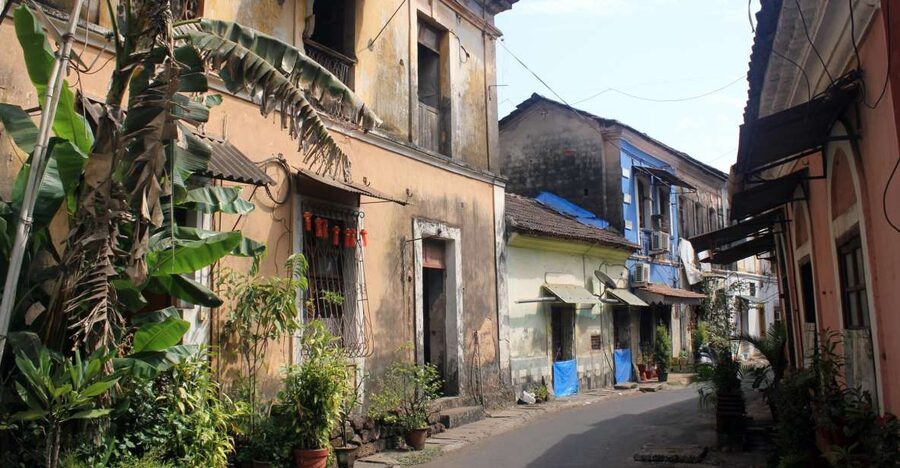
- Fontainhas Latin Quarter lanes for colorful houses, cafés, and heritage-side streets
- Indo-Portuguese architecture spotted up close, not guessed from far away
- Altinho Hill uphill streets with a view payoff at the top
- Stops beyond the obvious like a modest art space and a visitor center moment
- A local, English and Hindi guide who uses fun “infotainment” to keep momentum
- A small food tasting stop so the tour includes more than photos
More of Goa, sand and stone
Panjim Church to Altinho Hill, the walkable storyline
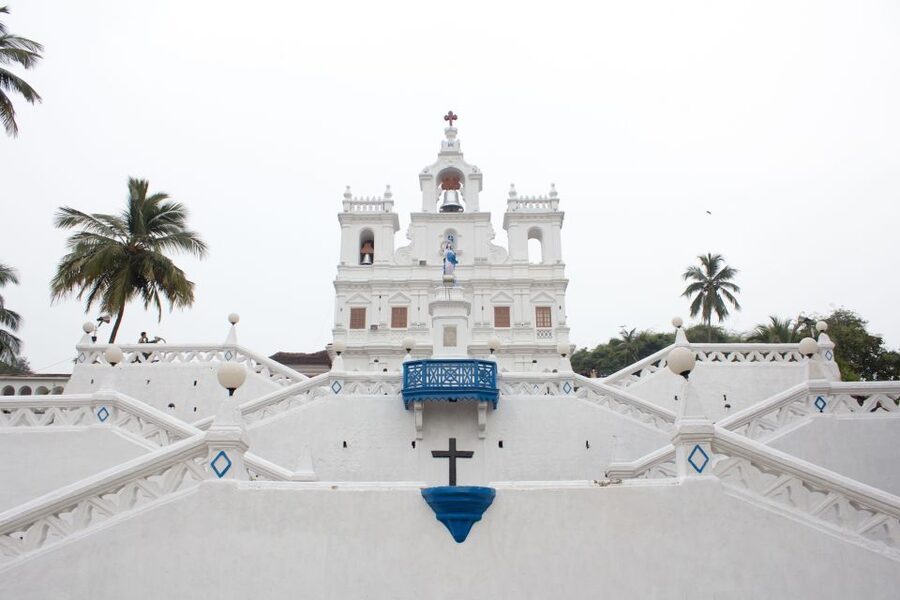
You start at the staircase of Panjim Church, the white, iconic marker that gives your whole walk its theme. From the very beginning, the tour feels like a guided route through layers of influence, not just a scenic stroll. If you’re the kind of traveler who likes to understand why a building exists, this start sets you up fast.
Then you work your way toward Altinho Hill. Expect stepped streets and a bit of uphill effort. It is not a hike, but it is enough that you’ll feel it if you plan to wear sandals or very soft footwear. I like this part because the change in elevation mirrors what you’re learning, Panjim rises from everyday lanes to official buildings and overlooks.
Along the way you pass the area associated with the Archbishop’s Palace. Even when you are seeing exteriors only, the guide’s explanations help you notice how Portuguese-era design and local materials shaped what stands today. If you usually skip colonial buildings because they look similar, you’ll probably start seeing differences once someone points out the features you should watch for.
The Portuguese footprint: high court, colonial buildings, and power in stone
One of the best values of this tour is that it links architecture to everyday power. You see the Old High Court area, including colonial-era buildings and one of India’s oldest High Courts. That sounds formal, but the walk makes it human, the guide frames the court as part of a much bigger colonial-era setup, not an isolated monument.
This section is also where Indo-Portuguese style becomes more than a label. The tour keeps pulling you back to specific cues, like how houses and institutional buildings hold onto European influences while still working for local life. It is the sort of information that makes your photos more meaningful, because you’ll know what you’re photographing instead of just pointing and shooting.
You also pass the Chief Minister’s Residence area by way of exterior views. This is a quick moment, but it reinforces how Panjim’s historic core still functions as a living city, not a museum district. I find that helpful, because it keeps the tour grounded in the present.
Fontainhas Latin Quarter: the lanes that make the story stick
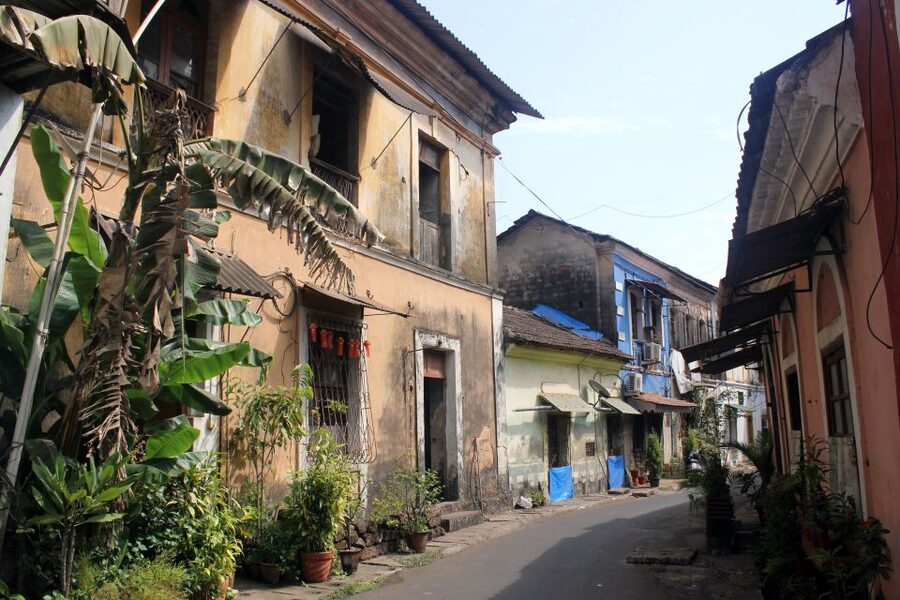
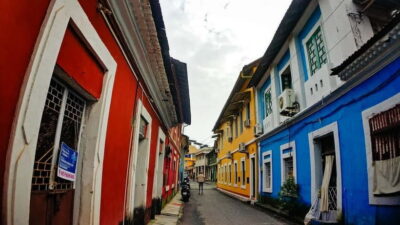
Fontainhas is the heart of the tour, and it earns that status. This is where you slow down naturally, because the colored houses, cafés, and heritage lanes invite you to look up, not just straight ahead. The guide’s pacing here matters, you are not rushed through a quick highlight stop.
You’ll spend meaningful time moving through the Latin Quarter area, spotting details in the streetscape that are easy to miss when you’re on your own. The best part is how the tour treats these lanes as living spaces. Even if you’re not stopping for every café, you’ll get a sense of daily routines around the architecture, which is exactly what makes this part feel authentic.
If your travel style is “I want to see the city I will actually return to in my memory,” Fontainhas is where that happens. I love the contrast, you start with a church, climb toward official buildings, then land in a neighborhood where the Portuguese influence shows up in the everyday look of homes and streets.
Photo tip: bring patience. The lanes are photogenic, but you will need a few angles to get the best lines, especially when houses sit close to the street. Keep moving with the group, then take a short pause when the guide gives you a clear target to look for.
- Goa: Dudhsagar Waterfall, Jeep Safari and Spice Plantation★ 3.4 · 43 reviews
- Goa: Spice Plantation Tour and Traditional Local Lunch★ 4.3 · 32 reviews
- Panjim: Guided Walk Tour of Portuguese-Influenced Goa★ 4.6 · 26 reviews
- Goa: Old Goa and Divar Island E-Bike Tour with Snacks★ 4.7 · 25 reviews
- Panaji: Fontainhas Neighborhood Cultural Guided Walking Tour★ 4.7 · 20 reviews
Inside stops that add context, not clutter
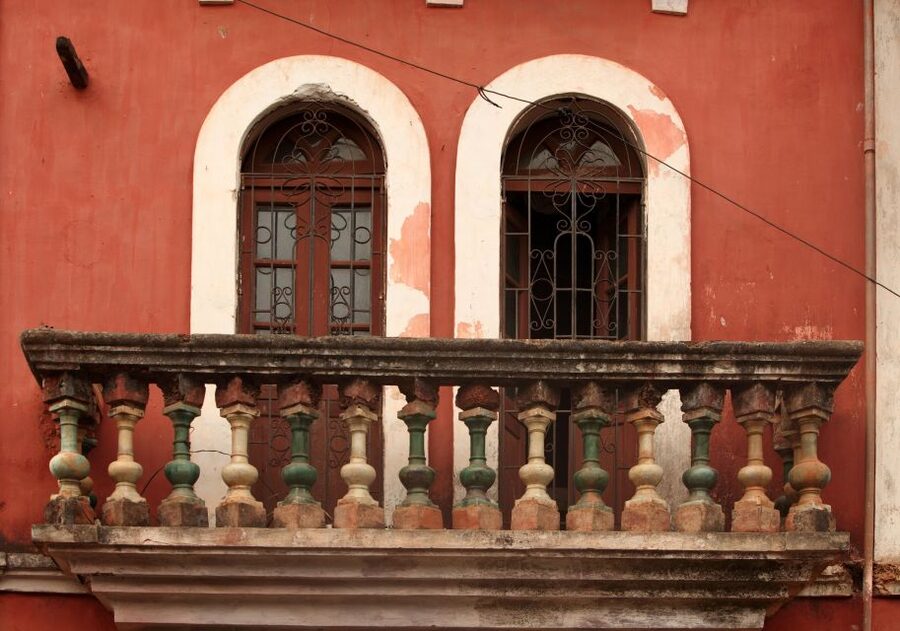
This tour does not try to stuff in too many indoor visits, which I appreciate. Instead, it includes short, purposeful stops so you understand what you’re seeing outdoors.
You visit a visitor center area, then there’s a guided stop at another spot that helps connect themes. The goal is simple: make sure you know what Portuguese influence means in this part of Goa, beyond stereotypes and broad time periods.
There is also an art gallery stop at a modest space with Scandinavian and local artwork. That combination is interesting because it reminds you that this is not only a Portuguese past. Panjim and Goa keep receiving new influences. For me, this stop works best if you treat it as a pause, not a destination. Look at a few pieces, then mentally switch back to the street details outside.
One more practical note: the tour uses an “infotainment” style. That means the guide keeps stories moving, so you do not lose momentum even if history is not your favorite subject. I like tours that are structured enough to teach, but light enough that you do not feel trapped in lectures.
Viewpoint payoff and the calmer end near Maruti Temple
After you spend time in Fontainhas, the tour also includes a viewpoint section. This is the moment where your uphill effort makes sense. You get a look across Panjim from a higher position, and the city suddenly reads like a map instead of separate buildings.
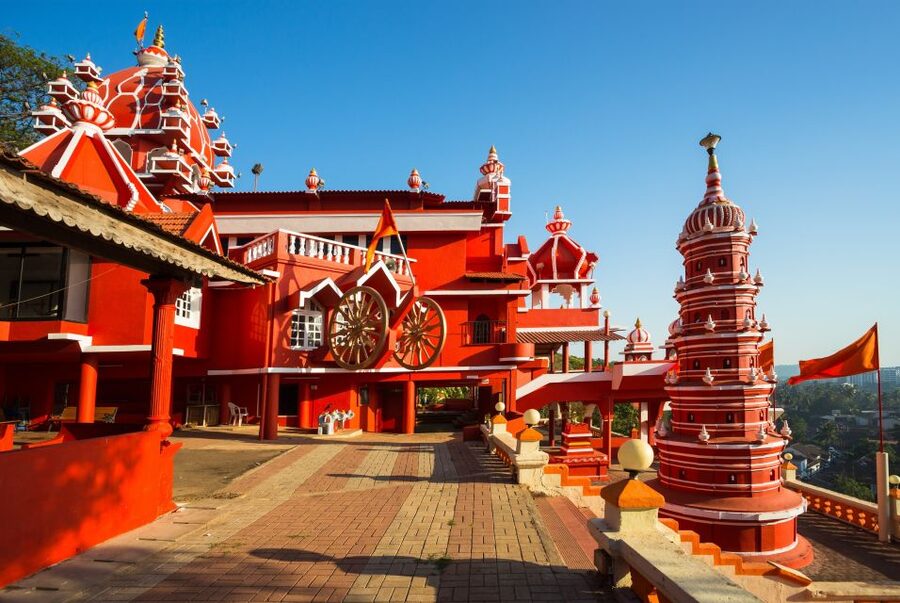
Then the walk ends at Maruti Temple in Altinho, overlooking Panjim. This part feels calmer and more reflective than the earlier street and monument areas. You’ll likely appreciate it if you want a shift from “look at history” to “breathe and take it in” before wrapping up.
Finally, the day ends in Fontainhas, so the tour finishes where the best street atmosphere is. If you’d like to continue exploring on your own, this is a smart way to end, because you can wander cafés or shop slowly without having to retrace uphill sections.
Food tasting: a small break that keeps the tour grounded
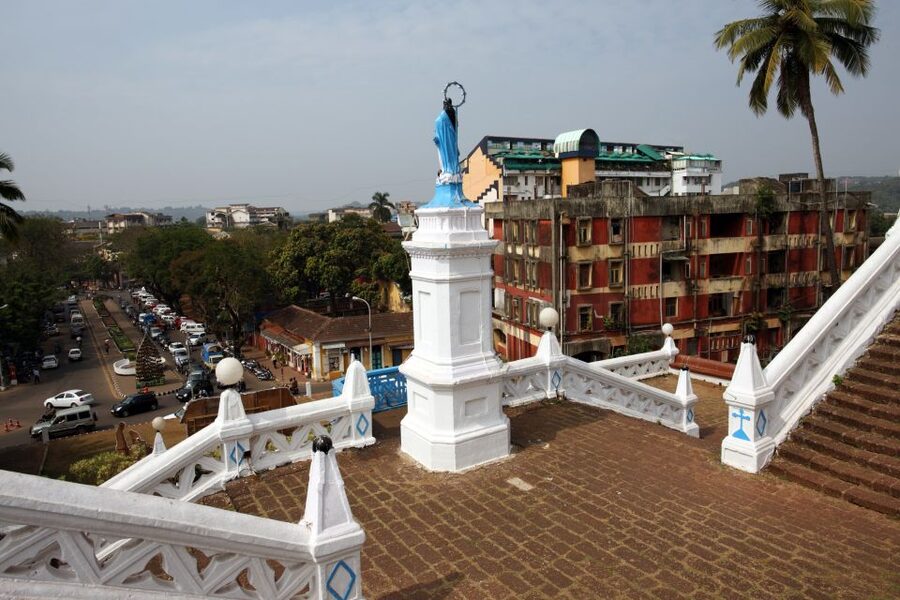
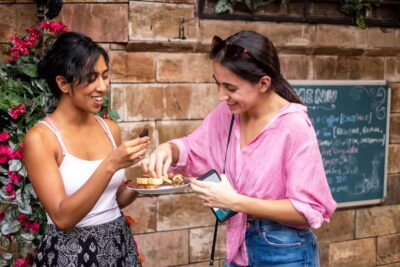
A local café stop is built into the route, and it includes a food tasting. You should treat it as a taste, not a full meal. Still, I find that small food moments make walking tours better because they break up concentration and give you a quick reset.
Food is not the focus, the stories and street visuals are. But the tasting helps you connect to local life rather than just colonial façades. If you have dietary restrictions, you should plan to ask your guide at the café stop based on what’s being served. The details of specific items are not guaranteed here, so asking matters.
Also, no water bottle is included. Bring water with you, especially if you’re doing this on a hot day.
Price and logistics: why $14 is fair for this kind of route
At around $14 per person for a 2-hour guided walk, the value is strong if you like learning on your feet. You’re paying for more than walking, you’re paying for a guide who can connect Portuguese influence to actual buildings, and who can show you access to hidden lanes and heritage points.
You also avoid the common cost trap of transportation. This is an on-foot experience with no hotel pickup or drop-off included. So you need to be able to get to the meeting point yourself.
The meeting point is at the staircase of Panjim Church, at 165, Avenida Teófilo Braga, Goa. Show up about 10 minutes early so you can start calmly. The guide may coordinate with you using WhatsApp, so having an active WhatsApp number helps.
One more detail: the tour is listed as wheelchair accessible. The route includes uphill sections, so if mobility is a factor, it’s worth discussing how comfortable you are with steps before you commit. Accessibility is possible, but the tour’s shape still includes hilly streets.
Comfort and pacing tips that make the tour feel easy
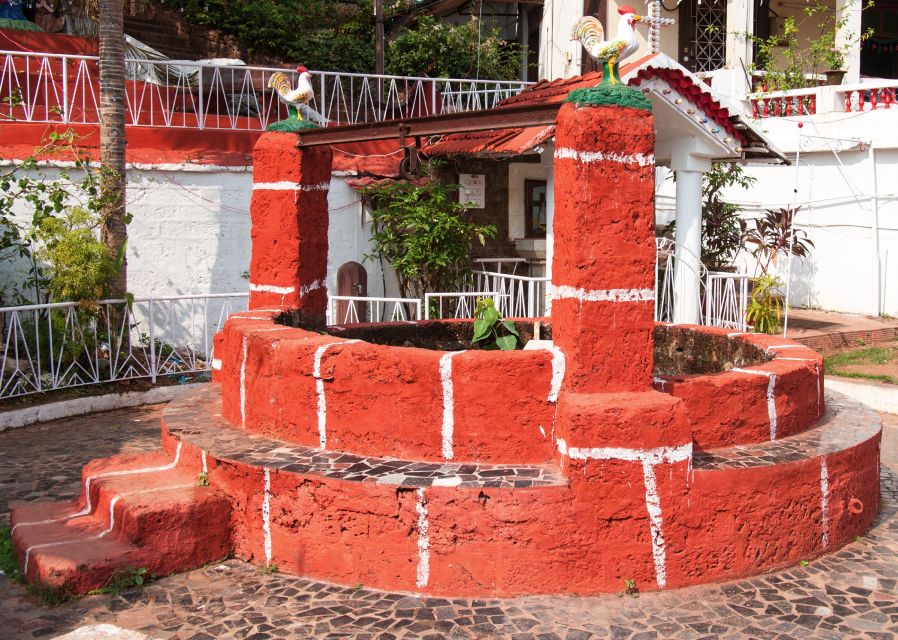
Even though it’s a short 2-hour tour, wear comfortable clothes and shoes. Altinho Hill is part of the story, and you will walk uphill. If you tend to overpack, keep it light so your hands are free for photos and quick stops.
A slower pace is a big reason people enjoy this tour. That pace gives you time to look, ask, and compare details between buildings. In one guide-focused review, the guide’s enthusiasm and command of European context made the colonial-era theme click, especially for architecture fans and anyone curious about colonialism’s footprint.
Sound check: one review notes the guide talked quietly. That can be totally fine if you are in a small group and close enough to hear. If you struggle with quieter voices, ask questions sooner rather than later, and try to position yourself where you can see and hear clearly.
Finally, bring your camera mindset. This tour is built for photos, but the best shots happen when you know what to look for, like specific architectural features and lane lines. Let the guide point, then take your time.
So, should you book this Panjim Portuguese walk?
I’d book it if you want Portuguese-influenced Goa with substance, not just a checklist of monuments. The strongest reasons to choose it are the Fontainhas Latin Quarter walking time, the Indo-Portuguese architecture focus, and the guide storytelling approach that keeps history from feeling heavy.
I might skip it if you cannot handle uphill streets or if you want a tour with frequent, long indoor stops. This is mostly on foot, with short stops that support the outdoor route.
If you do book, arrive on time, wear good shoes, bring water, and be ready to look up at balconies and façades as much as you look at streets. That’s where this walk becomes more than a pleasant afternoon.
FAQ
Where is the meeting point?
Meet your guide at the staircase of Panjim Church. The address listed is 165, Avenida Teófilo Braga, Goa. Plan to arrive about 10 minutes before the tour start time.
How long is the tour?
The guided walk tour lasts 2 hours.
Is hotel pickup or drop-off included?
No. Hotel pickup and drop-off are not included, and the tour is entirely on foot.
What languages does the guide speak?
The live tour guide speaks English and Hindi.
Is this tour wheelchair accessible?
Yes, the tour is listed as wheelchair accessible.
Do I need to bring my own water?
Water bottle is not included, so it’s a good idea to bring water with you.
Is food included?
A local café stop includes a food tasting, but food and drinks are not broadly included, so expect only a tasting rather than a full meal.
What should I wear and bring?
Wear comfortable shoes and comfortable clothes. The walk includes uphill sections at Altinho Hillock.
What is the cancellation and booking flexibility?
Free cancellation is offered up to 24 hours in advance for a full refund. There is also a reserve now, pay later option where you can book and pay nothing today.
More of Goa, Beach and Basilica




Recently reviewed across Goa
- Panaji: Fontainhas Neighborhood Cultural Guided Walking Tour
★ 4.7 · 20 reviews - Goa: Old Goa and Divar Island E-Bike Tour with Snacks
★ 4.7 · 25 reviews - Panjim: Guided Walk Tour of Portuguese-Influenced Goa
★ 4.6 · 26 reviews - Goa: Spice Plantation Tour and Traditional Local Lunch
★ 4.3 · 32 reviews - Goa: Dudhsagar Waterfall, Jeep Safari and Spice Plantation
★ 3.4 · 43 reviews - Goa: Private Full-Day Sightseeing Highlights Tour
★ 4.7 · 52 reviews
Goa Beaches and Heritage, compared.
 ★ 4.8Panaji: Heritage Walk through Goa’s Latin QuarterFrom $12291 reviews
 ★ 4.9Old Goa: Walking Tour of Heritage ChurchesFrom $1281 reviews
 ★ 4.5Private Beach Photoshoot in North Goa by Professional PhotographerFrom $8078 reviews
 ★ 4.7Private Full-Day Sightseeing Highlights TourFrom $7152 reviews
 ★ 3.4Dudhsagar Waterfall, Jeep Safari and Spice PlantationFrom $3243 reviews
 ★ 4.3Spice Plantation Tour and Traditional Local LunchFrom $6032 reviews
 ★ 4.9Panaji: Heritage Walking Tour in Fontainhas Latin QuarterFrom $1031 reviews
 ★ 4.9Goa Shore Excursions: Highlights of GoaFrom $6029 reviews
Browse the lists this tour appears in