
REVIEW · WALKING TOURS
Vintage Walk Amer
Slow walking beats sightseeing stress. This 3-hour Vintage Walk Amer is a focused way to understand Jaipur beyond the big monuments, moving on foot through Amer Fort (Amber Palace), the stepwell Panna Meena ka Kund, a royal-era temple, and the Anokhi Museum for hand printing. You get a private group, pickup offered, and a mobile ticket, so your morning has fewer moving parts.
What I like most is how the route links places to people, not just places to photos. I’m especially drawn to the Amber Fort area with about 45 minutes on site, plus the short stops where you can actually pause and read the details, like the mirror-symmetry feel at Panna Meena ka Kund.
One consideration: this is a walking tour and it’s weather dependent. Also, double-check the Amber Palace entrance fee when you book, because one part of the info says ticket included while the separate list says entrance for Amber Palace is not included.
In This Review
- Key highlights you should care about
- Why the morning starts in Amer, not downtown Jaipur
- Amber Palace (Amer Fort): your first real taste of power and detail
- Panna Meena ka Kund: the stepwell that feels like a fairy tale
- Jagat Shiromani Ji Temple: Meera Bai, Krishna, Vishnu, and royal memory
- Anokhi Museum of Hand Printing: wood-block craft in a traditional townhouse
- Price and tickets: is $25 good value for this 3-hour walk?
- How the tour actually feels in motion (private group, pickup, languages)
- Practical things to plan for in Amer (walking and weather)
- Should you book Vintage Walk Amer?
- FAQ
- How long is the Vintage Walk Amer tour?
- Is pickup offered for Vintage Walk Amer?
- Where does the tour start and where does it end?
- What stops are included on the walk?
- Is the Amber Palace entrance fee included?
- What is the cancellation and weather policy?
Key highlights you should care about
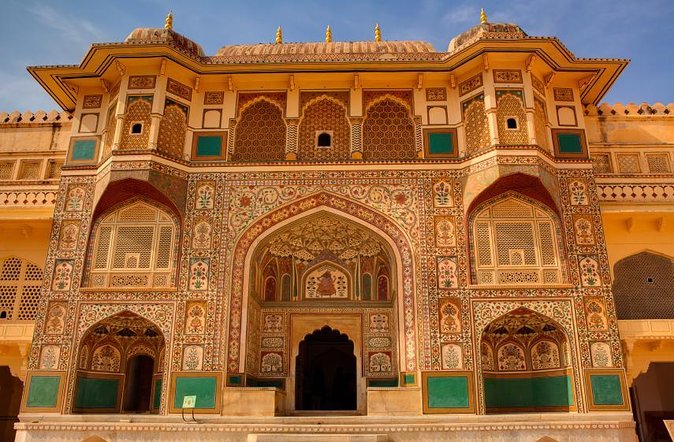
- Amber Fort in focused time with about 45 minutes to see and understand what you’re looking at
- Panna Meena ka Kund stepwell with symmetrical stairways and rainwater catchment context
- Jagat Shiromani Ji Temple story tied to Queen Kanakwati and the years 1599-1608
- Anokhi Museum of Hand Printing inside a traditional townhouse, centered on wood-block craft
- Private tour feel with pickup offered and a mobile ticket for less hassle
- Guides praised for clear English and Spanish with patient, attentive explanations
Shortlisting? Every Jaipur trip below went through the same review.



Why the morning starts in Amer, not downtown Jaipur

Amer (also written as Amer/Amber) sits about 11 kilometers from Jaipur, and it’s elevated, which matters for how the sites feel. The area is part fort, part town vibe, and it helps you see why this region became so important in Rajasthan.
Because you’re walking and not doing a long shuffle between far-flung attractions, you can keep your attention on one theme: local life and royal power in the Amer area. It’s also a practical setup, since the tour starts and ends back at the meeting point at Amer Fort, so you don’t spend your time re-planning rides.
If you’re trying to understand Jaipur’s culture without racing from one landmark to the next, this route has the right tempo. You get multiple stops, but each one is short enough that you’re not exhausted before you reach the best photo spots.
Amber Palace (Amer Fort): your first real taste of power and detail
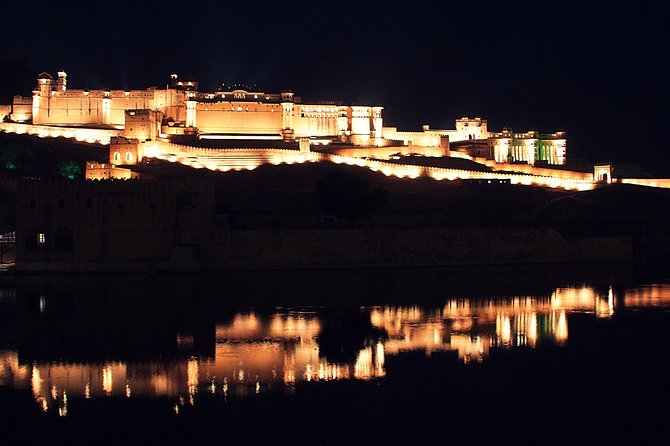
Amer Fort, known as Amber Palace, is located high on a hill and is described as Jaipur’s principal tourist attraction. That hilltop setting is more than a backdrop, it shapes the flow of the fort and the feel of walking through it.
You’ll spend about 45 minutes here, with an admission ticket mentioned in the itinerary timing. At the same time, the pricing notes list Amber Palace entrance as not included, so this is the one detail you should verify in your booking confirmation.
Either way, the value of this stop is not just seeing walls and courtyards. It’s the guided focus that helps you notice what’s functional, what’s symbolic, and what tells you about the people who built and used the place.
A fort visit can go two ways: either you stare at stone and hope it makes sense, or you understand why the design is the way it is. This is built for the second option, especially if you like explanations that connect architecture to culture, and not just dates.
Practical tip: give yourself mental room for small detours inside the fort area. Even within 45 minutes, you want enough focus to appreciate transitions, not just the biggest viewpoints.
Panna Meena ka Kund: the stepwell that feels like a fairy tale
After Amber Fort, the tour shifts to something quieter and more intimate: Panna Meena ka Kund, a historic stepwell and rainwater catchment. The key feature is the picturesque symmetrical stairways, which are the reason people love this stop for photos.
You get about 20 minutes here, which is the right amount of time. Stepwells can be visually tricky at first glance, and symmetry takes a moment to register. With a guide, you usually end up seeing the structure as a system, not only as a pretty frame.
Why this stop earns its place on the route: it’s a reminder that the heritage of a place isn’t only temples and forts. Water management, everyday engineering, and public utility were part of the story too.
Also, the visual rhythm of those stairs makes it an easier stop to slow down. If you’re the type who likes to notice details in carvings, patterns, and symmetry, you’ll probably enjoy standing still for a few minutes and letting the shape click.
If you’re visiting during harsher heat, a stepwell stop is a natural pacing break. You’re still outside, but the environment often feels cooler than open street level, which helps you keep your energy for the next two stops.
- Full-Day Jaipur Private Sightseeing Tour by Car with Guide★ 5.0 · 472 reviews
- Pink City Cooking Class★ 5.0 · 452 reviews
- Private Elephant Sanctuary★ 5.0 · 390 reviews
- Private Full Day Jaipur Sightseeing Tour By Tuk Tuk★ 5.0 · 382 reviews
- Private Guided Half Day Tour Jaipur★ 5.0 · 371 reviews
Jagat Shiromani Ji Temple: Meera Bai, Krishna, Vishnu, and royal memory
The next leg takes you to Jagat Shiromani Ji Temple in Amer. It’s dedicated to Hindu gods Meera Bai, Krishna, and Vishnu, and it’s tied directly to a specific royal story.
This temple was constructed between 1599 and 1608 AD by Queen Kanakwati, the wife of King Man Singh I. It was built in memory of their son Jagat Singh, which gives you a human reason to care about the site instead of treating it like another stop on a list.
You’ll have about 15 minutes here. That’s short, but it’s enough for the basics to land: who it honors, when it was built, and why it matters in the Amer area. With the right explanation, the temple becomes a chapter in the larger royal narrative that also shaped Amber Fort.
One more benefit: temples are often where you learn local etiquette. Even without a long stop, your guide can help you move respectfully, focus on what you’re seeing, and understand the symbolism behind what might otherwise seem like ornament.
Consider this stop if you want depth. If you’re only in Jaipur for high-impact photo locations and don’t care about cultural context, you might feel it’s less exciting than the fort. But if you like understanding the people and beliefs connected to the buildings, this is a strong anchor on the walk.
Anokhi Museum of Hand Printing: wood-block craft in a traditional townhouse
For the final part of the walk, you go to Anokhi Museum of Hand Printing. The museum is in a traditional townhouse and focuses on the art and heritage of wood-block printing.
You’ll spend about 20 minutes here, which works well as a wrap-up. After forts and a stepwell, hand printing brings you into a different kind of Rajasthan skill: craft that turns design into everyday objects, through process and repetition.
This is a good stop if you like seeing cultural continuity. You can connect the symmetry of architecture to the symmetry and pattern-making mindset of print design. Even if you do not know anything about printing, watching how museums frame craft often helps you spot how much intention goes into details.
There’s also a value angle. Craft museums can feel too academic or too commercial, but this one is described as showcasing heritage through a traditional home setting and a focus on wood blocks. That makes it feel grounded rather than distant.
If you’re shopping for textiles later, this stop can give you language and perspective. You may not leave with brand names, but you can leave with an understanding of the technique category and why wood-block printing is treated as heritage.
Price and tickets: is $25 good value for this 3-hour walk?
At $25.00 per person for about 3 hours, this is priced like a budget-friendly guided experience. What makes it feel reasonable is the mix of sites: Amber Fort area time, a major stepwell, a temple with clear historical context, and a craft-focused museum.
The tour also states that all fees and taxes are included. That’s meaningful in India tours, where extra charges can creep in and surprise you at the end.
The one place you should be careful is the entry fee confusion around Amber Palace. The itinerary timing says admission ticket included for Amber Palace, but the separate notes say entrance for Amber Palace is not included. I’d treat that as a flag, not a dealbreaker, and confirm in your booking details what you personally will pay at the gate, if anything.
Pickup is offered, and you’ll use a mobile ticket. That combination tends to reduce time wasted on meeting up and figuring out where to go once you’re already in the Amer Fort area.
Finally, it’s a private tour/activity, meaning it’s only your group. That matters if you ask lots of questions or want a guide who can pace things to your comfort, rather than rushing everyone along like a conveyor belt.
How the tour actually feels in motion (private group, pickup, languages)
A walking tour lives or dies by pacing. This one is built around short, timed stops: about 45 minutes at Amber Fort, then around 20 minutes at the stepwell and museum, and about 15 minutes at the temple.
That structure is helpful for two reasons. First, it prevents the day from turning into one long, tiring slog. Second, each site gets enough time to register, but not so much time that you lose interest.
Pickup offered and a start at Amer Fort makes the whole thing simpler, especially if you’re not based in Amer. The info also says it’s near public transportation, so even if pickup details are minimal, you likely have options.
The private setup is also worth noting. The experience is designed for your group only, so your questions and interests can shape the experience more than on shared tours.
Language can be a deal maker, and the guides in the feedback you provided are praised for English and Spanish explanations. Names that show up are Hasseb and Mudassir, and they’re described as gentle, patient, and attentive, with responsive help for questions and needs.
If you want cultural context without lectures that run too long, that guide style usually works well. You should still expect walking, standing, and looking closely, but with better odds of understanding what you’re seeing.
Practical things to plan for in Amer (walking and weather)
This experience requires good weather. That means your timing matters, and you should be ready to adjust if conditions change. If the weather isn’t good, you’ll be offered a different date or a full refund, which is a fair policy for an outdoor walking route.
Because it’s a walking tour, comfortable shoes are not optional. Even with stop times, you will be on your feet more than you expect if you’re used to car tours.
I also recommend bringing water and a hat or sun protection. The tour is focused on Jaipur’s Amer area, and that usually means sun exposure and warm temperatures during parts of the day.
If you’re the type who plans around crowds, you’ll probably like the structure. You start at the fort, then move to stepwell and temple, and end at the museum. It’s not random wandering, so you can keep your energy and attention.
Should you book Vintage Walk Amer?
Book it if you want a culture-first walk through Amer that goes beyond monuments-as-postcards. You’ll see four meaningful stops, each with a distinct angle: royal power at Amber Fort, water engineering at Panna Meena ka Kund, royal family devotion at Jagat Shiromani Ji Temple, and craft heritage at Anokhi Museum of Hand Printing.
It’s also a good fit if you appreciate clear guide explanations and you’d rather ask questions than read plaques for everything. The guides named in feedback, like Hasseb and Mudassir, are repeatedly praised for being attentive and communicative in English and Spanish.
Skip it or reconsider if you hate walking, because the tour is built around moving on foot between sites. Also, take two minutes to confirm the Amber Palace entrance situation so there are no surprises.
If you like slow, meaningful sightseeing with a private-group feel, this is strong value at $25 for the amount of ground it covers and the variety of what you learn.
FAQ
How long is the Vintage Walk Amer tour?
It’s approximately 3 hours.
Is pickup offered for Vintage Walk Amer?
Yes, pickup is offered.
Where does the tour start and where does it end?
It starts at Amer Fort, Devisinghpura, Amer, Rajasthan 302028, India, and ends back at the meeting point.
What stops are included on the walk?
The walk includes Amber Palace, Panna Meena ka Kund, Jagat Shiromani Ji Temple, and the Anokhi Museum of Hand Printing.
Is the Amber Palace entrance fee included?
The information provided says all fees and taxes are included, but it also lists entrance for Amber Palace as not included. Check your booking details to confirm what applies to your reservation.
What is the cancellation and weather policy?
You can cancel for a full refund up to 24 hours in advance. The experience requires good weather, and if it’s canceled due to poor weather, you’ll be offered a different date or a full refund.
Recently reviewed across Jaipur
- 6-Night Royal Rajasthan: Private Tour from Jaipur, India
★ 5.0 · 10 reviews - Jaipur Nahargarh Sunset and Night Lights Tour
★ 5.0 · 10 reviews - Jaipur Full Day Heritage of Pink City Tour By Tuk Tuk With Chai
★ 5.0 · 10 reviews - Private Jaipur Sightseeing Tour by Tuk-Tuk
★ 5.0 · 10 reviews - Explore Jaipur at Night with Patrika Gate
★ 5.0 · 10 reviews - Jaipur walking tour.
★ 5.0 · 10 reviews
Walking Tours, compared.
 ★ 5.0Group Guided Walking Tour in Fort and ColabaFrom $161,073 reviews
 ★ 5.0Spiritual City Walking Tour-THE Pushkar RouteFrom $6907 reviews
 ★ 5.0Private Guided Walking Tour in Fort & ColabaFrom $36895 reviews
 ★ 5.0Old Delhi Food, Heritage&Cultural Walk with Rickshaw ride to Masterji Kee HaveliFrom $52742 reviews
 ★ 5.0Breakfast Walk in Old DelhiFrom $80449 reviews
 ★ 5.0Blue City Heritage Private Walking Tour With Pickup and Drop-OffFrom $11441 reviews
 ★ 5.0Delhi Food Walk: Rickshaw Ride, Street Eats & Market TourFrom $40401 reviews
 ★ 5.0Private Guided Walking Tour in Bandra Queen of SuburbsFrom $36383 reviews
Browse the lists this tour appears in