
REVIEW · MUMBAI CITY TOURS
Group Guided Walking Tour in Fort and Colaba
Mumbai’s oldest corners are easier when guided. This Fort and Colaba walk connects major landmarks to the stories that shaped the city, from Portuguese and British influence to today’s mix of cultures. You also get a very manageable group size, plus a route that ends with the Gateway of India and Taj Mahal Palace.
I love the small group setup, max 12 people, which makes it feel like a real conversation instead of a crowded line. I also like that the stops are free to enter, so you spend your money on the experience, not on ticket surprises.
One thing to consider is the weather. This tour requires good conditions, and if it gets canceled for poor weather you’ll be offered a different date or a full refund.
In This Review
- Key takeaways
- What you’re really buying on this Fort and Colaba walk
- Town Hall to Horniman Circle Garden: colonial echoes and a city-garden pause
- St. Thomas Cathedral and Flora Fountain: sacred calm, then a town-square landmark
- Oval Maidan and Rajabai Clock Tower: cricket origins and a Big Ben look-alike
- Kala Ghoda art district: architecture you notice, not just photographs you snap
- Keneseth Eliyahoo Synagogue: spotting a Jewish enclave in plain view
- Gateway of India and Taj Mahal Palace Hotel: how to end with a real wow
- What the guide adds: local tips, good pacing, and photo guidance
- Price, timing, and who this Mumbai walking tour fits
- Should you book this tour?
- FAQ
- How long is the guided walking tour in Fort and Colaba?
- What is the price per person?
- What group size should I expect?
- Where do I meet the tour, and where does it end?
- Do I need to buy admission tickets for the stops?
- What if the weather is poor or I need to cancel?
Key takeaways
- Max group size of 12 for a more personalized pace and better questions
- 2 hours 30 minutes that fits neatly into a single day in South Mumbai
- Free entry at every stop listed, so your value is clear and predictable
- Fort-to-Colaba route built around major landmarks and smaller, easy-to-miss details
- Local recommendations from your guide to help you keep exploring after the walk
- Gateway of India plus Taj Mahal Palace as a satisfying visual finale
Mumbai, a few more routes through it
What you’re really buying on this Fort and Colaba walk

This is a history-and-landmarks walking tour that focuses on one compact slice of Mumbai: Fort and Colaba. In about 2 hours 30 minutes, you’ll connect famous buildings with the city’s big turning points, including the era after Portuguese and British colonization. The goal is not to recite facts. It’s to help you see why these places matter when you’re looking at them on the street.
The value is strong because you’re not paying entry fees at each stop. The tour lists free admission tickets for the major sights you visit, so your main cost is the guide time and the structured route. At $16.73 per person, that’s a budget-friendly way to get an overview without spending the day navigating alone.
The small-group format is also practical. With a maximum of 12 travelers, you’re more likely to notice details the group slows for, and your guide can steer the conversation based on what you ask. If you like photography, this also helps, because you are not constantly getting squeezed out of position.
One note: this is a walking tour, so wear comfortable shoes and expect some time outdoors, especially as you move between stops.
Town Hall to Horniman Circle Garden: colonial echoes and a city-garden pause
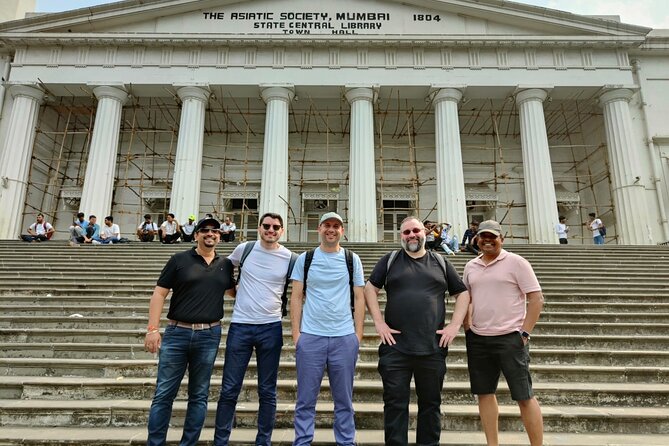
Your start point is Asiatic Society, Town Hall in Mumbai’s Fort area. This stop sets the tone fast. You’re in a place tied to how the city’s story gets told, and your guide shares the narrative of how Mumbai’s identity shifted after Portuguese and British colonization. If you’ve been looking at Fort-style architecture and wondering what changed and when, this is a helpful launch.
A second practical win is timing. This first stop is short, about 20 minutes, which means you don’t get stuck in one location. You get enough context to start noticing details in the streets around you, which is the best kind of background for a walk.
Next comes Horniman Circle Garden, often called Mumbai’s oldest garden. Your guide explains what used to happen here and why the garden is so distinctive, especially because it’s framed by Victorian buildings. This is a good breather stop. You move from institutional history to a more everyday public-space vibe.
What to watch for here: the way the garden’s edges and the surrounding architecture work together. Even if you only take a few minutes to pause, you’ll come away with a clearer mental map of how colonial-era planning shaped the street scene.
St. Thomas Cathedral and Flora Fountain: sacred calm, then a town-square landmark
After the garden, you’ll step into St. Thomas Cathedral Mumbai, described as Mumbai’s oldest Anglican church. This stop is about 15 minutes, and it’s built for quiet attention. Your guide points out memorials and the grand altar, so you’re not just walking past impressive walls, you’re learning how to look.
This matters for visitors because churches can be confusing if you don’t know where to focus. A guide gives you a route for your eyes, and it also helps you understand why the building feels meaningful beyond aesthetics.
Then you shift into the most “center-of-the-map” feel on the walk: Flora Fountain. It’s positioned in the main town square and described as Mumbai’s answer to Piccadilly Circus and the Martyrs’ Memorial. The point of this stop is simple and visual. You get a landmark that anchors the surrounding civic energy, and your guide adds context so it does not feel like a random statue moment.
Flora Fountain is around 15 minutes, which is enough for photos and a quick orientation reset. If you’re the type who likes to understand how a city’s public spaces work, this stop clicks.
- Elephanta Caves & Island Guided Private Tour★ 5.0 · 1,327 reviews
- Private Guided Walking Tour in Fort & Colaba★ 5.0 · 895 reviews
- Mumbai: Street Food and Night Markets Tour★ 4.9 · 719 reviews
- Mumbai: Dharavi Slum, DhobiGhat, and Dabbawallas Tour★ 4.9 · 689 reviews
- Dharavi Slum Tour★ 5.0 · 625 reviews
Oval Maidan and Rajabai Clock Tower: cricket origins and a Big Ben look-alike
Two of the most photo-friendly stops come next: Oval Maidan and Rajabai Clock Tower. Oval Maidan is about 20 minutes, and it’s linked to the birthplace of Indian cricket, plus it’s listed as part of a UNESCO World Heritage site. That combination is powerful. The space is both a sports landmark and a heritage landmark, so your guide can connect daily life with the bigger story of what the city preserved.
Even if you are not a cricket superfan, this is still worth your time because it’s a wide-open space surrounded by significant buildings. It helps you understand Mumbai’s rhythm: institutional architecture, big public areas, and how crowds move through them.
Then you’ll move to Rajabai Clock Tower, also about 15 minutes. It’s described as Mumbai’s answer to Big Ben Clock Tower, and your guide shares stories about the evolution of the University of Mumbai. This is the stop where the walk really “explains itself.” You begin to see how education, architecture, and colonial-era design choices all show up in the streets.
What I like about pairing these two stops back-to-back is contrast. You go from a heritage-linked open ground to a clock tower that gives you a sense of time, institutions, and long-term city planning.
Kala Ghoda art district: architecture you notice, not just photographs you snap
Kala Ghoda is next, and your time there is about 15 minutes. This area is described as Mumbai’s premier art district, and the guide’s job is to help you notice what your eyes might skip when you’re walking fast.
Your focus here is “look closer.” Your guide shares the secrets buildings hold, with emphasis on the fact that the architecture is varied and intentionally designed. Kala Ghoda is one of those places where you can easily take a few wide photos and miss the real payoff, which is learning how to interpret the streets.
If you like architecture and street-level storytelling, this is a key part of the route. The guide’s context turns a neighborhood into a lesson, and it helps you understand why people keep returning to this side of the city even after they’ve “seen the main sights.”
Keneseth Eliyahoo Synagogue: spotting a Jewish enclave in plain view
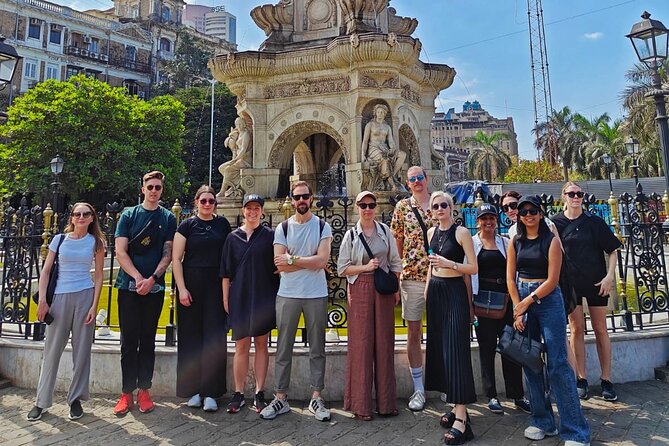
Next is Keneseth Eliyahoo Synagogue, again about 15 minutes. Your guide focuses on Mumbai’s Jewish enclave and points out signs of Jewish life that are now almost extinct in the city.
This is one of the quieter, more reflective moments on the walk. The value is not just seeing the building, it’s understanding that city history includes communities that changed, shrank, or were forced to adapt. Your guide helps connect architecture to lived culture, and that makes the stop feel more grounded than a photo-op.
Keep an eye on the details your guide points out, especially those small references that might disappear if you’re walking without context. Even if you’re not religious, this stop can still give you a clear sense of how Mumbai’s identity layers over time.
Gateway of India and Taj Mahal Palace Hotel: how to end with a real wow
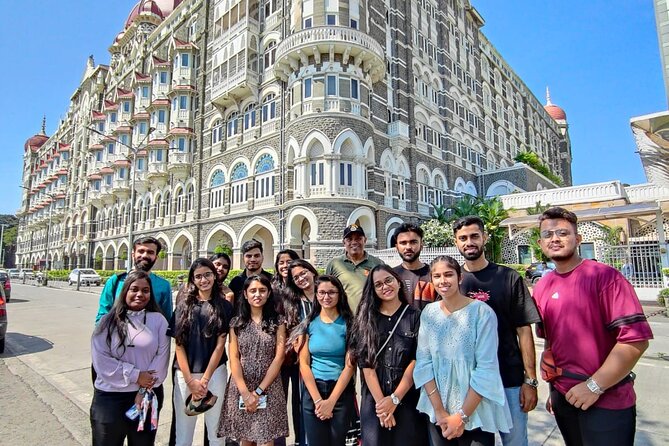
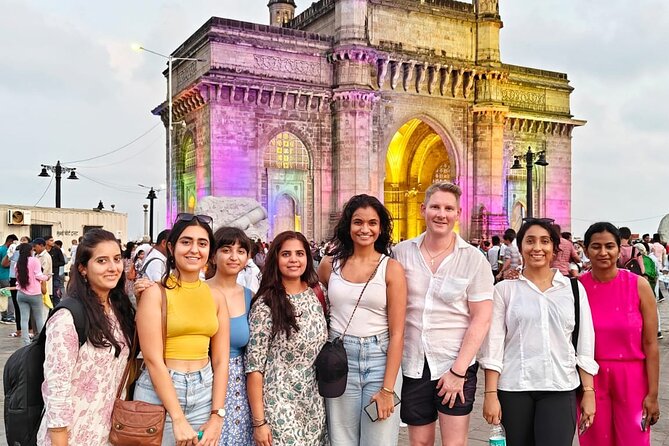
The final stretch is the grand finale: Gateway of India with Taj Mahal Palace Hotel nearby, about 20 minutes. This is your classic Mumbai punctuation mark. You end where many people start, but you do it after learning how the city’s systems, institutions, and communities got shaped.
Your guide frames the Gateway of India not as a standalone monument, but as part of the broader story of the city’s development. That’s what changes the experience from scenery into understanding.
Photo tip for this ending: plan for crowds and angles. If you can, position yourself early in your allotted time so you don’t end up rushing through photos at the busiest moment. With only about 20 minutes here, you’ll want to move efficiently: one wide shot, a couple closer details, then a final look as you absorb the whole scene.
This ending works especially well if your next plans are nearby in Colaba. You’ve finished at one of the easiest places to continue exploring on foot.
What the guide adds: local tips, good pacing, and photo guidance
The tour promises that your guide can offer local recommendations and tips, and that matters because it helps you keep your day from feeling random. A good guide does more than talk. They help you decide what to do next, how to order your stops, and what to pay attention to while you’re still in the area.
You may also get a small surprise. One guide name that showed up in a past group experience was Palak, and there was mention of a complimentary coffee break mid-walk. That doesn’t mean it’s guaranteed, but it does suggest the guide team sometimes builds in a break so you can reset before the next set of sights.
Pacing is part of the value here. Each stop is short enough that you keep energy, but the story is still given time to land. The maximum group size of 12 helps your guide keep the group together without turning the tour into a stop-and-go shuffle.
If you’re serious about photos, ask your guide where to stand before the group moves. On street corners and around gates and towers, small positioning changes the quality of your shot. A guide who knows the route can save you time and frustration.
Price, timing, and who this Mumbai walking tour fits
At $16.73 per person, this is priced like an efficient introduction to a complex city. The key value isn’t just the cost. It’s what you get for that cost: a guided route, a small group, free entry at the listed stops, and an overview of about 500 years of Mumbai’s history tied to specific landmarks.
Timing helps too. 2 hours 30 minutes is long enough to feel like you really learned something, but short enough that you can still do a proper second activity later that day. It’s a smart pick if you only have one day in South Mumbai or if you want to structure your time around the big visual anchors like the Gateway of India.
Who should book:
- First-timers who want a clear orientation to Fort and Colaba
- Travelers who like architecture, landmarks, and history connections
- Anyone who prefers small groups and expects to ask questions
- People who want free-entry stops so the budget stays controlled
Who might hesitate:
- If you dislike walking in busy streets, or you need long sit-down breaks, this may feel a bit fast
- If you want deep museum-style immersion, you may want a longer, more specialized add-on after this
And because it requires good weather, you should check conditions the day you plan to go. If the forecast looks rough, have a backup plan, or be ready to reschedule.
Should you book this tour?
If you want a practical way to understand Mumbai’s past while still enjoying famous sights, I’d say yes, book it. The route makes sense, the stop times keep you moving, and the free entry at the listed locations makes the price feel fair. Ending at the Gateway of India after learning how Fort and Colaba grew into what you see today is a strong, satisfying finish.
Before you go, do two small things: wear comfortable shoes, and bring a charged phone or camera because photo opportunities are a core part of this experience. If the weather is questionable, schedule with flexibility so you are not stuck disappointed.
For most visitors, especially first-timers, this is a smart value choice that turns Mumbai’s landmarks into a story you can actually follow on foot.
FAQ
How long is the guided walking tour in Fort and Colaba?
It lasts about 2 hours 30 minutes.
What is the price per person?
The price is $16.73 per person.
What group size should I expect?
The tour has a maximum group size of 12 travelers.
Where do I meet the tour, and where does it end?
You start at Asiatic Society, Town Hall (WRJP+P8M, Shahid Bhagat Singh Rd, Fort, Mumbai) and end at Gateway of India (Apollo Bandar, Colaba, Mumbai).
Do I need to buy admission tickets for the stops?
The tour lists admission tickets as free for the stops included.
What if the weather is poor or I need to cancel?
This experience requires good weather. If it’s canceled due to poor weather, you’ll be offered a different date or a full refund. You can cancel for a full refund up to 24 hours in advance.
Mumbai, Keep Exploring




Recently reviewed across Mumbai
- Mumbai City Sightseeing Guided Tour on a Bicycle
★ 5.0 · 10 reviews - Mumbai Street Food & Beach Tour with 10+ Tastings
★ 5.0 · 10 reviews - Mumbai Market Tour & Maharashtrian Cooking Class with Chef Reshma
★ 4.5 · 10 reviews - Sailing Experience in Mumbai on Mid Size Yacht
★ 5.0 · 10 reviews - 3 Days Complete Mumbai Tour Inclusive of Bollywood Studio Experience
★ 5.0 · 10 reviews - Dharavi Slum Tour
★ 5.0 · 10 reviews
Mumbai City Tours, compared.
 ★ 4.9Full-Day Sightseeing Tour of MumbaiFrom $241,822 reviews
 ★ 4.8Elephanta Caves Half-Day Guided Tour with ExpertFrom $301,032 reviews
 ★ 5.0Highlights of Mumbai Sightseeing Tour: TRAVELLERS CHOICE AWARDEDFrom $33915 reviews
 ★ 5.0Private Guided Walking Tour in Fort & ColabaFrom $36895 reviews
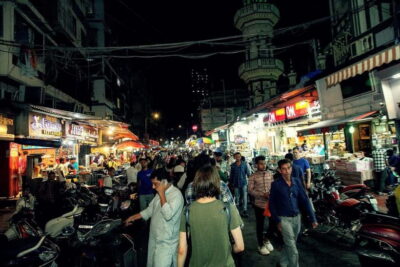 ★ 4.9Street Food and Night Markets TourFrom $13719 reviews
 ★ 4.9Dharavi Slum, DhobiGhat, and Dabbawallas TourFrom $14689 reviews
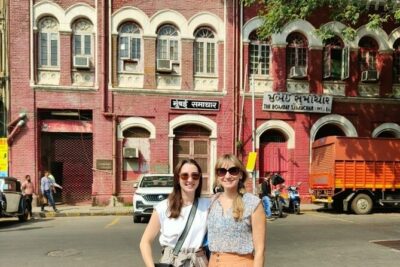 ★ 5.0Highlights of South Mumbai Guided Private Tour in AC VehicleFrom $74620 reviews
 ★ 5.0The Original Mumbai by Dawn – Recommended by Nigella Lawson & Nat Geo Traveller!From $86610 reviews
Browse the lists this tour appears in