
REVIEW · OLD DELHI AND CHANDNI CHOWK TOURS
3-4 Hour Old Delhi Heritage Walk Tour with Tuk Tuk Ride Wherever Required
Old Delhi hits hard, and this tour helps. You get a guided half-day loop built around Old Delhi’s Mughal-era roots, with a smart mix of A/C car transfers and short tuk tuk or rickshaw rides to keep the route doable. I like that it’s a small group (capped at 15), so the guide can actually answer questions while you move through places like Jama Masjid and the Chandni Chowk area.
The main drawback is that you are moving through crowded, narrow streets for part of the day, so if you prefer slow sightseeing, this format may feel a bit intense. Also, Jama Masjid admission is not included, so you’ll want to plan for that extra cost before you go inside.
In This Review
- Key highlights you will actually care about
- Why this Old Delhi route works so well for first-timers
- A/C car transfers plus tuk tuks and rickshaws, the practical way to do it
- Jama Masjid, Shah Jahan’s mega-mosque and your first big wow
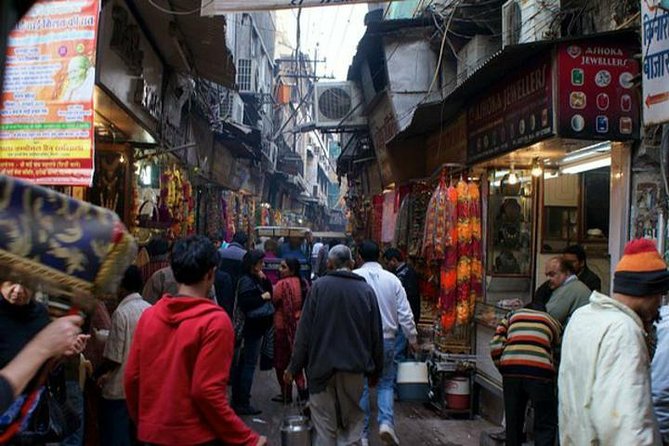
- Chandni Chowk and the paratha alley: shopping streets with real texture
- Khari Baoli: the wholesale spice engine of Old Delhi
- Naughara: a name with a story, even when you only stop briefly
- Dariba Kalan: gold-and-silver stalls and Persian-root street names
- Guides who manage crowds, keep you safe, and make it make sense
- Price and time: is $24 good value for this Old Delhi loop?
- What you should expect at each stop, plus the trade-offs
- Who this tour suits best, and who may want a different plan
- Should you book this Old Delhi Heritage Walk with tuk tuk rides?
- FAQ
- How long is the Old Delhi heritage walk tour?
- What does the tour cost?
- Is pickup available from hotels in New Delhi?
- How large is the group?
- What kind of transportation is used during the tour?
- What is included in the price?
- Is Jama Masjid admission included, and are camera fees covered?
- Can I get a full refund if plans change?
Key highlights you will actually care about
- Small group, capped at 15, for a more personal pace in tight lanes
- A/C vehicle plus tuk tuks and rickshaws, so you spend less time stuck in traffic
- Jama Masjid with a set time block, then straight into the markets
- Chandni Chowk side streets, including the paratha-focused alley
- Khari Baoli and Dariba Kalan, where Old Delhi turns into wholesale spices and gold-and-silver shops
- Bottled water included, a simple comfort item that matters in the heat
Deeper into Old Delhi and the Chowk
Why this Old Delhi route works so well for first-timers
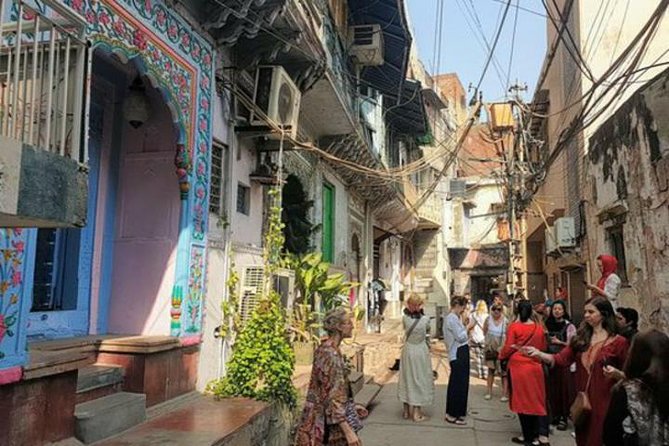
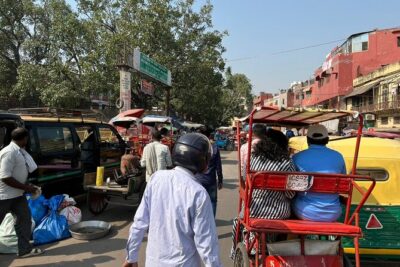
Old Delhi can be overwhelming fast, mainly because it is packed with people, bikes, carts, and shopfronts stacked on top of each other. This tour is built to make sense of that chaos. You start with Jama Masjid, one of the biggest and most important Mughal-era monuments in Delhi, then you slide into the commercial heart of the area around Chandni Chowk.
What I like most is that the tour is not just about landmark photos. You are guided through a sequence of markets that explain how Old Delhi functions, from the religious anchor point at Jama Masjid to the street-level trading zones like Chandni Chowk, Khari Baoli, and Dariba Kalan. It feels like a guided way to get your bearings quickly.
The other win is the small-group cap. With a larger group, you spend time walking like a school bus, eyes forward, questions saved for later. Here, the capped number makes it easier to pause and ask your guide what you are looking at, whether it is the purpose of a lane, the meaning behind a street name, or why one market sells what it sells.
A/C car transfers plus tuk tuks and rickshaws, the practical way to do it
This is a “mix and match” transportation plan, and it matters. The tour uses an A/C car for moving between key areas, then switches to tuk tuks and rickshaws where needed to fit into the lane structure and crowd patterns of Old Delhi.
That blend does two things for you. First, it saves time and energy. Second, it keeps the experience authentic. You are not trapped in a car for the whole day, so you still get the real street feel in the markets, but you also get some breathing room between stops.
You also get door-to-door hotel transfer, which is a big deal in Delhi. From a value perspective, that reduces the guesswork of matching buses or finding the right metered ride at the right moment. For a half-day plan, getting that part handled is worth a lot.
Jama Masjid, Shah Jahan’s mega-mosque and your first big wow
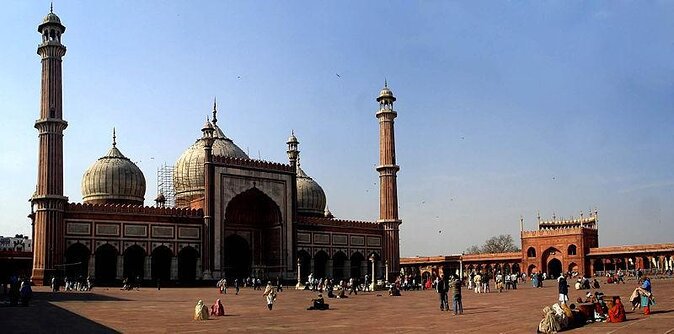
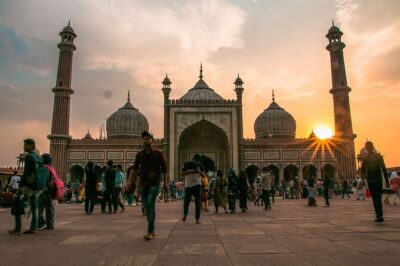
Stop 1 is Jama Masjid, also called Masjid-i Jahān-Numā. Built by Mughal Emperor Shah Jahan between 1644 and 1656, it was reportedly constructed at enormous cost for the era, around 1 million rupees. That scale is the point. Jama Masjid is not a small neighborhood mosque. It is a destination.
You get about 45 minutes at the mosque. Admission is not included, and camera fees are also listed as not included for Jama Mosque. So if you know you will want to photograph, plan for that added payment before you assume you are covered.
The practical takeaway: this stop sets the tone for the whole day. If you want the rest of Old Delhi to make more sense, start here. The guide helps connect the religious site to the surrounding city fabric, and once you understand why Jama Masjid is such a hub, the markets feel less random as you move from lane to lane.
- Old & New Delhi City Tour – Half or Full Day Options Available★ 5.0 · 4,811 reviews
- Taj Mahal Tour from Delhi by Express Train (Viator Award Winner)★ 5.0 · 2,849 reviews
- Same Day Taj Mahal, Fort & Baby Taj Tour from Delhi by Car★ 4.9 · 2,534 reviews
- From Delhi: Taj Mahal and Agra Fort Private Sunrise Tour★ 4.9 · 2,270 reviews
- Sunrise Taj Mahal, Agra Fort & Baby Taj Tour from Delhi by Car★ 5.0 · 2,243 reviews
Chandni Chowk and the paratha alley: shopping streets with real texture
After Jama Masjid, the tour heads into the Chandni Chowk market area. The time block is around 30 minutes for Pasar Chandni Chowk. This is where Old Delhi turns into a sensory overload of goods. You are in an active shopping area where stalls sell things like spices, dried fruit, silver jewelry, and colorful saris, with tiny shops along the sides that sell items such as essential oils.
This is also where a guide earns their keep. Without guidance, it is easy to wander in circles. With guidance, you move with intent, pausing where it helps and skipping dead ends so you actually cover the market highlights in the limited time window.
Next is Gali Paranthe Wali, the paratha street, with about 15 minutes. It is known for shops selling paratha, the Indian flatbread. Even if you do not eat there, this stop is useful because it shows how the broader Chandni Chowk trade becomes hyper-specialized at street level. One alley becomes its own identity.
Practical note: markets like this can be tight and crowded, so keep your plan simple. Have water in your bag, keep your phone secured, and let the guide pace you. This kind of stop works best when you are not trying to speed-run shopping.
Khari Baoli: the wholesale spice engine of Old Delhi
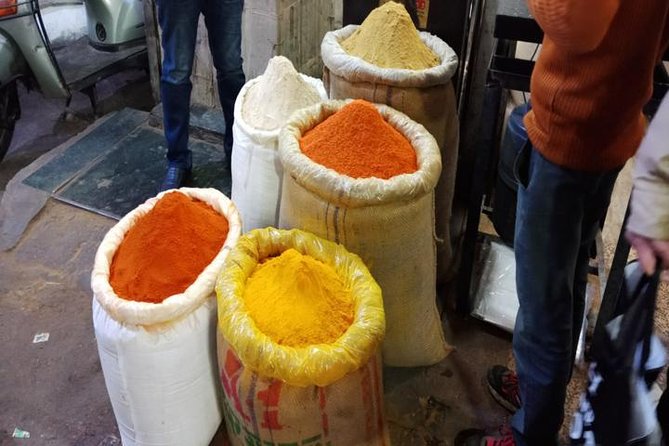
Stop 4 is Khari Baoli, about 30 minutes. This street is known for wholesale grocery and for being Asia’s largest wholesale spice market, selling many types of spices, nuts, herbs, and food products like rice and tea.
This is one of the best value stops on the route because it gives you a behind-the-scenes view of what Old Delhi exports daily. You are not just seeing souvenirs. You are seeing ingredients and supply lines. The guide helps you understand what you are looking at, which makes the spice displays more meaningful than a quick photo.
Why it is worth your time: the market stops help you notice patterns. Some areas feel more like retail browsing, while others function like bulk supply. Khari Baoli is strongly in the wholesale category, which is why it stands out as a working street, not a staged one.
Naughara: a name with a story, even when you only stop briefly

After the big wholesale focus, the tour includes Naughara for about 25 minutes. The name Naughara literally relates to nine homes (nau ghar), though there is a conflicting explanation tied to nine pots of water (nau gharra). Either way, the concept connects to travelers needing water on the go.
This is a smaller, shorter stop, but it is a good example of what makes this tour feel guided rather than just sightseeing. Street names in Old Delhi often act like time capsules. The guide helps you interpret those clues, so even a brief stop can add context to the rest of what you see.
Dariba Kalan: gold-and-silver stalls and Persian-root street names
Stop 6 is Dariba Kalan, with about 30 minutes. This area is known for gold and silver stalls, which makes it a nice contrast to the spice focus earlier in the tour.
The street name has Persian roots. Dariba comes from Dur-e be-baha, a phrase often translated as a pearl of great value or great splendor, and Kalan means big. There is also a smaller nearby street known as Dariba Khurd, sometimes referred to as Chhota Dariba, meaning small.
That naming detail is not trivia for its own sake. It helps you understand the city’s layered identity. Old Delhi is not one culture sealed off from another. You see Mughal-era influence, Persian language echoes, and market life all living side by side.
If you like shopping, this is the part of the day that feels most like jewelry shopping. If you do not plan to buy, it still helps to look because it shows what kinds of trade matter here beyond food and spices.
Guides who manage crowds, keep you safe, and make it make sense
The biggest consistent praise across guides is not just “they know facts.” It is how they manage the day. You are in a place famous for crowds and tight lanes, and the guide’s job is to keep you moving with confidence.
Guides named Tariq, Adeel, and Rahis Kahn show up in the feedback. They are described as professional, with strong English, and good at handling logistics and crowd flow. One theme I really appreciate is that people reported feeling safe and not rushed. That matters. In Old Delhi, you should not feel like you are being dragged through checklists. You want a pace that lets you look up and absorb what you are seeing.
The historical storytelling also seems to hit the sweet spot for newer visitors. Several comments describe the tour as a fast, practical introduction to Old Delhi, not an academic lecture. You get a mix of places that include religious sites such as Jain and Sikh temples in addition to Jama Masjid, and you get tuk tuk or rickshaw rides that help break up the walking.
If you want to maximize your half-day, choose the tour because you trust the guide to do the heavy lifting. The route itself is busy. The guide is what turns it into a coherent experience.
Price and time: is $24 good value for this Old Delhi loop?
At $24 per person, this tour is priced like a budget-friendly guided outing, but it still includes a lot of the expensive parts most independent travelers underestimate.
Here is what you get included:
- A/C vehicle
- Private transportation
- Door-to-door hotel transfer (pickup offered)
- Bottled water
- GST
What is not included:
- Lunch
- Jama Masjid admission ticket
- Camera fees at Jama Mosque
For a 3 to 4 hour half-day, that is strong value if you want structure and minimal stress. You are paying for the guide’s route planning, crowd management, and translation of what you see into something that feels understandable. You are also paying for the comfort and time savings from A/C transit and pickup.
To decide if it is right for you, think about your own travel style:
- If you like guided history and street-level market context, $24 is a bargain.
- If you only want freedom to browse without interpretation, you might feel the guide time is less useful.
- If you plan to visit Jama Masjid anyway, the fact that admission is separate just means you should budget a little extra.
What you should expect at each stop, plus the trade-offs
A 3 to 4 hour itinerary is never going to be slow. The trick is choosing what you want from Old Delhi in limited time, and then letting the guide handle the route.
Here is the stop-by-stop logic, with the trade-offs baked in:
- Jama Masjid (45 minutes): Big monument first, so everything else has context. Trade-off: admission and camera fees are extra.
- Pasar Chandni Chowk (30 minutes): Market shopping energy with spices, dried fruit, silver jewelry, and saris, plus side shops selling things like essential oils. Trade-off: you will need to tolerate crowds.
- Gali Paranthe Wali (15 minutes): Quick hit of the paratha street identity. Trade-off: short stop, more orientation than lingering.
- Khari Baoli (30 minutes): Wholesale spice market and ingredient supply view. Trade-off: less time for wandering at your own pace.
- Naughara (25 minutes): Street-name story about nine homes or nine water pots. Trade-off: smaller, more interpretive than commercial.
- Dariba Kalan (30 minutes): Gold-and-silver stalls and Persian-root naming. Trade-off: plan for a focus on shopping culture.
This is why the tuk tuk and rickshaw support matters. You are not forced to walk the entire loop, and the guide can shift transport based on lane conditions.
Who this tour suits best, and who may want a different plan
This tour is a great match if you:
- Are short on time and want a concentrated Old Delhi hit
- Prefer a guided approach through busy streets
- Want market context, not just landmark photos
- Like the idea of moving between an A/C comfort zone and real street life
You might want a different approach if you:
- Strongly dislike crowded lanes and walking segments
- Want a fully self-directed shopping trip with zero structure
- Do not want any extra ticketing, since Jama Masjid admission is not included
One more practical point: the experience requires good weather. That is not a quirky detail. In Old Delhi, rain can make lanes slick and uncomfortable, so build your schedule around forecast reality.
Should you book this Old Delhi Heritage Walk with tuk tuk rides?
If your goal is to understand Old Delhi fast, with a guide who handles crowd flow and gives you a coherent route, I think this is a smart booking. The small-group cap, the A/C transfers, and the choice to include tuk tuks and rickshaws wherever required all point to a tour designed to fit reality, not just an ideal map.
Book it if you want:
- Jama Masjid plus major market districts in one half day
- A guide-led explanation that helps you connect religious and commercial life
- Included essentials like bottled water, private transport, and pickup
Skip it only if you already know Old Delhi well, hate guided pacing, or you want a long free-form market crawl without a schedule.
FAQ
How long is the Old Delhi heritage walk tour?
It runs about 3 to 4 hours.
What does the tour cost?
The price is $24.00 per person.
Is pickup available from hotels in New Delhi?
Yes. Pickup is offered, with door-to-door hotel transfers included.
How large is the group?
The tour is a small group capped at 15 visitors.
What kind of transportation is used during the tour?
You travel between locations by A/C vehicle, and you also take a tuk tuk ride and rickshaw rides as needed.
What is included in the price?
Bottled water, an air-conditioned vehicle, private transportation, and GST are included.
Is Jama Masjid admission included, and are camera fees covered?
No. Admission tickets for Jama Masjid are not included, and camera fees in the Jama Mosque area are also not included.
Can I get a full refund if plans change?
Yes. You can cancel up to 24 hours before the experience for a full refund. The experience also requires good weather, and if it is canceled due to poor weather, you will be offered a different date or a full refund.
Still in Old Delhi? Keep Going





Recently reviewed across New Delhi
- Golden Triangle – Delhi Agra and Jaipur
★ 5.0 · 10 reviews - Taj Mahal & Agra Tour by Indian Bullet Train All Inclusive
★ 4.5 · 10 reviews - Private Tour in Mehrauli Archaeological Park & Qutub Minar
★ 5.0 · 10 reviews - Old & New Delhi Tour
★ 5.0 · 10 reviews - From Delhi : Taj Mahal & Agra Fort Tour by Luxury Express Train
★ 5.0 · 10 reviews - Delhi Shopping Tour: Top Bazaars, Crafts & Souvenir Finds
★ 5.0 · 10 reviews
Old Delhi and Chandni Chowk Tours, compared.
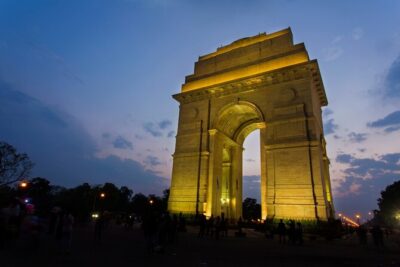
 ★ 5.0Old & New Delhi City Tour – Half or Full Day Options AvailableFrom $384,811 reviews
 ★ 5.0Old & New Delhi City Tour – Choose Half or Full Day ExperienceFrom $384,513 reviews
 ★ 5.0Old & New Delhi Private Tour – Half or Full Day (Rated Excellent)From $202,226 reviews
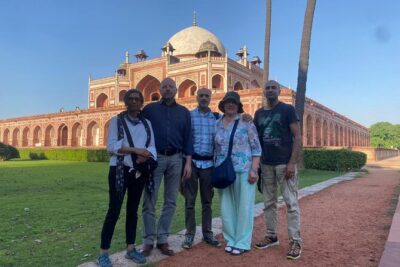 ★ 5.0Old & New Delhi Full or Half Day Sightseeing TourFrom $241,900 reviews
 ★ 5.0Old and New Delhi Guided Full or Half-Day TourFrom $20976 reviews
 ★ 5.0Old & New Delhi Private City Tour – Traveler’s Choice (Top Rated)From $13746 reviews
 ★ 5.0Old Delhi Food, Heritage&Cultural Walk with Rickshaw ride to Masterji Kee HaveliFrom $52742 reviews
 ★ 5.0Full-Day Private Old and New Delhi Combo TourFrom $20625 reviews
Browse the lists this tour appears in