
REVIEW · WALKING TOURS
Agra Walking Tour
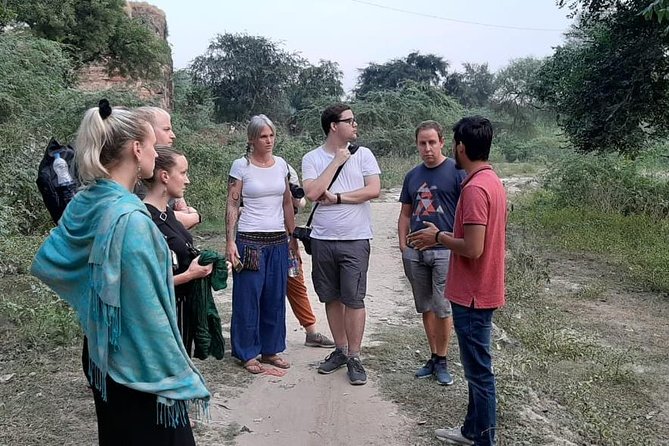
Agra is not just a Taj day. This walking tour strings together Jama Masjid, old markets, and sweet-shop time, with guided stops that feel like you’re reading the city with a flashlight.
I love the private setup, because you get personal attention without the usual shuffle. I also like that transportation is provided, so you spend less energy figuring out how to move and more energy actually looking.
One possible drawback is the pace. This is a compact 2 to 3 hours, so if you want long hangs at every door and corner, you may feel a bit rushed.
In This Review
- Key takeaways before you go
- Why this Agra walk feels different from the usual tour
- Price, duration, and what you really get for about $11
- Pickup and getting oriented quickly
- Stop-by-stop: what to expect and what to watch for
- Jama Masjid, a major mosque and a big first impression
- Shri Mankameshwar Mandir, 650-year-old stories in stone
- Agra Fort Railway Station, British-era architecture and “stories”
- Kinari Bazar, 400 years old and made for slow wandering
- Gopal Das Pethe Wale Johri Bazar, pethe with a local story
- Subash Bazar, where clothes and wholesale energy take over
- The final wander through small places beyond Google
- Guide quality is the real product
- What makes this itinerary worth your time
- Who should book this and who should skip it
- Should you book the Agra Walking Tour?
- FAQ
- How much does the Agra Walking Tour cost?
- How long is the walking tour?
- Is this tour private?
- Does the tour include transportation and pickup?
- What language is the guide?
- Which stops are included in the tour?
- Are admission tickets included?
- What is the cancellation policy?
Key takeaways before you go
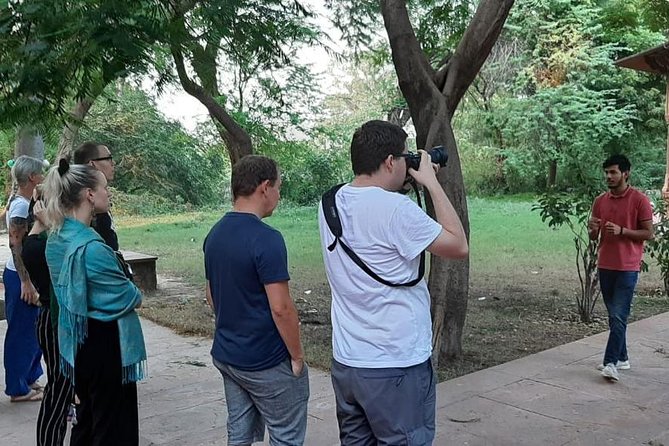
- Private guide, small-world access: You get your own guide for the full walk, not a crowd sweep.
- Taj-adjacent, but not Taj-focused: You see major religious and old-city spots people use, not just postcard hits.
- Short, timed stops: Each stop is around 15 to 25 minutes, so the day stays efficient.
- Markets with real shopping energy: Kinari Bazar and Subash Bazar give you a clear sense of daily life and trade.
- Pethe stop is part of the plan: You get time at a local confectionary shop for Agra’s famous sweet made from white pumpkin.
- Timing matters: Reviews include comments about tour length and late starts, so keep an eye on the schedule and communicate early.
Shortlisting? Every Agra trip below went through the same review.



Why this Agra walk feels different from the usual tour
Most Agra days get boiled down to one thing, the Taj Mahal. This tour does the opposite. It sends you into older lanes and working neighborhoods where the city’s rhythm is easier to feel.
The best part is how the route mixes places of worship with markets. You don’t just see monuments. You see how people move through the city, buy, pray, snack, and talk. The itinerary is built around that mix, with frequent short stops so you’re not stuck on one long stretch of asphalt.
The other win is the guide style that shows up in the experience. In particular, guides like Amit and Ritik come up in the feedback for energy, conversation, and history context. Even if your assigned guide is different, the expectation is the same: keep things lively, explain what you’re looking at, and make it easy to ask questions.
Price, duration, and what you really get for about $11
At about $11, this is one of those prices that feels almost too friendly for a private guide. The value is not just the price tag. It’s what’s folded into it.
Here’s what you should expect included:
- an English speaking local guide
- transportation provided
- a private experience for only your group
- a mix of free entry stops and a couple of stops where admission is included
- a mobile ticket
The tour length is listed as 2 to 3 hours, which is short by design. That can be great if you want a morning or late afternoon activity that doesn’t drain your whole day. It can also be the reason some people feel the walk is a little brief. If you’re the type who likes to linger, you’ll want to manage expectations and ask your guide to prioritize what matters most to you.
Practical note: the experience requires good weather. If weather turns, you may be offered a different date or a full refund.
Pickup and getting oriented quickly
Meeting point is Jama Masjid Agra. The activity ends back at the meeting point, so you’re not left stranded somewhere random far from where you started.
Because transportation is provided and the meeting point is described as near public transportation, you should be able to slot this tour into a normal Agra day without a big hassle. Still, do yourself a favor: show up a little early, especially if you’re pairing this with other plans. One review included a complaint about a late start and a shorter-than-advertised experience, which is usually the kind of issue you can reduce simply by being on time and confirming the exact meeting details with your guide group before you walk off.
- Agra: Taj Mahal & Mausoleum Skip-the-Line Tour with Options★ 4.9 · 456 reviews
- Private Guided Tour of Agra★ 5.0 · 420 reviews
- Taj Mahal, Agra Fort, Baby Taj & Mehtab Bagh Private City Tour★ 5.0 · 391 reviews
- Taj Mahal Skip-the-Line Guided Tour with Optional Add-ons★ 5.0 · 385 reviews
- Agra : Private Sunrise Taj Mahal & Agra City Tour★ 5.0 · 367 reviews
Stop-by-stop: what to expect and what to watch for
Jama Masjid, a major mosque and a big first impression
You start at Jama Masjid, and the scheduled time is about 20 minutes. Admission is listed as free.
This is a strong opener because it sets the tone. Even if you’re not focused on architecture, you’ll notice scale right away. Mosques work differently than temples in how visitors interact with space, so pay attention to what the guide tells you about where to stand and what areas are appropriate to view.
Consideration: some visitors want more time at entrances and details. If that sounds like you, don’t wait. Ask your guide early what you can see inside or right at the doorway, then plan your photos around that answer.
Shri Mankameshwar Mandir, 650-year-old stories in stone
Next is Shri Mankameshwar Mandir, also about 20 minutes, admission free. The temple is described as around 650 years old, with stories inside.
This stop is valuable for a simple reason: it shows Agra beyond Mughal headlines. Temples like this turn the city into a living religious landscape rather than a list of ticketed sites.
In practical terms, temples tend to reward slow looking: carvings, symbols, and small details. Because the schedule is time-boxed, you’ll have to choose a few things to focus on instead of trying to photograph everything. Your guide can help you pick.
Agra Fort Railway Station, British-era architecture and “stories”
Stop 3 is Agra Fort Railway Station, about 20 minutes, with admission included.
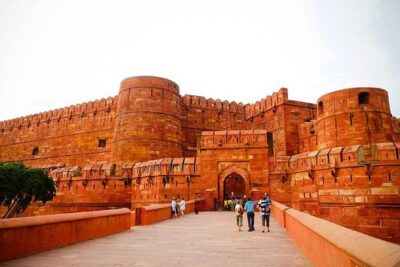
This is one of those places that sounds odd until you’re standing near it. The description points to architecture built by the Britishers, plus the idea of rare design and lots of stories. Even if you just treat it as an urban photo stop, it gives you a different lens on Agra’s past, showing how rail and colonial-era design have shaped the city.
Consideration: if you’re expecting a full museum-like experience, you might be surprised by the short time. This is more of a guided look and context. Think of it as a short chapter, not the whole book.
Kinari Bazar, 400 years old and made for slow wandering
Then you head to Kinari Bazar, around 20 minutes, admission free.
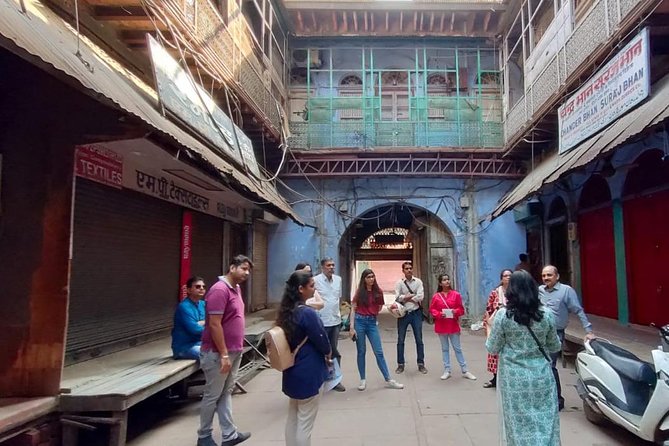
The description calls it about 400 years old and suggests that it feels like time has stopped, capturing the essence of the old city. In my view, that’s exactly the point of including a market in a walking tour. It’s not there for shopping convenience alone. It’s there to show you texture, trades, and how narrow streets carry everyday life.
This is also where you can start to feel the difference between tourist routes and local routes. You’ll likely notice more bargaining, more hand-to-hand transactions, and a lot of fabric and supply talk. If you’re not shopping, that’s fine. Watch the rhythm. Let the guide explain what you’re seeing.
Gopal Das Pethe Wale Johri Bazar, pethe with a local story
Stop 5 is at Gopal Das Pethe Wale Johri Bazar, about 15 minutes, with admission included.
This is your sweet stop for pethe, the famous Agra confection made from white pumpkin. The plan is to check out the shop and get time to sample it, with a story you’re meant to enjoy.
If you like trying local sweets, this is a highlight because it’s short and focused. You get a taste without turning it into a 45-minute food detour. If you do not like sweets, you can still use this moment to learn what pethe is and how locals describe it. Even people who skip eating often find it interesting.
Quick tip: pethe is sweet and filling. If you’re sensitive to heavy sugar, share or take small bites.
Subash Bazar, where clothes and wholesale energy take over
Next is Subash Bazar, around 20 minutes, admission free.
This stop is described as a wholesale market for Indian wear, and the vibe is described as a bit of controlled chaos, the kind of place where you see locals shopping and you feel the momentum of commerce.
This is a great segment if you enjoy people-watching and want to understand local fashion and buying habits. It’s also a good place for questions. Ask your guide what different kinds of fabric or clothing are used for, and you’ll learn more from the conversation than from any signboard.
Consideration: markets can be intense on the senses. If you’re easily overwhelmed by crowds and noise, go into this stop with a plan, short looking, quick questions, and then move on. The schedule keeps it from turning into a long ordeal.
The final wander through small places beyond Google
The last stop is labeled simply as Agra, with about 25 minutes, admission free. The idea is that you’ll explore smaller places where locations are not easily found on Google, and that the stories behind them help you fall a bit in love with the city.
This part is harder to describe, but that’s the point. A walking tour like this saves something flexible for the end, after you’ve already seen the big signals: mosque, temple, train architecture, and bazaars. Once you’ve got that context, the smaller lanes make more sense.
In practice, this segment works best when you stay curious and ask your guide what each side street is connected to. Even if you don’t remember every detail later, you’ll remember the feeling of a real neighborhood.
Guide quality is the real product
You can pay for the route and the sites. But the experience lives or dies on the guide.
Two names show up strongly in the feedback: Amit and Ritik. The tone described in the feedback is energetic, communicative, and confident with local context. One comment also points to hopping on local transport like the metro and short tuk-tuk rides as part of making the route work, which fits the tour’s promise to blend walking with practical movement.
If you get a guide like that, you’ll probably love the pace because it stays active and you never feel stuck with confusion. If you get a guide who follows the clock rigidly without explaining, the compact schedule might feel thin.
My advice: before you start walking, confirm what you care about most. If you want mosque details, mention it right away. If you want maximum bazaar time, say so. A private guide can usually adjust the emphasis.
What makes this itinerary worth your time
This tour earns its place because it gives you a “day in the city” feeling, not a checklist day.
You’re hitting three categories in one go:
- major religious landmarks (Jama Masjid and Shri Mankameshwar Mandir)
- a quirky, less-typical historical stop (Agra Fort Railway Station)
- active local shopping streets (Kinari Bazar and Subash Bazar)
- a signature edible moment (pethe at Johri Bazar)
That mix helps you understand Agra as more than a backdrop. And the short duration means it’s realistic even if you’re also planning something bigger on another day.
Who should book this and who should skip it
Book this if:
- you want a local-side Agra experience beyond the Taj
- you like markets and short, guided stops
- you prefer a private guide
- you want a light 2 to 3 hour plan with transportation handled
Skip or reconsider if:
- you hate crowds and noise, because the market stops can feel intense
- you want deep, slow time at one landmark, because the schedule is compact
- you’re very timing-sensitive, since one feedback note mentioned issues when the guide arrived late
If you’re in Agra for only a couple days, this is a smart “context tour.” It helps the rest of your trip make more sense.
Should you book the Agra Walking Tour?
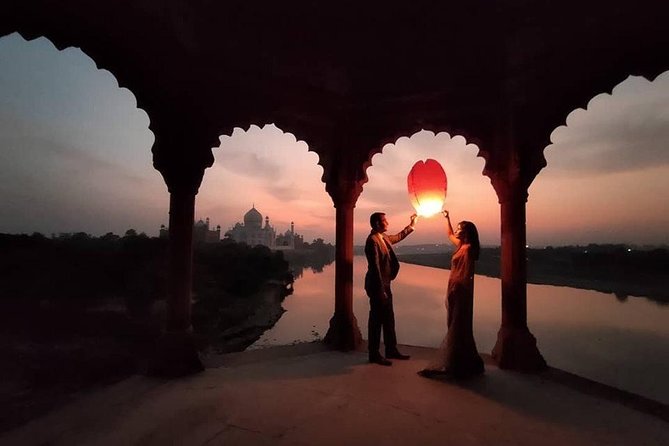
Yes, with one mindset adjustment. Treat it as a quick, guided sampler of old Agra life, not a slow, all-day deep dive.
If you’re okay with short stops, you’ll come away with a better feel for how Agra works on normal days: religious spaces, craft-and-cloth commerce, and that sweet pause for pethe. At about $11 with transportation and a private English speaking guide, the value is hard to beat.
Just show up on time, communicate your priorities early, and you’ll get the most out of every 15 to 25 minute segment.
FAQ
How much does the Agra Walking Tour cost?
The price is listed as $11 (approx.).
How long is the walking tour?
The duration is listed as 2 to 3 hours (approx.).
Is this tour private?
Yes. It is a private tour or activity, and only your group participates.
Does the tour include transportation and pickup?
Transportation will be provided, and pickup is offered.
What language is the guide?
The tour includes an English speaking local of the city.
Which stops are included in the tour?
The planned stops are Jama Masjid, Shri Mankameshwar Mandir, Agra Fort Railway Station, Kinari Bazar, Gopal Das Pethe Wale Johri Bazar (pethe), Subash Bazar, and then more small places in Agra before returning to the meeting point.
Are admission tickets included?
Some stops list admission as free, while Agra Fort Railway Station and Gopal Das Pethe Wale Johri Bazar include admission.
What is the cancellation policy?
You can cancel for a full refund up to 24 hours in advance. The experience requires good weather, and if it is canceled due to poor weather, you’ll be offered a different date or a full refund.
Recently reviewed across Agra
- Agra : Best Evening Street Food & Local Bazar Tour in Agra.
★ 4.5 · 10 reviews - Agra City Cultural Walk
★ 5.0 · 10 reviews - Agra: Taj Mahal and Mausoleum Tour with Skip-the-Line Entry
★ 5.0 · 10 reviews - Skip-the-Line Taj Mahal VIP Entrance Tour
★ 5.0 · 11 reviews - Same Day Agra Tour By Gatimaan Express Train from delhi
★ 5.0 · 11 reviews - Taj Mahal visits with Licensed Guide with Entry Assistance
★ 5.0 · 11 reviews
Walking Tours, compared.
 ★ 5.0Group Guided Walking Tour in Fort and ColabaFrom $161,073 reviews
 ★ 5.0Spiritual City Walking Tour-THE Pushkar RouteFrom $6907 reviews
 ★ 5.0Private Guided Walking Tour in Fort & ColabaFrom $36895 reviews
 ★ 5.0Old Delhi Food, Heritage&Cultural Walk with Rickshaw ride to Masterji Kee HaveliFrom $52742 reviews
 ★ 5.0Breakfast Walk in Old DelhiFrom $80449 reviews
 ★ 5.0Blue City Heritage Private Walking Tour With Pickup and Drop-OffFrom $11441 reviews
 ★ 5.0Delhi Food Walk: Rickshaw Ride, Street Eats & Market TourFrom $40401 reviews
 ★ 5.0Private Guided Walking Tour in Bandra Queen of SuburbsFrom $36383 reviews
Browse the lists this tour appears in