
REVIEW · COOKING CLASSES
Cooking classes @ Aryavilla heritage, Varkala
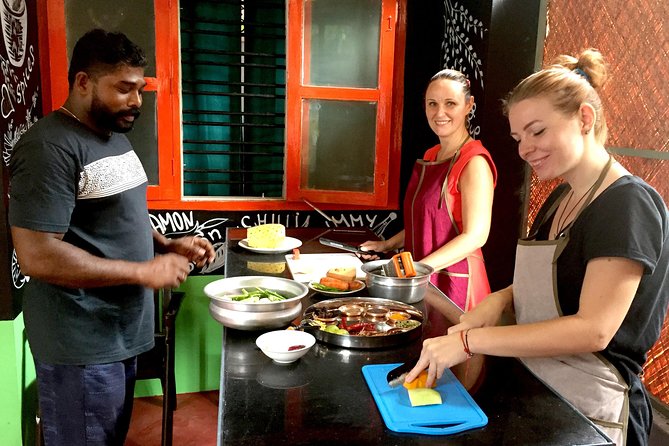
Kerala cooking gets personal fast. In an old Varkala house run by chef Suresh, you learn how flavors work, not just how to follow steps. I love the hands-on spice mix training and the banana-leaf thali lunch that lets you taste what you made right away. The main drawback is time, it is about two hours, so you get a strong start on fundamentals, not a full, weeklong mastery course.
You’ll cook a traditional Kerala lunch with around five dishes, guided from the kitchen basics up to the plate. Expect spice combos, flavor profiling, and classics like sambar, aviyal, and pineapple chutney, plus a traditional dessert at the end.
This class happens in the Aryavilla Heritage setting, in a kitchen that feels airy and open, even while you’re cooking. It stays small, up to 15 people, which helps the session feel friendly and practical, especially for a hands-on lunch format.
In This Review
- Key highlights you’ll actually feel
- Aryavilla Heritage: why the setting matters in Kerala cooking
- Chef Suresh and the pace of a 2-hour lunch class
- Spices, combos, and flavor profiling you can reuse
- Your lunch menu: sambar, aviyal, pineapple chutney and more
- Sambar: learning a lentil-and-vegetable flavor engine
- Aviyal: the practice of mixed textures and Kerala balance
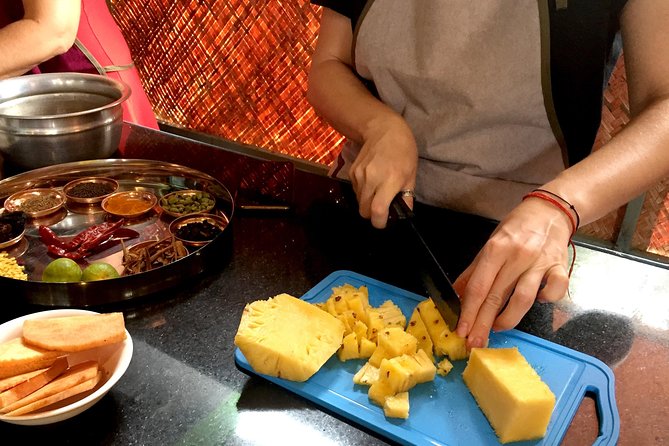
- Pineapple chutney: sweetness, tang, and bite
- The extra dishes that complete the plate
- Banana-leaf thali lunch: eating the way the class teaches you
- Price and value for a Kerala cooking class in Varkala
- Practical tips before you go to Aryavilla Heritage
- Should you book this cooking class in Varkala?
- FAQ
- How long is the Aryavilla heritage cooking class?
- Where do I meet for the class?
- What time does the class run?
- How many dishes will we cook?
- What foods are included in the meal?
- How large is the group?
- Is there a mobile ticket?
- Who teaches the class?
- Can I cancel and get a refund?
Key highlights you’ll actually feel
- Chef Suresh teaching the why, not just the how behind Kerala flavors and spice combos
- Around five dishes in about two hours, including sambar, aviyal, and pineapple chutney
- Banana-leaf thali lunch where your food lands on the table fast
- Old Varkala house kitchen setup, with open sides for airflow, good for comfort
- Recipes included, so you can rebuild what you learn later
- Small group size (max 15) for better interaction and a calmer pace
Shortlisting? Every Trivandrum trip below went through the same review.



Aryavilla Heritage: why the setting matters in Kerala cooking
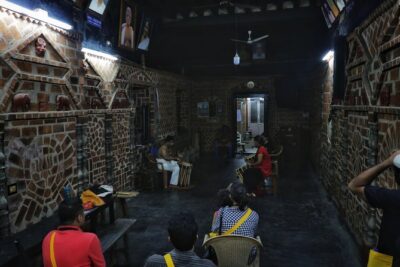
One reason I like this kind of cooking class in Kerala is that the food is tied to the home kitchen rhythm. Here you’re welcomed into an old Varkala house at Aryavilla Heritage, at the Vaishakom Building near Helipad Cliff. That matters because Kerala cooking is not only technique, it’s also ingredients, timing, and how spices behave when they hit hot oil, steam, and simmer.
The kitchen design also makes a difference. In reviews, people call out an open, well-designed setup with sides that let in air. If you’ve ever cooked in a hot enclosed space, you know how quickly it can turn into a sweaty stress test. This kind of open-sided kitchen makes it easier to focus on what you’re doing, and it also makes the class more comfortable when the weather is warm.
You’re not stuck doing everything at a distant counter while watching someone else. The point is that you’re part of the cook line. You learn by doing, and the home setting helps it feel less like a demonstration and more like a real meal being made.
Chef Suresh and the pace of a 2-hour lunch class
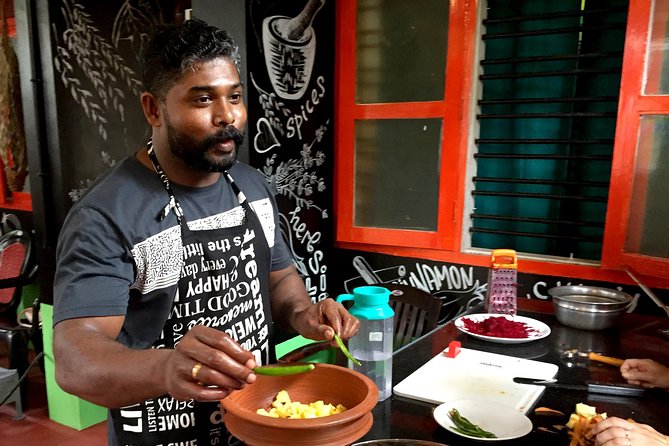
Chef Suresh runs the class, and the format is built around a lunchtime cooking cycle. The session window is 11:00 AM to 1:00 PM, and the class itself is about 2 hours. For me, that’s a smart time target on a travel day. It’s long enough to learn real steps, but it’s short enough that you’re still able to plan the rest of your afternoon in Varkala.
It’s also small group by design, with a maximum of 15 travelers. That size is big enough that you don’t feel awkward, but small enough that you’re not lost in the crowd. When you’re learning spice combinations, questions come fast, like how much to add, when to add it, and what to do if the flavor is too sharp or too flat.
In practical terms, you’ll be cooking while the class moves forward as a unit. So don’t plan to chat your way through the whole thing. If you’re the kind of person who learns best by stirring, tasting, and adjusting, you’ll do well here. If you want a slow, hands-on experience where you stay in one dish for a long time, this isn’t built for that.
Spices, combos, and flavor profiling you can reuse
The core of the lesson is not a list of recipes. It’s the building blocks. You’ll learn basic spice combinations and how to think about flavor profiles, which is exactly what makes Kerala food easier to replicate after your trip.
Here’s what that kind of training does for you as a traveler. When you later eat sambar or chutneys out in town, you stop guessing and start noticing patterns. You start to recognize what sour and spice are doing together. You see how coconut changes the texture and softens the edge of heat. You understand that some flavors are meant to be punchy on day one, while others mellow when rested.
In a lot of cooking classes, the end result is a plate that tastes good, but you don’t know why. Here, the emphasis is on the flavor logic. That’s why people finish the class feeling like they learned the fundamentals, not just a one-time cooking performance.
Also, Kerala cooking often depends on small additions. A pinch of spice at the right moment can change the entire direction of a dish. You’ll practice that kind of timing while working on your dishes, which is more valuable than memorizing measurements that might vary by brand and kitchen.
- Day trip to Kanyakumari beach and Padmanabhapuram palace★ 4.5 · 21 reviews
- Best of the Trivandrum (Guided Half Day City Tour by Car)★ 5.0 · 11 reviews
- Kanyakumari Day Package★ 4.0 · 10 reviews
Your lunch menu: sambar, aviyal, pineapple chutney and more
The class cooks around five dishes for a traditional Kerala lunch. The named highlights you’ll run into include sambar, aviyal, and pineapple chutney. You’ll also work on additional components to complete the meal spread, including the usual sides and additions that turn it into a full lunch rather than a single dish experience.
Let’s talk about what these teach you.
Sambar: learning a lentil-and-vegetable flavor engine
Sambar is a classic Kerala staple built around lentils and vegetables with spice and seasoning. Cooking it in a class is useful because it teaches you the rhythm of a simmered base. Lentils need time and patience, and the flavors develop as the dish thickens and the vegetables soften.
When you cook sambar yourself, you learn what balance feels like. Too much heat overpowers. Too little spice makes it flat. The goal is a warm, layered profile where the spice supports the lentils instead of sitting on top of them.
Aviyal: the practice of mixed textures and Kerala balance
Aviyal is another signature dish, and it’s the kind of food where texture matters. If you’ve ever eaten it and wondered why it tastes so smooth and comforting while still feeling vegetable-rich, cooking it is how you understand that balance.
In a class setting, you’re not just making aviyal, you’re learning how ingredients and cooking style work together. That’s a great skill for future meals at restaurants, because you’ll be able to judge how different versions are made.
Pineapple chutney: sweetness, tang, and bite
Pineapple chutney is where you see Kerala flavor contrasts in action. Sweetness from fruit, tang, and spicy seasoning usually show up quickly in chutney. It teaches you how quickly flavors can shift and why tasting matters. You can think of chutney as a tool: it can brighten a plate, cut through richness, and give you something to reset your palate.
The extra dishes that complete the plate
Since the class is around five dishes total, you’ll get more than just the three named highlights. The format is designed to land you with a rounded lunch, including rice and other additions served alongside what you cooked. That means you’ll taste the set as a whole, not as separate experiments.
Banana-leaf thali lunch: eating the way the class teaches you
After the cooking session, you all sit down for lunch, and the food is served “thali” style. That means you’re eating as a unit, with dishes laid out together on a round platter, typically with banana leaves involved in the serving.
This part is practical, not just ceremonial. Banana leaves are used in Kerala cooking traditions for serving, and they help keep food tasting fresh while creating a natural, pleasant way to portion. The class setting makes it easier to remember what you cooked, because you’re not eating hours later. You’re tasting while the learning is still in your hands.
The meal includes rice, the dishes you prepared, plus additional items, and a traditional dessert at the end. From a travel value standpoint, that is big. Many cooking classes turn into a snack and a small tasting. Here, you get a real lunch structure, so you’re not stuck paying for lunch separately later.
Also, you get recipes. People highlight this in reviews, and I think that’s important. If you want to bring the lesson home, a recipe gives you a starting point. Technique gives you the confidence to adjust. In combination, you end up with something that can work in your own kitchen instead of becoming a memory only.
Price and value for a Kerala cooking class in Varkala
At $36.31 per person, this is priced like a true experience, not a casual demo. You are paying for two things that are hard to replicate on your own: expert guidance on spice combos and flavor profiling, and the full meal result you help create.
Let’s break down the value logic. You get about two hours of guided hands-on cooking, a small-group format capped at 15 people, multiple dishes (around five), and lunch served with rice and dessert included. That usually means you’re not paying extra for food the way you might at other workshops.
Is it cheap? No. But in places like Varkala where you’re paying for guides and activities, it feels like a fair deal because the class ends with the product. You don’t just learn, you eat. If you’ve been spending your vacation eating your way through South India, this class lets you understand what you were tasting, which can make the rest of the trip more satisfying.
One more value point: because it focuses on spice combinations and flavor profiles, you get usable skills, not only dishes. That skill transfer is what helps this feel worth it even if you don’t cook often at home.
Practical tips before you go to Aryavilla Heritage
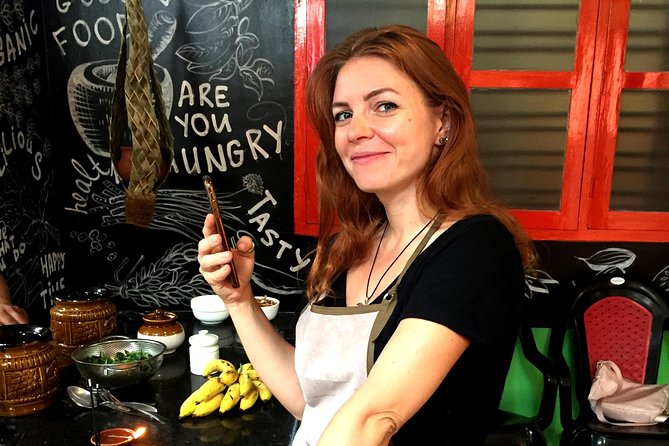
A few things will make your visit smoother.
First, plan around the class time window, 11:00 AM to 1:00 PM. It’s a lunch-time experience, and the pacing assumes you’ll be ready to cook right at the start.
Second, bring your own curiosity, and expect to taste and adjust. Kerala cooking is built on balance, and part of the learning is learning your way to that balance by tasting.
Third, know your meeting point: Aryavilla Heritage, Vaishakom Building, Helipad Cliff, PPP3+MJW, Varkala, Kerala 695141, India. Having the exact address helps, because Varkala has a few clusters of hotels and activity zones.
Fourth, it’s near public transportation, so you should be able to reach it without stress if you’re already moving around Varkala. You also get a mobile ticket, which means you should be able to show up without needing paper.
Finally, if you visit in off season, you might get a more exclusive feel, based on how the class can run. That’s a nice bonus if your dates line up with lighter demand.
Should you book this cooking class in Varkala?
I’d book this if you want hands-on Kerala cooking from a local chef, especially if you’re the type who enjoys learning how flavors work. The combination of cooking around five dishes, then eating your banana-leaf thali lunch right after, makes it easy to connect the lesson to a real taste memory.
I’d think twice if you’re looking for a long, deep technical course. This is a focused 2-hour lunch workshop. You’ll get strong basics and good recipes, but you won’t leave with everything you’d need to open a restaurant kitchen.
One last decision check: if you’re in Varkala and you already love Indian food, this is a practical way to understand the spices you’ve been tasting. And if you’ve felt confused by Kerala cuisine before, the focus on spice combos and flavor profiling can turn confusion into confidence fast.
FAQ
How long is the Aryavilla heritage cooking class?
It lasts about 2 hours.
Where do I meet for the class?
You meet at Aryavilla Heritage, Vaishakom Building, Helipad Cliff, PPP3+MJW, Varkala, Kerala 695141, India.
What time does the class run?
It runs daily in the 11:00 AM to 1:00 PM window.
How many dishes will we cook?
You will cook around five dishes for a traditional Kerala lunch.
What foods are included in the meal?
Lunch includes rice, the dishes you prepared, additional items, and a traditional dessert.
How large is the group?
The class has a maximum of 15 travelers.
Is there a mobile ticket?
Yes, the activity uses a mobile ticket.
Who teaches the class?
A cooking class host named Suresh teaches.
Can I cancel and get a refund?
Yes, you can cancel for a full refund up to 24 hours in advance of the experience start time. Free cancellation is available up to 24 hours before local start time.
Recently reviewed across Trivandrum
- Best of the Trivandrum (Guided Half Day City Tour by Car)
★ 5.0 · 11 reviews - Cooking classes @ Aryavilla heritage, Varkala
★ 5.0 · 20 reviews - Private Kingdom of Gods Trail Walking Tour
★ 5.0 · 21 reviews - Day trip to Kanyakumari beach and Padmanabhapuram palace
★ 4.5 · 21 reviews - Trivandrum Walk of Divinity (2 Hours Guided Walk)
★ 4.5 · 24 reviews - Heritage & Cultural Walk of Trivandrum 2 Hour Guided Walking Tour
★ 4.5 · 29 reviews
Cooking Classes, compared.
 ★ 5.0Pink City Cooking ClassFrom $27452 reviews
 ★ 5.0Five Course Cooking Class & MealFrom $60250 reviews
 ★ 5.0Veg and Non veg : Private Cooking Class in Delhi home (7 meal)From $47226 reviews
 ★ 5.0Indian Cooking Class in an Authentic Local Home – Learn 6 DishesFrom $50195 reviews
 ★ 5.0Durga Cooking ClassFrom $15159 reviews
 ★ 5.0Private Guided Cooking Workshop Experience in JodhphurFrom $36158 reviews
 ★ 5.0Jaipur Market Tour & Vegetarian Rajasthani Home Cooking ClassFrom $60113 reviews
 ★ 5.0Cooking Class in Jaipur – Family Experience with Meal & TransportFrom $29101 reviews
Browse the lists this tour appears in