
REVIEW · HISTORICAL TOURS
Heritage & Cultural Walk of Trivandrum 2 Hour Guided Walking Tour
Two hours can change how you see Trivandrum. This heritage walking tour links Kanakakunnu Palace to markets and museums with a guide who shares the stories you usually miss. Expect a structured route that teaches the city’s architecture and culture as you walk.
I love the English and Hindi storyteller guide, because the commentary turns each landmark into something you can actually picture. I also like that you get local tips for where to eat, shop, and save money, plus access to lanes that make Trivandrum feel lived-in.
One thing to keep in mind: at about 2 hours, you cover a lot of stops, so comfy shoes matter and the pace can feel more like moving between sights than wandering for long stretches.
In This Review
- Key highlights before you go
- What this Trivandrum heritage walk is really good at
- Start at Kanakakunnu Palace, end at the Secretariat
- Kanakakunnu Palace flag: your first landmark and instant orientation
- Napier Museum: 19th-century artifacts that feel specific, not generic
- Keralam Museum and Mateer Memorial Church: culture through institutions
- Rama Rao Lamp, old Kerala houses, the state library, and an old university
- Cathedral stop: Latin Rite church built 150 years ago
- Connemara Market: the oldest market, with an arched entrance and street vendors
- The guides make the difference, and you can ask a lot of questions
- Food and shopping pointers you can use right away
- Price and value: why $11.35 makes sense
- Timing, walking comfort, and what to bring
- Who should book this tour, and who should skip it
- Should you book Heritage & Cultural Walk of Trivandrum?
- FAQ
- How long is the Heritage & Cultural Walk of Trivandrum?
- Where does the tour start and end?
- Is the tour guided, and what languages are offered?
- What is included in the price?
- Is hotel pickup or bottled water provided?
- What if the weather is bad?
Key highlights before you go
- A small-group or private option that keeps the walk personal enough to ask questions.
- Kanakakunnu Palace as your orientation point, starting with the tallest national flag in India.
- Napier Museum’s 19th-century mix of art and natural history, with standout artifacts like bronze idols and ivory carvings.
- A route through institutions and worship places, from museums and churches to the state library and cathedral.
- Connemara Market at the end, useful for turning sightseeing into real shopping and snack plans (snacks are not included).
- Guides who stay engaged, including names like Suresh, Gokul, Vijay, Biju, Naveen, Siddharth, and Hareesh.
Shortlisting? Every Trivandrum trip below went through the same review.

What this Trivandrum heritage walk is really good at
This is a walking tour designed for people who want more than a quick sightseeing checklist. In just about 2 hours, you get a sequence of major landmarks, plus the kind of context that helps you read the city as you move through it. You are not just looking at buildings, you are learning how Trivandrum thinks, worships, learns, and trades.
The price is $11.35 per person, which is where the value comes in. For that cost, you get a trained guide, English and Hindi commentary, and practical city pointers for food and shopping. You also get access to lanes and places you might not target on your own. This is the sort of tour I’d book early in a trip because it helps you plan the rest of your days.
Two quick realities to consider. First, it is a walk, so you need to expect street-level movement and uneven pacing. Second, bottled water and snacks are not included, so if you tend to snack while walking, you will want to carry something or stop nearby.
Start at Kanakakunnu Palace, end at the Secretariat
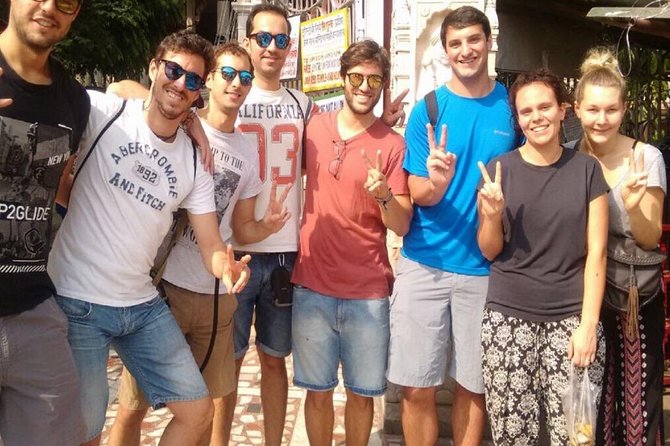
Your tour meets at the Kanakakunnu Flag Post at Kanakakunnu Palace Road in Kanaka Nagar, Nanthancodu (GX65+334). The end point is the Kerala Government Secretariat, Main Block, near the Statue at Palayam in central Trivandrum.
That start-to-finish setup is more than just a logistics detail. Kanakakunnu gives you a strong visual “anchor” at the beginning. The finish near the Secretariat places you close to a major civic area, which can make it easier to connect to other plans afterward. And since the tour is listed as being near public transportation, you are not forced into a car-first day.
One more thing I like: the route sounds purpose-built. It avoids the common problem of doing a tour where you spend half your time lost between far-apart attractions. Here, the sights are connected into a logical loop that mostly makes sense as you go.
Kanakakunnu Palace flag: your first landmark and instant orientation
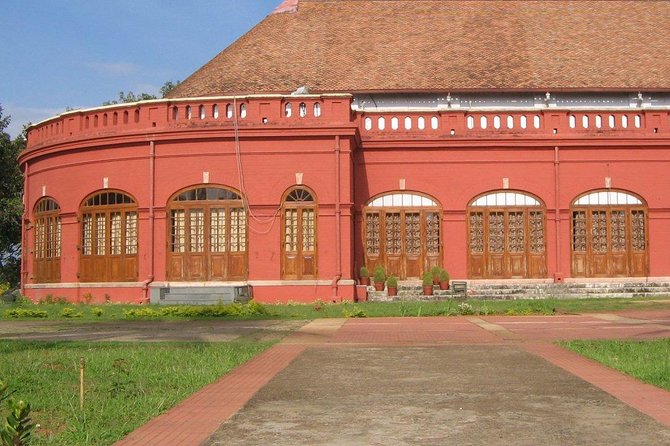
The tour begins with a stop at the tallest national flag in India flying at Kanakakunnu Palace. Even if you do not know much about the palace area, the flag itself gives you a clear, easy-to-spot reference point.
This is a good opening because it helps you settle in right away. Your guide can orient you about what you are seeing and how the city’s power, ceremonies, and public spaces connect. You also set a baseline for what comes next: museums, old houses, institutions, and worship places that reflect Trivandrum’s layered identity.
If you like photo stops, this is an excellent early one. If you prefer to move fast, you still get something useful out of it: context.
- Day trip to Kanyakumari beach and Padmanabhapuram palace★ 4.5 · 21 reviews
- Best of the Trivandrum (Guided Half Day City Tour by Car)★ 5.0 · 11 reviews
- Kanyakumari Day Package★ 4.0 · 10 reviews
Napier Museum: 19th-century artifacts that feel specific, not generic
Next up is Napier Museum, described as an art and natural history museum built in the 19th century. The stop is about more than a building. The highlights include historical artifacts such as bronze idols, ancient ornaments, a temple chariot, and ivory carvings.
This kind of lineup can be hit-or-miss on a self-guided visit. On a guided walk, the real advantage is that your storyteller can connect the dots. Instead of you seeing a collection and wondering what matters most, you get a sense of what to notice and why it was collected and preserved.
What I’d watch for here is your guide’s pacing. With a 2-hour tour, there is limited time for heavy museum study. Still, a strong guide can make a short stop feel meaningful by pointing out a few key objects and explaining what they reveal about daily life, belief, craft, and trade.
Possible drawback: if your goal is a deep museum experience with lots of time inside, this tour might feel like a “preview,” not a replacement for a full museum visit. Think of it as an introduction that tells you what to come back for.
Keralam Museum and Mateer Memorial Church: culture through institutions
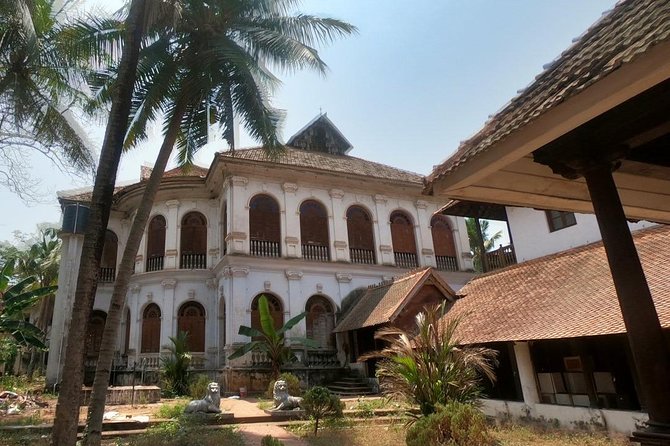
The itinerary then includes Keralam, Museum of History and Heritage, along with Mateer Memorial Church.
Keralam is your chance to understand regional identity in a more organized way. The word heritage is often used loosely in travel marketing, but in this context, you can expect the museum to function like a framework for how Trivandrum’s past gets explained: through objects, displays, and the kinds of stories a city chooses to pass on.
Then you shift to Mateer Memorial Church, which adds another layer: architecture and faith in the same walking day. Trivandrum is not only about palaces and museums. It is also about how different communities built landmarks that remain central to local life.
If you like seeing how different traditions sit side by side in one city, this pairing is a smart use of time.
Rama Rao Lamp, old Kerala houses, the state library, and an old university
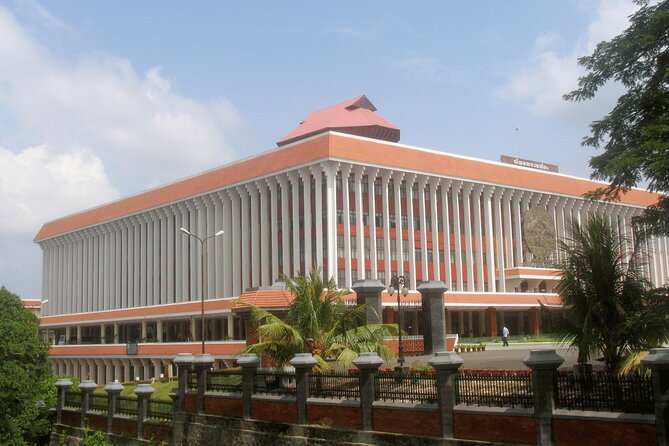
After that, you get a set of stops that are ideal for people who like texture. The tour includes the Rama Rao Lamp, old houses of Kerala, the state library, and an old university.
This stretch is where you start to feel the city’s everyday brain. Lamps, house styles, and institutions sound small compared to palaces and big museums, but that is exactly why they matter. They show what people built for learning, gathering, and living.
I particularly like when a guide points out how traditional homes relate to climate, community life, and neighborhood layout. Even if you never become an architecture nerd, you start to notice patterns: what gets built close together, how streets feel, and why certain landmarks keep pulling people into the same areas.
One practical tip: this is a good time to ask your guide what to look for on your own next day. A good answer can save hours of trial-and-error.
Cathedral stop: Latin Rite church built 150 years ago
The tour also visits an Roman Catholic Latin Rite cathedral of the Archdiocese of Trivandrum, built 150 years ago.
Cathedrals can become photo stops if you do not know what to look for. With a guide, the difference is that you get historical framing and architectural context in the time you have. Even a short stop can be valuable if your storyteller connects the building to the city’s religious timeline and how communities established long-lasting landmarks.
This is also a nice rhythm shift. After museums and institutions, you return to the human scale of places of worship. If you are comfortable around active religious sites, you’ll likely find this portion gives the walk warmth, not just facts.
Connemara Market: the oldest market, with an arched entrance and street vendors
Your final stop is the oldest Connemara Market, noted for its arched entrance and its variety of items sold by street vendors.
This ending is practical. Sightseeing without any spending or sampling can feel incomplete. Markets make the tour useful, not just educational. You can translate what you learned into action: bargaining instincts, what goods are worth checking out, and where to look for everyday items you might not find in major malls.
Even if you do not plan to buy, markets teach you how a city trades. You notice what people carry home, what gets displayed outside, and what feels like local routine.
If you tend to love browsing, this is where the walk can become more fun than “work.” And since snacks are not included, you can use this part to turn curiosity into a real stop for food nearby.
The guides make the difference, and you can ask a lot of questions
The tour includes a highly trained, friendly storyteller guide who can speak English and Hindi. That language coverage matters, because it gives you freedom to ask follow-up questions instead of just hearing a script.
A few guide names stand out from recent experiences: Suresh and Sureshkumar for detailed explanations and patient pacing, Gokul for local, resident-style perspective and help finding a quiet coffee place, Vijay for a clear intro to the sights and history, Biju for excellent English and taking time for questions, Naveen for friendliness and sharp explanation, Siddharth for competence and kindness, and Hareesh for a professional, fun approach.
Also, pay attention to this practical detail: the tour can be small enough that you might end up with almost one-on-one time. That is a big advantage if you want your route tailored slightly or you prefer more conversation and fewer people blocking the view.
If you want to maximize value, come with 2 or 3 questions. For example: what is worth revisiting tomorrow, what area is best for street food, or what museum should not be skipped if you only have one day.
Food and shopping pointers you can use right away
One of the most underrated parts of a walking tour is the “what to do next” layer. Here, your guide includes great local tips and recommendations to save money and explore the best of the city.
Because bottled water and snacks are not included, these recommendations can also help you avoid wasting time later. Ask your guide where to eat nearby that matches your budget. Ask where locals shop for the kind of items you like to bring home. Ask for one or two places to revisit after the walk ends at the Secretariat.
Even a short tour becomes more valuable when you leave with a practical plan for dinner or for a quick browse route the rest of your trip.
Price and value: why $11.35 makes sense
At $11.35 per person, this tour sits in the “starter dose” category. You are paying for guidance, storytelling, and a curated route across key parts of Trivandrum, including museums, houses, churches, and a major market.
You are also getting value from what is not included. Because there is no hotel pickup, it is designed for you to meet at a landmark and walk from there. That typically keeps costs down. And since no water or snacks are provided, you are free to choose what fits your tastes.
If you want a private experience, the option exists, but the public price you see here is for the standard walk. For most visitors, that shared, timed, guided format is the sweet spot.
Timing, walking comfort, and what to bring
The tour lasts about 2 hours. It runs only when conditions are good, because the experience is listed as requiring good weather. That means if you are booking around rainy season or monsoon days, you should be ready to shift plans.
What to bring is simple:
- Comfortable shoes you can walk in for a couple of hours.
- A personal water bottle, since bottled water is not included.
- A small plan for food, since snacks are not included.
The tour is listed as being near public transportation, so even if you are not starting from a hotel nearby, you should still be able to reach the meeting point without a big detour.
Who should book this tour, and who should skip it
This is a great fit if:
- you are new to Trivandrum and want to get your bearings fast.
- you like cities where history and everyday life share the same streets.
- you want an organized introduction that points you toward food and shopping options.
You might want to think twice if:
- you want a long, slow neighborhood wander with minimal movement.
- you plan to spend lots of time inside museums and churches, rather than getting guided context and moving on.
- you dislike walking between scattered stops in a tight time window.
One more nuance: the tour is built around major landmarks and institutions. That is its strength. It can also mean the walk sometimes prioritizes reach over drifting.
Should you book Heritage & Cultural Walk of Trivandrum?
Yes, if you want a smart first pass through Trivandrum for $11.35 and you like learning with a guide who can speak English and Hindi. The route makes practical sense, and the guide role is central, not optional. You end near the Secretariat, which can help you continue your day easily.
I’d book it early in your trip, then pick one or two stops you want to revisit on your own at a slower pace. If you love structure, stories, and a clear set of places to see, this is an efficient way to understand the city rather than just pass through it.
FAQ
How long is the Heritage & Cultural Walk of Trivandrum?
It lasts about 2 hours.
Where does the tour start and end?
It starts at the Kanakakunnu Flag Post at Kanakakunnu Palace Road and ends at the Kerala Government Secretariat, Main Block near the Statue at Palayam.
Is the tour guided, and what languages are offered?
Yes. The included guide is a friendly storyteller who can speak English and Hindi.
What is included in the price?
The tour includes the guide, storytelling, local tips and recommendations, and access to hidden lanes and places.
Is hotel pickup or bottled water provided?
No. Hotel pickup and drop are not included, and bottled water and snacks are not included.
What if the weather is bad?
The tour requires good weather. If it is canceled due to poor weather, you will be offered a different date or a full refund.
Recently reviewed across Trivandrum
- Best of the Trivandrum (Guided Half Day City Tour by Car)
★ 5.0 · 11 reviews - Cooking classes @ Aryavilla heritage, Varkala
★ 5.0 · 20 reviews - Private Kingdom of Gods Trail Walking Tour
★ 5.0 · 21 reviews - Day trip to Kanyakumari beach and Padmanabhapuram palace
★ 4.5 · 21 reviews - Trivandrum Walk of Divinity (2 Hours Guided Walk)
★ 4.5 · 24 reviews - Heritage & Cultural Walk of Trivandrum 2 Hour Guided Walking Tour
★ 4.5 · 29 reviews
Historical Tours, compared.
 ★ 5.0Old Delhi Food, Heritage&Cultural Walk with Rickshaw ride to Masterji Kee HaveliFrom $52742 reviews
 ★ 5.0Blue City Heritage Private Walking Tour With Pickup and Drop-OffFrom $11441 reviews
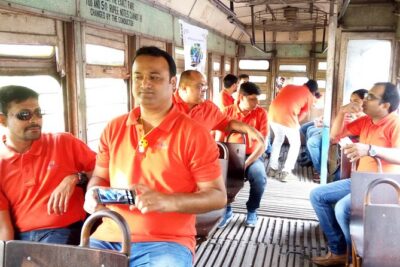 ★ 4.0Kolkata Heritage Tram TourFrom $60395 reviews
 ★ 5.0Private Heritage Walking Tour in Jaisalmer Fort and Old BazaarFrom $10306 reviews
 ★ 4.8Panaji: Heritage Walk through Goa’s Latin QuarterFrom $12291 reviews
 ★ 5.0Old Delhi Heritage Walking TourFrom $13247 reviews
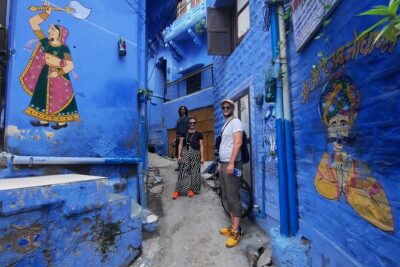 ★ 5.0Jodhpur Blue City Heritage Walking Guided TourFrom $13240 reviews
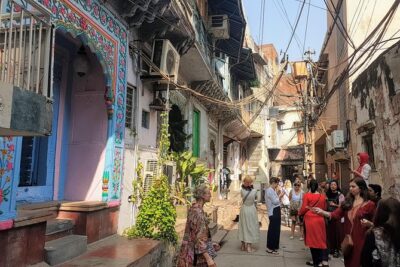 ★ 5.03-hour Old Delhi Heritage Walking tour with Rickshaw RideFrom $7240 reviews
Browse the lists this tour appears in