
REVIEW · VARANASI GHATS AND GANGA AARTI
Cultural & Spiritual Trails of Old Town Varanasi Guided Walking Tour
One walk can explain a city that feels endless. This guided route links ghats and old lanes with clear stories about faith, ritual, and daily life. I especially like the chance to ask questions as you go, and how the walk helps you see major sacred places without getting lost. One drawback to consider: if you do not want any shopping-style stops, set that expectation early, since at least one participant mentioned being taken toward a silk shop.
If you are a mobile traveler and want a quick orientation, this works well. The tour runs about 2 hours and is capped at 20 people, so you still get interaction instead of a lecture with no room to breathe. The route is outdoors, so comfort depends on weather and your willingness to move at a walking pace.
In This Review
- Key things you will notice on this Old Town Varanasi walk
- Meeting at St. Thomas Church and How a 2-Hour Walk Shapes Your Day
- Why the Ghats First: Dasashwamedh Ghat Sets the Tone Fast
- Manikarnika Ghat and Moksha: Learning Without Looking Away
- A Quick Shift From Riverfront to Devotion: Shiva Temple on the Route
- The Wooden Temple (Mini Khajuraho): Nepali-Style Architecture in Stone City Space
- Narrow Lanes, Old Markets, and Photogenic Temples You Can Actually Explain
- Guide Quality: The Real Reason This Tour Gets High Ratings
- Price and Value: What $11.17 Buys You in Varanasi
- Who This Walking Tour Fits Best
- Should You Book This Old Town Varanasi Guided Walk?
- FAQ
- How long is the Cultural and Spiritual Trails of Old Town Varanasi walking tour?
- Where does the tour start and end?
- What are the main stops on the tour?
- Is food or hotel pickup included?
- Is there an admission ticket cost?
- How big is the group?
- What languages does the guide speak?
- What is the cancellation policy?
Key things you will notice on this Old Town Varanasi walk
- Dasashwamedh Ghat as the action center, with context around the Ganga aarti held every evening
- Manikarnika Ghat and the idea of Moksha, explained in the setting of cremation rites
- A pass by a major Shiva temple, so you understand how devotion shows up in everyday space
- The Wooden Temple (Mini Khajuraho), described through its Nepali-style architecture
- Narrow lanes, older buildings, and old markets, giving you a sense of Kashi beyond the riverfront
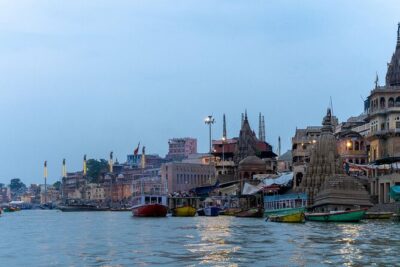
More time on the Varanasi ghats
Meeting at St. Thomas Church and How a 2-Hour Walk Shapes Your Day
This tour starts at St. Thomas Church on Luxa Road, in the Luxmanpura area, and it ends back at the same meeting point. That matters in Varanasi because the city can feel like it folds in on itself, and having a clean start and finish keeps your day simple.
Expect a walking route through ghats and nearby lanes rather than a long vehicle hop. That is great if you want to see the texture of Old Town, and it also means you should wear shoes you trust on uneven ground. Bring water, even though food and drinks are not included.
With a group size capped at 20, you are less likely to get shuffled along and more likely to get real answers. And because the guide speaks English and Hindi, you can ask follow-up questions without translating everything in your head.
Why the Ghats First: Dasashwamedh Ghat Sets the Tone Fast
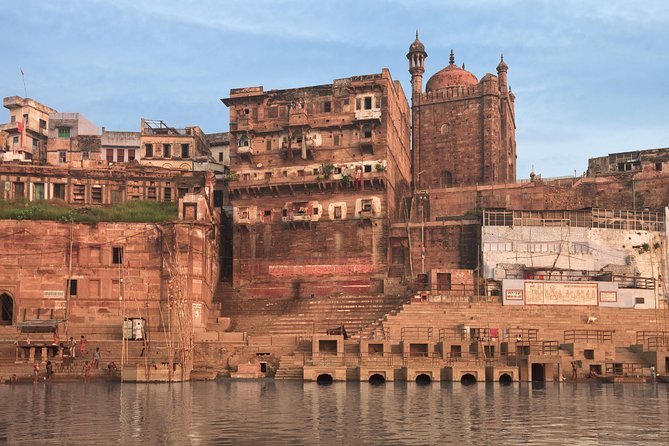
The walk kicks off at Dashashwamedh Ghat, described as the oldest and holiest ghat and the heart of the action. This is the kind of place where Varanasi stops being a set of photos and becomes a living rhythm.
You will get a guided look at the ghats of Kashi, with stories tied to how energy, belief, and daily life connect along the river. One practical payoff of a guide here is that you learn what you are actually seeing, instead of just witnessing crowds and smoke without context.
A key detail: the famous Ganga aarti happens every evening at Dashashwamedh Ghat. Even if you are not arriving at exactly that moment, the guide’s framing helps you understand why the timing, movement, and devotion matter so much here.
Manikarnika Ghat and Moksha: Learning Without Looking Away
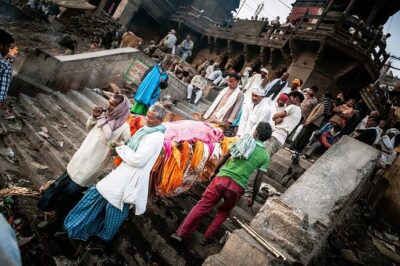
Next up is Manikarnika Ghat, often called the holiest sacred riverfront alongside the Ganga. The tour focuses on the spiritual belief that when a dead human is cremated here, the soul finds salvation, known as Moksha.
This stop is powerful, and it is also sensitive. If you are someone who gets uncomfortable around cremation rituals, you should know this is part of the experience and you will be walking through that reality with guidance.
The value of a storyteller guide here is not just facts. It is how the explanation is delivered, how you are encouraged to make sense of it, and how you can ask questions in the moment rather than processing everything later with Google.
Also note the setting can be intense depending on the time of day and what is happening at the ghats. If you prefer gentler pacing, take a breath, ask your guide to slow down, and remember that understanding often requires patience.
- The Ultimate 1 Day in Varanasi – How to Spend 13 Hours – Private Guided Tour★ 5.0 · 295 reviews
- A Journey of A lifetime★ 5.0 · 272 reviews
- Varanasi: Hidden Secrets of Vibrant Tradition (Guided Tour)★ 4.9 · 176 reviews
- Private Heritage and Spiritual Walk Tour – Varanasi Kashi★ 5.0 · 172 reviews
- 3 Hour Walking Tour of Buddhism in Sarnath★ 5.0 · 160 reviews
A Quick Shift From Riverfront to Devotion: Shiva Temple on the Route
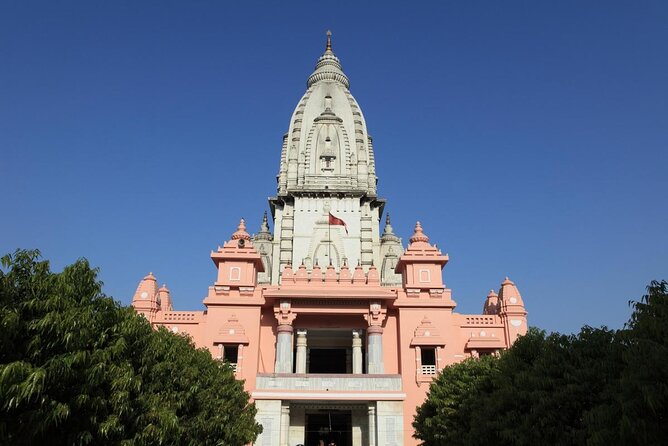
From the ghats, the walk passes by a Shiva temple, called the holiest among the Shiva temples in the route description. You are not just moving past it, either. The guide’s job is to connect what you saw at the riverfront to what you will keep seeing in the lanes.
In Varanasi, religious life is rarely separate from daily life. A temple stop like this helps you notice patterns: how devotion shapes architecture, street movement, and even how people pause and gather.
If you are a first-time visitor, this is a smart bridge. Instead of feeling like you have seen only one category of sights, you start to realize the city’s spiritual logic runs through the whole neighborhood.
The Wooden Temple (Mini Khajuraho): Nepali-Style Architecture in Stone City Space
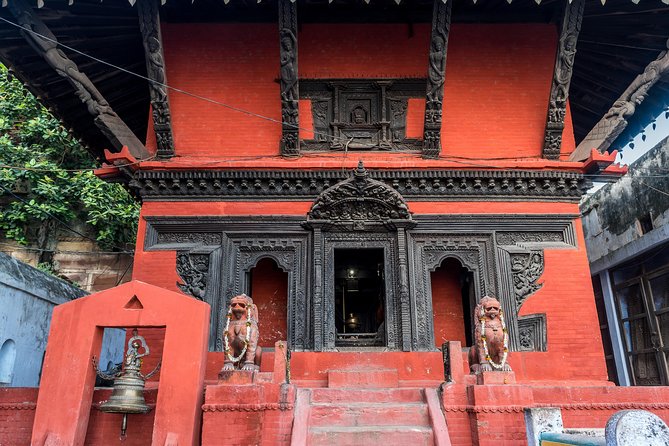
One of the standout moments is the Wooden Temple, also described as the Mini Khajuraho, built in Nepali-style architecture. This is the kind of stop that is easy to overlook if you are walking alone, because it is not just about a single impressive facade. It is about what the architecture is trying to communicate.
Your guide’s storytelling is especially useful here. You will likely understand the why behind the design, and how this temple form fits into Varanasi’s layered landscape of belief and building styles.
Even for people who do not usually care about architecture, a stop like this gives you a break from the heavy emotion of the ghats. It changes the pace from ritual to craft, from faith in action to faith in form.
Narrow Lanes, Old Markets, and Photogenic Temples You Can Actually Explain
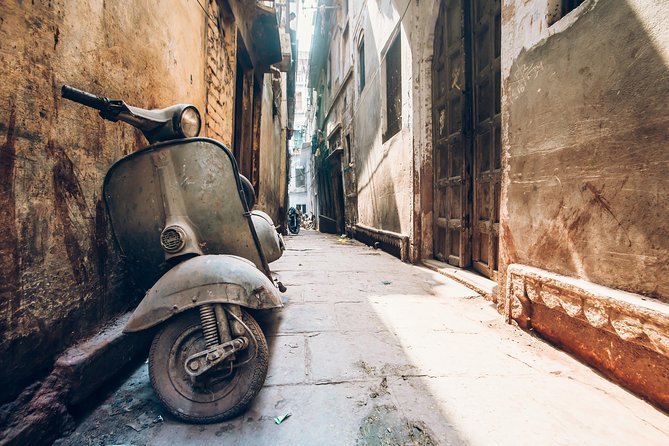
A big part of the route is the movement through centuries-old buildings and narrow lanes. You will also pass old markets and some of the most photographed temples in the city.
This is where guided walking can feel like a real upgrade. Without help, you might take photos, feel overwhelmed, and still not know what makes one temple different from another. With a guide, you get a storyline for the street scenes.
You may also hear about a masonry observatory passed along the way. Even without a long stop, that kind of detail nudges you to notice Varanasi as more than a religious backdrop. It is also a place where knowledge, planning, and everyday craft show up in public structures.
One practical tip: lanes can bring tight crowds and sudden changes in footing. Stay close to your guide, keep your phone secured, and do not expect wide-open walking space.
Guide Quality: The Real Reason This Tour Gets High Ratings
This is one of those tours where the guide is the product. The overall rating is strong, and that makes sense because the guide is described as a friendly storyteller trained to explain the religious aspect, beliefs, and local importance.
I like how the format invites questions. In the best moments, you are not just hearing a script. You are clarifying what you are seeing, asking why people do certain things, and learning what terms like Moksha mean in real-life context.
One review highlighted Manish as a guide who was early at the meeting point, friendly, and good at answering questions. That kind of service matters in Varanasi, where a smooth start helps you feel confident before you enter the dense lanes.
Just keep an eye on personal preferences. One participant complained about a silk shop visit they did not want, which suggests you should be clear if you want zero shopping time. If your priority is strictly cultural stops, ask your guide at the start what the route includes and where shop-style pauses might happen.
Price and Value: What $11.17 Buys You in Varanasi
At $11.17 per person, this is budget-friendly for a guided walk that covers multiple major areas. In many cities, you pay more for just one landmark plus a quick explanation. Here, you get the riverfront focus plus temple and lane context in about 2 hours.
What really drives the value is the combination of:
- multiple high-impact sights (ghats and temples)
- a bilingual, Q and A friendly guide
- a smallish group size of up to 20
You are also paying for orientation. For first-time visitors, the biggest cost is often confusion. A guide helps you avoid that wasted time, especially in a place like Old Town Varanasi where getting turned around is easy.
What is not included is just as important. There is no hotel pickup or drop, no food and drinks, and no air-conditioned vehicle. That is totally normal for a walking tour, but it means you should plan your meal stops and hydration yourself.
Who This Walking Tour Fits Best
This works best if you are:
- a first-time visitor who wants an overview of sacred Varanasi in one go
- comfortable walking and navigating tight streets
- curious about religious meaning, not just visual sightseeing
- someone who likes asking questions and getting story-based answers
It may be less ideal if you:
- strongly dislike any shopping-style pauses
- are looking for an all-relaxing, low-emotion itinerary
- want a long break in the middle, since this is designed as a continuous walk
If you are traveling solo but prefer human guidance, the small group format can feel like a middle ground between independent wandering and a big bus tour.
Should You Book This Old Town Varanasi Guided Walk?
I think you should book this if you want a guided start point into Varanasi’s spiritual and historical logic. The route focuses on the places that shape how people understand the Ganga, Shiva devotion, and the idea of Moksha, and the guide format helps you make sense of it in real time.
Skip it or be cautious if your main goal is shopping-free sightseeing. If you have firm boundaries, ask directly at the meeting point about any shop stops and how long you will spend at each stop.
FAQ
How long is the Cultural and Spiritual Trails of Old Town Varanasi walking tour?
It is about 2 hours (approx.).
Where does the tour start and end?
It starts at St. Thomas Church on Luxa Rd in Varanasi and ends back at the same meeting point.
What are the main stops on the tour?
The route includes Dasaswamedh Ghat, Manikarnika Ghat, a pass by a Shiva temple, a Wooden Temple (Mini Khajuraho), and time walking through old lanes, markets, and historic areas.
Is food or hotel pickup included?
No. Hotel pickup and drop, food, and drinks are not included. There is also no air-conditioned vehicle.
Is there an admission ticket cost?
For the Dashashwamedh Ghat stop, an admission ticket is listed as free. The data provided does not specify ticket costs for the other stops.
How big is the group?
The maximum group size is 20 travelers.
What languages does the guide speak?
The guide is described as able to speak English and Hindi.
What is the cancellation policy?
You can cancel for a full refund if you cancel up to 24 hours in advance. If you cancel less than 24 hours before the start time, the amount paid is not refunded. The tour also depends on good weather.
The Ghats at Varanasi, More Reviews




Recently reviewed across Varanasi
- Varanasi: Sunrise Boat Tour and Heritage Walk with transfers
★ 5.0 · 10 reviews - Varanasi Mysteries Walk: A Journey through Life and Death
★ 5.0 · 10 reviews - Omvity’s Full-Day Varanasi Tour: Sunrise Boat to Sunset Aarti
★ 5.0 · 10 reviews - Cycle of Life, Death & Rebirth (2 Hours Guided Walking Tour)
★ 4.5 · 10 reviews - Varanasi: Private Heritage Walking Tour & Sunrise Boat Ride
★ 4.9 · 11 reviews - Varanasi: Ganga Arti Evening Light Ceremony on the Main Ghat
★ 4.1 · 11 reviews
Varanasi Ghats and Ganga Aarti, compared.
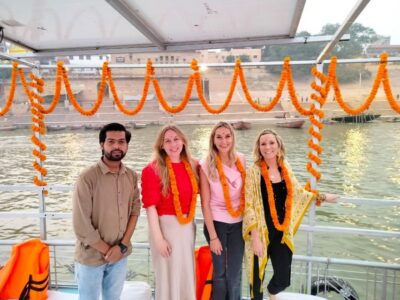 ★ 4.8Full Day City Highlights Day Tour & Ganges CruiseFrom $61520 reviews
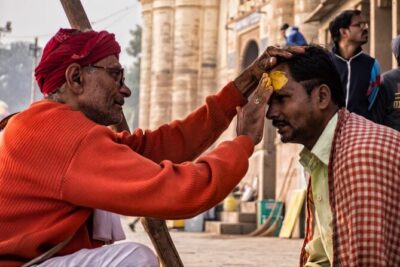 ★ 5.0Hidden Secrets of Varanasi: Vibrant Tradition (Guided Tour)From $24429 reviews
 ★ 5.0Sunrise Boat Tour with Arti CeremonyFrom $31375 reviews
 ★ 5.0Banaras Wala ToursFrom $13329 reviews
 ★ 5.0The Ultimate 1 Day in Varanasi – How to Spend 13 Hours – Private Guided TourFrom $65295 reviews
 ★ 4.9Hidden Secrets of Vibrant Tradition (Guided Tour)From $16176 reviews
 ★ 5.0Private Heritage and Spiritual Walk Tour – Varanasi KashiFrom $24172 reviews
 ★ 4.5Varanasi Landmark Evening City Tour – Aarti, Boating & Witnessing the GODFrom $31149 reviews
Browse the lists this tour appears in