
REVIEW · CYCLING TOURS
Cycle of Life, Death & Rebirth (2 Hours Guided Walking Tour)
Varanasi gets under your skin fast. This 2-hour small-group Ganges walk ties Hindu beliefs about life, death, and rebirth to real places along the ghats, with an English-speaking guide and time for questions. I especially like the way you get both spiritual explanation and straight-on sights, and I also like that the guide handles it in clear English while still respecting the local rituals. One drawback to keep in mind, the route includes cremation ghats, so it can feel intense, and you’ll want to come with a respectful, steady mindset.
You start at St. Thomas Church on Luxa Rd, then spend the next two hours moving through some of Varanasi’s most important riverfront sites. The pacing is built for learning on the move, not for rushing, and the group size caps at 10 so the Q and A does not get swallowed.
For me, the best part is the balance: you’re not just watching rituals, you’re also hearing the meaning behind them, including Hindu ideas like Moksha and the cycle of transformation. Still, this is walking, and there is no air-conditioned vehicle or hotel pickup, so bring comfortable shoes and expect real street-level conditions.
In This Review
- Key things I’d watch for on this tour
- Why Varanasi’s ghats are the best classroom for life and death
- Your two-hour route, from Dashashwamedh to Harishchandra
- Dashashwamedh Ghat, the oldest heart of the ghats
- Manikarnika Ghat and the promise of Moksha
- Other ghats of Kashi, prayer stairs, and real daily religion
- Harishchandra Ghats and the cremation ritual in context
- The guide and the question-time factor (Manish is a standout)
- What the energy transformation talk does for a walking tour
- Price and what you actually get for $13.20
- Who this tour suits best, and who might want a different option
- Should you book Cycle of Life, Death & Rebirth in Varanasi?
- FAQ
- FAQ
- How long is the Cycle of Life, Death & Rebirth walking tour?
- Where does the tour start?
- Where does the tour end?
- What is the group size?
- Does the guide speak English?
- Which ghats are included?
- What is included in the price, and what is not?
- What happens if the weather is bad or I need to cancel?
Key things I’d watch for on this tour
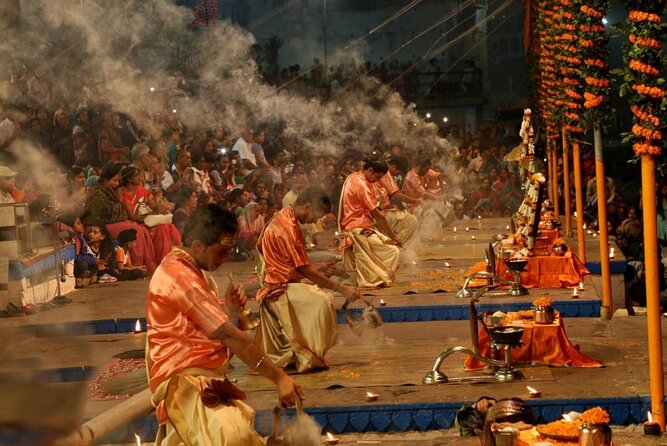
- Dashashwamedh Ghat: the old, holy center where the Ganga aarti happens every evening
- Manikarnika Ghat and Moksha: cremation as part of the journey toward salvation
- A guided walk through multiple ghats: different riverfronts, different spiritual vibes
- Time for questions with an English speaking guide: you’re not stuck listening the whole time
- Energy transformation ideas: practical talk about balancing your inner energy system
Shortlisting? Every Varanasi trip below went through the same review.
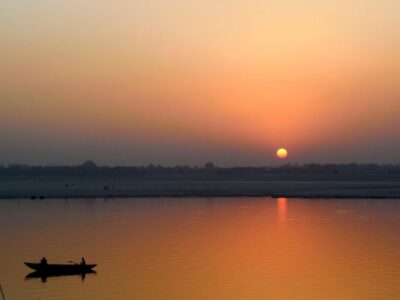
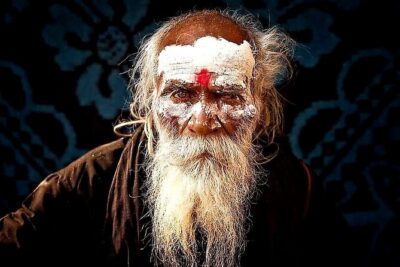
Why Varanasi’s ghats are the best classroom for life and death
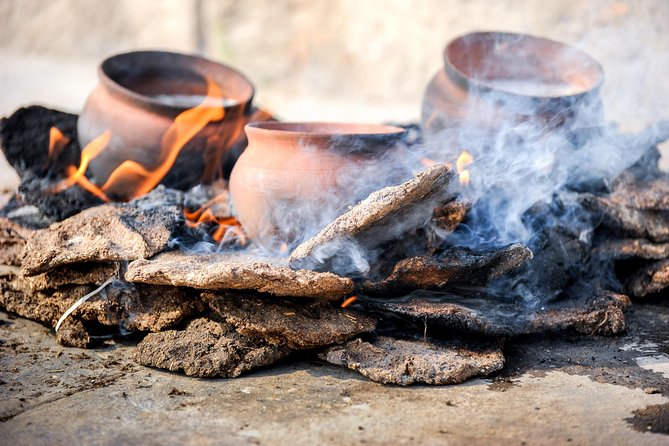
Varanasi is one of those places where religion is not stuck in a museum. It is in daily movement: washing, prayer, music, chanting, and cremation rites all along the river. That is why this kind of walking tour works so well. You learn concepts like life, death, and rebirth, but you connect them to the actual stages of the riverfront.
I like that the tour focuses on meaning, not just sightseeing checklists. Hindu philosophy here is not abstract. The river is a living part of the story, and the ghats are the stages where people understand and respond to that story.
One more thing: this walk is built for questions. When you are seeing something unfamiliar, silence is the worst option. With a guide who can explain in English (and also Hindi), you get the chance to ask what you are seeing and what it means, instead of guessing.
Your two-hour route, from Dashashwamedh to Harishchandra
In about two hours, you cover several iconic ghats on the Ganges. The walk is not described as a single straight line. Think of it as a sequence of riverfront stops, each one tied to a specific piece of the life-death-rebirth theme.
What makes the route smart is that it connects the spiritual big ideas to physical locations:
- the action center of Ganga worship
- the cremation front where the tradition says the soul finds salvation
- additional old ghats where you watch everyday prayer and meditation
- a final cremation area tied to the ritual tradition
Also, the tour notes include energy transformation techniques. That matters because it shifts the experience from purely observational to interpretive. You are being asked, gently but directly, to reflect on balance and transformation, not just memorize facts.
Dashashwamedh Ghat, the oldest heart of the ghats
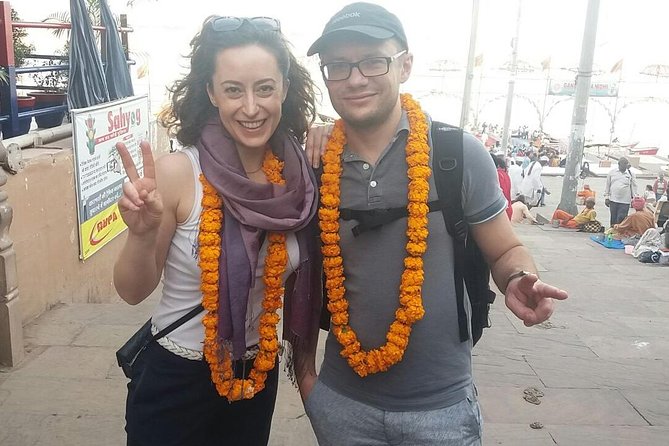
Your first major stop is Dashashwamedh Ghat, described as the oldest and holiest ghat and the heart of the action. This is the kind of place that instantly tells you Varanasi is not quiet. It is active, layered, and full of ritual energy.
A key highlight here is the Ganga aarti, held every evening. Even if your timing does not place you exactly in the middle of it, the guide framing helps you understand why this ghat is special. The aarti is not just a show. It is a public expression of devotion to the river as a sacred force.
What I think you’ll enjoy most is how the guide connects the idea of transformation to what you see at the water’s edge. You will also likely get a practical learning moment, because the tour then moves into the topic of energy transformation techniques. That is where the walking tour format pays off. You hear the philosophy, then you immediately experience the setting it belongs to.
Possible drawback: because this ghat is so central, it can also be the most visually intense. If you get overwhelmed easily in crowded, high-activity areas, focus on the guide’s explanations and keep your questions ready.
- The Ultimate 1 Day in Varanasi – How to Spend 13 Hours – Private Guided Tour★ 5.0 · 295 reviews
- A Journey of A lifetime★ 5.0 · 272 reviews
- Varanasi: Hidden Secrets of Vibrant Tradition (Guided Tour)★ 4.9 · 176 reviews
- Private Heritage and Spiritual Walk Tour – Varanasi Kashi★ 5.0 · 172 reviews
- 3 Hour Walking Tour of Buddhism in Sarnath★ 5.0 · 160 reviews
Manikarnika Ghat and the promise of Moksha
Next up is Manikarnika Ghat, identified as the holiest among the sacred riverfronts on the Ganga. This is the cremation-focused stop on the route, and it is also where the tour explains the belief that when a dead human is cremated here, the soul finds salvation, Moksha.
You do not need to be Hindu to approach this with respect. But you do need the right attitude. This part of the walk is more serious than most tourist stops. You are learning how a community understands death, not just looking at a process.
Why it matters: Hindu belief here links cremation rites to spiritual progress. That makes the ghats more than scenery. They become a system of meaning. The guide’s explanations help you see why people view these moments as part of a larger cycle of life, death, and rebirth.
If you are sensitive to death-related rituals, plan for that. This tour can be meaningful and educational, but it is not a light evening stroll.
Other ghats of Kashi, prayer stairs, and real daily religion
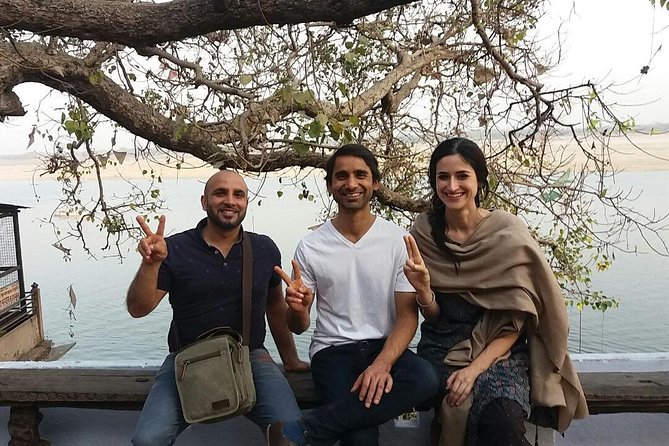
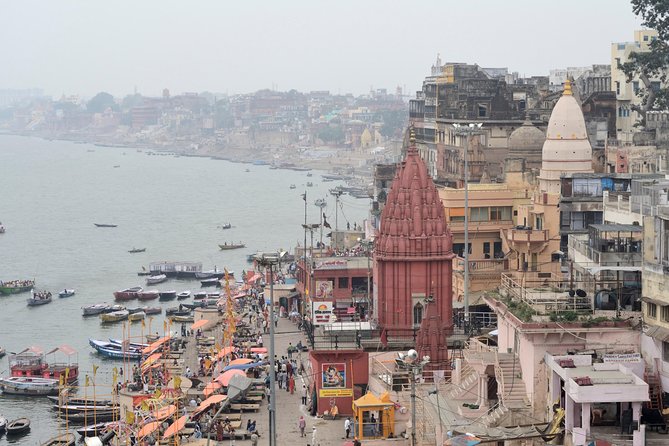
Between the major cremation and worship anchors, the tour takes you through other old ghats along the river. This is where you start to see Varanasi as something more than a couple of postcard sites.
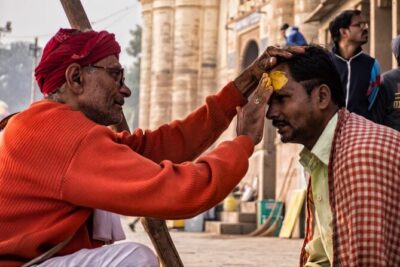
Expect to watch a colorful mix of people at the riverfront. The route description specifically points to Hindu gurus doing meditations and prayers on the stairs. That detail is important. It tells you the ghats are not only about dramatic rituals. They are also where people slow down, focus, and practice devotion in daily rhythms.
This section also works well for your learning style. When you are in the middle of multiple ghats, you naturally compare how spaces feel different. Some spots feel like community worship, others feel like quiet focus, and the guide’s job is to translate those feelings into belief and practice.
Small caution: because the tour emphasizes observation of people and rituals, you will likely want to keep your camera habits thoughtful. If you see a moment that feels private or sacred, step back and watch without forcing yourself into the scene.
Harishchandra Ghats and the cremation ritual in context
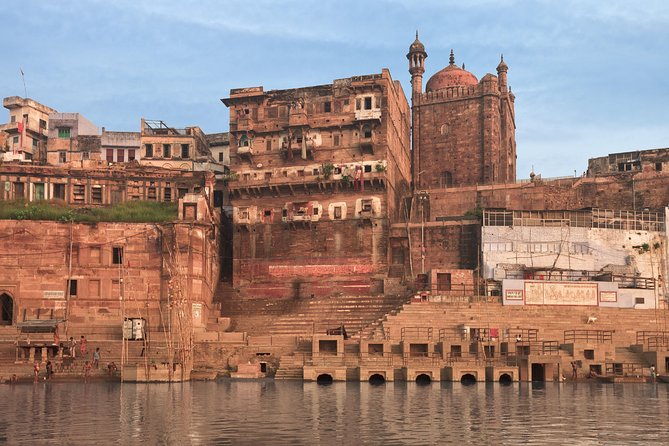
The walk finishes with Harishchandra Ghats, dedicated to the cremation ritual. This stop is another place tied directly to the cycle of death and rebirth, and it helps you understand that cremation in Varanasi is not a random event. It is part of an established spiritual process with specific sacred riverfront spaces.
By now, you should have enough guide context to connect the dots. Earlier stops set the philosophical framework and explain Moksha. Later stops show you how rituals are situated in geography and tradition.
From a practical standpoint, the cremation-focused part of the route is also the part where you most want to keep your pacing steady. Walking here can bring you close to activity. Take your time, follow the guide’s lead, and let the explanations land without rushing to see everything at once.
The guide and the question-time factor (Manish is a standout)
This experience is led by a friendly, trained storyteller/guide who speaks English and Hindi. The group is small, with a maximum of 10 travelers, which matters more than you might think.
When the group is tiny, you can ask real questions. Instead of nodding and moving on, you can clarify what something means, why it happens in this way, or how the belief ties to what you are seeing on the ghats.
One review specifically named the guide Manish and praised how knowledgeable and friendly he was, including his ability to answer questions about Hinduism and Varanasi rituals. That is the kind of guide you want for a subject that is both spiritual and culturally specific. You are not just getting facts, you are getting conversation.
If you enjoy learning through dialogue, this tour format fits your style. If you prefer a silent “headphones and photos” approach, you might find the conversation-heavy element less your thing.
What the energy transformation talk does for a walking tour
The itinerary includes learning energy transformation techniques intended to help you balance the energy system within you. That line can sound vague if you only see it in a brochure. On this kind of tour, it makes more sense as a guided reflection that keeps the lesson from staying only in the external world.
Here’s how you can use this segment well:
- Treat it as an interpretive bridge between philosophy and practice
- Pay attention to what the guide suggests you do mentally while you walk and observe
- Ask questions if you want practical meaning, not just terminology
This matters because Varanasi can feel overwhelming. A topic like energy balancing gives you a way to stay grounded. Even if you do not share the same belief system, you can still benefit from the guidance as a method of reflection.
Price and what you actually get for $13.20
At $13.20 per person for about two hours, this is priced like a solid local-guided experience. You are paying for an English-speaking guide, interpretation, and a short walking route through major riverfront sites.
What you should know about value:
- You get small-group attention, with a cap of 10
- You get storytelling that connects beliefs to the ghats
- You do not get hotel pickup, an air-conditioned vehicle, or food and drinks
That last point affects your comfort more than the money. Because there is no vehicle, you should plan for walking time and heat, and you should already know where you want to get water or a snack before or after.
Mobile ticket and a near public transport meeting point also help keep it easy to start. The meeting point is St. Thomas Church on Luxa Rd in Varanasi. The tour ends back at the meeting point, which makes it simpler to rejoin your day plan.
Who this tour suits best, and who might want a different option
This is a strong choice if you:
- want a guided explanation of Hindu beliefs about life, death, and rebirth
- prefer small groups and question time
- like learning tied to real places, not just lectures
- are curious about cremation rites in a cultural and philosophical context
It may be less ideal if you:
- are uncomfortable with death-related rituals as an educational focus
- hate walking in real street conditions
- want a purely sightseeing style tour with minimal religious context
Also, if you are sensitive to crowds at the most active ghats, you might still enjoy it, but you should go in with a plan to stay calm and follow the guide’s pace.
Should you book Cycle of Life, Death & Rebirth in Varanasi?
I think it’s worth booking if your goal is understanding, not just photos. The mix of major ghats, cremation context, and a guide who can explain in English is the real value. The small group size keeps the experience personal enough that you can ask the questions you actually have.
If you are easily distressed by cremation-related environments, you may want to choose a lighter religious or temple-focused walk instead. But if you can meet the subject with respect and curiosity, this tour gives you a structured way to make sense of what you see along the Ganges.
FAQ
FAQ
How long is the Cycle of Life, Death & Rebirth walking tour?
The tour lasts about 2 hours.
Where does the tour start?
The meeting point is St. Thomas Church, Luxa Rd, Luxmanpura, Laxman pura, Ramapura Luxa, Varanasi, Uttar Pradesh 221001, India.
Where does the tour end?
The activity ends back at the meeting point.
What is the group size?
This tour has a maximum of 10 travelers.
Does the guide speak English?
Yes. The guide is described as speaking English, and they can also speak Hindi.
Which ghats are included?
The route includes Dashashwamedh Ghat, Manikarnika Ghat, several other old ghats along the Ganges, and Harishchandra Ghats.
What is included in the price, and what is not?
Included: a highly trained friendly guide and good conversations to explore religious aspects, beliefs, and local importance. Not included: air-conditioned vehicle, hotel pickup and drop, and food and drinks.
What happens if the weather is bad or I need to cancel?
The experience requires good weather. If it is canceled due to poor weather, you’ll be offered a different date or a full refund. You can cancel for a full refund up to 24 hours in advance; if you cancel within 24 hours, the amount paid is not refunded.
Recently reviewed across Varanasi
- Varanasi: Sunrise Boat Tour and Heritage Walk with transfers
★ 5.0 · 10 reviews - Varanasi Mysteries Walk: A Journey through Life and Death
★ 5.0 · 10 reviews - Omvity’s Full-Day Varanasi Tour: Sunrise Boat to Sunset Aarti
★ 5.0 · 10 reviews - Cycle of Life, Death & Rebirth (2 Hours Guided Walking Tour)
★ 4.5 · 10 reviews - Varanasi: Private Heritage Walking Tour & Sunrise Boat Ride
★ 4.9 · 11 reviews - Varanasi: Ganga Arti Evening Light Ceremony on the Main Ghat
★ 4.1 · 11 reviews
Cycling Tours, compared.
 ★ 5.03-Hour Morning Bike Tour of JaipurFrom $321,253 reviews
 ★ 5.0Old Delhi Bike TourFrom $30616 reviews
 ★ 5.0Delhi By Cycle & Old DelhiFrom $30329 reviews
 ★ 5.0Cyclin’Jaipur – Explore the city on a cycle!From $32133 reviews
 ★ 5.0Udaipur Countryside Biking excursionFrom $28106 reviews
 ★ 5.0Nahargarh Cycle Tour in JaipurFrom $3562 reviews
 ★ 4.5The Unique Pondicherry City Bike TourFrom $2058 reviews
 ★ 5.0I Bike Inside JaipurFrom $3257 reviews
Browse the lists this tour appears in