
REVIEW · VARANASI GHATS AND GANGA AARTI
Hidden Secrets of Varanasi: Vibrant Tradition (Guided Tour)
Varanasi feels like a living maze at night. This guided tour pulls you through the Ghats and major temples in a tight, 3-hour loop, with stories that help you read what you are seeing instead of just photographing it. I especially like the way the route mixes famous sites with lesser-seen corners, and I love that the pace is built for comfort with frequent stops for explanation.
The biggest consideration is simple: you are walking in an active, sometimes intense old-city environment. If you are easily overwhelmed by crowds, incense, funerary activity, or close quarters, go with eyes open and choose your distance at places like Manikarnika Ghat.
In This Review
- Key highlights you should know
- Start at Manmandir Ghat, then let the city explain itself
- Price and what $24.55 actually buys you in Varanasi
- A 3-hour loop that hits the Ghats you can’t ignore
- Dashashwamedh Ghat, where the riverfront becomes the calendar
- Vishalakshi Temple, Parvati in a local spotlight
- Kathwala (Nepali) Temple, a stop with a wow factor
- Manikarnika Ghat, cremations and the need for respectful distance
- Manikarnikeshwar Mahadev, an underground linga and a belief about rebirth
- Small lanes, markets, and food stalls you learn to read
- Guides like Akash and Badal, and why their style matters
- Timing, weather, and how to dress for a 3-hour Varanasi walk
- Extras you can arrange if you want more than the base route
- Who should book this tour, and who should reconsider
- Should you book Hidden Secrets of Varanasi for your trip?
- FAQ
- How long is the Hidden Secrets of Varanasi guided tour?
- How much does the tour cost?
- Is bottled water and tea included?
- Is food included?
- Do I need to buy admission tickets for the stops?
- Where does the tour start and end?
- Is there a mobile ticket?
- What is the group size limit?
- What if the weather is bad?
- What is the cancellation window?
- Are service animals allowed?
Key highlights you should know
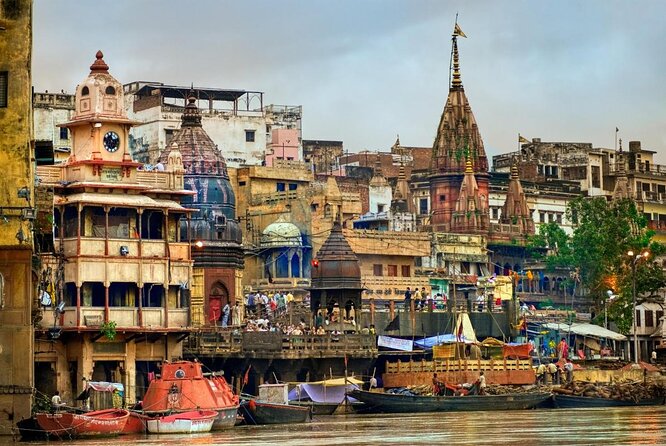
- Local, multi-generational guides who know the small streets and daily routines beyond the postcard stops.
- Manikarnika Ghat cremation ground explained with timing and respectful viewing context.
- Underground Manikarnikeshwar Mahadev and the belief tied to worship there.
- Temple stops that show religious variety, from Vishalakshi to the Nepali (Kathwala) temple.
- Small group size up to 25, which helps you keep up and ask questions.
- Good comfort basics included, bottled water plus coffee or tea.
More time on the Varanasi ghats
Start at Manmandir Ghat, then let the city explain itself
Your tour begins near Manmandir Ghat at the Virtual Experiential Museum Varanasi, in Bangali Tola (you will get the exact meeting point at booking). This matters more than it sounds, because Varanasi is not a place where you can easily “wing it” once you get close to the river.
I like that the tour ends back at the meeting point. That gives you a clean reset for the rest of your day, whether you want to keep walking on your own or head back for a breather.
Price and what $24.55 actually buys you in Varanasi
The price is $24.55 per person for about 3 hours. For that money, you are not just paying for a guide voice, you are paying for a local filter, someone who can point out what matters, and someone who can help you navigate the mess of streets, people, and competing sights.
You also get practical value built in: bottled water, plus coffee or tea. Several temple and ghat-related entries are included on the route, including places like Vishalakshi Temple and the two major cremation-area stops. Transportation is not included, so you will want to be ready to walk and get yourself to the meeting point.
A 3-hour loop that hits the Ghats you can’t ignore
This tour is designed as a concentrated introduction to Varanasi’s riverfront religion and everyday life. You will see the important historical and religious sites, plus narrow streets, markets, and popular food stalls along the way, and you will also get some less-touristy spots that help you understand modern Varanasi.
It is a good “first tour” shape, especially if Varanasi feels overwhelming on day one. The goal is not to see everything. The goal is to see enough that you start making sense of what the city is doing.
- The Ultimate 1 Day in Varanasi – How to Spend 13 Hours – Private Guided Tour★ 5.0 · 295 reviews
- A Journey of A lifetime★ 5.0 · 272 reviews
- Varanasi: Hidden Secrets of Vibrant Tradition (Guided Tour)★ 4.9 · 176 reviews
- Private Heritage and Spiritual Walk Tour – Varanasi Kashi★ 5.0 · 172 reviews
- 3 Hour Walking Tour of Buddhism in Sarnath★ 5.0 · 160 reviews
Dashashwamedh Ghat, where the riverfront becomes the calendar
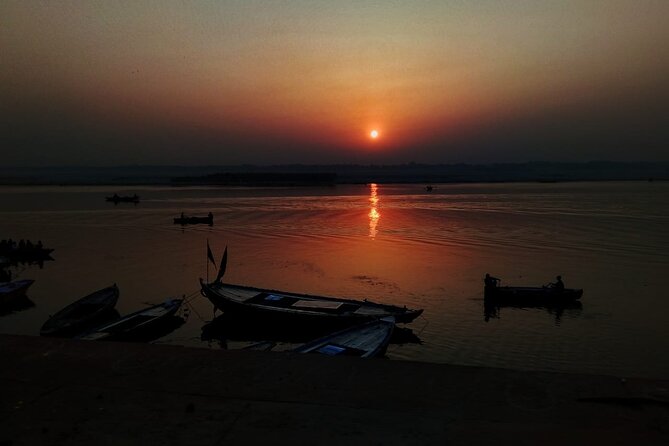
Your first stop is Dashashwamedh Ghat, one of the oldest and most important ghats on the Ganges. It is also positioned near the old Vishwanath Temple area in Kashi, so you get that layered feeling right away: river life, pilgrimage life, temple life, all in the same frame.
What I like here is the framing. A good guide does not just name places, they explain why this ghat matters in Hindu tradition and how it functions as a stage for religious practice. You learn what you are looking at before you drift into the nearby lanes.
Practical note: expect this area to be active and visually loud. Keep your phone handy, but also take a minute to watch people without trying to catch every second on camera.
Vishalakshi Temple, Parvati in a local spotlight
Next up is Vishalakshi Temple, also known as Vishalakshi Gauri Temple. This temple is tied to the goddess Vishalakshi, considered an aspect of Parvati, so the stop gives you a clear thread into the way Hindu devotion has many faces and local forms.
This is one of the moments where a guide’s stories really matter. In Varanasi, the same religious tradition can feel different depending on the neighborhood and the specific form of the goddess or deity being honored. You are learning the city through its specific worship points.
Look for small details inside and around the temple area. Even when you cannot read everything, a practiced guide helps you connect symbols to meaning.
Kathwala (Nepali) Temple, a stop with a wow factor
The tour continues to the Nepali Temple (Kathwala Temple), also known by names like Shri Samrajeswar Pashupatinath Mahadev Mandir. It is described as one of the oldest and most famous temples in the holy city, and it is also referred to as Mini Khajuraho.
That Mini Khajuraho nickname is the clue to what makes this stop fun: you are likely to notice decorative styles and temple forms that feel familiar if you have seen Khajuraho art before. Even if you have not, you still get an on-the-ground introduction to why different temples can have different architectural languages.
This is also a good breathing stop in the schedule. After the riverfront intensity, temple architecture gives you a visual pause and a quieter way to reset.
Manikarnika Ghat, cremations and the need for respectful distance
Then you reach Manikarnika Ghat, the sacred cremation ground for Hindus. It is described as one of the holiest cremation grounds among the sacred riverfront ghats, alongside the Ganges.
This stop is not an attraction like a theme park ride. It is religious practice with powerful emotions all around. A helpful guide’s job is to help you watch responsibly: where to stand, what to avoid, and how to understand that this is not entertainment to the people living the ritual.
In the tour context, time here is not just “look and leave.” You get narration tied to the cremation process so you understand the sequence of what you are seeing, rather than reacting randomly to scenes you do not grasp.
If you are sensitive to funerary activity, you should still consider this stop only if you feel ready. And if you do go, plan to stay composed and respectful.
Manikarnikeshwar Mahadev, an underground linga and a belief about rebirth
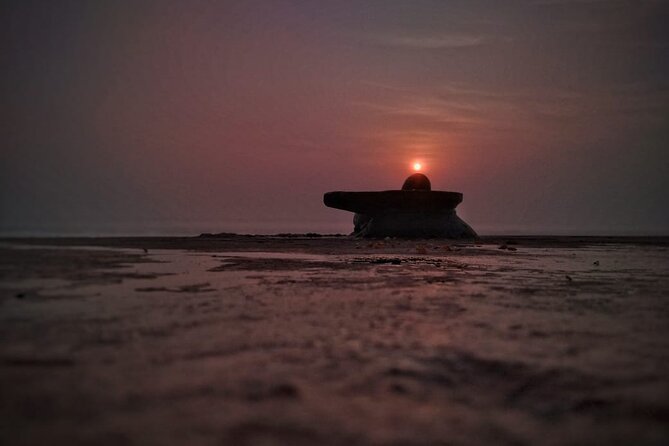
Your final major stop is Manikarnikeshwar Mahadev Temple (Kashi Khand). Here the key detail is that the linga is located underground. This is a striking piece of information because it changes how you imagine the temple space and how worship might be experienced.
The tour explains a specific belief: devotees who take a bath in Manikarnika and worship Manikarnikeshwar will not see mother’s womb again, meaning there will be no rebirth. That is a heavy concept, and it is also one reason Varanasi hits so hard for visitors, because the religious ideas are not abstract. They are connected to place.
Again, watch how people behave. Notice the tone, the gestures, and the seriousness of the space. It helps you understand the city’s spiritual logic quickly.
Small lanes, markets, and food stalls you learn to read
The itinerary is designed to go beyond the obvious riverfront icons. Along the way, you will walk through narrow streets, see markets, and stop near popular food stalls. The point is not just to sample items. It is to understand how daily commerce and daily devotion sit side by side in Varanasi.
You also get less touristic spots that help you understand modern Varanasi. That combination matters, because Varanasi is not stuck in the past. It is active, lived-in, and complicated, right now.
One practical tip: wear shoes you can trust on uneven ground. And keep your hands free if the lanes get crowded. You do not want to fumble with bags while trying to follow a guide and negotiate space.
Guides like Akash and Badal, and why their style matters
The quality of this kind of tour lives and dies with the guide. In this experience, local guides are central, including names that come up often like Akash and Badal (The Mango Travel). Other guides you may be assigned include people such as Nivas, Niwas, Vidya Niwas Chaubey, Manish, Ravi, Rakesh, and Badal Pandey.
Across guides, the best pattern is consistent: they stay patient, explain in clear English, and make sure you are comfortable while moving through crowded areas. You will also hear humor in some tours, which helps when the sights and smells are intense.
If you want a “first time in Varanasi” win, this is where you should spend your energy. Ask questions early. If you have dietary limits, say so up front when food stalls come into view. Your guide can steer you toward safer choices and help you avoid feeling pressured.
Timing, weather, and how to dress for a 3-hour Varanasi walk
This tour lasts around 3 hours. You also need good weather, because the experience depends on walking through outdoor areas. If weather turns, the operator will offer a different date or a full refund.
Dress for the heat or the breeze, depending on the season you travel. Keep sleeves and coverage in mind for temple visits, and plan for a little dust and exhaust around the ghats and lanes.
Bring a bottle camera habit if you want, but also bring the mindset that some moments are about seeing, not just snapping.
Extras you can arrange if you want more than the base route
The core tour covers the main ghats and key temple stops. If you want to add more, some people have arranged extra experiences through their guide for an additional cost, such as an evening aarti or a boat ride.
I recommend thinking of these as optional, not mandatory. Your best payoff is already built into the 3-hour rhythm, especially if you want a grounded overview before exploring on your own afterward.
Who should book this tour, and who should reconsider
This tour is a strong fit if you want the meaning behind Varanasi’s ghats, not just the view. It is also ideal for first-timers who feel overwhelmed by the city’s chaos and want a calm guiding hand through narrow lanes and major ritual sites.
You might want to reconsider if you are very sensitive to cremation activity or if long walks and crowded streets make you anxious. In that case, you could still visit Varanasi, just plan your route carefully and choose experiences that match your comfort level.
The good news is the tour is structured, about 3 hours, and includes comfort basics like water and tea. That helps you stay present without running on empty.
Should you book Hidden Secrets of Varanasi for your trip?
Book it if you want a fast, meaningful way to get oriented in Varanasi, especially if Manikarnika Ghat and the surrounding temple complex are on your must-see list. The value is in the combination of major sites, local street context, and guide narration that helps you connect what you see to why it exists.
Skip or choose a different option if you want a light, casual stroll with zero intensity. Manikarnika is real ritual space. This tour treats it seriously, and that seriousness is part of the point.
If you can handle a spiritually intense walk through a living city, this is one of the best ways to start.
FAQ
How long is the Hidden Secrets of Varanasi guided tour?
The tour lasts about 3 hours.
How much does the tour cost?
The price is $24.55 per person.
Is bottled water and tea included?
Yes. Bottled water and coffee and/or tea are included.
Is food included?
No. Food and drink are not included.
Do I need to buy admission tickets for the stops?
Admission is included for some stops, and one stop lists free admission. You should still plan for the possibility that not every site on the day requires a ticket.
Where does the tour start and end?
It starts at Virtual Experiential Museum Varanasi, near Manmandir Ghat (Bangali Tola). It ends back at the same meeting point.
Is there a mobile ticket?
Yes. The tour uses a mobile ticket.
What is the group size limit?
The maximum group size is 25 travelers.
What if the weather is bad?
The experience requires good weather. If it is canceled due to poor weather, you will be offered a different date or a full refund.
What is the cancellation window?
You can cancel for free up to 24 hours in advance for a full refund. If you cancel less than 24 hours before the start time, the amount paid is not refunded.
Are service animals allowed?
Yes. Service animals are allowed.
The Ghats at Varanasi, More Reviews




Recently reviewed across Varanasi
- Varanasi: Sunrise Boat Tour and Heritage Walk with transfers
★ 5.0 · 10 reviews - Varanasi Mysteries Walk: A Journey through Life and Death
★ 5.0 · 10 reviews - Omvity’s Full-Day Varanasi Tour: Sunrise Boat to Sunset Aarti
★ 5.0 · 10 reviews - Cycle of Life, Death & Rebirth (2 Hours Guided Walking Tour)
★ 4.5 · 10 reviews - Varanasi: Private Heritage Walking Tour & Sunrise Boat Ride
★ 4.9 · 11 reviews - Varanasi: Ganga Arti Evening Light Ceremony on the Main Ghat
★ 4.1 · 11 reviews
Varanasi Ghats and Ganga Aarti, compared.
 ★ 4.8Full Day City Highlights Day Tour & Ganges CruiseFrom $61520 reviews
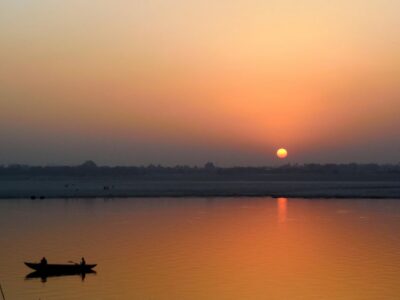 ★ 5.0Sunrise Boat Tour with Arti CeremonyFrom $31375 reviews
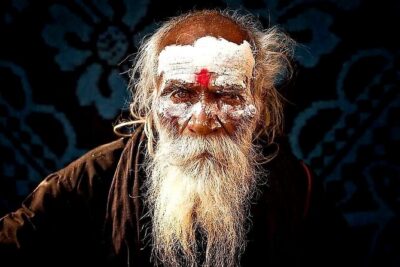 ★ 5.0Banaras Wala ToursFrom $13329 reviews
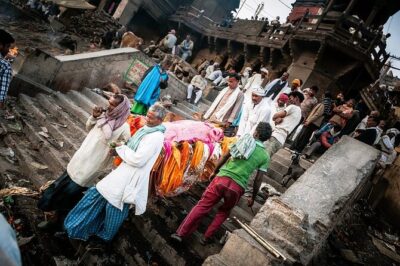 ★ 5.0The Ultimate 1 Day in Varanasi – How to Spend 13 Hours – Private Guided TourFrom $65295 reviews
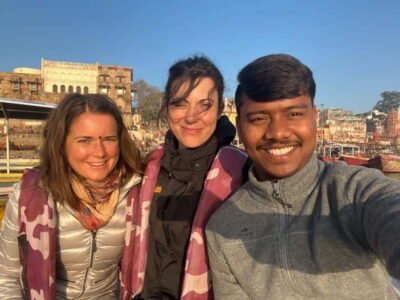 ★ 4.9Hidden Secrets of Vibrant Tradition (Guided Tour)From $16176 reviews
 ★ 5.0Private Heritage and Spiritual Walk Tour – Varanasi KashiFrom $24172 reviews
 ★ 4.5Varanasi Landmark Evening City Tour – Aarti, Boating & Witnessing the GODFrom $31149 reviews
 ★ 5.0INDIVIDUAL YOGA CLASS – BEGINNER / ADVANCED Sunrise Yoga with Ayush in VaranasiFrom $16147 reviews
Browse the lists this tour appears in