
REVIEW · KOLKATA HERITAGE TOURS
Day trip from Kolkata for a Slice of Europe
Colonial Bengal starts on the Hooghly, and this day trip turns that idea into a real route. I like the private tour pace with close guide attention, and I especially liked that included lunch breaks up the long drive time. The one drawback is also the plain truth, this is very history focused, so if you just want Instagram scenery with zero context, you may find it a bit too nerdy.
You start at 8:00 am with hotel pickup, then spend about 12 hours moving through three towns shaped by European trade. There are free or included admissions at many stops, a mobile ticket, and vegetarian lunch on request. It is a good value when you want guided meaning, not just transport.
In This Review
- Key things that make this trip worth your time
- West Bengal’s European trading towns, in one 12-hour loop
- Price and logistics: hotel pickup, lunch, and a full-day pace
- Chandannagar highlights: Dupleix Palace and the cannons
- Patal Bari and The Strand: the Hooghly’s colonial leftovers
- Bandel’s churches, from 1884 stained glass to 1660 tombstones
- Serampore Rajbari, Carey’s education legacy, and Denmark Tavern
- Food on the route and how to get the most from lunch
- Is the Slice of Europe tour worth your time
- Should you book this day trip or not?
- FAQ
- What towns does the tour visit?
- How long is the tour?
- What time does the tour start?
- Is hotel pickup and drop-off included?
- Is lunch included?
- Is the price per person or per group?
- Are admission tickets included for the sights?
- Is drinks included with lunch?
- What is the cancellation policy?
Key things that make this trip worth your time
- An expert guide experience that puts the French, Portuguese, and Danish influence into plain language
- Dupleix Palace (Chandannagar Dupleix Museum) with artifacts and cannons connected to the Carnatic wars
- Patal Bari, the mansion partly submerged in the Hooghly, with its carved wooden details
- The Strand’s colonial buildings, especially Durgacharan Rakshit Ghat with columns and stucco work
- Two different Bandel church experiences, from 1884 stained glass to the older Rosary church setting
- Serampore College ties to William Carey, plus a restored slice of Danish-era life at Denmark Tavern
More Kolkata streets we have walked
West Bengal’s European trading towns, in one 12-hour loop
This is a day trip built around a simple theme: how European powers left traces along the Hooghly river. You visit Chandannagar, Bandel, and Serampore, towns once shaped by French, Portuguese, and Danish presence. The best part is that you see multiple layers, not one museum stop and then rushed photos.
The route also has a smart rhythm. You begin with French-era material culture in Chandannagar, move into colonial architecture and church sites in Bandel, then finish with Serampore’s big names in education and the Danish-era presence. If you enjoy connecting dots, you will leave with a clearer picture of how this part of Bengal fit into wider European trade and politics.
Do note the pace. It is about 12 hours total, so you will want comfortable shoes and an easy mood. This is not a slow walk with lots of time for random detours. It is a guided route meant to cover the highlights and explain them.
Price and logistics: hotel pickup, lunch, and a full-day pace
At $150 per person, this is not a budget half-day. But it does include hotel pickup and drop-off, plus lunch mid-route. It also runs as a private tour, meaning only your group participates, which can make a big difference for people who hate feeling herded.
One practical point: drinks are not included, so if you want bottled water or sodas, plan on paying for them. Lunch is included, and a vegetarian option is available if you tell them when you book.
Also, the tour is typically booked about 8 days in advance on average. That tells me it is popular enough that you should not wait until the last minute, especially if you have dietary needs. Mobile ticket is handy once you are in Kolkata, since you do not have to fuss with paperwork during the day.
Bottom line on value: you are paying for transportation out of the city, a guided story across three towns, and a full day that would be much harder to piece together on your own without local help.
Chandannagar highlights: Dupleix Palace and the cannons
Your first stop is Chandannagar, a place that helps you understand the French side of the story right away. Dupleix Palace, now the Chandannagar Dupleix Museum, is your starting point. You get about 1 hour 30 minutes here, and the admission is free.
What I like about Dupleix Palace is that it does not only show pretty rooms. The museum displays cannons linked to the Carnatic wars, plus artifacts and period furniture. That mix matters. It pushes you past the idea of European influence as just fancy architecture and into the reality of conflict, power, and trade.
If you enjoy objects with stories, this is a strong opener. It gives your brain something concrete to hold onto before you see the rest of the route. And since this is a guided private tour, you are not left to figure out the context by yourself.
A small consideration: museums can feel dry if you are not in the mood for historical detail at 9:00 am. If you are the type who loves background and timelines, you will probably feel right at home here. If not, lean on your guide to connect the museum items to what you will see later.
- Magic Hour Tour★ 5.0 · 241 reviews
- Alleyway Food Tour★ 5.0 · 137 reviews
- Private Half-Day Kolkata Tour★ 5.0 · 125 reviews
- Kolkata: A Sea of Faces and A Thousand Places★ 4.9 · 116 reviews
- Kolkata – Sounds and Sights – Private Full Day City Tour★ 5.0 · 106 reviews
Patal Bari and The Strand: the Hooghly’s colonial leftovers
After Dupleix Palace, the day turns more visual and atmospheric.
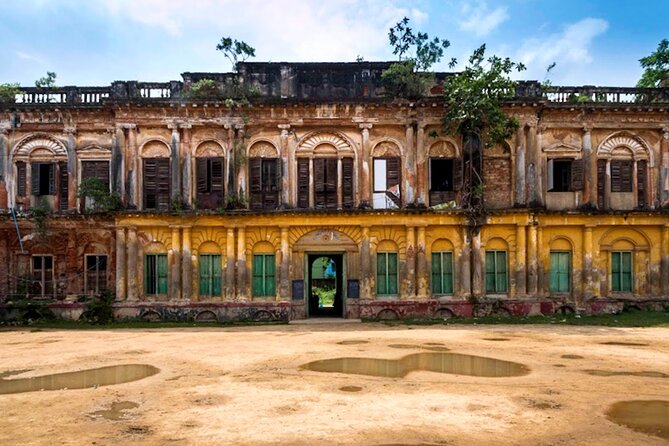
You visit Patal Bari, which literally means underground house. The big hook is that the mansion is partly submerged in the Hooghly river, and you get about 1 hour here. Admission is free. Even without a guide, the structure would catch your eye, but the guide angle is what makes it click. You get the sense of how the river shaped where Europeans and locals built, stored, and lived.
Another bonus is that the building has beautifully carved wooden details. Those kinds of craft features can be easy to miss in passing traffic, but you are given time to look.
Next comes The Strand, with about 1 hour and included admission at key viewing. This stretch is known for its collection of colonial buildings. The standout named here is Durgacharan Rakshit Ghat, a pavilion with imposing columns and striking stucco work built in the relevant early colonial era (the key point is the style and presence, not a rushed calendar fact).
This part is where you start to feel the colonial architecture as lived-in space, not just museum display. You get a stronger sense of scale too, since ghat spaces, pavilions, and riverfront geometry are hard to grasp from postcards.
Potential drawback for some people: the Strand stop can feel more architectural than interactive. If you want hands-on activities, look to focus on photo angles and the way the buildings frame the river.
Bandel’s churches, from 1884 stained glass to 1660 tombstones
Bandel is the religious and architectural centerpiece of the day, with two church stops that give you two different time periods.
First is Shrine Basilica Bandel, a two-storied church with twin towers and a magnificent statue of Jesus. You get about 1 hour and admission is free. Built in 1884, it is known for stained glasses and coloured reliefs of Jesus carrying the cross on the walls. This is the stop that tends to do the best job for people who like art, because stained glass and wall reliefs offer lots to look at from multiple angles.
Then you continue to Bandel’s other church stop: a church dedicated to Nostra Senhora di Rozario, popularly known as Our Lady of the Rosary. This one is older, built in 1660, and you get about 45 minutes. Admission is free here too. The setting includes vintage tombstones, and violet blossoms are mentioned as part of the look around the church area.
I like the pairing because you see continuity and change. The 1660 church setting feels grounded and older, while the 1884 basilica offers more dramatic visual storytelling through glass and relief work. Together they make the Bandel segment feel like a mini timeline instead of two unrelated stops.
If you are sensitive to long standing and watching details in churches, pace yourself. Take a moment to sit or step away during transitions, especially after the earlier riverfront walking.
Serampore Rajbari, Carey’s education legacy, and Denmark Tavern
Serampore is where the tour shifts from architecture to big names and big ideas.
You visit the Rajbari, described as the grand mansion of the Goswami family, connected to Serampore’s wealth and history. The building is built in 1820, and it is tied to a wider story about the region’s settlement and business opportunities. You get about 45 minutes, admission is free.
This stop helps you understand that European influence was not only about Europeans building along the river. It was also about local power, wealth, and the business conditions that let different communities operate. A good guide makes that connection feel logical instead of random.
Then comes Serampore College, about 30 minutes, and admission is free. This is where the education angle becomes clear. William Carey founded Serampore College, and it is described as the first university in Bengal. You also connect to early Bengali publishing linked to the education story, with Samachar Darpan referenced as an early Bengali development.
One review highlight that matters in real life: I like that you can meet people connected to the place when the schedule allows. One account I saw mentioned meeting Dr Mukharjee at Serampore College, which is the kind of moment that can turn a quick stop into something memorable.
Finally, you end at The Denmark Tavern, about 30 minutes. It is described as restored, and it ties back to the Danish side of the Serampore story. Even if you do not get a long sit-down here, it works as a closing image, a reminder that these were trade and community hubs, not just theory lessons.
Logistics note: by the end of Serampore, you are usually tired. This last stretch is shorter per stop, which helps. Still, plan to keep water handy if your group needs it, since drinks are not included.
Food on the route and how to get the most from lunch
Lunch is included, served midway through the experience. Vegetarian option is available if you ask ahead. This matters because it prevents a common day-trip problem in Kolkata, you spend the afternoon hunting food while the group keeps moving.
I also like that the lunch is not treated like a quick box-check. A good guide tends to use the meal to connect culture to what you just saw. In one review, the guide Anirban shared insightful context around Bengali culture during lunch, and the meal was described as delicious and appropriately spicy.
What should you do to get the most out of lunch? Go in hungry and keep your questions simple. Ask about what you saw that morning, like how the riverfront architecture relates to daily life, or why French or Danish presence left such different traces. If your guide is sharp, you will get answers that make later photos make more sense.
One small watch-out: drinks are not included. If you want something beyond water, budget for it.
Is the Slice of Europe tour worth your time
This tour is best for people who like guided context. You are not just collecting stops. You are building a story around colonial influence along the Hooghly river, across European powers and local institutions.
The best fit:
- You enjoy colonial architecture and religious art, especially stained glass and carved details
- You like education history, and names like William Carey make you perk up
- You want a private guide who can explain the why behind what you see
- You prefer day-trip structure over self-planning out of Kolkata
The not-so-great fit:
- You want a mostly relaxing sightseeing day with minimal explanation
- You are only interested in one town or one type of site
- You dislike long full days, because this is about 12 hours total
If you fall into the nerdy-but-curious group, this is exactly the kind of trip that scratches the itch. It is also a solid choice if you have already seen the main Kolkata sights and want something that actually changes the scenery and story.
Should you book this day trip or not?
Book it if you want an organized route to three Hooghly towns with real European colonial traces, plus a guide who can make the connections make sense. It is priced fairly for what is included, especially the hotel pickup and lunch, and it saves you from the headache of figuring out local transport for multiple locations.
Skip or reconsider if you prefer low-effort sightseeing or you get bored when the day turns into history and architecture explanation. This tour has a clear personality: it is for people who want to understand what they are looking at, not just look.
FAQ
What towns does the tour visit?
The day trip visits Chandannagar, Bandel, and Serampore, covering several named sights in each area.
How long is the tour?
The duration is about 12 hours.
What time does the tour start?
The start time is 8:00 am.
Is hotel pickup and drop-off included?
Yes, hotel pickup and drop-off are included.
Is lunch included?
Yes, lunch is included midway through the experience. Vegetarian option is available if you advise at booking.
Is the price per person or per group?
The listed price is $150.00 per person.
Are admission tickets included for the sights?
Admission is free for several stops listed, and at least one stop has included admission. The tour notes admission details per stop.
Is drinks included with lunch?
No, drinks are not included.
What is the cancellation policy?
You can cancel for a full refund up to 24 hours in advance of the experience start time, with free cancellation.
Kolkata, More Streets Reviewed




Recently reviewed across Kolkata
- Walk the Kolkata Wetlands: Green Eye Candy
★ 5.0 · 10 reviews - Kolkata: Full-Day Spirituality & Temples Tour
★ 4.5 · 10 reviews - Kolkata City Private Sightseeing Tour – Custom Hours, Itinerary
★ 5.0 · 11 reviews - Learn to Cook Authentic Bengali Food in a Local Home
★ 5.0 · 11 reviews - In the Footsteps of the Raj – Dalhousie Square Walk
★ 5.0 · 11 reviews - Kolkata Daily – Private Tour with Snacks, Coffee & Bengali Sweets
★ 5.0 · 11 reviews
Kolkata Heritage Tours, compared.
 ★ 5.0Cultural Confluence of Kolkata – Culture Kaleidoscope TourFrom $39701 reviews
 ★ 4.0Kolkata Heritage Tram TourFrom $60395 reviews
 ★ 5.0Bengali Nights Kolkata Food Tour with 13+ TastingsFrom $39325 reviews
 ★ 5.0Private Custom Full Day Sightseeing Tour of KolkataFrom $72128 reviews
 ★ 5.0Private Half-Day Kolkata TourFrom $99125 reviews
 ★ 4.9A Sea of Faces and A Thousand PlacesFrom $32116 reviews
 ★ 5.0Kolkata – Sounds and Sights – Private Full Day City TourFrom $89106 reviews
 ★ 5.0Explore Kolkata- Private Tour with LunchFrom $9987 reviews
Browse the lists this tour appears in