
REVIEW · VARANASI GHATS AND GANGA AARTI
Explore the Ancient and Hidden Sides of Varanasi
Varnasi makes sense on foot.
This small-group walk threads narrow lanes of the old city and connects what you see to what it means, from Shakti temples to the riverside cremation ghat. I like how the guide’s storytelling turns famous landmarks into something personal, and I also like that you get real variety in just 2 to 3 hours without rushing.
Two things stand out right away: the tight, human scale of the route and the way you learn the cultural and religious context as you go. One thing to consider is that this is a walking experience through busy, narrow streets, so bring comfortable shoes and be ready for the weather.
In This Review
- Key highlights to look for
- Where You Start: Man Singh Observatory and the Right First Views
- Meer Ghat: Your Panoramic Intro to the Ganges
- Vishalakshi Temple: Shakti Peeth Meaning and Small Details That Matter
- Kashi Vishwanath Corridor and the Golden Temple, Outside Only
- Nepali (Kathwala) Temple: Wooden Artistry and a Story You Can See
- Manikarnika Ghat: Moksha, Mourning, and Deep Respect
- Kashi Khand Temples: Manikarnikeshwar Mahadev and Ratneshwar Mahadev
- The City Between Stops: Narrow Lanes, Mosques, Markets, and Corridor Views
- What the Guides Do Best: Stories, English, Flexibility, and Comfort
- Price and Value: What $28.35 Really Buys You
- Practical Tips: Shoes, Respect, and a Calm Plan
- Should You Book This Varanasi Walk?
- FAQ
- Where does the tour start?
- What time does it begin?
- How long is the walk?
- Is this a small group?
- Are entrance fees included?
- What is included besides entrance fees?
- Is the ticket mobile?
- Which key sights are part of the route?
- Is it refundable if plans change?
- What if the weather is bad?
Key highlights to look for
- Man Singh Observatory start at 9:30 am, right where the old-city lanes feel close and alive
- Meer Ghat panoramic river views for a first look at Varanasi from the waterline
- Vishalakshi Temple tied to Shakti Peeth symbolism and the idea of the divine feminine
- Kashi Vishwanath corridor and outside views that still help you understand the sacred layout
- Nepali (Kathwala) Temple with 19th century wooden architecture and detailed carvings
- Manikarnika Ghat experience framed with respectful explanation of moksha and life and death traditions
More time on the Varanasi ghats
Where You Start: Man Singh Observatory and the Right First Views
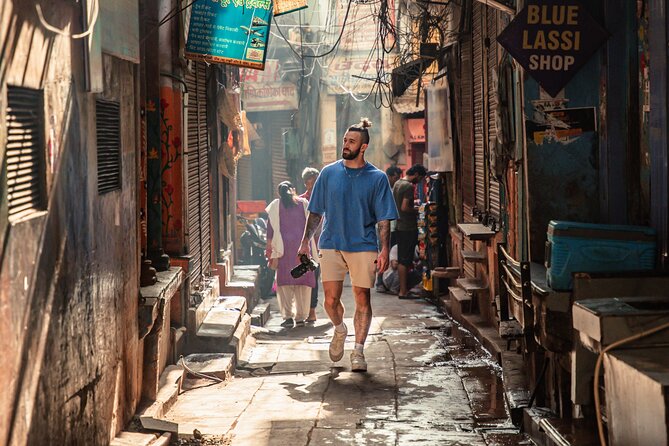
You meet at Man Singh Observatory, near Man Mandir Ghat on Dashashwamedh Ghat Road, with a morning start time of 9:30 am. The timing matters here. Early in the day, you can move through the tight lanes with less stress, and the river views still feel special rather than just crowded.
From the start, the experience is set up like a guided story walk. Instead of dropping you at temples with a quick explanation, you walk together and the guide connects places to beliefs and daily practice. That context is what makes Varanasi feel less like a checklist and more like a lived-in city.
You’ll also appreciate the practical side: this is a maximum 10-person tour, so you’re not stuck behind a parade of strangers. Plus, you get complimentary water bottles and tea, which helps a lot on warm days.
Meer Ghat: Your Panoramic Intro to the Ganges
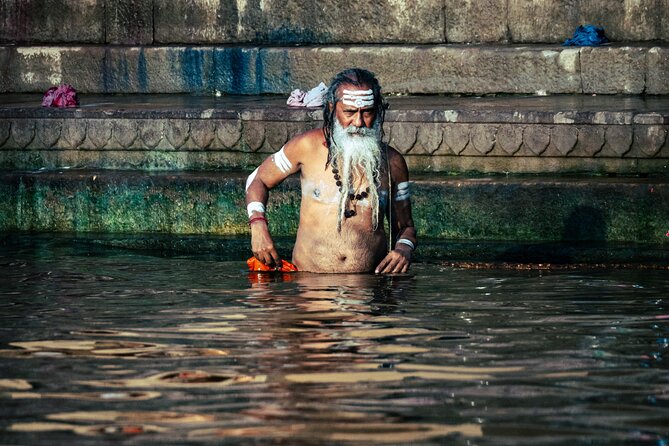
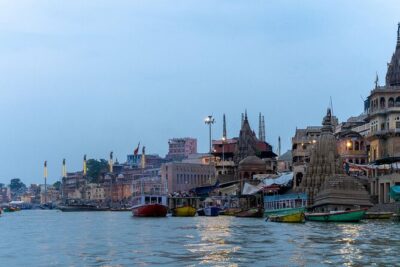
The first stop is Meer Ghat, where you get about 20 minutes to take in one of the best panoramic looks over the ghats. This is a smart opener. From here, the ghats make sense as a whole system, not just individual steps along a river.
What I’d watch for at Meer Ghat is how the guide frames the river as more than scenery. In Varanasi, the Ganges is part of religion, daily life, and community rhythm. Even if you don’t want to sit through every ritual you see, you’ll understand why people come to the water, at certain times, with certain intentions.
Quick practical note: you’ll be around the riverfront atmosphere, so keep your belongings secure and expect people moving in every direction.
Vishalakshi Temple: Shakti Peeth Meaning and Small Details That Matter
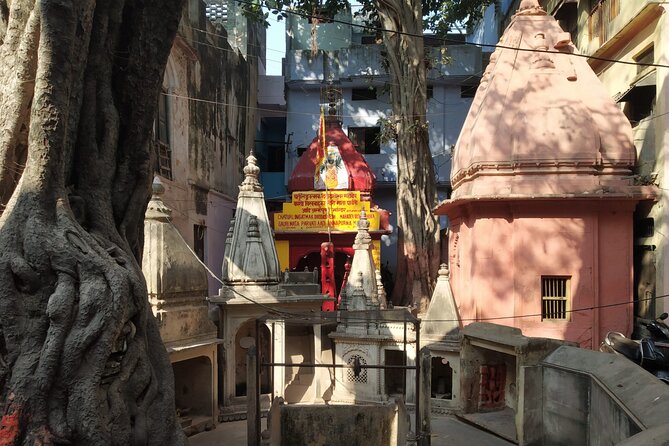
Next you visit Vishalakshi Temple, a shrine dedicated to Goddess Vishalakshi, linked to the 51 Shakti Peethas. This stop is shorter, about 15 minutes, but it’s not a drive-by. The value is in the guide’s explanation of symbolism and why this temple fits into the larger idea of the divine feminine.
You’ll likely notice how temple areas in Varanasi feel like meeting points, not museum rooms. There’s activity all around, and the guide helps you read it without turning it into a distraction. If you’ve ever been to a temple and felt you were missing the meaning, this is the kind of explanation that fixes that.
Admission here is listed as free, which is a nice bonus. You can spend your time paying attention instead of calculating costs in your head.
- The Ultimate 1 Day in Varanasi – How to Spend 13 Hours – Private Guided Tour★ 5.0 · 295 reviews
- A Journey of A lifetime★ 5.0 · 272 reviews
- Varanasi: Hidden Secrets of Vibrant Tradition (Guided Tour)★ 4.9 · 176 reviews
- Private Heritage and Spiritual Walk Tour – Varanasi Kashi★ 5.0 · 172 reviews
- 3 Hour Walking Tour of Buddhism in Sarnath★ 5.0 · 160 reviews
Kashi Vishwanath Corridor and the Golden Temple, Outside Only
Then comes one of the most famous names in Varanasi: Shri Kashi Vishwanath Temple, sometimes called the Golden Temple. For this experience, you view it from outside only, and you’ll spend about 20 minutes there.
That might sound limiting, but it can also be the right call. From the outside, you still get a clear sense of how the temple space relates to the surrounding sacred area. The guide also uses this moment to explain what you’re looking at and why the corridor and approaches carry meaning.
If you’re someone who likes architecture but also wants the spiritual map, outside-only access can actually work well. You’re not rushing through gates or trying to squeeze understanding into a timed visit. You can look, listen, and ask questions.
Admission here is free for the experience, so you’re paying for guidance and understanding rather than entry fees.
Nepali (Kathwala) Temple: Wooden Artistry and a Story You Can See
A standout cultural stop is the Nepali Temple, also known as the Kathwala Temple. You’ll spend about 20 minutes here, and the key detail is its construction story. This temple was built in the 19th century by the King of Nepal and is known for wooden architecture and intricate carvings.
This is one of those Varanasi moments where you slow down and start seeing craftsmanship. Even if you’ve visited other temple areas, the wooden details make this feel distinct. It’s not just another stone facade. The guide’s explanation helps you connect the carvings to the religious environment that created them.
Admission is included, so you don’t have to do extra math while you’re standing in front of the doors.
Manikarnika Ghat: Moksha, Mourning, and Deep Respect
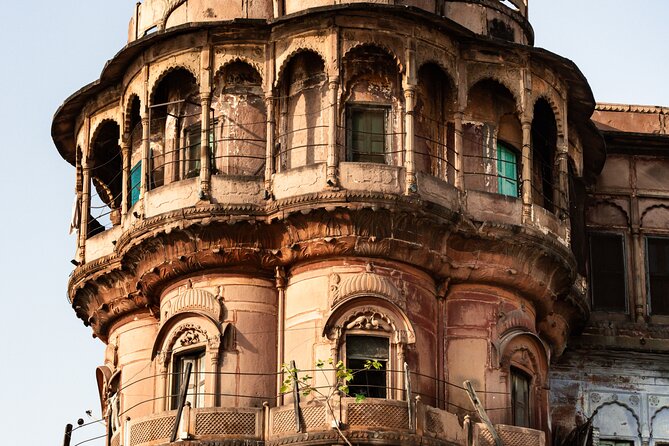
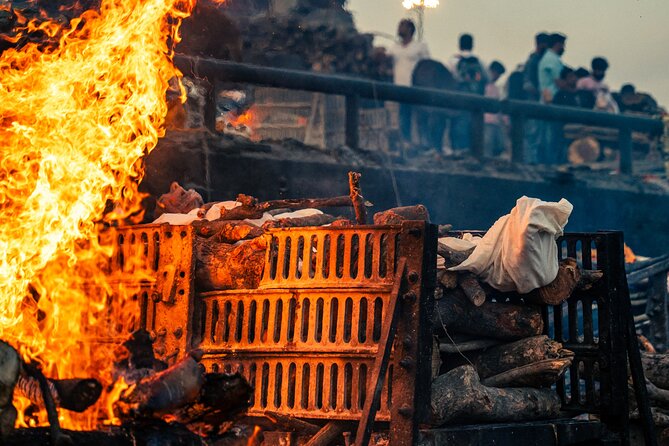
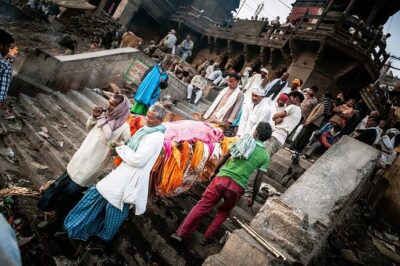
The most emotionally intense stop is Manikarnika Ghat, with about 30 minutes there. This is one of Varanasi’s most significant cremation sites along the Ganges, and it’s traditionally believed that cremation here helps the soul achieve moksha, liberation.
This part of the city is not “sightseeing” in the casual sense. It’s sacred ground, and it comes with heavy atmosphere. The guide’s role becomes crucial here: you’re not just looking, you’re learning how locals interpret what happens at the waterline and why rituals follow certain rules.
If you’re sensitive to intense visuals, I recommend mentally preparing before you arrive. Don’t treat it like a photo spot. Instead, treat it like a place where people are doing something meaningful, and let the explanation guide your pace and questions.
Admission is included for the experience.
Kashi Khand Temples: Manikarnikeshwar Mahadev and Ratneshwar Mahadev
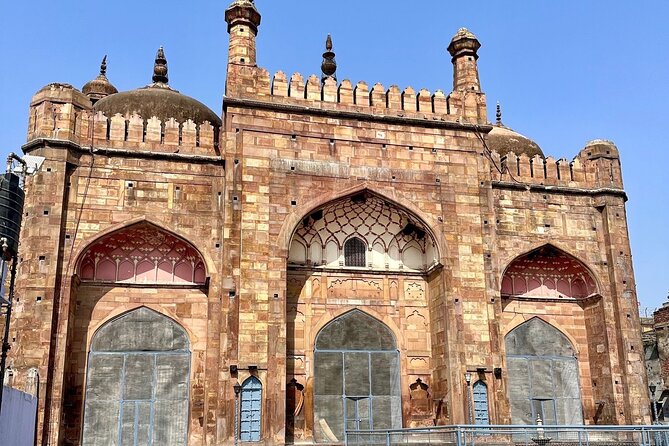
After the ghats, you continue into the religious web around them.
First you visit Manikarnikeshwar Mahadev Temple in Kashi Khand. It’s described as being linked to Manikarnika Ghat, symbolizing the connection between life and death. This is a short stop, around 15 minutes, but the point is the conceptual bridge. You walk from the cremation ground to the temple space and see how the city thinks about endings and transformations.
Next is Ratneshwar Mahadev Temple, also about 15 minutes. It’s believed to date back to the 18th century, built by a local king as a tribute to Lord Shiva. The legend tied to it involves a wish being fulfilled, which is another example of how the guide uses stories to make old stones feel less abstract.
These temples are not just religious destinations. They help you understand Varanasi as a system where belief, place, and ritual connect tightly.
The City Between Stops: Narrow Lanes, Mosques, Markets, and Corridor Views
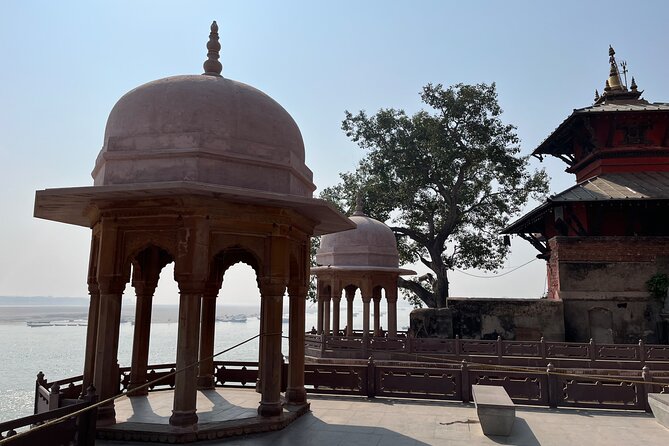
A big part of what makes this walk feel special is what happens between the major stops. You move through labyrinth lanes of the old city, and the guide highlights heritage architecture as you pass it.
Along the way, you’ll also encounter areas tied to different traditions in Varanasi, including the Alamgir Mosque and the old markets. You’re not expected to become a historian during a stroll, but the guide’s commentary gives you a framework for why these buildings and neighborhoods sit next to each other.
Another detail mentioned in the tour overview is an emphasis on the Kashi Vishwanath Corridor and an underground temple. Even if you do not spend long in each exact structure, you get points of reference that help you navigate the sacred geography you’ll see on your own later.
And yes, there’s a food-minded stop idea too: a blue lassi shop that’s described as one of the best places in Varanasi for lassi. The tour includes water and tea, but if you want lassi, you should treat it as a personal add-on and follow your guide’s cues on when it’s best to grab it.
What the Guides Do Best: Stories, English, Flexibility, and Comfort
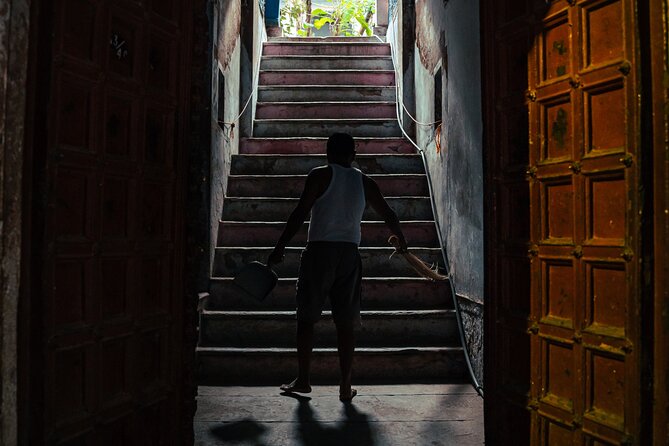
The most praised part of the experience is the guiding. Guides such as Suhail and Aman are described as patient, careful, and able to adjust to the group’s needs. That matters a lot in Varanasi because your pace and route can get affected by crowds, street conditions, and how people feel in the moment.
You can also expect solid English and clear explanations of culture, religion, tradition, and Hindu gods and goddesses. The guide isn’t only pointing and naming. The goal is that you leave understanding why a place is important.
One practical perk that shows up repeatedly in the way the guides are described is how they handle breaks. If you need tea, chai, or a short rest, a good guide will build it into the flow instead of making you feel like you’re slowing things down.
This is exactly where value lives for me. A cheap tour can show you places. A great guide helps you interpret them.
Price and Value: What $28.35 Really Buys You
At $28.35 per person for a 2 to 3 hour walking experience, this is positioned as strong value if you care about guidance and multiple paid stops. Entrance fees are listed as included across the tour, and you also get complimentary water bottles and tea.
One cost detail to keep in mind: GST is not included. That doesn’t mean you’ll be surprised at the last second, but it does mean your final total could be slightly higher than the headline price depending on how your booking platform displays taxes.
For you, the bigger value question is this: do you want someone to translate the meaning of temples and ghats while you walk through the old city maze? If yes, the price feels fair because you’re paying for a guided framework, not just for access to a couple of points.
Also, the group size stays small, up to 10 people. That makes questions easier and keeps the walking pace more manageable.
Practical Tips: Shoes, Respect, and a Calm Plan
This is a walking tour through narrow lanes and sacred sites, so the basics matter more than you’d think.
- Wear comfortable shoes with grip. Streets can be uneven and crowded.
- Bring a light layer or sun protection since you’ll be outside for extended stretches.
- Plan your mindset for Manikarnika Ghat. It’s solemn, so keep camera use respectful and brief.
- Use your guide’s explanations to stay grounded. If you don’t understand what you’re seeing, ask. That’s part of the point.
Weather matters too. The experience requires good weather, so if conditions are poor, you might get a different date or a full refund.
Should You Book This Varanasi Walk?
If you want a Varanasi experience that’s more than photos and more than a long day in traffic, I think this is a good fit. It’s short enough to feel manageable, includes entrance fees, and places strong emphasis on understanding the city’s religious and cultural logic as you walk.
It may not be the best choice if you hate walking, you’re very uncomfortable with emotionally heavy sacred spaces, or you want a lot of time inside temples rather than outside views and guided context. But if you can handle a respectful, guided walk through both beauty and seriousness, this tour can give you a clearer picture of Varanasi fast.
FAQ
Where does the tour start?
The tour starts at Man Singh Observatory, Man Mandir Ghat, Dashashwamedh Ghat Rd, Observatory, Man Mandir, Godowlia, Varanasi, Uttar Pradesh 221001, India.
What time does it begin?
The start time is 9:30 am.
How long is the walk?
The duration is about 2 to 3 hours.
Is this a small group?
Yes. The tour has a maximum size of 10 travelers.
Are entrance fees included?
Yes. All kinds of entrance fees are included.
What is included besides entrance fees?
You get complimentary water bottles and tea.
Is the ticket mobile?
Yes, the tour uses a mobile ticket.
Which key sights are part of the route?
You visit Meer Ghat, Vishalakshi Temple, Shri Kashi Vishwanath Temple from outside only, the Nepali (Kathwala) Temple, Manikarnika Ghat, and additional Mahadev temples including Manikarnikeshwar Mahadev Temple and Ratneshwar Mahadev Temple.
Is it refundable if plans change?
You can cancel for a full refund up to 24 hours in advance of the experience start time.
What if the weather is bad?
This experience requires good weather. If it is canceled due to poor weather, you will be offered a different date or a full refund.
The Ghats at Varanasi, More Reviews




Recently reviewed across Varanasi
- Varanasi: Sunrise Boat Tour and Heritage Walk with transfers
★ 5.0 · 10 reviews - Varanasi Mysteries Walk: A Journey through Life and Death
★ 5.0 · 10 reviews - Omvity’s Full-Day Varanasi Tour: Sunrise Boat to Sunset Aarti
★ 5.0 · 10 reviews - Cycle of Life, Death & Rebirth (2 Hours Guided Walking Tour)
★ 4.5 · 10 reviews - Varanasi: Private Heritage Walking Tour & Sunrise Boat Ride
★ 4.9 · 11 reviews - Varanasi: Ganga Arti Evening Light Ceremony on the Main Ghat
★ 4.1 · 11 reviews
Varanasi Ghats and Ganga Aarti, compared.
 ★ 4.8Full Day City Highlights Day Tour & Ganges CruiseFrom $61520 reviews
 ★ 5.0Hidden Secrets of Varanasi: Vibrant Tradition (Guided Tour)From $24429 reviews
 ★ 5.0Sunrise Boat Tour with Arti CeremonyFrom $31375 reviews
 ★ 5.0Banaras Wala ToursFrom $13329 reviews
 ★ 5.0The Ultimate 1 Day in Varanasi – How to Spend 13 Hours – Private Guided TourFrom $65295 reviews
 ★ 4.9Hidden Secrets of Vibrant Tradition (Guided Tour)From $16176 reviews
 ★ 5.0Private Heritage and Spiritual Walk Tour – Varanasi KashiFrom $24172 reviews
 ★ 4.5Varanasi Landmark Evening City Tour – Aarti, Boating & Witnessing the GODFrom $31149 reviews
Browse the lists this tour appears in