
REVIEW · VARANASI GHATS AND GANGA AARTI
Explore Varanasi’s heritage
A day in Varanasi can feel like a living museum. This private heritage walk is built around local roots and a guide who has family in the city for over 500 years, so you are not just looking, you are understanding. I especially like how the route threads together the ghats and temples in a logical flow, and how the tour stays flexible to your pace and interests. One consideration: a few key temple entries are not included, so you may want to budget extra on the day.
I also like that this is a small, private experience, with pickup offered and a mobile ticket, which keeps the logistics easy in a place that can get crowded and chaotic. The main drawback is that the experience does require good weather, and some stops involve walking through old lanes around very active religious sites.
In This Review
- Key highlights
- How this heritage walk helps you read Varanasi, not just photograph it
- Meeting Manjeet Sahani: the local touch that changes the whole day
- Walking route and timing: 2 to 4 hours with a flexible finish
- Stop-by-stop guide to the ghats, lanes, temples, and markets
- Stop 1: Dashashwamegh Ghat
- Stop 2: Vishalakshi Temple
- Stop 3: Meer Ghat and the 84 ghats view
- Stop 4: Nepali Temple (Kathwala Temple)
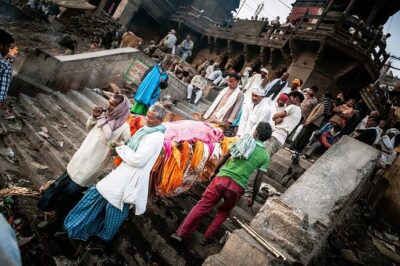
- Stop 5: Manikarnika Ghat, the death ritual ghat
- Stop 6: Panchganga Ghat and the Alamgir mosque link
- Stop 7: Shri Kashi Vishwanath Temple, the Golden Temple
- Stop 8: Bhans Phatak and Chowk Godowlia, the flower market
- Stop 9: Madanpura, the artisans and weaving industry
- Stop 10: Manmandir Ghat, sages of Kashi
- Price and value: what $20.69 per person buys you in Varanasi
- Practical considerations before you book
- Should you book this heritage walk?
- FAQ
- How long is the tour?
- Is pickup offered?
- Is this tour private?
- Where do we meet for the tour?
- Which stops include admission tickets?
- Which stops have admission not included?
- What is the weather requirement and cancellation option?
Key highlights
- Manjeet Sahani, 500-year Varanasi family heritage gives you context that goes beyond monuments
- A private walking format means your route and stops can be tailored to what you care about
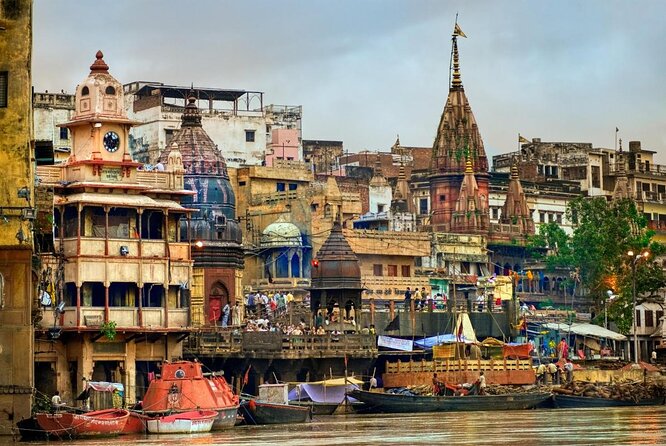
- Ghat panoramas and major ritual sites at a human walking pace, not a rushed drive-by
- A mix of Hindu temples, a Nepal-built teak temple, and Mughal-era links shows Kashi’s layers
- Included admissions at several stops helps you manage costs on the day
- Flexibility at the finish point lets you end where it is most convenient for you
More time on the Varanasi ghats
How this heritage walk helps you read Varanasi, not just photograph it
Varanasi is famous for color, crowds, and ceremony. But the real payoff is learning how all those moving pieces connect. On this walk, you follow a local path through Dashashwamegh Ghat, then into the old-town lanes, and finally toward some of the most significant ghats and temples. The difference is in the framing. You are guided to notice why a ghat matters, what a temple represents, and how everyday life rubs shoulders with ritual.
I like that the tour does not treat Varanasi as one big checklist. It feels like a guided conversation between history and present-day habits. Even the shorter stops, like market time at Chowk Godowlia and Madanpura, are there for a reason: they show how craft and trade have their own daily rhythms here.
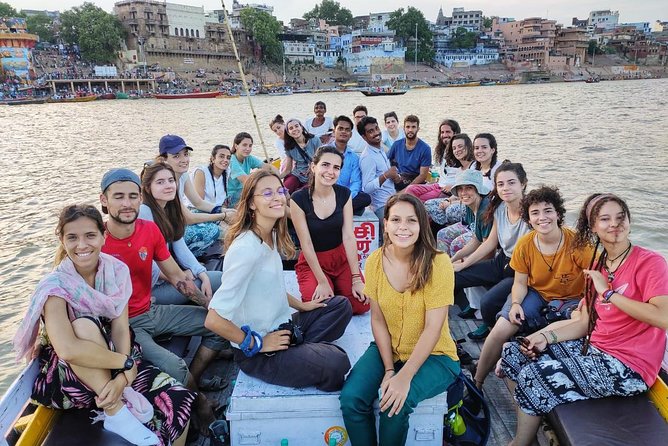
The other big reason this tour works is that it is private. You are not stuck keeping up with a large group while your attention gets yanked toward the next photo spot. With a private guide, you can pause longer when something catches your interest and move faster when you want to keep the momentum.
Meeting Manjeet Sahani: the local touch that changes the whole day
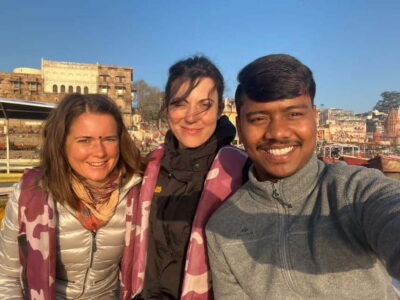
The guide behind the walk is Manjeet Sahani. He is presented as a local with family living in Varanasi for generations, and he runs the tour personally. That matters for two reasons.
First, the explanations tend to sound like they come from living here, not studying from a distance. When you are told what to look for, it connects to the city’s habits, not just dates. Second, there is real flexibility. The tour can be adjusted to your interests as you walk, and that is useful in Varanasi, where conditions can change quickly.
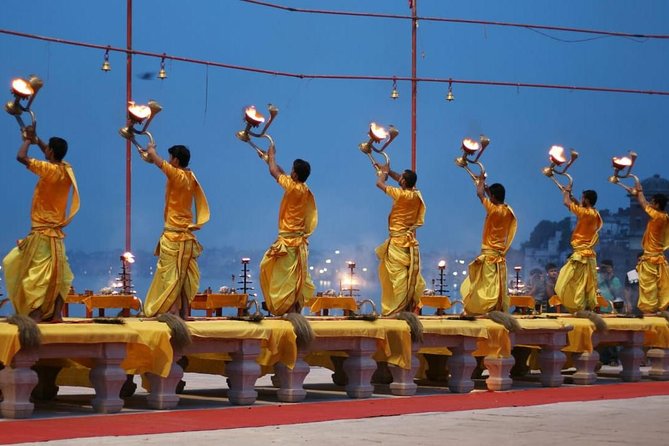
This practical flexibility shows up in how Manjeet handles real-world issues. For example, when rain disrupted daily plans and the Aarti ceremony was suspended, he was able to get people front row seating for a rooftop Aarti. The message is simple: you are not only buying a route, you are getting a problem-solver who knows the city.
Walking route and timing: 2 to 4 hours with a flexible finish
Plan on about 2 to 4 hours for the walk. The exact pace depends on what you want to linger on and how the day’s flow works. Pickup is offered, and you use a mobile ticket, which makes it easier to coordinate without extra paperwork.
Your meeting point is Dashashwamedh Ghat Rd, Ghats of Varanasi, Godowlia, Varanasi, Uttar Pradesh 221001. The start and end are listed at the same general area, but the ending point is actually flexible. If you want to finish somewhere else, you just need to let the guide know.
One more practical note: the tour runs daily from early to late hours, so you can choose a time window that fits your schedule. Still, the experience requires good weather, so if conditions are poor, you may have to switch dates or get a refund.
- The Ultimate 1 Day in Varanasi – How to Spend 13 Hours – Private Guided Tour★ 5.0 · 295 reviews
- A Journey of A lifetime★ 5.0 · 272 reviews
- Varanasi: Hidden Secrets of Vibrant Tradition (Guided Tour)★ 4.9 · 176 reviews
- Private Heritage and Spiritual Walk Tour – Varanasi Kashi★ 5.0 · 172 reviews
- 3 Hour Walking Tour of Buddhism in Sarnath★ 5.0 · 160 reviews
Stop-by-stop guide to the ghats, lanes, temples, and markets
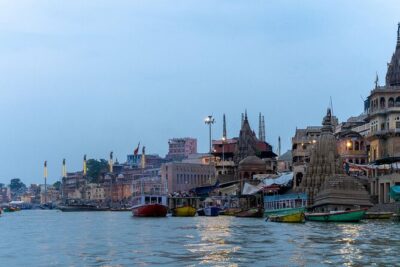
This walk has a tight sequence. You start at a major ghat, move through historic temple territory and old lanes, then connect back through ghats with major religious importance, ending near markets where you can see craft and everyday shopping.
Stop 1: Dashashwamegh Ghat
You begin at Dashashwamegh Ghat. This is your “orientation stop,” the place where the tour’s heritage theme starts to make sense. You get history and context through someone who is rooted in the city, not just passing through it.
This stop is marked as about 15 minutes, and the admission ticket here is free. That makes it a low-friction start, especially if you arrive and want to settle your bearings quickly. Also, because it is a ghat, the surrounding activity helps you understand why these riverfront steps are not passive scenery here. They are part of daily life and sacred routine.
Tip for this stage: arrive with a mindset of watching how people move. On a ghat, the flow tells a story.
Stop 2: Vishalakshi Temple
Next, you walk through the bylanes of old Kashi town to reach Vishalakshi Temple. This is a short stop, about 10 minutes, and admission is included.
The value here is the transition. You shift from open riverfront space into dense, human-scale streets where you can feel the age of the neighborhood. Temples like this often reveal local devotion in a more intimate way than a huge complex. Even if your time is short, you get a snapshot of how faith lives inside everyday corridors.
If you do not enjoy tight lanes, you might find this stretch a little compressed, but it is also where the city’s texture shows up.
Stop 3: Meer Ghat and the 84 ghats view
At Meer Ghat, you get a panoramic angle on the famous 84 ghats of Kashi. This is about 15 minutes, with admission included.
This stop gives you one of the most useful “big picture” moments on the walk. When you can see the ghats as a linked system, you understand why Varanasi feels like a network, not one single waterfront attraction. It also helps you place later stops. After you get the overview, Manikarnika and Panchganga feel less random.
If you want photos, this is one of your better windows because the scene is meant to be seen from above or at a viewpoint. If lighting or crowding is off on your day, keep moving, because the rest of the route stays worth it.
Stop 4: Nepali Temple (Kathwala Temple)
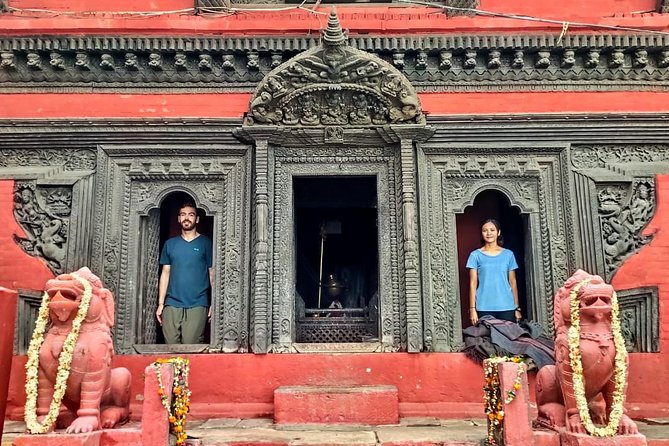
Then you head to the Nepali Temple, also called Kathwala Temple. It is built by the King of Nepal and uses only teak wood, and the tour points you toward intricate carvings, including erotic and historical details.
This stop is about 15 minutes. Admission is not included.
This is one of the most distinctive stops on the route because it is a different cultural ingredient in Varanasi’s mix. Also, teak and carved details are the kind of things you notice only if someone points them out. If you prefer very straightforward, faith-only sightseeing, the erotic carving mention is worth flagging. It is part of the temple’s historical character, so decide based on your comfort level.
Stop 5: Manikarnika Ghat, the death ritual ghat
Next is Manikarnika Ghat, described as the main ghat used for death rituals for thousands of years. This stop is about 20 minutes, with admission included.
I think this is where the walk becomes real, not just scenic. Cremation ghats are emotionally intense places. The point of stopping here is not shock value. It is context. If you take a respectful approach and let your guide frame what you are seeing, you walk away with a clearer understanding of why Varanasi is considered sacred in this way.
You should consider your own comfort level. If heavy topics are hard for you while traveling, spend the minimum time, keep a respectful distance, and focus on the explanations.
Stop 6: Panchganga Ghat and the Alamgir mosque link
At Panchganga Ghat, you visit the Alamgir mosque built in the Mughal era. This stop is about 15 minutes, and admission is not included.
This is a smart inclusion because it shows Varanasi’s layered story. Instead of presenting religion and architecture as separate worlds, you see overlap and proximity. You are moving through Hindu devotional space, then connecting to a Mughal-era Islamic landmark nearby.
If you are expecting only one style of temple, this stop adds balance. It also changes the feel of the walk, since mosques have their own architectural language and sense of space.
Stop 7: Shri Kashi Vishwanath Temple, the Golden Temple
Then comes Shri Kashi Vishwanath Temple, often called the Golden Temple. It is described as one of the most sacred Hindu temples and a must visit when you are in Varanasi.
This stop runs about 30 minutes, and admission is not included.
This is the anchor stop for many people, and it is also practical to have a local guide here. Getting inside major temple areas can involve multiple gates and rules that change with the day. In fact, people in past groups have noted that Manjeet helped them get to the right gates and moved them efficiently inside the complex, including time at related spots like the Nepali temple area and other temple points within the broader setting.
If your priorities include seeing this temple in a non-rushed way, this stop is where your time is likely to go.
Stop 8: Bhans Phatak and Chowk Godowlia, the flower market
After temples, you shift to commerce. Bhans Phatak, Chowk Godowlia is your flower market stop, about 10 minutes. Admission is free.
This is more than a colorful break. Flowers matter in the city’s everyday religious economy. You see what people buy for worship, and you feel how the market supports ceremony in real time.
It is a quick stop, so if you want extra shopping time, ask the guide how much the schedule can stretch. A flower market also means a lively sense of motion, so keep your hands free and your attention on where you step.
Stop 9: Madanpura, the artisans and weaving industry
Next is Madanpura, an artisans market tied to a centuries-old weaving industry. This stop is about 30 minutes, and admission is free.
This is one of the best segments for anyone who wants Varanasi beyond temples. Weaving here is part of continuity, not just souvenirs. The payoff is learning what is made and why it matters to locals, not just what to buy.
If you like to compare textiles and ask questions, you will appreciate the time. If you are traveling light and do not plan to shop, treat it as a window into craft and labor. You do not need to buy to learn.
Stop 10: Manmandir Ghat, sages of Kashi
Finally, you end at Manmandir Ghat, around 10 minutes. Admission is free.
This closing stop is a calmer capstone. It focuses on the sages of Kashi, tying the day’s learning back into spiritual storytelling. If you still have energy, this is a nice place to take in the riverfront again after the intense temple moments.
Because the route ends near the starting area and is flexible, you can adjust your finish based on where you want to go next. If you are planning a meal or heading back to your hotel, this flexibility can save time.
Price and value: what $20.69 per person buys you in Varanasi
The price is $20.69 per person, with tours often booked around 40 days in advance. On its face, that sounds like a budget walking tour. In value terms, what matters is what you are buying.
You are paying for a private route that blends major ghats, landmark temples, a Mughal-era mosque connection, a Nepal-built teak temple with carved details, and market stops. Several admissions are included, including key segments like Vishalakshi Temple, Meer Ghat, and Manikarnika Ghat. Others are not included, including Nepali Temple, Panchganga Ghat’s Alamgir mosque, and Shri Kashi Vishwanath Temple.
So the smart way to think about the cost is this: even if you have extra entry fees, you avoid the hassle of piecing together your own route, and you get a local guide to connect the dots. In a city like Varanasi, that guidance has real value. It saves you from wandering into confusing routes and helps you understand what you are looking at while you walk.
Practical considerations before you book
Varanasi days can be hot, crowded, and active. This walk is designed for most people, and it is a private group, which usually makes it easier to manage your pace.
The two real considerations are:
1) Weather and day-of conditions. The experience requires good weather. If rain hits, plans can change, and the tour may switch dates or offer a refund.
2) Temple entry costs not included. Some highlights, including Shri Kashi Vishwanath and the Alamgir mosque, are marked as admission not included. If you want to avoid surprises, plan a little extra budget for on-site entries.
If you care most about a sense of place and understanding, this tour tends to fit very well. If you prefer a purely scenic, low-emotion itinerary, you might find the Manikarnika Ghat stop heavy.
Should you book this heritage walk?
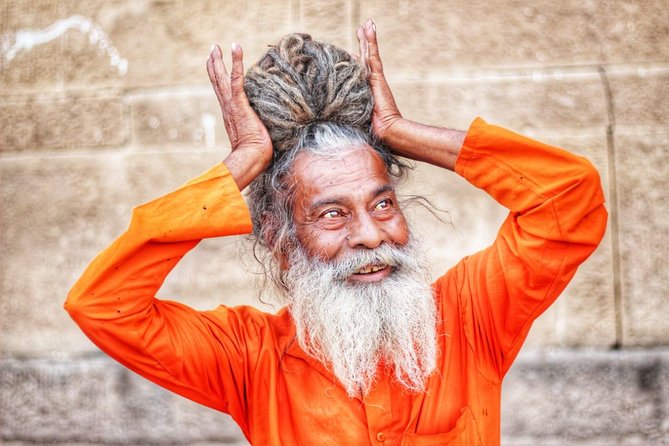
If you want to understand Varanasi instead of just pass through it, this is an easy yes. The big reason is the private approach led by Manjeet Sahani, with flexibility and a route that connects ghats, temples, and markets in one coherent story.
I would especially recommend it if you:
- want help navigating the most important temple areas without feeling lost
- like walking and can handle busy, historic streets
- appreciate guidance that includes context, not only landmarks
- are open to emotionally serious places, with respect
I would think twice if you:
- are uncomfortable with cremation-related sites
- dislike markets and shopping stops, even if they are short
- want every entry included in the price, since some major temples are not included
If you book, consider asking for your preferred finish point at Dashashwamedh Ghat Rd so your day lines up with dinner or your next activity. That little detail can make the whole experience feel smoother.
FAQ
How long is the tour?
The tour lasts about 2 to 4 hours.
Is pickup offered?
Yes, pickup is offered.
Is this tour private?
Yes, it is a private tour/activity, and only your group participates.
Where do we meet for the tour?
The start point is Dashashwamedh Ghat Rd, Ghats of Varanasi, Godowlia, Varanasi, Uttar Pradesh 221001, India.
Which stops include admission tickets?
Admission is included for Vishalakshi Temple and Meer Ghat, and it is included for Manikarnika Ghat. Some stops are free, and some are not included.
Which stops have admission not included?
Admission is not included for Nepali Temple (Kathwala Temple), Panchganga Ghat (Alamgir mosque), and Shri Kashi Vishwanath Temple (Golden Temple).
What is the weather requirement and cancellation option?
The experience requires good weather. You can cancel for a full refund up to 24 hours before the experience’s start time.
The Ghats at Varanasi, More Reviews


Recently reviewed across Varanasi
- Varanasi: Sunrise Boat Tour and Heritage Walk with transfers
★ 5.0 · 10 reviews - Varanasi Mysteries Walk: A Journey through Life and Death
★ 5.0 · 10 reviews - Omvity’s Full-Day Varanasi Tour: Sunrise Boat to Sunset Aarti
★ 5.0 · 10 reviews - Cycle of Life, Death & Rebirth (2 Hours Guided Walking Tour)
★ 4.5 · 10 reviews - Varanasi: Private Heritage Walking Tour & Sunrise Boat Ride
★ 4.9 · 11 reviews - Varanasi: Ganga Arti Evening Light Ceremony on the Main Ghat
★ 4.1 · 11 reviews
Varanasi Ghats and Ganga Aarti, compared.
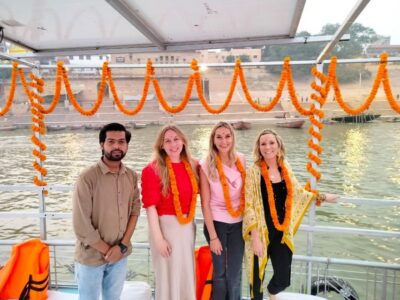 ★ 4.8Full Day City Highlights Day Tour & Ganges CruiseFrom $61520 reviews
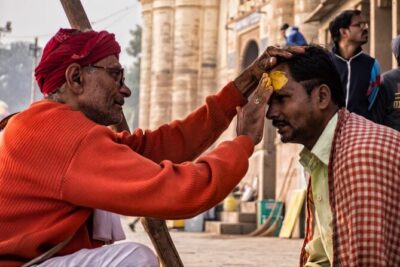 ★ 5.0Hidden Secrets of Varanasi: Vibrant Tradition (Guided Tour)From $24429 reviews
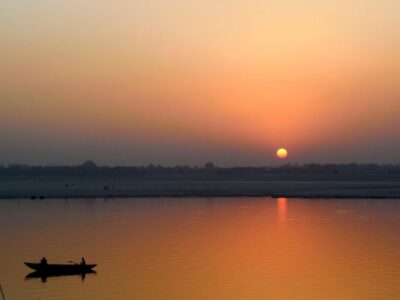 ★ 5.0Sunrise Boat Tour with Arti CeremonyFrom $31375 reviews
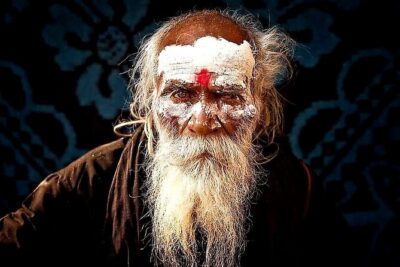 ★ 5.0Banaras Wala ToursFrom $13329 reviews
 ★ 5.0The Ultimate 1 Day in Varanasi – How to Spend 13 Hours – Private Guided TourFrom $65295 reviews
 ★ 4.9Hidden Secrets of Vibrant Tradition (Guided Tour)From $16176 reviews
 ★ 5.0Private Heritage and Spiritual Walk Tour – Varanasi KashiFrom $24172 reviews
 ★ 4.5Varanasi Landmark Evening City Tour – Aarti, Boating & Witnessing the GODFrom $31149 reviews
Browse the lists this tour appears in