
REVIEW · VARANASI GHATS AND GANGA AARTI
Guide francophone à varanasi – Rakesh
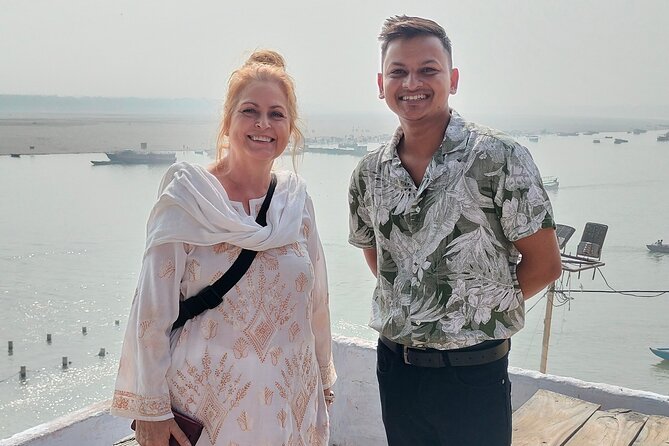
Varanasi turns understandable fast with Rakesh. This French-speaking local guide is born and raised in Banaras, so you get a route built around traditions, history, and religion, not just a checklist. I like the way he frames what you are seeing so it feels connected, and I especially like the structure of ghat and temple stops that moves along the riverfront rather than scattering you around town.
One thing to keep in mind: the ghats can be intense and crowded, and Manikarnika Ghat is emotionally heavy. If you are sensitive to the idea of cremation grounds, plan for a slower moment there and let your guide set the pace, especially during peak-tourist periods.
In This Review
- Key Highlights You’ll Feel on the Walk
- Three Hours With a French-Speaking Local, at a Price That Makes Sense
- Meeting at Dashashwamedh Ghat, the Main Gateway to Banaras
- Stop 1, Dasaswamedh Ghat and the Vishwanath Temple Area
- Stop 2, Vishalakshi Temple at Mir Ghat: A Temple Dedicated to Vishalakshi
- Stop 3, Nepali (Kathwala or Kanthwala) Temple: Names You’ll Remember
- Stop 4, Manikarnika Ghat: The Most Serious Spot on the Route
- Stop 5, Ratneshwar Mahadev Temple: A Photographed Temple With a Visible Quirk
- Stop 6, Pita Maheshwar Mahadev Temple and the Kashi Khand Shivling
- How Rakesh Helps You Navigate Varanasi’s Tight Lanes and Peak Days
- What You Should Plan for Before You Go
- Is This Tour Worth Booking? My Decision Guide
- FAQ
- How long is the tour?
- Where does the tour start?
- Is this tour private?
- Are temple or ghat admission tickets included?
- What language is the guide?
- What if the weather is bad?
- Can I cancel for a refund?
Key Highlights You’ll Feel on the Walk
- French-first guidance from Rakesh, with clear explanations for the main sights along the Ganga
- A stop-by-stop ghat route that stays focused and efficient in about 3 hours
- Admissions handled for most stops, so you spend less time figuring out tickets on the riverfront
- Manikarnika Ghat included, one of the most serious places in Varanasi, not an optional side detour
- Patient navigation through tight lanes, helpful when crowds swell
- Questions welcomed, with quick answers that help you connect the dots
More time on the Varanasi ghats
Three Hours With a French-Speaking Local, at a Price That Makes Sense
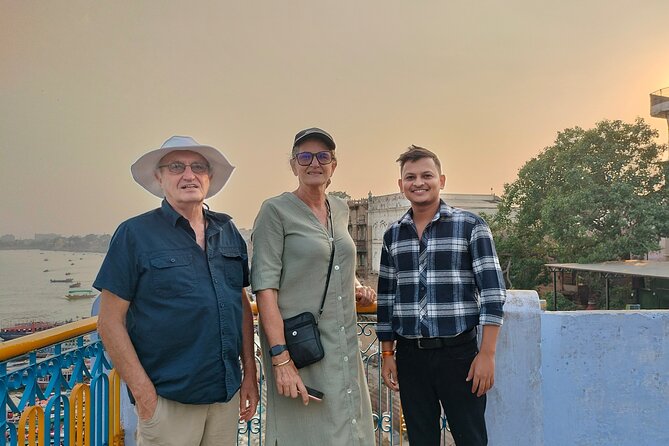
This is a private tour, meaning it is only your group. That matters in Varanasi, where the riverfront and temple lanes can turn chaotic fast. At about 3 hours, you get a full afternoon-style introduction without feeling stuck in a long day.
The price is $27.96 per person, which feels fair because the itinerary is concentrated: you are moving between major ghats and multiple temples, and admissions are included at most stops. The tour also uses a mobile ticket, so you are not hunting for paper vouchers while you are already surrounded by sights and sounds.
This tour is also designed for real participation: the info says most travelers can participate and the experience requires good weather. If weather is poor, the plan may be rescheduled or refunded, so keep an eye on conditions when you book.
Meeting at Dashashwamedh Ghat, the Main Gateway to Banaras
You start at Dashashwamedh Ghat Rd, Ghats of Varanasi, Godowlia, Varanasi, Uttar Pradesh 221001. Ending back at the meeting point keeps things simple, especially if you do not want to think about transport at the end of a walk.
This start location is smart. Dashashwamedh Ghat is described as a main ghat on the Ganga River, and it sits close to Vishwanath Temple. In other words, you are dropped right into the heart of the riverfront world instead of starting somewhere convenient but disconnected from the main energy.
Also, your first stop is time-light on purpose: about 25 minutes with free entry. That gives you a chance to orient yourself early, get comfortable with the flow of the area, and settle into your guide’s rhythm before the more meaningful stops take over.
Stop 1, Dasaswamedh Ghat and the Vishwanath Temple Area
Dashashwamedh Ghat is one of the key riverfront ghats in Varanasi. Your visit here is about 25 minutes, and the entry is listed as free, so this part is easy to slot into your morning or afternoon without hidden costs.
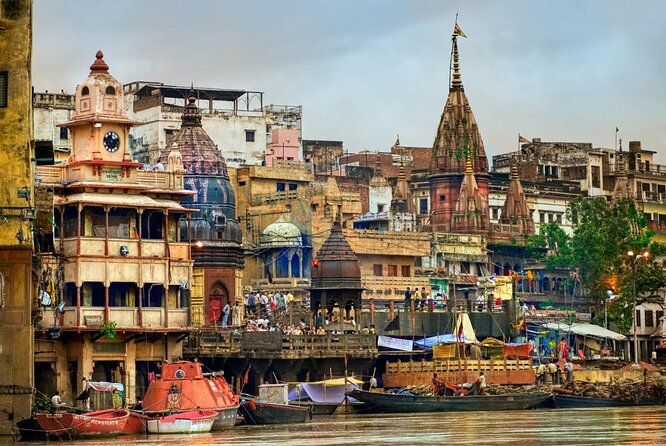
What you will likely notice first is that the ghat area is visually busy, with temple connections close by. Since it is located near Vishwanath Temple, it works as a natural “hub” stop, where you can understand how the riverfront relates to worship sites rather than treating them like separate attractions.
A private guide earns his keep here. When you are standing at a famous ghat, the crowd can make everything blur. Having Rakesh with you helps you focus on what is worth slowing down for, instead of wandering just trying to see everything at once.
- The Ultimate 1 Day in Varanasi – How to Spend 13 Hours – Private Guided Tour★ 5.0 · 295 reviews
- A Journey of A lifetime★ 5.0 · 272 reviews
- Varanasi: Hidden Secrets of Vibrant Tradition (Guided Tour)★ 4.9 · 176 reviews
- Private Heritage and Spiritual Walk Tour – Varanasi Kashi★ 5.0 · 172 reviews
- 3 Hour Walking Tour of Buddhism in Sarnath★ 5.0 · 160 reviews
Stop 2, Vishalakshi Temple at Mir Ghat: A Temple Dedicated to Vishalakshi
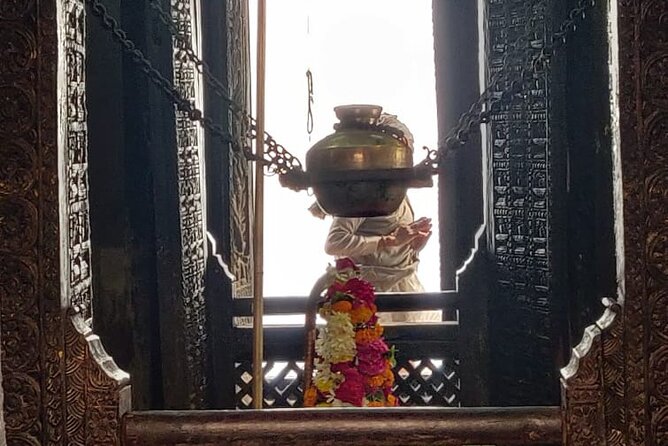
Next up is Vishalakshi Temple, also known as Vishalakshi Gauri Temple. It is a Hindu temple dedicated to the goddess Vishalakshi, and it is located at Mir Ghat on the banks of the Ganges.
This stop is about 25 minutes, and admission is included. That inclusion matters because it reduces one practical headache at the start of the day when you might already be adjusting to local logistics.
What makes this stop interesting in the context of Varanasi is that you are not only watching the riverfront. You are switching from the “main stage” feel of a major ghat into a more specific devotional identity tied to a particular goddess. It is the kind of stop where a guide’s explanations help you interpret what you are seeing.
Stop 3, Nepali (Kathwala or Kanthwala) Temple: Names You’ll Remember
Then you reach the Nepali Temple, also called Kathwala Temple. The site information links it to Shri Samrajeswar Pashupatinath Mahadev Mandir, and you may see alternative names like Nepali Mandir and Kanthwala Mandir.
It is also described as Mini Khajuraho, with the note that “Kanthwala” refers to wooden. Your stop here is another about 25 minutes, and admission is included.
This is a great mid-tour stop because it gives you a change of pace. A ghat route can start to blend together unless something specific anchors your attention. The temple’s multiple names, and the “Mini Khajuraho” comparison, give you a mental handle so you can remember what you saw and why it felt distinct.
Stop 4, Manikarnika Ghat: The Most Serious Spot on the Route
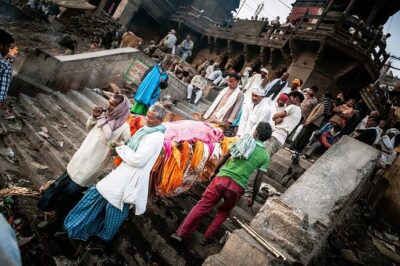
Manikarnika Ghat is one of the holiest cremation grounds along the sacred riverfronts of Varanasi, on the Ganga. Your visit here is about 50 minutes, and admission is included.
This is the stop that will stick with you the longest, mainly because it is not just a view. A cremation ground is part of living religious practice, and the atmosphere can feel heavy even when you are trying to remain observational.
Balanced advice: do not force yourself to “power through” it. If you need a pause, take one. A private guide helps here because you can step aside briefly without losing the thread of the story you are being told.
It is also why a guide matters for value, even if you already know the basics. Rakesh’s job is not just pointing. It is helping you understand the place in context, so you are not left thinking, I saw something dramatic, but I do not know what it means.
Stop 5, Ratneshwar Mahadev Temple: A Photographed Temple With a Visible Quirk
Ratneshwar Mahadev Mandir is described as one of the most photographed temples in Varanasi. The site is described as being well-preserved but also leaning significantly towards the back, which is exactly the sort of detail you want someone to point out while you are there.
This stop runs about 30 minutes, and admission is included. Since you are already walking through temple areas, this is a clean addition: it is shorter than the Manikarnika stop, and it gives you a specific, visually noticeable feature to focus on.
In practice, that leaning detail does more than satisfy curiosity. It helps you slow your eyes down and look more carefully. When a guide highlights one real feature like that, your photos and your memory turn out better because you know what to track visually.
Stop 6, Pita Maheshwar Mahadev Temple and the Kashi Khand Shivling
The final stop is Pita Maheshwar Mahadev Temple, tied to Kashi Khand. The focus here is the Pita Maheshwar Shivling, which is believed to be shwayambhu, meaning a self-manifested form of Shivling.
The information also notes that the mention of this shivling can be found in Skand Puran, one of the 18 most important Hindu scriptures. Your visit is about 20 minutes, and admission is included.
This stop is valuable because it turns your attention from the “place” to the “symbol.” Earlier you dealt with ghats and temple locations. Here, you are being guided toward a specific religious belief connected to a physical icon. For many people, that is the moment where the tour feels most connected to religion rather than just scenery.
If you are the type who likes to ask questions, this is a good ending. The scriptures reference gives your guide a clear thread to explain, and a short stop keeps it from dragging after the heavier Manikarnika experience.
How Rakesh Helps You Navigate Varanasi’s Tight Lanes and Peak Days
The best part of this tour is not only what you see, it is how you get there. One review highlights that during unusually busy times, like Mahakumbh surge periods, the guide served as more than a tour leader, acting like a steady friend and guide through narrow lanes full of people.
That kind of experience matters because Varanasi can feel like a moving puzzle. Without guidance, it is easy to lose your place, get turned around, or spend energy pushing through crowds instead of watching and learning.
Rakesh is also described as being on time, patient, and quick to answer requests. In a place like this, those traits are practical. They reduce stress, and they let your attention stay where it belongs, on the ghats and temples instead of logistics.
Language is part of that comfort too. The guide is francophone, and reviews also mention he speaks English fluently. So if your group is mixed-language, you should be in good hands.
What You Should Plan for Before You Go
You are visiting active, sacred areas along the riverfront, plus a cremation-ground site. That means the experience can be emotionally intense and visually demanding, even when everything is explained respectfully. Plan for that reality, not just the photo moments.
Here are a few sensible preparations that match what the tour is doing, without trying to over-script your day:
- Wear comfortable shoes, since you will be moving between closely related stops.
- Bring a light layer if weather changes, since the experience is weather dependent.
- Think in terms of short, focused stops, especially after Manikarnika, so you do not feel rushed.
- Keep your questions ready. If you are curious about what you are seeing, this is the type of guided route where it pays to ask.
Also, because it is a private experience, your pace should work better for you. You can slow down for one temple feature, then keep moving when you are ready.
Is This Tour Worth Booking? My Decision Guide
Book this tour if you want a structured, private introduction to Varanasi’s river ghats and key temples in about three hours, led by a French-speaking local guide. The price feels like good value because admissions are included for most stops, and the route is concentrated rather than scattered.
Skip it or think twice if you know you are not comfortable with the idea of visiting a cremation ground, even with context. In that case, you could still enjoy other Varanasi experiences, but this particular route includes Manikarnika as a core stop.
If you want something more than a photo walk, this is built for meaning. The route gives you the big names, then adds temples with specific identities, so you leave with a clearer sense of how religion, the riverfront, and daily life connect in Banaras.
FAQ
How long is the tour?
The tour lasts about 3 hours.
Where does the tour start?
It starts at Dashashwamedh Ghat Rd, Ghats of Varanasi, Godowlia, Varanasi, Uttar Pradesh 221001, India.
Is this tour private?
Yes. It is a private tour/activity, so only your group participates.
Are temple or ghat admission tickets included?
Admission is listed as free for Dasaswamedh Ghat. Admission is included for the other listed stops: Vishalakshi Temple, Nepali Temple (Kathwala Temple), Manikarnika Ghat, Ratneshwar Mahadev Temple, and Pita Maheshwar Mahadev Temple.
What language is the guide?
The experience is described as led by a francophone guide, Rakesh. Reviews also mention he speaks English and French fluently.
What if the weather is bad?
The experience requires good weather. If it is canceled due to poor weather, you will be offered a different date or a full refund.
Can I cancel for a refund?
Yes. Free cancellation is available, and you can cancel up to 24 hours in advance for a full refund. If you cancel less than 24 hours before the start time, the amount paid will not be refunded.
The Ghats at Varanasi, More Reviews



Recently reviewed across Varanasi
- Varanasi: Sunrise Boat Tour and Heritage Walk with transfers
★ 5.0 · 10 reviews - Varanasi Mysteries Walk: A Journey through Life and Death
★ 5.0 · 10 reviews - Omvity’s Full-Day Varanasi Tour: Sunrise Boat to Sunset Aarti
★ 5.0 · 10 reviews - Cycle of Life, Death & Rebirth (2 Hours Guided Walking Tour)
★ 4.5 · 10 reviews - Varanasi: Private Heritage Walking Tour & Sunrise Boat Ride
★ 4.9 · 11 reviews - Varanasi: Ganga Arti Evening Light Ceremony on the Main Ghat
★ 4.1 · 11 reviews
Varanasi Ghats and Ganga Aarti, compared.
 ★ 4.8Full Day City Highlights Day Tour & Ganges CruiseFrom $61520 reviews
 ★ 5.0Hidden Secrets of Varanasi: Vibrant Tradition (Guided Tour)From $24429 reviews
 ★ 5.0Sunrise Boat Tour with Arti CeremonyFrom $31375 reviews
 ★ 5.0Banaras Wala ToursFrom $13329 reviews
 ★ 5.0The Ultimate 1 Day in Varanasi – How to Spend 13 Hours – Private Guided TourFrom $65295 reviews
 ★ 4.9Hidden Secrets of Vibrant Tradition (Guided Tour)From $16176 reviews
 ★ 5.0Private Heritage and Spiritual Walk Tour – Varanasi KashiFrom $24172 reviews
 ★ 4.5Varanasi Landmark Evening City Tour – Aarti, Boating & Witnessing the GODFrom $31149 reviews
Browse the lists this tour appears in