
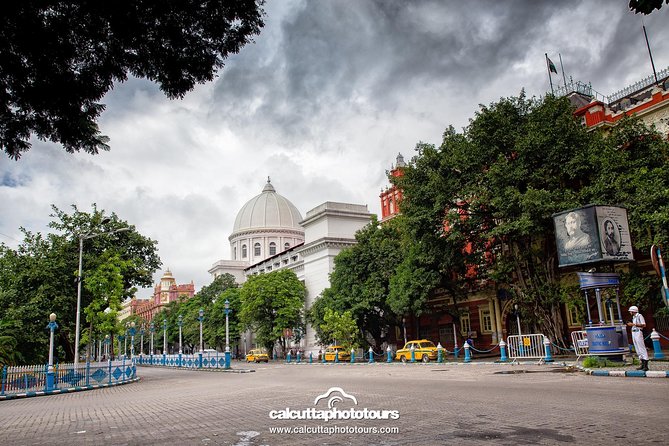
REVIEW · KOLKATA HERITAGE TOURS
Kolkata’s English History – European Calcutta Tour
Calcutta can feel confusing fast, then this tour gives it a spine. You start around Dalhousie Square to BBD Bagh, then move through landmark British-era sites while a guide turns architecture into story. I like the small group size for real attention, and I like that the tour includes a coffee or tea pause, plus water and snacks. One thing to consider is that it is a walking route through busy central streets, so plan your pace accordingly.
What makes it work is the way your guide stitches together the what and the why. Manjit, a guide associated with this tour, is repeatedly praised for clear storytelling, sharp architectural observations, and honest context that makes the colonial period feel understandable, not just memorized. The British influence in Kolkata becomes a set of places you can actually point to by the end.
In This Review
- Key highlights you will actually use
- A 3-hour orientation to British Kolkata around BBD Bagh
- Where you meet, how the tour starts, and why that matters
- BBD Bagh and Dalhousie Square, the nerve center story
- The Great Eastern Hotel area, architecture you can read
- St Andrew’s Church, a closer look at European Calcutta
- Government House, authority made visible
- St John’s Church, where the walk concludes
- Coffee or tea, water, and snacks, the small things that keep you moving
- Small group size and why it turns into real conversation
- Price and value: what $40.28 really covers
- Who this tour is for
- If you like history, bring your questions
- Should you book Kolkata’s English History Tour?
- FAQ
- How long is the Kolkata English History European Calcutta tour?
- What is the meeting point for the tour?
- Where does the tour end?
- Is pickup available?
- How many people are in the group?
- What is included during the tour?
- Do start times have flexibility?
- What if I need to cancel?
Key highlights you will actually use

- Story-first guide who explains the buildings, not just dates
- BBD Bagh orientation around the old central business district
- British-era landmarks including Great Eastern Hotel, St Andrew’s Church, Government House, and St John’s Church
- Coffee or tea, water, and snacks to keep you comfortable during the walk
- Up to 15 people so questions do not get lost
- Flexible start times that fit your day, with pickup options available
More Kolkata streets we have walked
A 3-hour orientation to British Kolkata around BBD Bagh
This is the kind of tour that helps you get your bearings fast. Kolkata has a layered past, and the British-era footprint is one of the easiest threads to follow because it shows up in the scale and style of key buildings in central areas. In about 3 hours, you get a guided route that turns that footprint into a story you can remember.
The best part is that the tour is not just a checklist. Your guide connects the street layout and the buildings to how the city functioned in the colonial period. That is what makes the places feel more alive as you move from one landmark to the next.
Where you meet, how the tour starts, and why that matters

You start near Dalhousie Square, at The LaLiT Great Eastern Kolkata address tied to Dalhousie Square. Your walk ends at St John’s Church, near Council House Street and Lal Dighi, BBD Bagh.
That ending point is handy. If you like to keep moving after a tour, St John’s Church sits in the middle of the BBD Bagh area, so you are not stranded at the far edge of town. It also means you are mostly staying inside the same compact zone for the full experience.
Also pay attention to the practical options built into the tour. There is pickup offered, and you can also book with or without hotel transfers. If you are staying in the central area, pickup can save time and reduce the guessing game of meeting points.
BBD Bagh and Dalhousie Square, the nerve center story
Your first major stop is BBD Bagh, tied to Dalhousie Square. This area is described as the city’s former central business district, and it is linked to the early formation of Kolkata, with Job Charnock’s Calcutta often cited as the nerve centre of activity here.
What I like about starting at BBD Bagh is that it gives you a framework. Instead of jumping straight into individual buildings, the tour begins with the idea of the area as a focal point. Once you understand that the city’s early commercial and administrative energy concentrated around this zone, the architecture you see later makes more sense.
You also get built-in time for photographic opportunities. Even if you only take a few photos, it helps to slow down and look at details while your guide explains what you are seeing. That is one reason story-led tours can feel more satisfying than doing landmarks alone.
- Magic Hour Tour★ 5.0 · 241 reviews
- Alleyway Food Tour★ 5.0 · 137 reviews
- Private Half-Day Kolkata Tour★ 5.0 · 125 reviews
- Kolkata: A Sea of Faces and A Thousand Places★ 4.9 · 116 reviews
- Kolkata – Sounds and Sights – Private Full Day City Tour★ 5.0 · 106 reviews
The Great Eastern Hotel area, architecture you can read
One of the named landmarks is the Great Eastern Hotel. Even if you have seen it in photos before, a guided look changes how you notice it. In tours like this, the “wow” is not only that a building looks grand, it is how a guide helps you connect style to purpose and period.
You do not just pass by. The point is to look at the building as a piece of colonial-era city planning, where European presence expressed itself through architecture and the confidence of public spaces. As you move through the central streets, your guide keeps tying the scene back to the city’s development and the influence of the British.
This is where tours like this earn their keep. If you are the type who enjoys observing facades and street corners, you will enjoy how the guide frames what you notice, especially when you start seeing repeated themes across different buildings.
St Andrew’s Church, a closer look at European Calcutta
Next up are the churches of European Calcutta, including St Andrew’s Church. Churches can feel like sightseeing filler on some tours, but here they have a job: they help you understand how European communities and institutions expressed themselves through built form.
Your guide puts the church in context so it is not just a pretty structure to photograph. The payoff is that you can start connecting religious and civic life to the wider colonial setup the tour is explaining.
If you like your history with specifics, this kind of stop tends to deliver. The best guides keep the focus on what you can see, how it fits into the neighborhood, and why it mattered to the people who built and used it.
Government House, authority made visible

The tour also includes Government House, another big signal that you are looking at the city through the lens of colonial administration. Government buildings do more than house offices. They project order, permanence, and control.
In a short 3-hour route, this is an especially effective stop because it reinforces the tour’s central theme: the British influence in Kolkata showed up not only in commerce and institutions, but also in how power looked in stone and symmetry.
This is also a good checkpoint for your own curiosity. If you find yourself wanting to understand the difference between colonial-era governance and how the city functions today, Government House is a natural place to think about that shift.
St John’s Church, where the walk concludes
Your tour ends at St John’s Church, near Council House Street. Ending at a church matters for the flow of the story. It closes the loop on the European institutional footprint you have been building all along, from civic and administrative energy around BBD Bagh to the European-style public presence in the surrounding streets.
Ending here also makes practical sense. You remain in the same central district where you can continue exploring on your own, grabbing a meal, or heading back to your hotel. It keeps the tour from feeling like a one-way transfer into the middle of nowhere.
Coffee or tea, water, and snacks, the small things that keep you moving
Most history tours feel long by the time you hit the second landmark. This one includes coffee or tea, water, and snacks, which changes the vibe. It means you can keep listening without your energy tanking mid-walk.
It also helps you stay patient with the pace. In central Kolkata, streets can be hectic, and a snack break is a quiet way to reset. One review highlights the guide stopping for a cup as part of the experience, and that kind of thoughtful timing is exactly what makes story-heavy tours feel less exhausting.
Small group size and why it turns into real conversation
The tour caps at 15 travelers, which is big enough for comfort and small enough for conversation. That matters when the guide is doing more than reading facts. A guide like Manjit is praised for mixing context with humor and personal anecdotes, and that kind of storytelling works best when people can ask questions and not wait through a crowd.
If you are the type who wants to ask why a building looks the way it does, or what a specific detail meant, the group size gives you a real chance.
Price and value: what $40.28 really covers
At $40.28 per person for about 3 hours, this is priced like an efficient orientation tour. What improves the value is what is included: pickup options, mobile ticket, a small-group format, coffee or tea plus water and snacks, and an admission ticket included.
That matters because the hidden cost of many guided walks is the extras. Here, you get practical comfort built into the schedule and at least one ticketed element included, which makes the experience feel more complete than a free-form walking tour.
In other words, you are not only paying for the guide. You are paying for time saved, the route design, and the added inclusions that keep you focused on the story.
Who this tour is for
This works especially well if you want a focused introduction to the British-era layer of Kolkata. It is a good fit for:
- First-time visitors who want a structured way to understand central Kolkata
- People who like architecture as a clue to history
- Travelers who appreciate story-led guides and clear context
- Anyone traveling in a small group who wants personal attention rather than a lecture for many
If you are chasing only famous monuments, you might find yourself wanting more time in fewer places. But if you want the city to feel legible, this tour is a strong start.
If you like history, bring your questions
The guide’s style is part of the appeal. Reports emphasize that Manjit is a gifted storyteller and an acute observer of architecture, and that he takes pride in the city’s history and how it shapes daily life. You will get more out of the tour if you show up curious, even with simple questions like:
- What does this building’s design suggest about its role?
- How did this area function back then?
- What should I notice on my own after the tour?
You do not need deep background knowledge. The tour is set up to explain the connections as you walk.
Should you book Kolkata’s English History Tour?
I would book it if you want a short, guided route that makes British Calcutta feel understandable through buildings, context, and storytelling. The combination of a small group, thoughtful included refreshment, and a guide known for turning architecture into story gives this tour real traction in just a few hours.
I might skip it if you dislike walking through busy central streets or if you prefer long museum time over street-level observation. This is a walk with stops, so it is best for people who enjoy being outside, looking closely, and listening.
FAQ
How long is the Kolkata English History European Calcutta tour?
It lasts about 3 hours.
What is the meeting point for the tour?
The start point is at The LaLiT Great Eastern Kolkata, Dalhousie Square area in BBD Bagh.
Where does the tour end?
It ends at St John’s Church near Council House Street, opp. Dewars Garage, Lal Dighi, BBD Bagh.
Is pickup available?
Pickup is offered, and you can book with or without hotel transfers.
How many people are in the group?
The tour has a maximum of 15 travelers.
What is included during the tour?
You get coffee or tea, water, and snacks, plus an admission ticket included. You also receive a mobile ticket.
Do start times have flexibility?
Yes, flexible start times are available to suit your schedule.
What if I need to cancel?
You can cancel for a full refund if you cancel at least 24 hours in advance.
Kolkata, More Streets Reviewed




Recently reviewed across Kolkata
- Walk the Kolkata Wetlands: Green Eye Candy
★ 5.0 · 10 reviews - Kolkata: Full-Day Spirituality & Temples Tour
★ 4.5 · 10 reviews - Kolkata City Private Sightseeing Tour – Custom Hours, Itinerary
★ 5.0 · 11 reviews - Learn to Cook Authentic Bengali Food in a Local Home
★ 5.0 · 11 reviews - In the Footsteps of the Raj – Dalhousie Square Walk
★ 5.0 · 11 reviews - Kolkata Daily – Private Tour with Snacks, Coffee & Bengali Sweets
★ 5.0 · 11 reviews
Kolkata Heritage Tours, compared.
 ★ 5.0Cultural Confluence of Kolkata – Culture Kaleidoscope TourFrom $39701 reviews
 ★ 4.0Kolkata Heritage Tram TourFrom $60395 reviews
 ★ 5.0Bengali Nights Kolkata Food Tour with 13+ TastingsFrom $39325 reviews
 ★ 5.0Private Custom Full Day Sightseeing Tour of KolkataFrom $72128 reviews
 ★ 5.0Private Half-Day Kolkata TourFrom $99125 reviews
 ★ 4.9A Sea of Faces and A Thousand PlacesFrom $32116 reviews
 ★ 5.0Kolkata – Sounds and Sights – Private Full Day City TourFrom $89106 reviews
 ★ 5.0Explore Kolkata- Private Tour with LunchFrom $9987 reviews
Browse the lists this tour appears in