
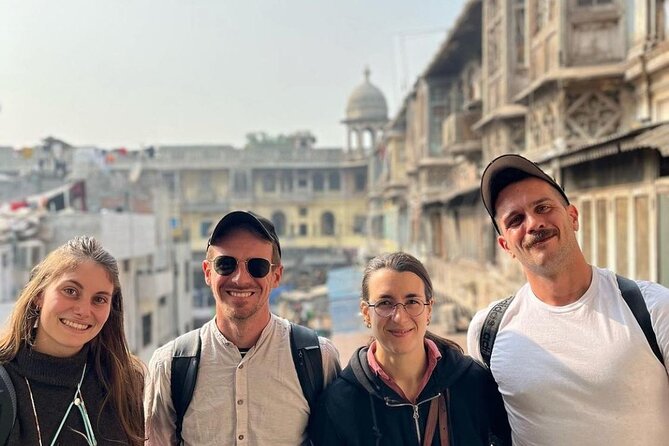
REVIEW · OLD DELHI AND CHANDNI CHOWK TOURS
Old and New Delhi City Tour – Half or Full Day Options Available
Old Delhi has a way of grabbing you fast, then New Delhi reminds you to breathe. This private tour is built for that exact rhythm, taking you between Mughal-era landmarks and modern Delhi highlights with a guide in the mix. I like how the route covers both sides of the city in one go, so you spend less time figuring out transport and more time actually seeing places like Jama Masjid and Lotus Temple.
Two things I really like: first, you get door-to-door pickup in Delhi NCR and a private, air-conditioned car with a driver, which is a big deal in Delhi traffic. Second, you get a live guide at every stop, plus optional Old Delhi rickshaw/tuk-tuk riding that helps you experience Chandni Chowk’s lanes the way they’re meant to be seen.
One consideration: monument entrance fees are not included (the tour notes $25 per person), so your final cost will be higher if you plan to go inside multiple sites.
In This Review
- Key highlights worth planning for
- Why this Old And New Delhi route works in real life
- Getting picked up anywhere in Delhi NCR, and why that matters
- Stop-by-stop: what you’ll see and what to watch for
- Jama Masjid in Old Delhi, plus a tuk-tuk moment
- Khari Baoli spice market: smell first, ask questions second
- Gurudwara Bangla Sahib: free entry, calm contrast
- Red Fort and the war memorial area: see the big names, keep moving
- Parliament House and President House: what you’ll notice from outside
- Connaught Place lunch break energy
- Humayun’s Tomb: the garden tomb highlight
- Agrasen Ki Baoli: myths, legends, and a quick stop
- Lotus Temple (and the Monday swap to Qutub Minar)
- Food, time, and the pace of a private half or full day
- The price and value: what $1.96 really means for your day
- Who this tour fits best (and who should choose something else)
- What the guide experience tends to feel like
- Should you book this Old and New Delhi City Tour?
Key highlights worth planning for

- Old Delhi tuk-tuk or rickshaw ride after meeting at Sunheri Masjid, for quick, fun neighborhood cruising
- Jama Masjid, including its Mughal backstory (built in 1656 by Shah Jahan) and major-scale mosque views
- Khari Baoli spice market time, where your guide points out spice uses and facts tied to what you see
- Gurudwara Bangla Sahib stop, with admission free and time set aside (built in the 18th century)
- Humayun’s Tomb as a major garden-tomb highlight (and first garden tomb of India, inspiring the Taj Mahal)
- Monday plan: Lotus Temple closure handled by swapping in Qutub Minar instead
More of New Delhi, monument by monument
Why this Old And New Delhi route works in real life

Delhi is not small. Even if you’re a strong planner, the city can still eat your day with transfers, wrong turns, and waiting around. This tour solves that with a simple idea: split your time between Old Delhi and New Delhi, but do it in a tight, guided route.
You also have flexibility. The tour offers half-day or full-day style options (4 to 8 hours total), and you can choose your pickup time. That matters if you land late, want to avoid peak traffic, or prefer a slower start. I also appreciate that it’s private, so you’re not stuck matching your pace to strangers who think every stop needs a selfie break every five minutes.
Getting picked up anywhere in Delhi NCR, and why that matters
Pickup is offered from any location in Delhi, Noida, Gurugram, Ghaziabad, or Faridabad. That means you’re not hunting for a meetup point across town, and you can roll right into the day.
Once you’re in the car, you’ve got real comfort: private air-conditioned vehicle with a driver and mineral water bottles. The tour also includes a guide in the mix, so the car time is not wasted on silence. You’re moving with a plan, not just being chauffeured around blindly.
Vehicle size is also matched to group size: a four-seater sedan for one to two people, a six-seater wagon for three to five, and a larger van for bigger groups. In practice, that makes a big difference. You won’t be squeezed, and you can keep your camera and bags easy to manage.
Stop-by-stop: what you’ll see and what to watch for
Deeper into Old Delhi and the Chowk
- Old & New Delhi Private City Tour – Traveler’s Choice (Top Rated)★ 5.0 · 746 reviews
- Old Delhi Food, Heritage&Cultural Walk with Rickshaw ride to Masterji Kee Haveli★ 5.0 · 742 reviews
- Full-Day Private Old and New Delhi Combo Tour★ 5.0 · 625 reviews
- Old Delhi Bike Tour★ 5.0 · 616 reviews
- Old Delhi Street Food Tour★ 5.0 · 497 reviews
Jama Masjid in Old Delhi, plus a tuk-tuk moment
Your Old Delhi story often begins at Jama Masjid. This is the largest mosque in India, built in 1656 by Mughal emperor Shah Jahan, and the architecture is a key part of why people come. Even if you only get an hour, the scale does a lot. You look up, you notice details, and you understand why this is a headline sight.
Right after, the tour has a practical add-on: meet your guide at Sunheri Masjid, then hop into a tuk-tuk to ride past the colourful, busy bazaars of Old Delhi. This is the part that feels like a local route, not a museum crawl. It’s also a smart way to break up the day. Walking the whole time can feel relentless, and the ride gives you quick perspective.
Consideration: you’ll be inside a high-activity area. Dress respectfully, and plan for a bit of hustle around entrances and viewpoints.
Khari Baoli spice market: smell first, ask questions second
From the mosque area, you head toward Khari Baoli, the spice market in Chandni Chowk. Your stop is about 30 minutes, and the focus is sensory. The tour description calls it famous for spices, and your guide shares interesting facts and uses tied to what you’re seeing.
This is a great fit if you like food culture but don’t want a full-blown food tour that takes over your whole day. In one short block, you get a taste of why Delhi’s markets have a reputation. If you’re bringing spices home, this is also the section where you’ll start thinking about what you want to buy.
Tip: bring a little patience for shopping lanes. If you want photos, ask your guide where the best angles are before you stop dead in the middle of foot traffic.
Gurudwara Bangla Sahib: free entry, calm contrast
Then you switch gears to Gurudwara Bangla Sahib, one of Delhi’s prominent Sikh temples. The tour includes about one hour here, and admission is free. It was built in the 18th century, and that gives it a long, lived-in presence.
For many visitors, this is the calm contrast point. You’re moving from market energy and big monuments into a place designed for reflection. Even if you’re not religious, it’s a human-scale stop that lets you reset.
What I’d do: keep this stop unhurried. Use the time to observe how the space works and how visitors move. Your guide can help you make sense of what you’re seeing.
Red Fort and the war memorial area: see the big names, keep moving
The route includes the Red Fort area as a major Mughal-era landmark. The provided details note it was built by Shah Jahan between 1639 and 1648, and it served as the Mughal emperors’ main residence for nearly 200 years.
Right after that zone, you also pass by the 1921 Tomb of the Unknown Soldier, where names of 13,300 Indian army servicemen who died during the First World War are carved on the wall.
This portion is powerful, but it’s also a practical one. Your time here is not just sightseeing. It’s where the city’s layers get obvious fast: empire power, then war memory, then government buildings nearby.
Parliament House and President House: what you’ll notice from outside
Two more big Delhi landmarks show up next: Parliament House and President House (also called Rashtrapati Bhavan today). The tour notes Parliament has the Lok Sabha and Rajya Sabha, and it points out that President House was originally built as the residence for the Viceroy of India.
Even if you’re not going inside, it helps to have a guide pointing out what you’re looking at. These are not casual buildings. They’re part of India’s political story, and the route connects them to the earlier Mughal and memorial sights so you understand the timeline.
Connaught Place lunch break energy
Next, you land at Connaught Place with about 45 minutes of time. This is where your guide recommends restaurant options, with the description calling out Mughlai and international dishes, plus vegetarian and dietary-specific choices.
This is useful because it turns a generic lunch break into an informed one. You’re not guessing where to eat while hunger hits and traffic waits for nobody.
Also, Connaught Place is a good place to regroup. Your guide can help you plan the next blocks so you’re not rushing through the remaining tomb and temple sites.
In the feedback I’ve seen from similar tours, guides often steer people toward fast, satisfying meals, sometimes even with fun extras like screens showing sports. You might not get that exact thing every time, but the point is: you can expect the lunch stop to be practical.
Humayun’s Tomb: the garden tomb highlight
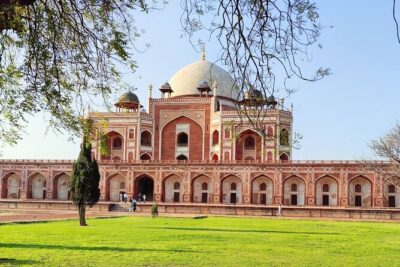
Humayun’s Tomb is a major stop on this route, with about one hour there. The tour description is clear that it’s the first garden tomb of India, and it later inspired the Taj Mahal.
This is the kind of site where you benefit from having a guide. Even within an hour, you can understand why the layout matters, not just that the tomb is important. You’ll likely spend time noticing how the garden setting frames the monument.
Entrance fees apply here. The tour lists monument entrance fees as not included, so build that into your day budget.
Agrasen Ki Baoli: myths, legends, and a quick stop
Then you head to Agrasen ki Baoli, with about 30 minutes. This site comes with a strong reputation for urban legends, including stories about hauntings and paranormal activity. The tour explicitly notes people consider it haunted and that it has been tied to paranormal activity.
This is a fun stop if you like the lighter side of Delhi lore. It’s not always about formal architecture. It’s about the stories that make places memorable and keep people curious.
If you prefer strictly historical sites with no folklore, you may want to treat this as a short break rather than the main event.
Lotus Temple (and the Monday swap to Qutub Minar)
Finally, the tour includes Lotus Temple, often referred to in the description as the Bahai House of Worship. It’s noted for its lotus-flower look and was made in 1986 by architect Fariborz Sahba. This stop is about 30 minutes, and admission is free.
One important practical note: Lotus Temple is closed on Monday, so the tour takes you instead to Qutub Minar. The key value is that your day doesn’t stall. Your guide still gives you context at the replacement sight.
If you’re photographing, this is the part of the day where you’ll likely want clear sightlines. Ask your guide when to step out for the best angles based on how the light feels that day.
Food, time, and the pace of a private half or full day

You’re not on a strict factory schedule here. Because it’s private, your guide can adjust how quickly you move through areas like markets and temples, as long as you stay within the overall time window.
Still, Delhi days can get compressed fast. That’s why I like that the route includes built-in buffers: a 30 minute spice market, a 45 minute Connaught Place break, and a 30 minute final temple stop. Those blocks help you avoid the all-or-nothing feeling of some sightseeing schedules.
What’s not included: food and drinks. That’s normal, but you’ll want to plan ahead. If your budget is tight, pick your lunch plan in Connaught Place rather than searching at random and paying tourist rates.
The price and value: what $1.96 really means for your day

The tour price is listed as $1.96 per person, which is unusually low for a private, guide-led day tour with transfers. The better way to think about value is this: you’re paying for the structure. You get pickup and drop, a private air-conditioned vehicle, live guide services, bottled water, and taxes, fuel, tolls, and GST.
Then the “watch this cost” section: monument entrance fees are not included and are listed as $25 per person. That can turn your final spend higher depending on how many ticketed sites you plan to enter.
So, is it good value? In my view, it’s worth it when you want the convenience of door-to-door routing plus a guide for multiple major landmarks across both Old and New Delhi. If you’re the type who wants to do everything solo and you’re comfortable paying for taxis and finding your own entrances, you might decide it’s not necessary. But if you want to move efficiently, this route is a strong match.
Who this tour fits best (and who should choose something else)

This tour is a great fit if:
- You want to see Old Delhi and New Delhi in one day without logistics headaches.
- You value a guide who can connect what you see to the story of each place.
- You like guided time blocks that prevent your day from turning into aimless wandering.
It might be less ideal if:
- You only care about one or two sites and don’t want to pay for a full routing day.
- You’re very price-sensitive and you’d rather skip ticketed monuments to keep costs low.
What the guide experience tends to feel like

The strongest pattern in the feedback is about guides who make the day smoother and more meaningful. People specifically highlighted guides such as Javed, Aman, and Faez, praising them for being helpful, friendly, and ready with explanations and support.
You’ll also likely appreciate the human extras: helping with photos, explaining local customs, and keeping the day stress-free. Add in a driver who handles the route well, and you can focus on the sights instead of the navigation.
Should you book this Old and New Delhi City Tour?

Yes, if your goal is to check off major Delhi landmarks with a guide, and you want the comfort of private pickup and transport. The route makes sense for first-time visitors who want an efficient mix of markets, temples, memorials, and monumental architecture across both halves of the city.
Book it with realistic expectations about costs. The tour includes a lot, but monument entrance fees are extra, and you’ll also need to pay for your own meals.
If you’re going on a Monday, plan around the Lotus Temple closure. It’s handled by swapping to Qutub Minar, so your day should still feel complete.
If you want to get your bearings fast and see the big sights without turning Delhi into a map app marathon, this is a very practical choice.
Still in Old Delhi? Keep Going





New Delhi Landmarks Worth the Morning

Recently reviewed across New Delhi
- Golden Triangle – Delhi Agra and Jaipur
★ 5.0 · 10 reviews - Taj Mahal & Agra Tour by Indian Bullet Train All Inclusive
★ 4.5 · 10 reviews - Private Tour in Mehrauli Archaeological Park & Qutub Minar
★ 5.0 · 10 reviews - Old & New Delhi Tour
★ 5.0 · 10 reviews - From Delhi : Taj Mahal & Agra Fort Tour by Luxury Express Train
★ 5.0 · 10 reviews - Delhi Shopping Tour: Top Bazaars, Crafts & Souvenir Finds
★ 5.0 · 10 reviews
Old Delhi and Chandni Chowk Tours, compared.
 ★ 5.0Old & New Delhi City Tour – Half or Full Day Options AvailableFrom $384,811 reviews
 ★ 5.0Old & New Delhi City Tour – Choose Half or Full Day ExperienceFrom $384,513 reviews
 ★ 5.0Old & New Delhi Private Tour – Half or Full Day (Rated Excellent)From $202,226 reviews
 ★ 5.0Old & New Delhi Full or Half Day Sightseeing TourFrom $241,900 reviews
 ★ 5.0Old and New Delhi Guided Full or Half-Day TourFrom $20976 reviews
 ★ 5.0Old & New Delhi Private City Tour – Traveler’s Choice (Top Rated)From $13746 reviews
 ★ 5.0Old Delhi Food, Heritage&Cultural Walk with Rickshaw ride to Masterji Kee HaveliFrom $52742 reviews
 ★ 5.0Full-Day Private Old and New Delhi Combo TourFrom $20625 reviews
Browse the lists this tour appears in