

REVIEW · OLD DELHI AND CHANDNI CHOWK TOURS
Old and New Delhi Full Day or Half Day Tour – Best of Delhi City
Delhi in a single day, sorted. This private Old and New Delhi tour strings together the big sights that are otherwise hard to place on your own, from Qutub Minar and Humayun’s Tomb to Jama Masjid and a rickshaw ride through the Old City, with an air-conditioned driver and a live guide.
I especially like the door-to-door pickup convenience and the way the route mixes famous Mughal-era landmarks with modern architecture like the Lotus Temple. You also get mineral water bottles and a guide who helps you make sense of what you’re seeing, not just where to stand for photos.
One thing to consider is that New Delhi traffic can be slow, so you may spend a chunk of time in the car, and monument entrance fees are extra (the main sites on this route are typically not included).
In This Review
- Key things I’d plan around
- How the day really flows, from pickup to drop-off
- Qutub Minar to India Gate, the New Delhi opener that sets context
- Qutub Minar: the 12th-century landmark you can’t fake
- Lotus Temple: modern architecture that feels calming, not cold
- India Gate: quick, meaningful, and easy to overlook
- Optional route detail to know
- Humayun’s Tomb and Gandhi Smriti, where the story gets more human
- Humayun’s Tomb: Mughal grandeur with real photo payoff
- Gandhi Smriti: a focused museum stop, not a long detour
- Small planning note
- Parliament House and the planned-city vibe of New Delhi
- Sansad Bhavan (Parliament House): Lutyens and Baker’s signature modern form
- Chandni Chowk by rickshaw, then Jama Masjid in Old Delhi
- Chandni Chowk: the market streets feel alive fast
- Jama Masjid: Mughal power and practical logistics
- Red Fort from outside, and how to make that stop count
- Your guide and driver: why it can make or break the day
- Price and value: $20 looks simple, then the extras show up
- Comfort and practical tips for Delhi traffic and short stops
- Should you book this Old and New Delhi highlights tour?
Key things I’d plan around

- Private group experience: only your group goes, so your guide can pace things for you
- Old Delhi by rickshaw: the Old City lanes are more fun with a guide and a vehicle window escape hatch
- Iconic mix of eras: Qutub Minar and Humayun’s Tomb alongside India Gate, Parliament House, and Lotus Temple
- Time is the real currency: plan for driving time, short stops, and flexible sequencing
- Entrance fees not included: Qutub Minar, Humayun’s Tomb, Gandhi Smriti, and Jama Masjid are marked as ticketed stops
More of New Delhi, monument by monument
How the day really flows, from pickup to drop-off
This tour runs about 4 to 8 hours, depending on whether you book a half-day or full-day version. You start with pickup from your chosen location in Delhi, Gurgaon, or Noida, and you end with a drop-off back where you started.
That structure matters in Delhi. Distances add up fast, and traffic can stretch your timeline even when you start with good intentions. Guides can still keep things moving, but the main value here is not speed for speed’s sake. It’s having a plan that links sights you’d otherwise struggle to connect efficiently, especially if you’re tired, on a layover, or traveling solo.
If you can pick a start time, I like the advice to go early, around 8:30 to 9:00am, to cut down on heat and crowds. The difference is real once you’re walking in the sun between stops.
Qutub Minar to India Gate, the New Delhi opener that sets context
Your day typically begins in the New Delhi zone with two very different symbols: an ancient victory tower and a modern faith-inspired building.
Qutub Minar: the 12th-century landmark you can’t fake
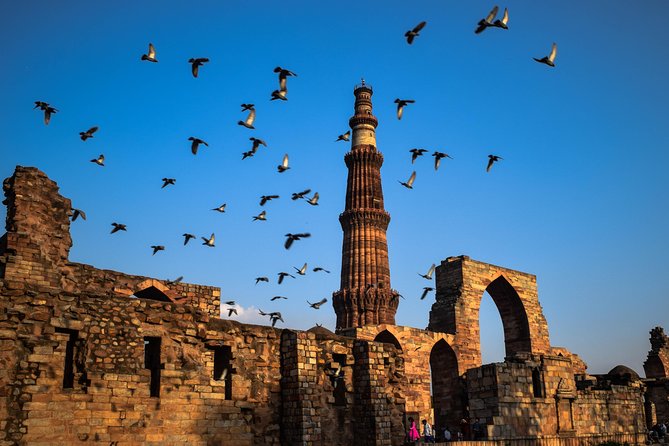
You’ll spend about one hour at Qutub Minar, a UNESCO World Heritage Site and a striking 73-meter tower of victory built in the 12th century. What makes it worth your time is how it’s both monumental and detailed, with red sandstone carvings and inscriptions you can stare at longer than you expect.
Entrance fees are not included for this stop, so factor that into your budget from the start. If you hate feeling rushed at ticket gates, arrive prepared with the right payment method and patience, because the site is popular.
Deeper into Old Delhi and the Chowk
- Old & New Delhi Private City Tour – Traveler’s Choice (Top Rated)★ 5.0 · 746 reviews
- Old Delhi Food, Heritage&Cultural Walk with Rickshaw ride to Masterji Kee Haveli★ 5.0 · 742 reviews
- Full-Day Private Old and New Delhi Combo Tour★ 5.0 · 625 reviews
- Old Delhi Bike Tour★ 5.0 · 616 reviews
- Old Delhi Street Food Tour★ 5.0 · 497 reviews
Lotus Temple: modern architecture that feels calming, not cold
Next up is Lotus Temple, usually a 30-minute stop. It’s famous for the lotus-inspired design of this Bahá’í House of Worship, and it’s open to all faiths. On a tour like this, it’s the reset button between older monuments and the more intense energy of Old Delhi.
This stop is admission free, which is a nice win. Also, it’s a good place to slow down for a few minutes, because later you’ll be threading through crowded market streets where even a simple walk can feel like a sport.
India Gate: quick, meaningful, and easy to overlook
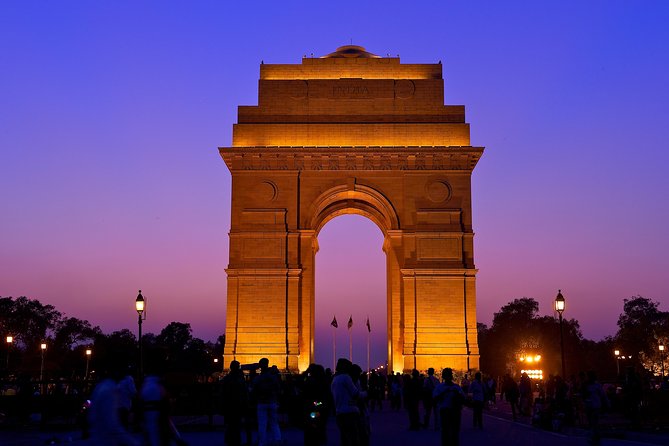
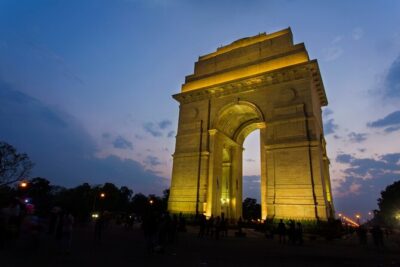
After that, you’ll reach India Gate for about 15 minutes. It’s a 42-meter arch war memorial designed by Sir Edwin Lutyens, built to honor Indian soldiers who sacrificed their lives during World War I.
This is one of those stops you might skip if you were traveling purely by your own schedule. I wouldn’t. Even on a tight itinerary, it’s a quick way to understand why New Delhi looks the way it does: imperial planning influences, formal monuments, and the state’s big public spaces.
Optional route detail to know
Depending on timing and access rules, your guide may adjust the order or how much time you get at each site. Some stops are built into the plan as brief photo moments, not long wandering. If you’re the type who likes to go deep, tell your guide early, and they can often tweak pacing where time allows.
Humayun’s Tomb and Gandhi Smriti, where the story gets more human
Humayun’s Tomb: Mughal grandeur with real photo payoff
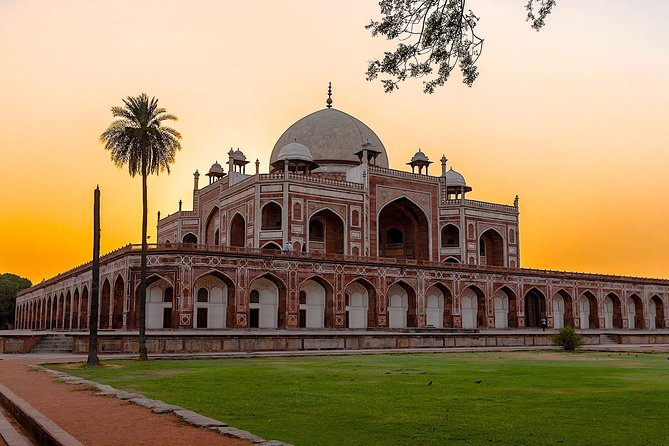
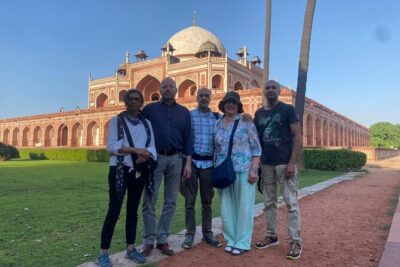
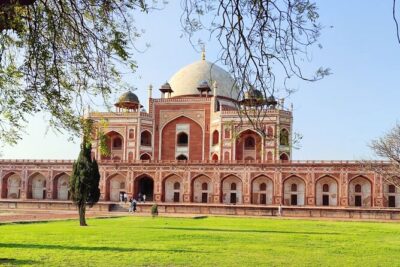
You’ll typically spend about one hour at Humayun’s Tomb, another UNESCO World Heritage Site. This is a 16th-century mausoleum built by Emperor Humayun’s wife, Empress Bega Begum, and it’s known for its red sandstone architecture and strong Mughal influence.
Entrance fees are not included for this stop. Even so, it’s usually one of the most memorable stops on the route, partly because it feels like a complete composition, not just a single structure. Give yourself time to look at the details, then step back for the full view.
Gandhi Smriti: a focused museum stop, not a long detour
After Humayun’s Tomb, you’ll move to Gandhi Smriti for about 30 minutes. This museum and memorial is dedicated to Mahatma Gandhi, located at the site where he spent his final days. You’ll see personal artifacts and exhibits that focus on his life and impact.
Entrance fees are not included for this stop. The upside is time. It’s short, organized, and it adds a different kind of meaning to your day, beyond architecture and empires.
Small planning note
If you’re sensitive to museum crowds, go in expecting that 30 minutes can feel like 10 once you’re reading labels. A guide who can explain the key themes in plain English can make the time go further.
Parliament House and the planned-city vibe of New Delhi
One of the tour’s neat strengths is that you also get a look at the planned political architecture of New Delhi.
Sansad Bhavan (Parliament House): Lutyens and Baker’s signature modern form
You’ll visit Parliament House, also called Sansad Bhavan, described as a circular building in New Delhi, designed by architects Sir Edwin Lutyens and Herbert Baker. This is typically a stop where you’ll appreciate scale and design more than you’ll linger for interiors, because your time is spread across multiple monuments.
Even if you’re not a politics person, this stop helps connect the dots. It shows how New Delhi’s designers used formality and symmetry to communicate power, governance, and a national identity.
Chandni Chowk by rickshaw, then Jama Masjid in Old Delhi
This is where the tour becomes memorable in a more sensory way. New Delhi’s Old City is energetic, compact, and visually busy. Doing it with a guide makes a big difference in how confidently you move.
Chandni Chowk: the market streets feel alive fast
You’ll head to Chandni Chowk for about one hour, and the highlight here is the rickshaw ride through the old lanes. It’s the kind of ride that lets you absorb the architecture, shop signs, and street flow without getting stuck in every bottleneck on foot.
This stop is marked as free of admission fees. So you’re not paying to experience the atmosphere, which is a good value use of time.
From a practical standpoint, this part is also where your guide’s job gets real. Old Delhi can feel chaotic, especially if it’s your first time in India. A guide can help you navigate safety, crowd behavior, and what is worth stopping for versus what is just passing scenery.
Jama Masjid: Mughal power and practical logistics
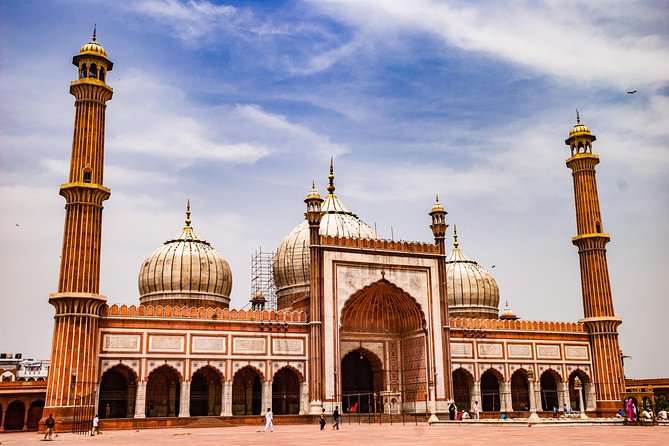
Next is Jama Masjid, one of India’s largest and most impressive mosques, built by Emperor Shah Jahan in the 17th century. You’ll have about 30 minutes, and entrance fees are not included for this stop.
Even in that short time, it helps to know what you’re looking at: grand domes, tall towers, and a sense of scale that’s hard to capture from outside the complex. If you’re visiting during busy hours, be ready for slow movement at entrances.
One thing I appreciate about this route is the pairing. Chandni Chowk gives you everyday street Delhi, then Jama Masjid gives you a landmark that explains why the city’s history shaped its religious architecture so visibly.
Red Fort from outside, and how to make that stop count
After Jama Masjid, the plan includes the Red Fort in Delhi, with viewing typically done from the outside. The fort is a major symbol of Mughal architecture built by Emperor Shah Jahan in the 17th century.
Even as an outside-view stop, it’s worth your attention. The Red Fort’s red sandstone walls and the fort’s imposing shape are still dramatic from the right angles, especially when your guide can point out the best viewpoints for photos.
The key expectation to hold: this tour is trying to cover many major landmarks in limited time. So Red Fort is likely not a deep museum-style visit here. If you want Red Fort interior time, you can always pair this with a separate plan on another day.
Your guide and driver: why it can make or break the day
A tour like this rises or falls on communication and calm driving. The good news is that the experience is consistently praised for both.
You’ll see strong guide feedback tied to names like Vicky, Ali, Haris, Vijay, Gyanendra, Adil, and Shailja. What comes through in the feedback is that the best guides do three things well:
- They explain what you’re seeing in a way that sticks, including how each site connects to Delhi’s larger story.
- They help you move safely through crowded areas, including Old Delhi.
- They work with your pace, including being willing to adjust timing if your day needs extra time or you want more photos.
Chauffeurs also show up in the feedback, like Aiyub, Faiz, and others, with repeated praise for careful driving. That matters in Delhi, because traffic and lane chaos can be stressful even when you’re not the one driving.
If you care about photos, tell your guide early. Several guides are described as knowing where to shoot and adjusting stops to help you get the shot without feeling like you’re sprinting between sites.
Price and value: $20 looks simple, then the extras show up
The headline price is $20 per person, with pickup and drop-off included when you choose the pickup option. The tour also includes a private air-conditioned car with driver (when that option is booked), a live guide, mineral water bottles, and parking, tolls, and taxes.
Now the realistic part: monument entrance fees are not included. The listed monument entrance fees are shown as $25 per person (with additional fine print mentioning adult pricing). On this route, several major sites are marked as ticketed, including Qutub Minar, Humayun’s Tomb, Gandhi Smriti, and Jama Masjid.
So is it a value? For most people, yes, if you want to pack in major highlights without planning transport, ticket timing, and routing yourself. It’s especially solid if you have limited days, want a first-time orientation, or are traveling in a small group that wants flexibility.
Where it can feel less good is if you expected everything to be included end-to-end, or if you really want long visits inside every major site. This route is optimized for coverage and context, not endless time in one place.
Comfort and practical tips for Delhi traffic and short stops
Here’s how to make the day feel easier.
- Wear walking shoes with grip. Old Delhi lanes are uneven and crowded.
- Bring a light layer for sun and inside spaces. Delhi shifts quickly.
- Start early if you can. It helps with both heat and calmer logistics.
- Keep your phone charged. You’ll likely be shooting a lot at Qutub Minar, Humayun’s Tomb, Jama Masjid, and the view zones around India Gate and Parliament House.
- Stay open to re-sequencing. Some days, certain places can be temporarily affected, and your guide may swap timing or include alternatives nearby so your day doesn’t collapse.
One more note: Delhi traffic is a real factor. Plan your expectations around time in the car. A good guide will manage that with humor and explanations, but it’s still part of the deal.
Should you book this Old and New Delhi highlights tour?
Book it if you want a practical first look at Delhi and you like having a plan handled for you. It’s a strong choice for solo travelers, couples, and small groups who want a private, guided experience that covers both Old and New Delhi’s biggest landmarks, including a rickshaw ride and major Mughal-era stops.
Skip it or adjust your expectations if you want long, inside-only visits and everything fully included with no extra tickets. This is a structured highlights route, so you’ll spend time moving between sights and you should expect shorter on-site windows.
If you do book, do this: message your guide ahead or ask at the start what your priorities are, then confirm whether you want more time at Humayun’s Tomb versus a longer stop for photography around India Gate or Red Fort viewpoints. That one conversation can turn a solid day into a great one.
Still in Old Delhi? Keep Going





New Delhi Landmarks Worth the Morning

Recently reviewed across New Delhi
- Golden Triangle – Delhi Agra and Jaipur
★ 5.0 · 10 reviews - Taj Mahal & Agra Tour by Indian Bullet Train All Inclusive
★ 4.5 · 10 reviews - Private Tour in Mehrauli Archaeological Park & Qutub Minar
★ 5.0 · 10 reviews - Old & New Delhi Tour
★ 5.0 · 10 reviews - From Delhi : Taj Mahal & Agra Fort Tour by Luxury Express Train
★ 5.0 · 10 reviews - Delhi Shopping Tour: Top Bazaars, Crafts & Souvenir Finds
★ 5.0 · 10 reviews
Old Delhi and Chandni Chowk Tours, compared.
 ★ 5.0Old & New Delhi City Tour – Half or Full Day Options AvailableFrom $384,811 reviews
 ★ 5.0Old & New Delhi City Tour – Choose Half or Full Day ExperienceFrom $384,513 reviews
 ★ 5.0Old & New Delhi Private Tour – Half or Full Day (Rated Excellent)From $202,226 reviews
 ★ 5.0Old & New Delhi Full or Half Day Sightseeing TourFrom $241,900 reviews
 ★ 5.0Old and New Delhi Guided Full or Half-Day TourFrom $20976 reviews
 ★ 5.0Old & New Delhi Private City Tour – Traveler’s Choice (Top Rated)From $13746 reviews
 ★ 5.0Old Delhi Food, Heritage&Cultural Walk with Rickshaw ride to Masterji Kee HaveliFrom $52742 reviews
 ★ 5.0Full-Day Private Old and New Delhi Combo TourFrom $20625 reviews
Browse the lists this tour appears in