
REVIEW · VARANASI GHATS AND GANGA AARTI
Pilgrimage Varanasi
Varanasi at dusk hits like a drum. This private pilgrimage-style walk and temple day links the Ganges ghats with the Aarti at Dasaswamedh Ghat, then keeps going to Sarnath and Shri Kashi Vishwanath Temple.
What I like most is having a local guide who can translate the city’s spiritual logic into real, everyday meaning, and the way the route balances big landmarks with quiet time on the riverfront. One drawback to consider: even though it’s sold as a 3 to 4 hour outing, it still packs multiple zones and religious stops, so you’ll want to be comfortable with a fast pace and lively crowds.
In This Review
- Key things to know before you go
- A 3 to 4 hour Varanasi pilgrimage day, privately paced
- Dasaswamedh Ghat Aarti: the evening ritual moment
- Banaras Ghats walking: reading the river edge like a local
- Sarnath: Buddhism’s first sermon after enlightenment
- Shri Kashi Vishwanath Temple (Golden Temple): devotion at the city’s center
- Varanasi Remembrances: narrow lanes and 3,000 years of continuity
- Price and what you’re really paying for
- Pickup, mobile ticket, and how to plan your timing
- What kind of guide makes this tour work
- Who this Varanasi pilgrimage route is best for
- Practical tips for a smoother walk between sacred sites
- Should you book Pilgrimage Varanasi?
- FAQ
- How long is the Pilgrimage Varanasi tour?
- Is pickup available?
- Do I need to buy tickets for all stops?
- Is this a private tour?
- What does the tour price include?
- What is the cancellation policy?
Key things to know before you go
- Dasaswamedh Ghat Aarti is built into the evening plan, with an easy, no-extra-charge ticket for the ceremony.
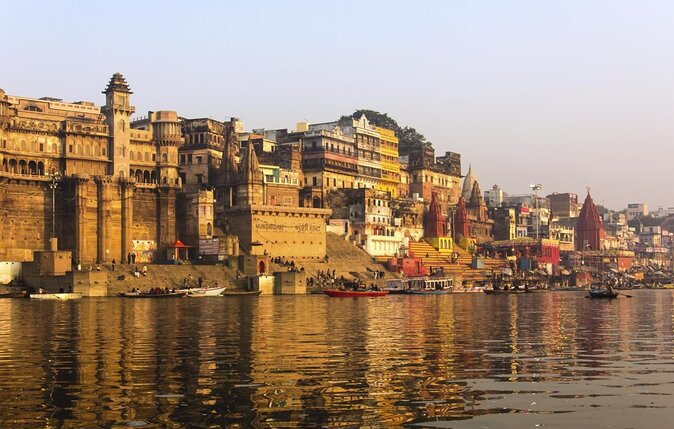
- Ganges ghats walking takes real time, so you see how people live, pray, and gather along the river edges.
- Sarnath fits the Buddhism angle, but the admission ticket there is not included, so expect an extra cost.
- Shri Kashi Vishwanath Temple (Golden Temple) stop is part of the religious heart of Varanasi, and it’s listed as free.
- Varanasi Remembrances focuses on narrow lanes where long-term human continuity is part of the story.
- Private tour format means you can move at your guide’s pace and ask questions without feeling like a number.
More time on the Varanasi ghats
A 3 to 4 hour Varanasi pilgrimage day, privately paced
This is a short-but-meaningful Varanasi route designed for maximum spiritual contrast. In one outing you’re meant to experience Hindu devotion at the ghats, then pivot toward Buddhism at Sarnath, and end with another major temple experience.
The private setup matters here. Varanasi can be complicated to navigate, and the value is not just where you go, it’s how you read what you’re seeing. With your own guide, you’re not stuck following a rushed group script. You can pause, ask, and get explanations that connect the sites instead of treating them like random stops.
One practical note: the itinerary includes several stops with listed durations that, on paper, can feel like more time than the overall 3 to 4 hour estimate. The usual fix is pacing. Your guide will likely compress or sequence things to fit what’s happening around you, especially during ceremonies and at temple entrances.
Dasaswamedh Ghat Aarti: the evening ritual moment
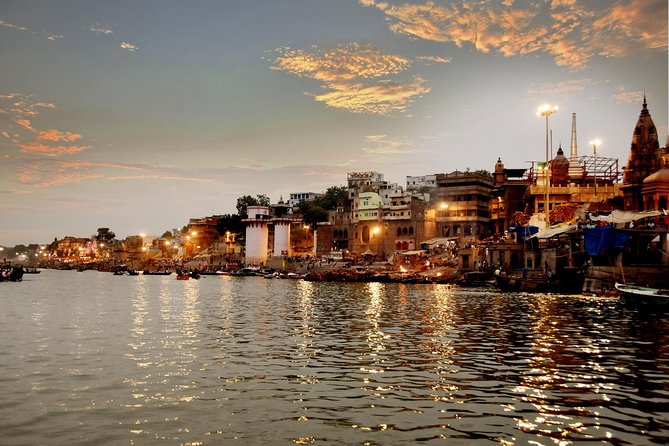
Dasaswamedh Ghat is where the day turns into night. The plan calls for the Aarti evening ceremony right at the ghat, with admission listed as free for this stop.
Here’s why this part of the tour is such good value. Varanasi’s spiritual energy is not just in buildings. It shows up in ritual timing, in how people gather, and in the riverfront rhythm. Watching the Aarti at the ghat gives you context for everything else you’ll see later: why places here feel alive even when the city looks chaotic from the outside.
Potential drawback: ceremonies can draw crowds and the best viewing spots may be taken quickly. If you’re sensitive to tight space, plan to be patient and flexible with where you stand and how long you stay.
Banaras Ghats walking: reading the river edge like a local
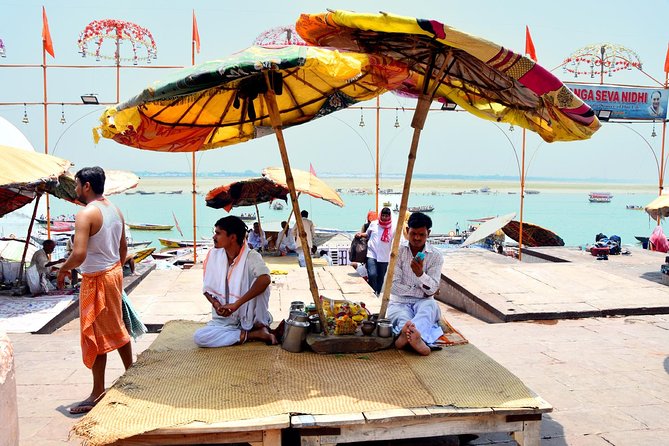
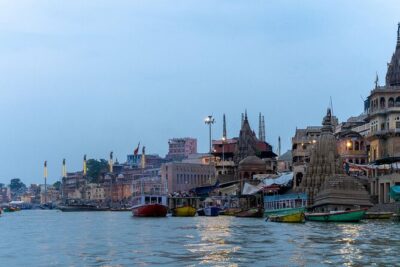
After the Aarti, the tour continues with a walk along the Banaras ghats. This is listed as about 2 hours and is free for admission.
Walking matters more than you might expect. You don’t just pass by the river. You get the slow view: steps down to the water, prayer rhythms, and the way daily life flows alongside sacred space. It’s the kind of walk where explanations turn into real understanding, especially when your guide links what you’re seeing to the beliefs behind it.
If you’re the type who enjoys people-watching, this part is worth leaning into. The ghats are practical as well as spiritual. You’ll see how the river shapes habits, movement, and community. The tour’s strength is that it gives you time to notice details instead of rushing straight to the next “must-see.”
- The Ultimate 1 Day in Varanasi – How to Spend 13 Hours – Private Guided Tour★ 5.0 · 295 reviews
- A Journey of A lifetime★ 5.0 · 272 reviews
- Varanasi: Hidden Secrets of Vibrant Tradition (Guided Tour)★ 4.9 · 176 reviews
- Private Heritage and Spiritual Walk Tour – Varanasi Kashi★ 5.0 · 172 reviews
- 3 Hour Walking Tour of Buddhism in Sarnath★ 5.0 · 160 reviews
Sarnath: Buddhism’s first sermon after enlightenment
Then comes the story shift: Sarnath. The stop is described as the Buddhism birthplace, where Lord Buddha gave his first sermon after his enlightenment in Bodhgaya. This stop is listed as about 3 hours, and the admission ticket is not included.
Why this is powerful in the middle of a Varanasi pilgrimage route: it helps you understand Varanasi not only as a Hindu center, but as a place where multiple spiritual traditions intersect through time. Visiting Sarnath after experiencing the ghats gives you a clearer mental map. You start to see the city as a living crossroads, not a single-theme destination.
Tradeoff: extra admission cost and travel time. Since admission is not included, you’ll want to budget for it and ask your guide how to handle the ticket on the day.
Shri Kashi Vishwanath Temple (Golden Temple): devotion at the city’s center
Next up is Shri Kashi Vishwanath Temple, also described as the Golden Temple. This stop is listed as about 1 hour, with admission free.
This is one of Varanasi’s most emotionally charged sites. The tour description includes a belief that a Hindu should visit this temple at least once in a lifetime. Even if you don’t follow that tradition, the meaning lands quickly when you see the flow of devotees and the intensity of attention people give the shrine.
One consideration: temples can be crowded, and entry areas can feel intense. If you prefer quiet, try to keep expectations realistic and focus on how the space works for worshippers rather than searching for empty corners.
Varanasi Remembrances: narrow lanes and 3,000 years of continuity
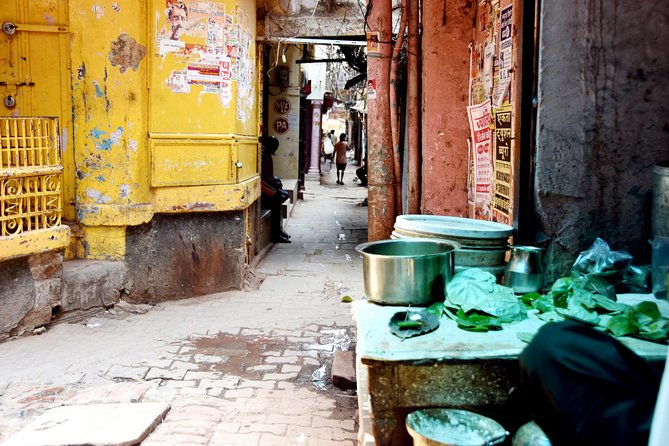
The final stop is called Varanasi Remembrances, focused on walking in the narrow lanes where human habitation has never been broken for the last 3,000 years. This part is listed as about 3 hours, and admission is free.
This segment is where the tour shifts from monuments to atmosphere. Temples and ghats give you the headlines. The lanes give you the everyday texture that makes Varanasi feel continuous. The value is not just walking through old streets, it’s understanding how religious and cultural life is built into the layout and the routine.
Potential drawback: narrow lanes can mean less comfort for people who dislike crowded walking corridors or who need more space. If you get overwhelmed easily, tell your guide early. A good guide can pace the route and choose moments to keep things manageable.
Price and what you’re really paying for
The price is $32 per person for the guided experience. That’s very low for a private, multi-stop outing, especially one that includes free entry for multiple stops and includes all fees and taxes.
What you’re getting with that price:
- A private guide and flexible attention
- A planned route that includes an evening ceremony at Dasaswamedh Ghat
- Free admission stops listed for key sites (Aarti and Kashi Vishwanath Temple, plus the ghats walk and lane segment)
- All fees and taxes covered
What you might spend extra on:
- Sarnath admission is not included, so you’ll pay separately there
- Private transportation is not included, so you’ll rely on whatever method gets you between points and end up back at the meeting point
The best way to judge value is to compare this to the cost of doing these sites alone. If you want a coherent route with explanations that connect Hindu devotion, Buddhism history, and local street life, a private guide at this price can be a bargain. If you already know the stories and prefer self-guided wandering, you might not need a guide for just ticketed access.
Pickup, mobile ticket, and how to plan your timing
The tour includes pickup offered and uses a mobile ticket. The meeting point is in Varanasi, Uttar Pradesh, India, and the experience ends back at the meeting point.
Also keep in mind: the tour requires good weather. In practice, that can affect ceremony comfort and walking ease. If the forecast looks bad, check in early so you’re not surprised on the day.
Because it’s near public transportation, you have options if pickup details are unclear when you book. The key is to confirm where you’ll meet and what your pickup looks like, since private transportation is explicitly not included.
What kind of guide makes this tour work
The tour concept depends on your guide’s ability to explain the city’s spiritual logic without turning it into a lecture. In the guide experience associated with this tour, Nilesh/Neelesh is repeatedly connected with clear explanations, patience with questions, and a warm, funny personality that helps the city feel less overwhelming.
That matters on a short tour. If your guide can connect the Aarti to the ghats walk, connect temple devotion to wider Indian religious practice, and connect Sarnath to the Buddhist narrative, you’ll leave with a mental framework. If your guide is only reading facts, you’ll feel like you visited places, not that you understood them.
So when you book, I’d treat the guide quality as part of the value, not an extra. A private tour is only as good as the person interpreting it for you.
Who this Varanasi pilgrimage route is best for
I’d put this tour high on your list if you want:
- A structured introduction to Varanasi in a half-day time window
- A mix of Hindu and Buddhism-related sights
- Explanations that help you see what’s happening, not just where
It’s also a good match for solo travelers who want companionship and direction without joining a big group.
You might hesitate if:
- You hate crowds and tight walking spaces
- You prefer a slow, self-paced wander with no ceremony components
- You want only one theme, either Hindu-only or Buddhism-only
Practical tips for a smoother walk between sacred sites
Here are the real-world things that help on this kind of pilgrimage route, based on how the stops are arranged.
- Plan for comfortable walking. The route includes ghats walking and narrow lanes.
- Expect shifting energy around ceremonies. The Aarti part is time-sensitive.
- If you get temple-facing nerves, tell your guide. A good guide can help you choose where to stand and how long to stay so you don’t feel stuck.
- Bring cash or be ready to handle the Sarnath admission ticket, since it’s not included.
And one more common-sense tip: Varanasi is not a place where you win by rushing. You win by going with the flow and letting the guide stitch the day together.
Should you book Pilgrimage Varanasi?
Book this if you want the best chance of understanding Varanasi in a short window. The private format, the evening Aarti focus, and the combination of ghats, Sarnath, and Shri Kashi Vishwanath Temple make this a smart first-or-second-day choice.
Don’t book it if you want a relaxed self-guided museum-style visit, or if you strongly dislike crowds and ceremony settings. Also, if the idea of paying separate admission at Sarnath would stress you out, factor that in before you commit.
If you’re on the fence, here’s the decision shortcut I use: if you’re arriving in Varanasi and you feel slightly lost about what you’re seeing, this is the kind of tour that turns confusion into a story you can carry home.
FAQ
How long is the Pilgrimage Varanasi tour?
The tour is listed as about 3 to 4 hours.
Is pickup available?
Pickup is offered, and the tour starts in Varanasi, Uttar Pradesh, India.
Do I need to buy tickets for all stops?
Sarnath admission is not included. Other listed stops have admission marked as free.
Is this a private tour?
Yes, it is a private tour/activity, and only your group participates.
What does the tour price include?
The price includes all fees and taxes.
What is the cancellation policy?
You can cancel for a full refund up to 24 hours in advance of the experience’s start time. Free cancellation applies up to that point, based on local time.
The Ghats at Varanasi, More Reviews




Recently reviewed across Varanasi
- Varanasi: Sunrise Boat Tour and Heritage Walk with transfers
★ 5.0 · 10 reviews - Varanasi Mysteries Walk: A Journey through Life and Death
★ 5.0 · 10 reviews - Omvity’s Full-Day Varanasi Tour: Sunrise Boat to Sunset Aarti
★ 5.0 · 10 reviews - Cycle of Life, Death & Rebirth (2 Hours Guided Walking Tour)
★ 4.5 · 10 reviews - Varanasi: Private Heritage Walking Tour & Sunrise Boat Ride
★ 4.9 · 11 reviews - Varanasi: Ganga Arti Evening Light Ceremony on the Main Ghat
★ 4.1 · 11 reviews
Varanasi Ghats and Ganga Aarti, compared.
 ★ 4.8Full Day City Highlights Day Tour & Ganges CruiseFrom $61520 reviews
 ★ 5.0Hidden Secrets of Varanasi: Vibrant Tradition (Guided Tour)From $24429 reviews
 ★ 5.0Sunrise Boat Tour with Arti CeremonyFrom $31375 reviews
 ★ 5.0Banaras Wala ToursFrom $13329 reviews
 ★ 5.0The Ultimate 1 Day in Varanasi – How to Spend 13 Hours – Private Guided TourFrom $65295 reviews
 ★ 4.9Hidden Secrets of Vibrant Tradition (Guided Tour)From $16176 reviews
 ★ 5.0Private Heritage and Spiritual Walk Tour – Varanasi KashiFrom $24172 reviews
 ★ 4.5Varanasi Landmark Evening City Tour – Aarti, Boating & Witnessing the GODFrom $31149 reviews
Browse the lists this tour appears in