

REVIEW · VARANASI GHATS AND GANGA AARTI
Private Guided Walking Tour in Varanasi
Varanasi sounds louder than it looks. This private guided walking tour strings together Varanasi’s biggest spiritual landmarks, from Rani Laxmibai Janmsthali to the Kashi Vishwanath corridor, using a walking route that keeps you moving while the guide explains what you’re seeing. I love that the pace is flexible enough to ask questions and get your bearings fast.
I also love the stop mix, from the wrestler training scene at Tulsi Ghat to the fertility ritual symbolism at Lolark Kund. The only real drawback to plan for is that parts of the route bring you to active cremation areas, where sights can feel intense, even if you’re prepared.
In This Review
- Key things I’d highlight before you go
- Why this 4 to 5 hour Varanasi walking route works
- Starting at Rani Laxmibai Janmsthali: courage before the ghats
- Tulsi Ghat and the akhada: wrestling culture you can actually see
- Lolark Kund stepwell: fertility symbolism and an annual bath festival
- Assi Ghat: pilgrimage center by day, chill zone at night
- Walking to Harishchandra Ghat: cremation ground as living ritual
- A South India cultural stop: different architecture in the middle of the ghats
- Dasaswamedh Ghat: the ghats hub and Ganga aarti timing
- Manikarnika Ghat: Varanasi’s oldest cremation ground
- Shri Kashi Vishwanath Temple corridor: golden-spired devotion from the outside
- Price and value: what $69 gets you in Varanasi
- Who this tour suits best
- Should you book this private guided walking tour?
- FAQ
- How long is the private guided walking tour in Varanasi?
- What does the tour cost?
- Does this tour include admission tickets?
- What is included in the price?
- Is this a private tour or shared group?
- Do I get a mobile ticket?
- What are the main stops on the walk?
- Where does the tour start and end?
- When does the tour operate?
- What is the cancellation policy?
Key things I’d highlight before you go
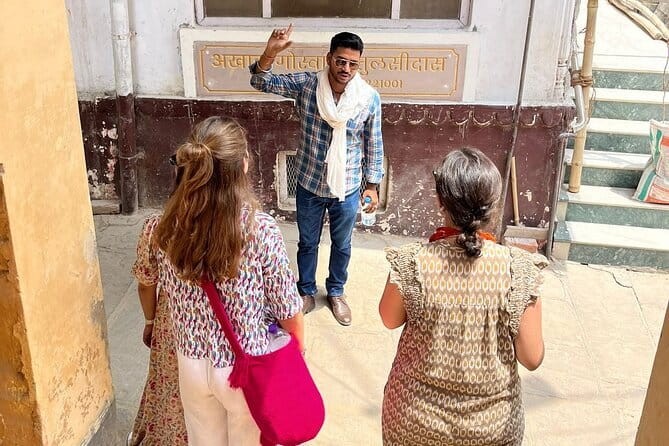
- Private-group format: Only your group joins, so the guide can slow down for photos or questions.
- Free-entry stops built into the route: Most key sites listed come with admission ticket free time included.
- A smart mix of daytime calm and evening energy: Assi Ghat and Dasaswamedh Ghat can feel completely different depending on when you’re there.
- Fertility and training scenes, not just temples: Lolark Kund and the Tulsi Ghat akhada add real everyday culture.
- Expert context where you might otherwise feel lost: The guide connects legends and daily ritual to the place in front of you.
- Guide flexibility when travel goes sideways: One reported review noted the host worked closely to accommodate major flight delays.
More time on the Varanasi ghats
Why this 4 to 5 hour Varanasi walking route works
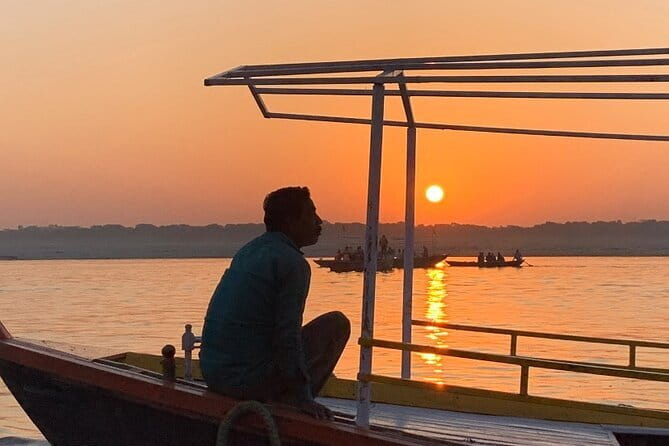
You’re paying for a guide, not just a list of sites. In Varanasi, that matters because the meaning of a ghatscape changes by angle, time of day, and what people are doing at the water’s edge. This tour keeps you walking across major stops while staying at a half-day length that doesn’t turn into a marathon.
The route is designed around short visits that add up: you’ll spend roughly 20 to 40 minutes at several anchors, plus some travel time between ghats. You also get bottled water included, which is a small thing that actually helps when you’re out for several hours in heat and humidity.
One more practical point: the schedule is tied to good weather. If weather is poor, the experience can be canceled and you’ll be offered a different date or a full refund.
Starting at Rani Laxmibai Janmsthali: courage before the ghats
The tour begins at the birthplace linked with Rani Laxmibai, the queen of Jhansi. It’s a good first move because it gives you a human-scale entry point before you step into the heaviest spiritual scenes later.
Even if you only know her name from Indian history, this stop frames the day as more than religion. You get a reminder that Varanasi isn’t only a religious stage, it’s also a place where major lives and stories have touched the city.
This is also a morale boost for many first-timers. Starting with a clear historical marker helps you orient emotionally, so the ghats feel less like chaos and more like connected locations with purpose.
Tulsi Ghat and the akhada: wrestling culture you can actually see
At Tulsi Ghat, you’ll visit the famous akhada, described as a typical gym for Indian wrestlers. This is one of my favorite parts of the route because it adds something physical and local that you might not expect on a spiritual itinerary.
You get about 30 minutes here, and with admission listed as free, it’s a low-pressure stop. Look closely at how the space works: training culture in a ghats environment tells you a lot about how daily life and belief sit side by side.
Practical tip: go in with a respectful mindset. Even though it’s an open, public setting, it’s still a training zone. Keep your voice low, move calmly, and ask your guide how to handle photos respectfully if you want them.
- The Ultimate 1 Day in Varanasi – How to Spend 13 Hours – Private Guided Tour★ 5.0 · 295 reviews
- A Journey of A lifetime★ 5.0 · 272 reviews
- Varanasi: Hidden Secrets of Vibrant Tradition (Guided Tour)★ 4.9 · 176 reviews
- Private Heritage and Spiritual Walk Tour – Varanasi Kashi★ 5.0 · 172 reviews
- 3 Hour Walking Tour of Buddhism in Sarnath★ 5.0 · 160 reviews
Lolark Kund stepwell: fertility symbolism and an annual bath festival
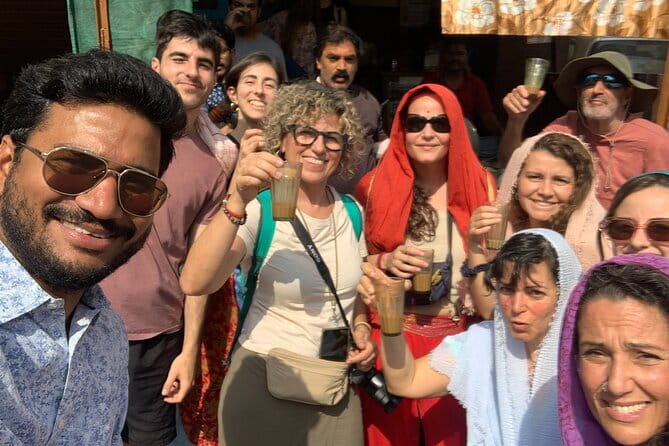
Next is Lolark Kund, a historical stepwell symbolizing fertility. You’ll have around 20 minutes here, and admission is listed as free.
What makes this stop more than a photo stop is the ritual context. The stepwell is tied to a once-a-year bath festival for women who are not able to conceive a baby. That detail changes how you look at the structure. You’re not just seeing stone steps, you’re seeing a place where hope and prayer are expressed through a physical act.
There’s also a sensitivity angle. This kind of ritual is deeply personal for many people. If you’re visiting as an observer, let the guide set expectations, and avoid treating it like a spectacle.
Assi Ghat: pilgrimage center by day, chill zone at night
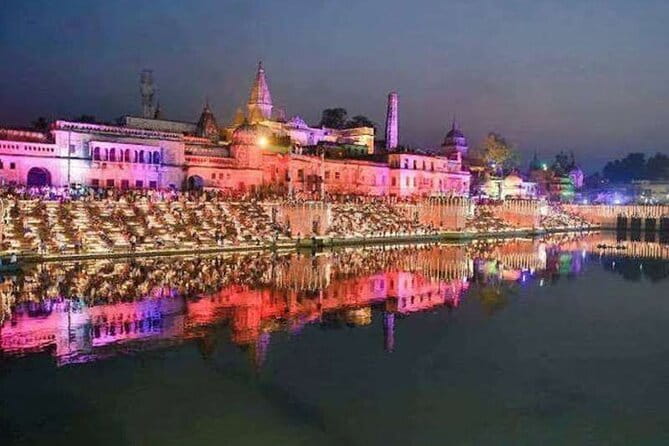
Assi Ghat is a core pilgrimage site for Hindus, and you’ll spend about 25 minutes there. Admission is free, and the guide is giving you time to take pictures and soak in the setting.
Here’s the key thing: Assi Ghat can feel calm in one part of the day and completely different in the evening. The tour specifically calls out that evening vibe as one of the more chill parts of Varanasi. That’s a useful clue for your planning, even if you don’t control the exact time.
If you’re a photographer, this is where the short window helps. You can grab images without feeling like you missed the moment. If you’re more into atmosphere, slow down, watch how people move, and let the guide explain what you’re seeing along the way.
Walking to Harishchandra Ghat: cremation ground as living ritual
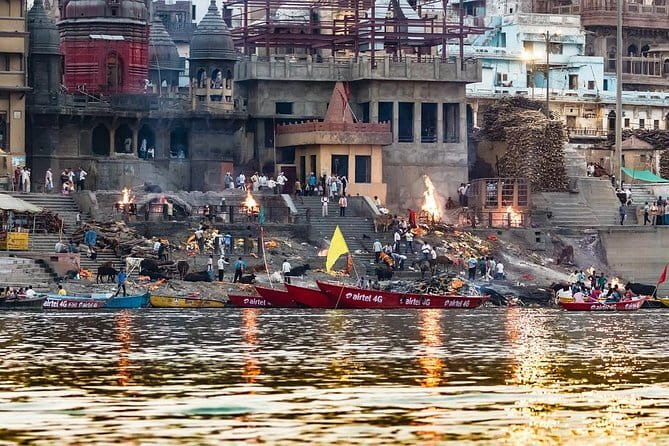
From Assi Ghat, the route walks toward Harishchandra Ghat. The itinerary notes about a 20-minute walk to reach it, then you’ll spend around 40 minutes total at this cremation ghat, with admission free.
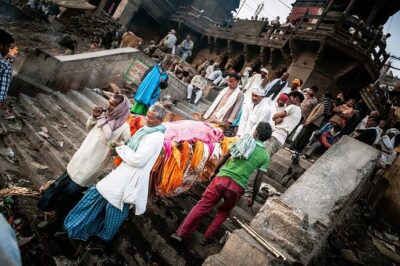
This is the part of the tour that can hit hardest. Harishchandra Ghat is known as a cremation area, and the guide will help you understand the rituals and the place’s meaning. Even when you know that’s what you’re going to see, the real thing can feel intense because it’s active, not staged.
My advice is simple: keep your distance, follow your guide’s lead, and don’t hover at close range. If you’re sensitive to strong visuals, mentally brace yourself before you get close. A good guide makes a huge difference here, because you’re more likely to understand what’s happening and why.
A South India cultural stop: different architecture in the middle of the ghats
The itinerary includes a stop that shows life, culture, and architecture of South India. That’s all you’re told about the specific site, but the value is clear.
You’re in northern India’s river temple country, then you get a contrasting cultural lens. It breaks up the mental heaviness of cremation scenes and helps you see Varanasi as a city that connects different regions and communities.
Because there’s no specific name provided for this stop, I’d treat it as a “look and listen” moment rather than a must-know landmark. Let the guide explain what makes the architecture distinct, and use it as a palate cleanser before Dasaswamedh Ghat.
Dasaswamedh Ghat: the ghats hub and Ganga aarti timing
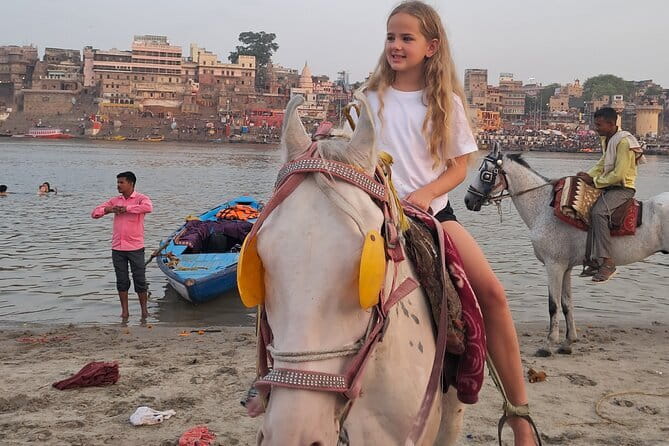
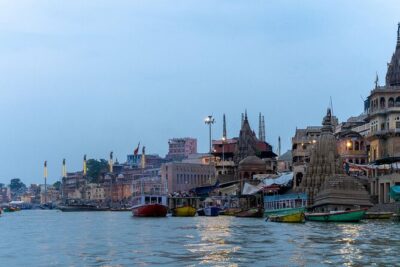
Dasaswamedh Ghat is described as the center of all the ghats, where every pilgrim or tourist comes first to feel the energy of Varanasi. You’ll spend about 30 minutes here, admission listed as free.
The tour also points out an important timing truth: morning and evening bring very different vibes. You also may get to witness the Ganga aarti, since it’s held here. Whether you catch it depends on when your tour time lands, but this is clearly one of the major “big moment” stops.
For practical value, don’t just aim for the scene. Watch the flow of people. Where they stand, when they shift, and how the guide frames what’s happening will make the experience feel understandable, not random.
If you want a photo, do it without blocking sightlines. In these places, the best photos often happen when you take a step back and let the moment stay intact.
Manikarnika Ghat: Varanasi’s oldest cremation ground
Manikarnika Ghat is described as the oldest cremation ground and ghat of Varanasi. You’ll have around 40 minutes here, with admission free.
The stop includes seeing burning pyres, rituals, and different activities. Again, this isn’t a calm sightseeing corner. It’s a working cremation area, and you’re observing it as part of the city’s daily spiritual cycle.
If you choose this tour, plan for emotional bandwidth. You can be respectful and still feel affected. Bring patience. Your guide can help you interpret what you’re seeing so it doesn’t just register as shock.
A small but helpful strategy: focus on the patterns. Look for repeated actions, the way people gather, and how the space functions. Understanding patterns turns intense scenes into meaningful observations.
Shri Kashi Vishwanath Temple corridor: golden-spired devotion from the outside
The final stop is Shri Kashi Vishwanath Temple. You’ll visit the corridor from outside, with about 1 hour allocated, and the guide will explain what to know about the place.
The overview describes it with golden imagery, and even from outside, the temple is meant to signal devotion on a grand scale. Since the tour stays at the corridor from outside, you’re getting explanation and a sense of the space without needing to spend the entire hour inside.
This ending is smart. You finish after the ghats and cremation areas, so the shift to temple devotion feels like a resolution. It gives your brain somewhere to land.
Price and value: what $69 gets you in Varanasi
At $69 for a private walking tour lasting about 4 to 5 hours, you’re paying for guided interpretation plus time at major sites. The good value part is that the stops listed are mostly admission ticket free, so you are not stacking extra entrance fees on top of the tour.
Bottled water is included, which is not glamorous but helpful. The only extra cost mentioned is VIP tickets, priced at Rupees 250 per person when chosen as an option. If you’re budget conscious, you can likely skip that option unless you specifically want a VIP experience.
The private format matters too. In places with crowds, ritual, and strong cultural rules, navigating with a guide usually saves you from guessing. You’re not just looking at Varanasi, you’re learning how to read it.
Who this tour suits best
This tour is a great fit if you want a main-ghats overview without trying to plan every connection yourself. It’s also ideal if you like context, because the guide is there to explain what each site symbolizes, not just point at it.
You’ll likely enjoy it if you care about variety: history (Rani Laxmibai), training culture (Tulsi Ghat akhada), ritual symbolism (Lolark Kund), pilgrimage atmosphere (Assi Ghat), and major ghats energy (Dasaswamedh and Manikarnika).
The biggest “think twice” category is people who strongly dislike or cannot handle the reality of cremation grounds. Even with guidance, those stops are intense. If that sounds like you, consider whether you want an itinerary that avoids those areas.
Should you book this private guided walking tour?
Yes, if you want a structured, guide-led walk across Varanasi’s core spiritual and cultural touchpoints in one half-day session. The combination of free-entry stops, time at multiple ghats, and a guide who can translate ritual to meaning is the real reason it scores so well.
I’d also recommend it if you value flexibility. One reported review shared that the host was very accommodating after severe flight delays, working closely to try to make the tour possible. That’s a reassuring sign of how the provider, Dhyanam India Tours, treats guests when travel plans go off-script.
I’d hesitate only if you know you are very sensitive to cremation visuals. Otherwise, this is a strong way to experience Varanasi without feeling like you’re wandering in circles.
FAQ
How long is the private guided walking tour in Varanasi?
The tour runs about 4 to 5 hours.
What does the tour cost?
The price is listed as $69.
Does this tour include admission tickets?
Most stops are listed with admission ticket free time. VIP tickets, if chosen as an option, cost Rupees 250 per person.
What is included in the price?
Bottled water is included.
Is this a private tour or shared group?
This is a private tour/activity, so only your group participates.
Do I get a mobile ticket?
Yes. The tour uses a mobile ticket.
What are the main stops on the walk?
You’ll visit Rani Laxmibai Janmsthali, Tulsi Ghat, Lolark Kund, Assi Ghat, Harishchandra Ghat, Dasaswamedh Ghat, Manikarnika Ghat, and the Shri Kashi Vishwanath Temple corridor from outside, plus a stop showing South India life, culture, and architecture.
Where does the tour start and end?
The information says it ends back at the meeting point. A specific meeting point name is not provided here.
When does the tour operate?
Monday to Saturday hours are listed as 8:30 AM to 1:00 PM and 2:30 PM to 7:00 PM.
What is the cancellation policy?
Cancellation is free up to 24 hours in advance for a full refund. If you cancel less than 24 hours before the start time, the amount paid is not refunded. The experience also requires good weather, and if canceled due to poor weather, you’ll be offered a different date or a full refund.
The Ghats at Varanasi, More Reviews




Recently reviewed across Varanasi
- Varanasi: Sunrise Boat Tour and Heritage Walk with transfers
★ 5.0 · 10 reviews - Varanasi Mysteries Walk: A Journey through Life and Death
★ 5.0 · 10 reviews - Omvity’s Full-Day Varanasi Tour: Sunrise Boat to Sunset Aarti
★ 5.0 · 10 reviews - Cycle of Life, Death & Rebirth (2 Hours Guided Walking Tour)
★ 4.5 · 10 reviews - Varanasi: Private Heritage Walking Tour & Sunrise Boat Ride
★ 4.9 · 11 reviews - Varanasi: Ganga Arti Evening Light Ceremony on the Main Ghat
★ 4.1 · 11 reviews
Varanasi Ghats and Ganga Aarti, compared.
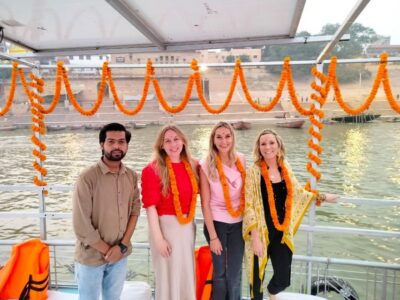 ★ 4.8Full Day City Highlights Day Tour & Ganges CruiseFrom $61520 reviews
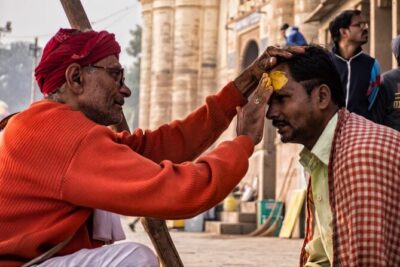 ★ 5.0Hidden Secrets of Varanasi: Vibrant Tradition (Guided Tour)From $24429 reviews
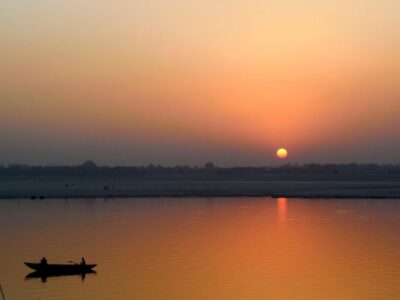 ★ 5.0Sunrise Boat Tour with Arti CeremonyFrom $31375 reviews
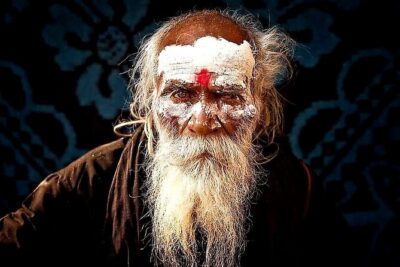 ★ 5.0Banaras Wala ToursFrom $13329 reviews
 ★ 5.0The Ultimate 1 Day in Varanasi – How to Spend 13 Hours – Private Guided TourFrom $65295 reviews
 ★ 4.9Hidden Secrets of Vibrant Tradition (Guided Tour)From $16176 reviews
 ★ 5.0Private Heritage and Spiritual Walk Tour – Varanasi KashiFrom $24172 reviews
 ★ 4.5Varanasi Landmark Evening City Tour – Aarti, Boating & Witnessing the GODFrom $31149 reviews
Browse the lists this tour appears in