
REVIEW · VARANASI GHATS AND GANGA AARTI
The Ultimate 3 Days in Varanasi – How to Spend 39 Hours – For First Timers
Varanasi can feel like sensory overload. This 3-day, first-timer-friendly plan turns the chaos into a tight loop: Buddhist roots at Sarnath, big temple time at Kashi Vishwanath, and the headline moment, Ganga Aarti on the river. You also get a private setup with English-speaking guidance, plus pickup and airport transfers, so you spend less time figuring things out and more time actually seeing things.
I love how the itinerary hits the classics across religions and time periods, from Buddha’s first sermon area in Sarnath to the Hindu ghats and temple corridor in Varanasi. I also like the practical pacing on the water, with a morning hand-rowing boat ride and dedicated time to watch rituals up close, rather than rushing past them.
One consideration: Varanasi is not a low-stimulation destination. You should expect early starts, walking on ghats and corridors, and the reality of visiting places like Manikarnika Ghat, where cremation takes place.
In This Review
- Key highlights you should care about
- A first-timer Varanasi game plan that actually works
- What you get for the money, and where it may cost extra
- Day 1 in Sarnath: Buddha’s starting point, plus museum context
- Ganga Aarti night: the river’s main show (and how to enjoy it)
- Day 2 early: Assi Ghat sunrise Aarti and a hand-rowed boat ride
- Manikarnika Ghat and Kashi Vishwanath: powerful, not casual
- BHU city tour and Lallapura saree shopping you can control
- Day 3: hotel morning, then airport drop with a low-pressure finish
- The guide and driver factor: what gets praised and why it matters
- How to make this trip feel comfortable in Varanasi
- Should you book this 3-day Varanasi plan?
- FAQ
- How long is this Varanasi experience?
- Does the tour include pickup and airport transfers?
- What major sights are included across the three days?
- Is hotel and breakfast included?
- Are admission tickets included for everything?
- Is this a private tour and can I cancel for free?
Key highlights you should care about
Ganga Aarti and cruise built into the core of the trip so you are not scrambling for the main event.
Sarnath + museum stop gives you context beyond temples and selfies.
English-speaking guide and private transportation makes a big city feel manageable.
Assi Ghat morning Aarti and boat ride adds a quieter, sunrise feel to the river theme.
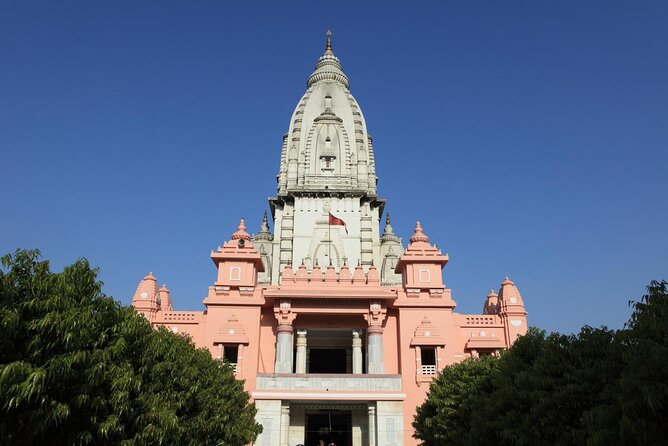
Temple corridor time at Kashi Vishwanath Temple focuses on the most iconic spiritual complex.
Hotel with breakfast included helps you start each day with less stress.
More time on the Varanasi ghats
A first-timer Varanasi game plan that actually works
If this is your first time in Varanasi, you are probably wondering how anyone fits everything in without losing the plot. This experience is built around three anchors: Sarnath (Buddhism), the river ghats (Hindu ritual life), and the temple corridor at Kashi Vishwanath (Hindu devotion). Around those anchors, you get supporting stops like the Sarnath Museum and a city tour that touches places across the old city and nearby Banaras Hindu University.
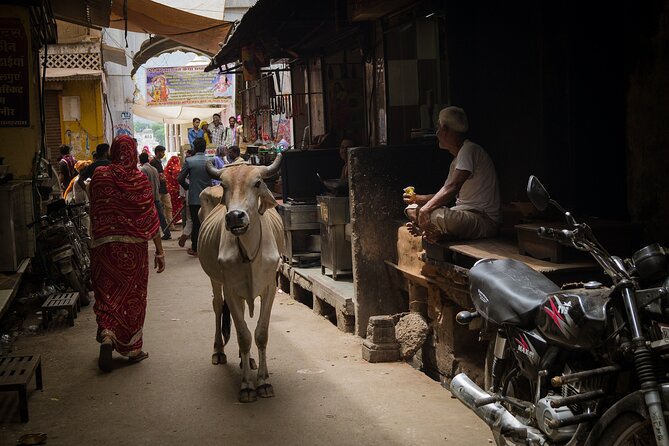
What makes it feel especially first-timer friendly is the order of operations. You start with Sarnath, so you ease into Varanasi with a calmer, more explanatory day. Then you move to the ghats and temple corridor, where Varanasi’s energy is strongest. By the second day, you already understand the geography and the spiritual logic of what you are seeing. That reduces the feeling of being dropped into a loud, confusing maze.
Also, the tour is set up as private. In the real world, that matters here. You can ask questions, ask for small adjustments, and avoid the “stand still for the group” friction that can make religious sites feel rushed.
What you get for the money, and where it may cost extra
This trip is priced at $115.74 per person, with the important “value” detail being what’s bundled. You get a 4/5-star hotel with breakfast, a private English-speaking guide, and private transportation during the sightseeing days. You also get mineral water every day, plus a morning hand-rowing boat experience on the Ganges.
The headline river moments are also covered in the package: Ganga Aarti is listed as admission included, and the morning Aarti at Assi Ghat plus the boat ride are also marked as included. That’s a big deal in Varanasi, because river rituals can be pricey or hard to time when you plan solo.
Where you should expect a small extra is the one item explicitly listed as not included: Sarnath Entrance Fee. Also, some optional upgrades appear in the experience environment. For example, one review notes additional cost for special seating at Ganga Aarti. You do not have to pay for upgrades, but it’s good to know they exist so you can decide ahead of time.
Net value check: if you want someone to manage route, timing, and ritual logistics, this price can feel fair. If you prefer total freedom and you already know exactly how to handle ghats, temples, and boat access, you might find a DIY plan cheaper. But you will pay in time, energy, and decision fatigue.
Day 1 in Sarnath: Buddha’s starting point, plus museum context
Your day begins with pickup from the airport or railway station and transfer to the hotel for check-in. That sounds basic, but for Varanasi it’s not. Arriving to traffic patterns and busy streets with no plan costs mental energy. Having someone there to meet you helps you start with a clear head.
Then you head to Sarnath, about 20 km from the city. This is where Buddha preached his first sermon to his five apostles, a starting point for Buddhism. You get a structured visit that includes about two hours at Sarnath plus a stop at the Sarnath Museum. The museum part matters because it gives you physical artifacts and a sense of continuity, rather than treating Sarnath as only a photo-stop.
Next, you shift to the evening ritual: Ganga Aarti. The tour includes it for admission, and you get a multi-hour block that’s clearly designed around the lead-up and viewing time. One of the biggest “why this works” factors in Varanasi is that the best river moments are not quick drive-bys. They require waiting, focusing, and being in the right place at the right time.
Possible drawback on Day 1: it can feel like you are moving through multiple spiritual settings quickly. If you prefer slow pacing, you may want to ask your guide for micro-pauses during transitions, especially after Sarnath and before the river.
- The Ultimate 1 Day in Varanasi – How to Spend 13 Hours – Private Guided Tour★ 5.0 · 295 reviews
- A Journey of A lifetime★ 5.0 · 272 reviews
- Varanasi: Hidden Secrets of Vibrant Tradition (Guided Tour)★ 4.9 · 176 reviews
- Private Heritage and Spiritual Walk Tour – Varanasi Kashi★ 5.0 · 172 reviews
- 3 Hour Walking Tour of Buddhism in Sarnath★ 5.0 · 160 reviews
Ganga Aarti night: the river’s main show (and how to enjoy it)
Ganga Aarti is why most people come to Varanasi, and the tour builds the day around being present for it. You are taken to the Ganges in the evening for what the experience describes as a grand event, with a dedicated 3-hour slot.
Here’s how to think about it practically. The Aarti is visual, sensory, and crowded. Even when you feel prepared, it can still be intense. A private guide makes a difference because they can help you position yourself, explain what you are seeing, and keep you from feeling lost in the crowd flow.
The experience also supports “food in between moments” with a stop at a Blue Lassi Shop and time for street food, including mention of Kachori Gali and Banarasi street breakfast kachori. That’s a smart pairing for Day 1 because it turns the evening gap into something you can enjoy, instead of sitting around wondering what to do next.
One extra note from what’s been praised: your guide choice matters here. Reviews consistently name guides like Sonny and Arvind, and drivers like Balbu and Abhishek, who were described as caring and attentive. While you cannot guarantee exact staff, the pattern suggests you should get a smooth, respectful experience if you book.
Day 2 early: Assi Ghat sunrise Aarti and a hand-rowed boat ride
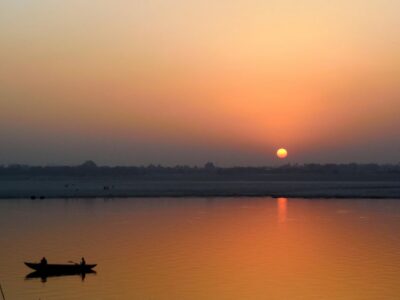
Day 2 starts with an early push to Assi Ghat to witness morning Aarti at a time described as welcoming the sun god, with mention of Havana, Aarti, and Yoga. Even if you do not catch every term, sunrise at Assi Ghat tends to feel different from the busier evening energy. It’s calmer, and the mood is more spacious.
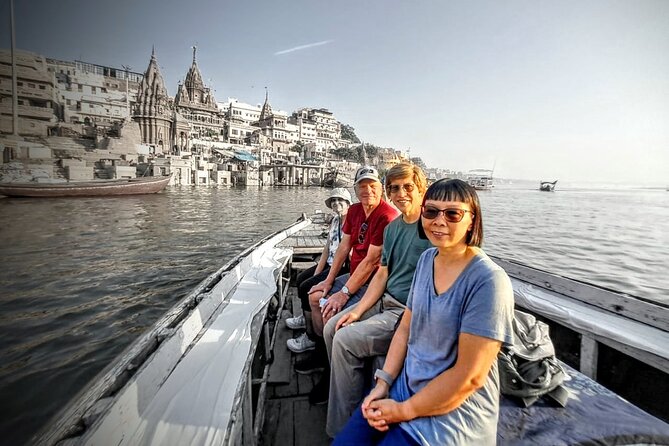
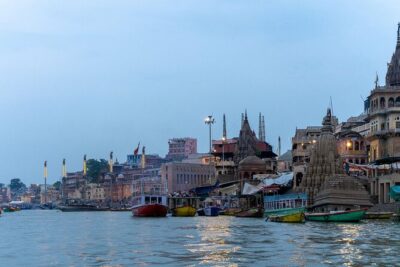
After that, you get a boat ride on the Ganges, described as mystical. The tour highlights a morning hand-rowing boat experience, which you should treat as a key part of the day rather than a transport-only move. The river from the water gives you a different scale. Buildings, ghats, and the flow of the city become readable.
This combination, sunrise ritual and then the boat, is a strong first-timer strategy. You are seeing “why the river matters” from two angles: from the ghats where people gather for ritual, and from the water where you see how the city sits along the river.
Practical consideration: mornings in Varanasi can still be warm later in the day, but cool enough early to feel a bit chilly if you are sensitive. Dress in layers you can handle.
Manikarnika Ghat and Kashi Vishwanath: powerful, not casual
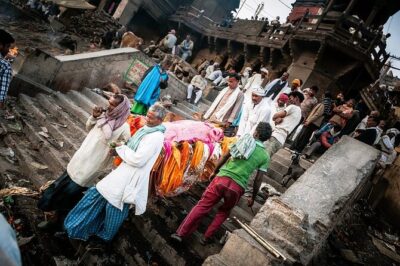
The boat drops you near Manikarnika Ghat. The tour includes a guided visit and explanation about the place. It also notes that this is the only place in the world where cremation takes place, and that you will take a walk afterward. Even if that specific phrasing is simplified, the essential reality you need to know is that this is a cremation site. If that topic makes you uncomfortable, go in with respect and emotional preparation.
After Manikarnika, you move into the temple corridor at Kashi Vishwanath Temple, often called the Golden Temple in this context. The corridor walk is part of the experience. You get a short guided segment that mentions the temple’s reconstruction in 1780 by the Maratha monarch Maharani Ahilyabai Holkar of Indore. That gives you historical anchor points so you understand why the corridor and temple complex feels so important.
Also, the tour specifically asks you to carry your passport for entry. That’s a big practical clue: plan your documents carefully the way you would for an airport. Have it accessible, not locked in a hotel bag somewhere.
Possible drawback: this part of the day can feel emotionally intense because it combines life, death, and devotion in close proximity. A good guide helps with the tone and pacing. If you start feeling overwhelmed, tell your guide early so they can slow down or adjust.
BHU city tour and Lallapura saree shopping you can control
After breakfast, the tour shifts to a broader city tour that includes Banaras Hindu University. The route is described starting from Bharat Mata temple, then Sankat Mochan (Hanuman temple), Manas Mandir, and then BHU. You also get free time to explore and amble, described as part of the tour.
Why I like this section for first-timers: it gives you a counterbalance to the ghats and the tight corridor feel of temple areas. BHU and the surrounding stops can help you understand Varanasi as a living city with institutions, not just a spiritual destination.
Then comes Lallapura Muslim School Road, where you spend time shopping for souvenirs and visiting Muslim areas to see the making of Banarasi handmade sarees. The experience explicitly says nobody will force you to buy anything. That matters because shopping in India can sometimes feel pushy elsewhere, and here the intent seems to be observation plus optional purchasing.
If you want value, this is where you can spend it wisely. Don’t treat it like a hurry-up souvenir grab. Ask about what you are seeing, compare simple options, and buy only if the cloth and craftsmanship feel right in your hands.
Day 3: hotel morning, then airport drop with a low-pressure finish
By the third day, the tour shifts into lighter mode. After breakfast, you have a morning at leisure to explore Varanasi on your own. The key is that the tour provides a vehicle for airport transfers only, not for your independent exploring. That means you should plan how you want to spend your final hours based on what is convenient from your hotel location.
Then checkout happens and you are dropped at Lal Bahadur Shastri International Airport. That’s the cleanest possible ending to a trip like this. Varanasi can be unpredictable. Leaving with a transfer already handled helps you avoid the last-minute stress that ruins the ending of a spiritual trip.
If you want a final tip: use Day 3 as your chance to revisit something you felt you rushed past on earlier days, or just to slow down and take in daily life. Not every “must-see” is a temple.
The guide and driver factor: what gets praised and why it matters
Across the experience feedback, the most praised aspect is the human part of the tour. Names like Sonny and Arvind show up as standout guides, and drivers such as Balbu or Abhishek are mentioned for careful, punctual driving. Another guide name you might hear referenced is Raj, praised for teaching about Hinduism, Buddhism, and ancient Indian history.
Here’s why that matters for you. Varanasi is layered and sometimes overwhelming. A strong guide does three things well:
1) They explain what you are looking at in plain language.
2) They help you move through crowds without feeling pressured.
3) They keep the timing realistic for rituals that cannot be rushed.
It’s not perfect. Some feedback points to feeling rushed or to hotel quality not meeting expectations. That means you should take the “4/5-star” claim seriously, but still be ready to adapt your expectations based on the specific property assigned when you book.
How to make this trip feel comfortable in Varanasi
You can do a lot right without changing the tour. Here are practical things I’d plan for in advance:
- Dress for temples and ghats: shoulders and legs covered for temples, shoes that handle uneven steps, and something easy to carry for quick changes.
- Carry your passport as the tour notes this for temple entry. Keep it somewhere you can access without tearing apart bags.
- Plan for strong crowds: even with a private tour, the Aarti and temple areas get busy. Wear patience like it’s part of your packing list.
- Eat with common sense: the tour includes a street food moment at the Blue Lassi stop and the Kachori Gali area. If you have a sensitive stomach, stick to the places your guide recommends and pace yourself.
- Use downtime wisely: Day 3 morning leisure is your chance to reset. Don’t overfill it if you have an early flight.
Should you book this 3-day Varanasi plan?
Book this tour if you want a structured first-timer route that hits the big spiritual highlights, with a guide who can explain what you are seeing and handle the timing for river rituals. It’s a good fit if you value convenience, want hotel breakfast support, and prefer private transportation over figuring out routes and entry rules on your own.
Skip or customize your expectations if you are very sensitive to emotionally heavy sites, or if you strongly prefer slow, unstructured travel. Also, because the hotel can vary within the 4/5-star category, read your booking confirmation carefully and be ready for a property that may feel more practical than “boutique.”
If you want Varanasi with less stress and more meaning, this plan is a solid way to do it.
FAQ
How long is this Varanasi experience?
It runs for about 3 days (approx.), designed around a total time window that fits first-timer sightseeing across the city and the river.
Does the tour include pickup and airport transfers?
Yes. Pickup is offered, and the experience includes hassle-free airport arrival and departure transfers.
What major sights are included across the three days?
You’ll visit Sarnath and the Sarnath Museum, attend Ganga Aarti, experience morning Aarti at Assi Ghat and a Ganges boat ride, visit Manikarnika Ghat, tour Shri Kashi Vishwanath Temple, and include a city tour that covers stops around Banaras Hindu University. There is also time at Lallapura Muslim School Road.
Is hotel and breakfast included?
Yes. The tour includes accommodation in a 4/5-star hotel with breakfast.
Are admission tickets included for everything?
Not all. The Sarnath entrance fee is listed as not included. Other ritual admissions and experiences in the itinerary are marked as included, such as Ganga Aarti and parts of the Assi Ghat experience.
Is this a private tour and can I cancel for free?
Yes, it is private, meaning only your group participates. Free cancellation is available up to 24 hours in advance for a full refund.
The Ghats at Varanasi, More Reviews




Recently reviewed across Varanasi
- Varanasi: Sunrise Boat Tour and Heritage Walk with transfers
★ 5.0 · 10 reviews - Varanasi Mysteries Walk: A Journey through Life and Death
★ 5.0 · 10 reviews - Omvity’s Full-Day Varanasi Tour: Sunrise Boat to Sunset Aarti
★ 5.0 · 10 reviews - Cycle of Life, Death & Rebirth (2 Hours Guided Walking Tour)
★ 4.5 · 10 reviews - Varanasi: Private Heritage Walking Tour & Sunrise Boat Ride
★ 4.9 · 11 reviews - Varanasi: Ganga Arti Evening Light Ceremony on the Main Ghat
★ 4.1 · 11 reviews
Varanasi Ghats and Ganga Aarti, compared.
 ★ 4.8Full Day City Highlights Day Tour & Ganges CruiseFrom $61520 reviews
 ★ 5.0Hidden Secrets of Varanasi: Vibrant Tradition (Guided Tour)From $24429 reviews
 ★ 5.0Sunrise Boat Tour with Arti CeremonyFrom $31375 reviews
 ★ 5.0Banaras Wala ToursFrom $13329 reviews
 ★ 5.0The Ultimate 1 Day in Varanasi – How to Spend 13 Hours – Private Guided TourFrom $65295 reviews
 ★ 4.9Hidden Secrets of Vibrant Tradition (Guided Tour)From $16176 reviews
 ★ 5.0Private Heritage and Spiritual Walk Tour – Varanasi KashiFrom $24172 reviews
 ★ 4.5Varanasi Landmark Evening City Tour – Aarti, Boating & Witnessing the GODFrom $31149 reviews
Browse the lists this tour appears in