
REVIEW · VARANASI GHATS AND GANGA AARTI
Tourist Guide English & Spanish Varanasi/Benares
Sunrise on the Ganges changes your pace fast. This 2-hour walking-and-river tour is built around ghats at first light plus a guided route through old-city temples, markets, and ceremony points.
I especially love the boat views of Varanasi as the city wakes up, and I also like how the guide connects the dots between sacred places, not just sightseeing photo stops.
The tradeoff is that it starts early and moves on foot, so you should come ready for crowds near the river and an emotionally intense stop at cremation ghats.
In This Review
- Key points to know before you go
- Why this Varanasi North and South route makes sense
- Meeting point at Hotel Mrk, and how pickup usually works
- Sunrise on the Ganges from a boat: what you’re really seeing
- The walking tour through old Varanasi ghats and temples
- Dashashwamedh Ghat, first impressions
- Harishchandra Ghat, then Assi Ghat
- Namo Ghat, then Manikarnika Ghat
- Time on the river again, and Ganga Aarti by the water
- Manikarnika and Raja Harishchandra: cremation ghats, respectfully handled
- Temples and sacred corners: Golden Temple, Hanuman, and the rest
- Akhara Goswami Tulsidas and the local spiritual rhythm
- Ganga Aarti on the river: why timing and seating matter
- Silk loom workshop visit: where the craft becomes real
- Food breaks that feel local, not touristy
- Price and value: is $16 worth it for 2 hours?
- Who should book, and who should think twice
- Final verdict: should you book this Varanasi English and Spanish guide tour?
- FAQ
- How long is the tour?
- How much does it cost?
- What languages does the guide speak?
- Where is the meeting point?
- Is pickup from my hotel included?
- Is the Ganges boat ride included?
- Is breakfast included?
- Are entrance tickets included?
- Does the experience include Ganga Aarti and cremation?
- Is wheelchair use included?
- When can I cancel for a full refund?
Key points to know before you go
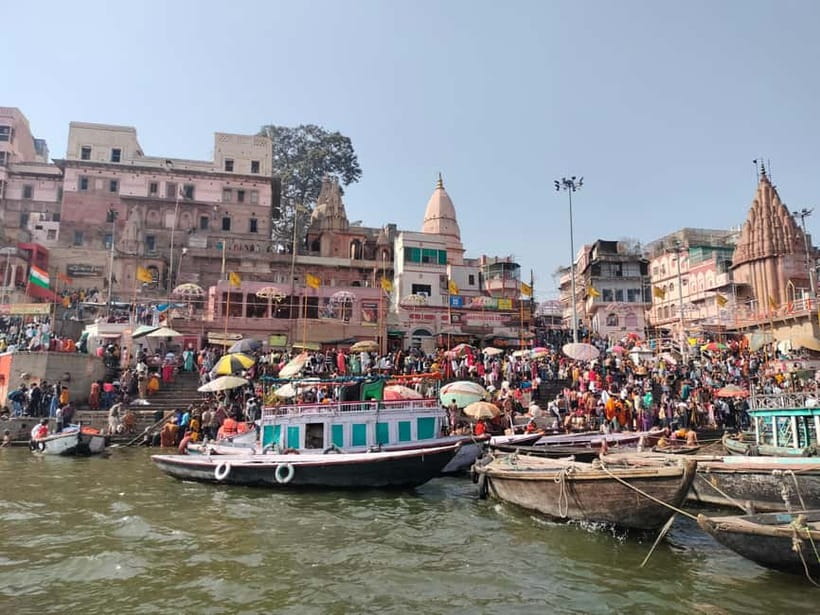
- Sunrise boat ride with ritual life on the ghats, including yoga and meditation moments you can actually see from the water
- Ganga ceremony time from the river, with the guide aiming for good viewing spots
- Old-town walking loop through north and south Varanasi, mixing temples, akharas, and busy markets
- Cremation ghats included, so go with respect, calm nerves, and a willingness to watch from a distance
- Silk loom workshop visit tied to the famous Mughal-inspired weaving designs and Varanasi handloom craft
- English, Spanish, and Hindi guiding, and guides like Pintu and Dheeraj are reported to handle multiple languages smoothly
More time on the Varanasi ghats
Why this Varanasi North and South route makes sense
This isn’t a long, exhausting day of random stops. In two hours, you get a tight loop that hits what most people come to Varanasi for: the river, the ceremonial edge of the city, and the old neighborhoods where daily faith is part of the street scene.
The walking part matters because you see how the ghats connect to temples and local life. Then the boat ride matters because it gives you perspective you just cannot get standing on stone steps. I like the balance here, the mix of grounded city walking and those quiet river angles that make Varanasi feel bigger than the street-level view.
Also, the guide approach is a big part of the value. Names that show up in real bookings include Pintu and Dheeraj, and both are described as patient with questions and clear in English and Spanish.
Meeting point at Hotel Mrk, and how pickup usually works
You meet below Hotel Mrk on Dashashwmedh Road, near the Bank of Baroda ATM. If your hotel is close, pickup may be free. If it is farther away, the vehicle cost is not included, and you will need to handle transport to the meeting point.
One small practical tip: arrive a few minutes early. Dashashwmedh Road stays busy, and you do not want to spend your first sunrise minutes hunting for the group.
At the end, you get drop-off at two possible locations, including Hotel Mrk and Hotel Ganges Grand, Varanasi.
Sunrise on the Ganges from a boat: what you’re really seeing
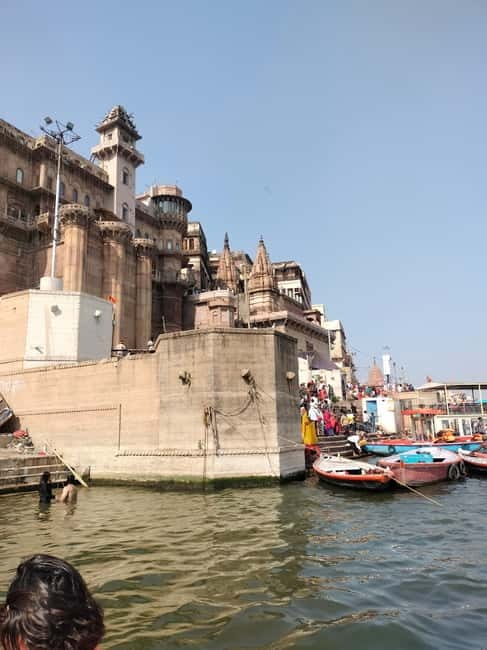
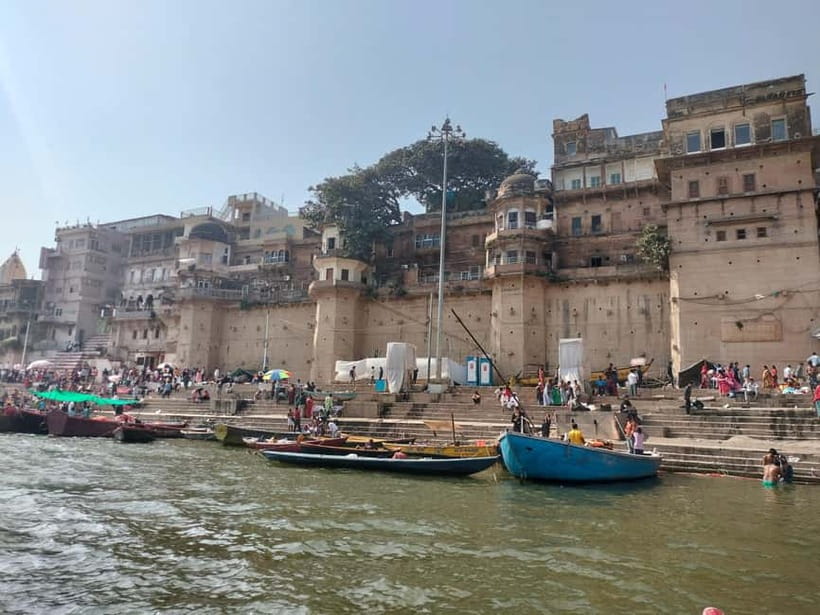
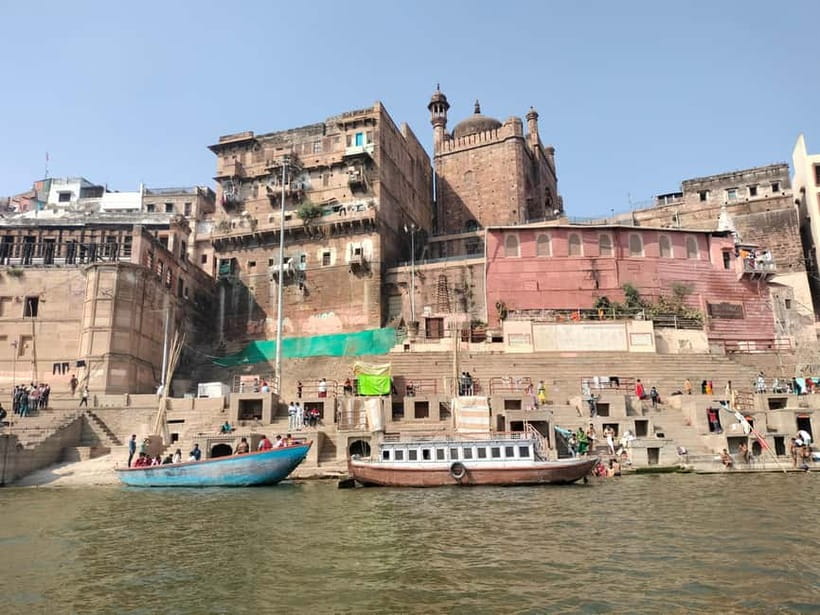
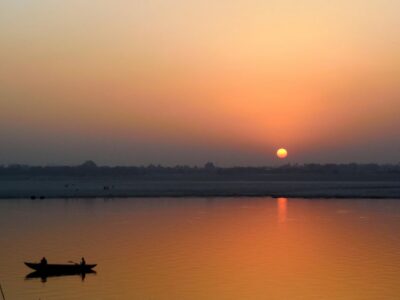
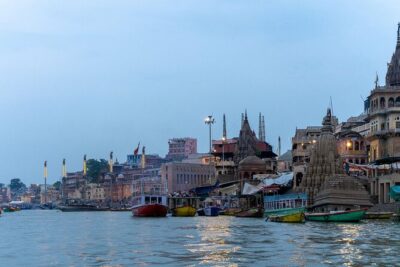
This tour’s headline moment is the Ganges River boat ride at dawn. Yes, it means an early wake-up. But it’s also when Varanasi feels most readable, when the city is switching from night mode to ritual mode.
From the water, you watch the ghats as they fill. You will see Hindu faithful going down for ritual baths, and you are likely to spot people meditating or doing yoga, alone or in groups. The river view is the point, and the guide’s job is to help you interpret what you are looking at so it feels like more than a dramatic backdrop.
I also like that the boat angle helps with crowd stress. Standing on the ghats can mean shoulder-to-shoulder movement. On the river, you get space to breathe while still being close to everything happening.
- The Ultimate 1 Day in Varanasi – How to Spend 13 Hours – Private Guided Tour★ 5.0 · 295 reviews
- A Journey of A lifetime★ 5.0 · 272 reviews
- Varanasi: Hidden Secrets of Vibrant Tradition (Guided Tour)★ 4.9 · 176 reviews
- Private Heritage and Spiritual Walk Tour – Varanasi Kashi★ 5.0 · 172 reviews
- 3 Hour Walking Tour of Buddhism in Sarnath★ 5.0 · 160 reviews
The walking tour through old Varanasi ghats and temples
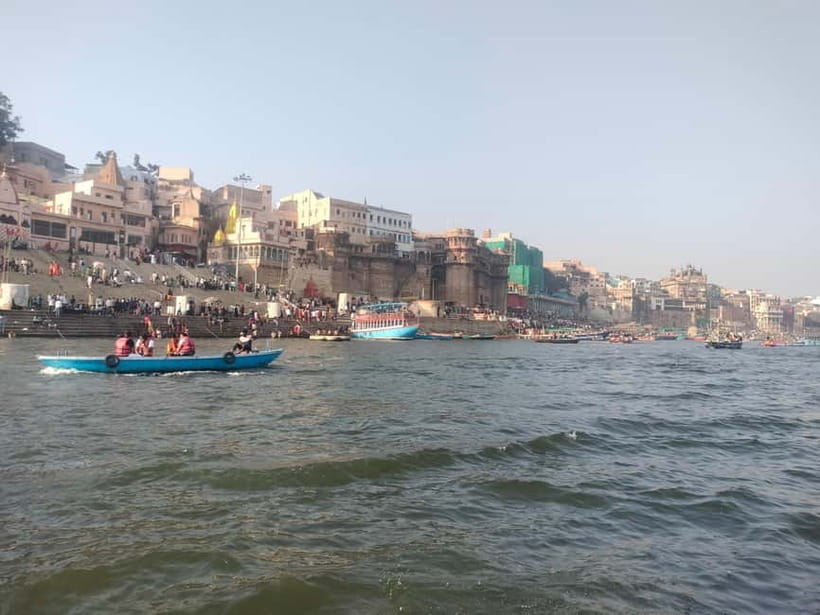
After the river segment, the tour shifts into a guided walk through the old area. Expect photo stops plus short guided segments, with a route that threads through key ghats and temples.
The itinerary includes several meaningful ghats and a clear geographic flow. You start around Dashashwamedh, then move through Harishchandra and Assi ghat territory, before continuing to Namo and Manikarnika areas.
Here’s how the stops tend to feel in practice:
Dashashwamedh Ghat, first impressions
You begin at Dashashwamedh Ghat for a quick introduction and photo time. It’s one of the most iconic start points, so you’ll get the big-picture orientation right away.
Harishchandra Ghat, then Assi Ghat
At Harishchandra Ghat, you get focused time (about 30 minutes guided in the plan) to learn what’s important there. Next comes Assi ghat with guided context plus photo time.
Assi is a good place to notice how the river edge blends into daily life. The guide helps you see the difference between a ghats-as-landmark spot and a ghats-as-living-space spot.
Namo Ghat, then Manikarnika Ghat
Next is Namo ghat, then Manikarnika ghat, which is one of the cremation points. The time at Manikarnika is shorter in the plan (about 15 minutes guided), but it is still one of the most serious stops on the tour.
Time on the river again, and Ganga Aarti by the water
There is time labeled around Ganges River photo and guided segments, and you also include Ganga Aarti Kashi Varanasi as a central ceremony moment.
Manikarnika and Raja Harishchandra: cremation ghats, respectfully handled
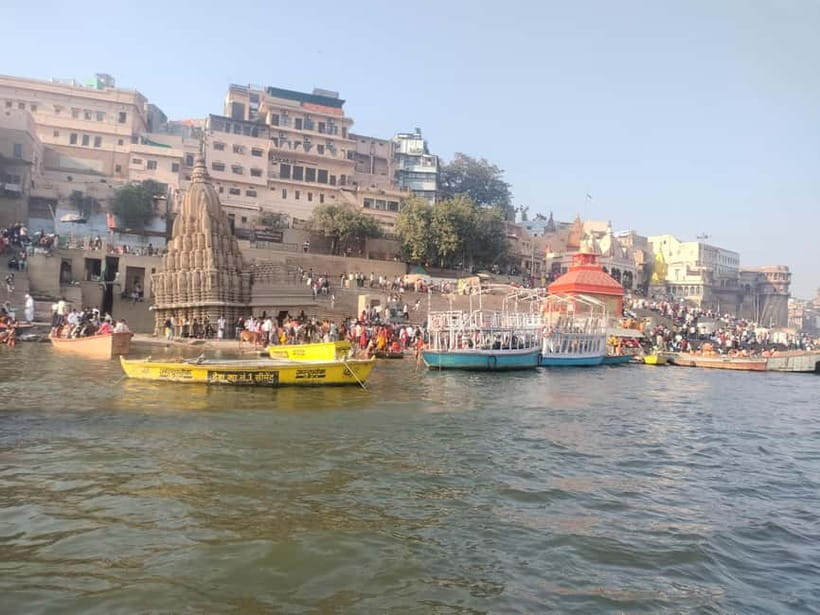
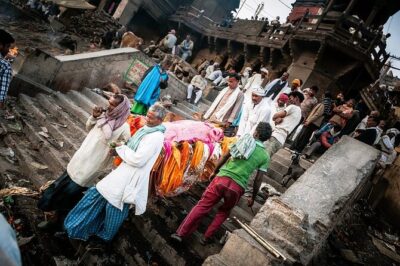
If you do this tour, you should go with emotional readiness. This experience includes cremation and river ceremony elements, specifically with ghats such as Manikarnika ghat and Raja Harishchandra ghat.
Practically, what this means for you:
- Keep your distance and stay respectful. The guide’s explanations are part of why this is included, so listen rather than trying to “capture” everything.
- Expect a more serious atmosphere than at a temple stop. Even if you are an easygoing traveler, your body will notice the shift.
The tour format helps because you are not left to figure it out alone. A good guide will explain what you are seeing and the meaning behind it, rather than rushing you through.
Temples and sacred corners: Golden Temple, Hanuman, and the rest
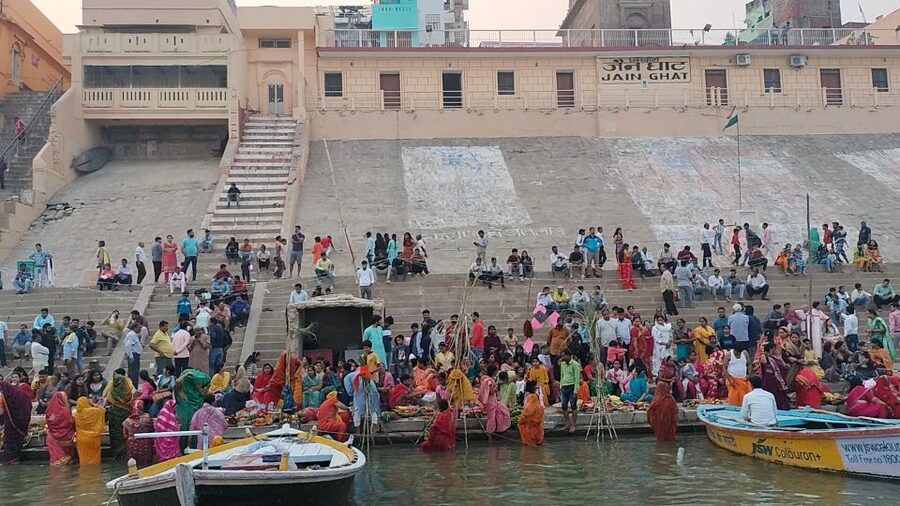
A major strength of this tour is that it uses the old-city walk to connect key religious sites. You will pass through several temples and stops tied to Hindu practice in Varanasi.
The plan highlights a few big-name places, plus several additional temple areas:
- Shri Kashi Vishwanath Temple (a must for many visitors)
- Nepali Temple (Mandir), known in the description for carvings with scenes representing Kamasutra
- Maa Tara Devi Temple
- Durga Bari Temple
- Chousatti Temple
- Hanuman Mandir (monkey god)
- Shri Kashi Kaamkoteeshwar Mandir
You also include stops like Lolark Kund, plus several other temple areas in the old town.
One caution that helps you enjoy the visit: temples in Varanasi can involve foot traffic that feels chaotic. Go slow. Let the guide set the pace. If you are sensitive to noise or crowds, pick your posture, breathe, and focus on the guide’s explanation.
Akhara Goswami Tulsidas and the local spiritual rhythm
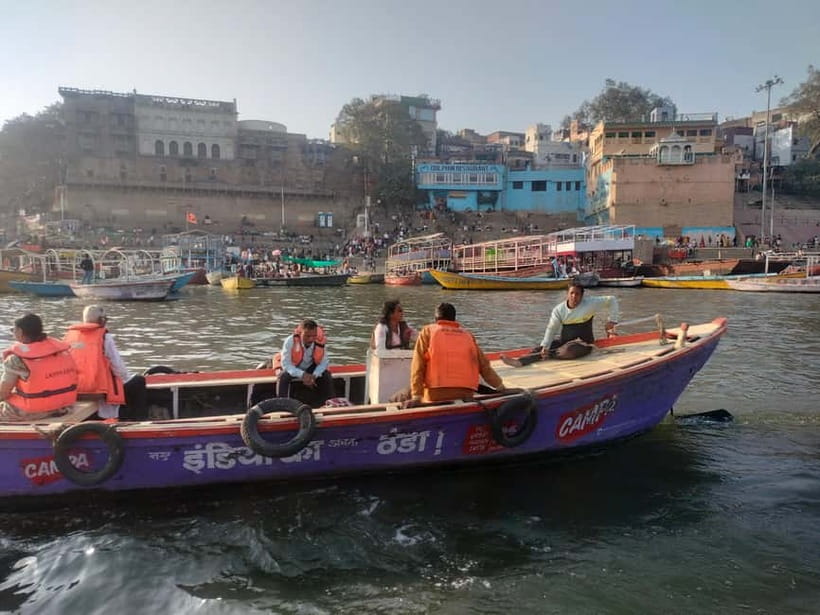
The tour includes Akhara Goswami Tulsidas. An akhara is not just a building, it’s a training and spiritual tradition tied to wrestling gyms and disciplined practice. Even if you are not a sports person, this is a great reminder that Varanasi is not only ceremonies for tourists, it is also structure, training, and daily routine.
From the description, you may also get a moment near an older-style training space, described as a traditional gym or akhara, tied to ancient practice. It’s one of the better ways to see that spiritual life here is lived, not staged.
Ganga Aarti on the river: why timing and seating matter
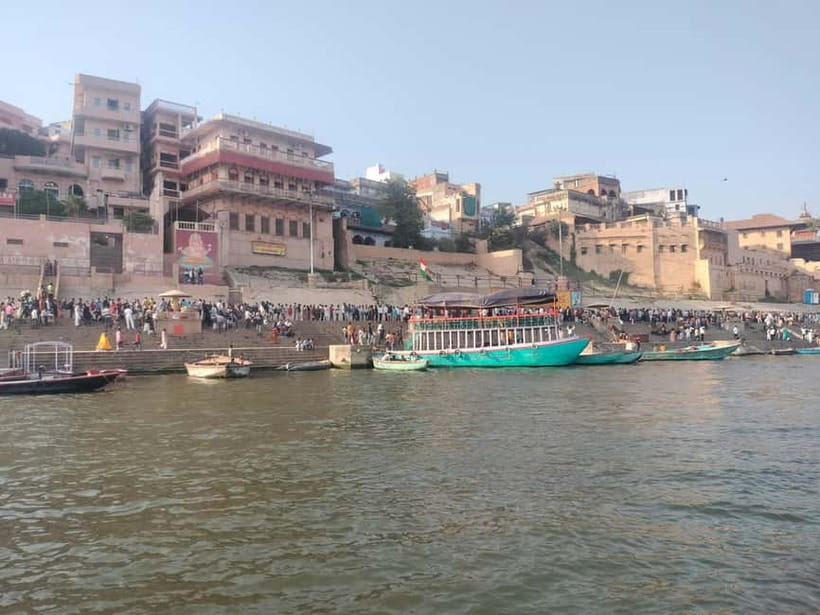
The itinerary includes Ganga Aarti Kashi Varanasi, and this is one of the best times of the whole experience. What I like is that it’s not just about watching. The guide’s role is to help you get good viewing position.
Boat-based ceremony viewing tends to reduce the stress of fighting for a viewpoint in a land crowd. In real bookings, people have praised the way guides help them find the best seats from the boat and keep things well-coordinated.
Go with patience. It is a ceremony, not a show. Let your brain settle into the slower rhythm.
Silk loom workshop visit: where the craft becomes real
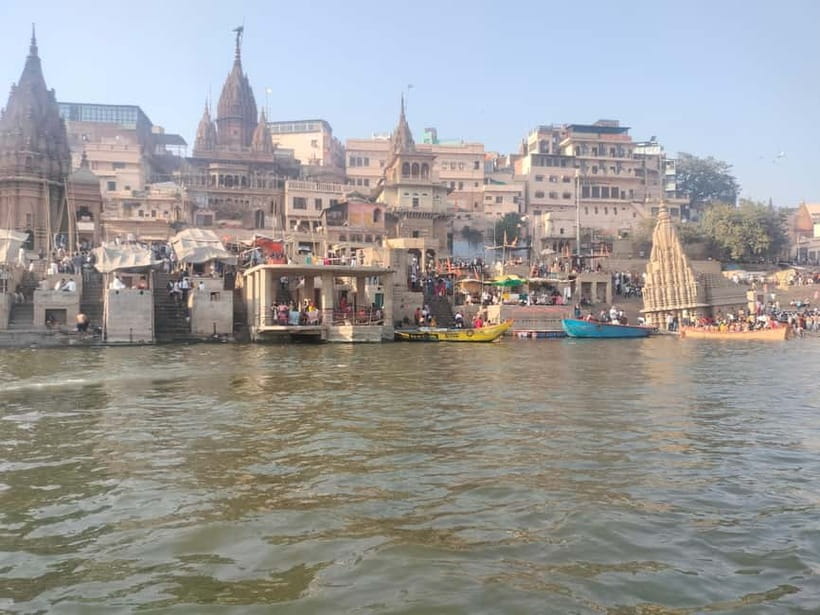
You also stop at one of the 270 workshops where Varanasi silk is produced. The description says these are handlooms following Mughal designs.
This is valuable because it turns a famous product into something you can picture. Instead of only hearing about silk, you see the loom work and how design patterns are made. If you like shopping, this is a smart place to do it with context. You’ll also get a better sense of why Varanasi fabric is treated as a serious craft, not just clothing.
Don’t expect a factory tour style here. The best part is the human scale of the process.
Food breaks that feel local, not touristy
This tour includes local breakfast banarasi and also free tea, coffee, and mineral water during the tour. There’s also mention of stopping for masala tea, with the guide explaining aromatherapy and essential oils.
Near the end, you get a chance to enjoy a lassi in a clay cup at a listed stop, described as a blue lassi shop.
Two practical tips:
- Eat the breakfast. Sunrise schedules can mess with hunger, and the food break is built into the experience.
- If you buy lassi, treat it as part of the flow, not a quick detour. The guide tends to wrap these small pauses into the stories of place.
Price and value: is $16 worth it for 2 hours?
At $16 per person for a 2-hour experience, the value is mainly in what is included:
- Boat ride (and the river time is the centerpiece)
- Local breakfast
- Tea, coffee, mineral water
- Guided touring in English and Spanish (plus Hindi)
What isn’t included matters too. You may have entrance tickets not included for monuments, and vehicles are not included. If you need transport to the meeting point and your hotel is far, plan for that extra cost.
So is it a bargain? For Varanasi, it is competitive because you are paying for both guided walking and river access, which often costs more when separated. The short duration is also a plus if you are only in town for a limited time.
Who should book, and who should think twice
This tour is a strong fit if you:
- Want a fast, structured first look at Varanasi old town and the ghats
- Like your guides to explain what you are seeing, not just point at it
- Care about ceremonial river moments, including the Ganga Aarti
- Enjoy getting a craft stop, like the handloom silk workshop
It might be less ideal if you:
- Dislike early mornings and walking in crowded areas
- Get uncomfortable with cremation-ghat proximity
- Need a highly private experience, since this is run as a small-group style tour in practice for some bookings
Final verdict: should you book this Varanasi English and Spanish guide tour?
I’d book it if you want your first taste of Varanasi to be guided, not random. The combination of sunrise boat time, a focused old-town walk through important temples and ghats, plus a ceremony moment on the river makes it an efficient use of a short trip.
Before you go, I’d do two quick things:
- Confirm the exact meeting point at Dashashwmedh Road near the Bank of Baroda ATM, especially if pickup depends on your hotel distance.
- Be mentally ready for the intensity of cremation ghats. Bring respect, stay calm, and let the guide’s explanations do the work.
If that sounds like your kind of travel, this $16, 2-hour tour is one of the more solid ways to get oriented fast and still feel the spiritual center of Varanasi.
FAQ
How long is the tour?
The tour duration is 2 hours.
How much does it cost?
The price is $16 per person.
What languages does the guide speak?
The guide is available in English, Spanish, and Hindi.
Where is the meeting point?
You meet below Hotel Mrk on Dashashwmedh Road near the Bank of Baroda ATM machine.
Is pickup from my hotel included?
Pickup can be free if your hotel is close to the meeting point. If your hotel is far, vehicle charge is not included, and transfer by vehicle is not included.
Is the Ganges boat ride included?
Yes. The boat ride is included.
Is breakfast included?
Yes. A local Banarasi breakfast is included. Tea, coffee, and mineral water are also free during the tour.
Are entrance tickets included?
No. Entrance tickets for monuments are not included.
Does the experience include Ganga Aarti and cremation?
Yes. It includes a river ceremony experience connected to Ganga Aarti and also includes cremation and river ceremony elements with ghats.
Is wheelchair use included?
No. Wheelchair is not included.
When can I cancel for a full refund?
You can cancel up to 24 hours in advance for a full refund.
The Ghats at Varanasi, More Reviews


Recently reviewed across Varanasi
- Varanasi: Sunrise Boat Tour and Heritage Walk with transfers
★ 5.0 · 10 reviews - Varanasi Mysteries Walk: A Journey through Life and Death
★ 5.0 · 10 reviews - Omvity’s Full-Day Varanasi Tour: Sunrise Boat to Sunset Aarti
★ 5.0 · 10 reviews - Cycle of Life, Death & Rebirth (2 Hours Guided Walking Tour)
★ 4.5 · 10 reviews - Varanasi: Private Heritage Walking Tour & Sunrise Boat Ride
★ 4.9 · 11 reviews - Varanasi: Ganga Arti Evening Light Ceremony on the Main Ghat
★ 4.1 · 11 reviews
Varanasi Ghats and Ganga Aarti, compared.
 ★ 4.8Full Day City Highlights Day Tour & Ganges CruiseFrom $61520 reviews
 ★ 5.0Hidden Secrets of Varanasi: Vibrant Tradition (Guided Tour)From $24429 reviews
 ★ 5.0Sunrise Boat Tour with Arti CeremonyFrom $31375 reviews
 ★ 5.0Banaras Wala ToursFrom $13329 reviews
 ★ 5.0The Ultimate 1 Day in Varanasi – How to Spend 13 Hours – Private Guided TourFrom $65295 reviews
 ★ 4.9Hidden Secrets of Vibrant Tradition (Guided Tour)From $16176 reviews
 ★ 5.0Private Heritage and Spiritual Walk Tour – Varanasi KashiFrom $24172 reviews
 ★ 4.5Varanasi Landmark Evening City Tour – Aarti, Boating & Witnessing the GODFrom $31149 reviews
Browse the lists this tour appears in