
REVIEW · VARANASI GHATS AND GANGA AARTI
Varanasi Walking and Heritage Tour
Varanasi hits your senses fast, and this short walk helps you make sense of it. I like how the route pairs big-ticket sights like the Kashi Vishwanath Temple Corridor with a slower, reflective stop at Manikarnika Kund. One possible drawback: the guide style can feel fast and very talk-focused, so if you prefer a slower pace, you will want to set that expectation early.
This is a 3-hour guided heritage walk in Uttar Pradesh that strings together temples, ghats, and the tight, colorful lanes that make Varanasi feel like a living city. It runs in English, Spanish, and Hindi, and it starts at the Bank of Baroda ATM, so you can find it without guesswork. You also get included tea/coffee and bottled water, which is a nice practical touch when you are moving through crowds and heat.
In This Review
- Key highlights you actually feel on the street
- From Bank of Baroda ATM to the old lanes of Kashi
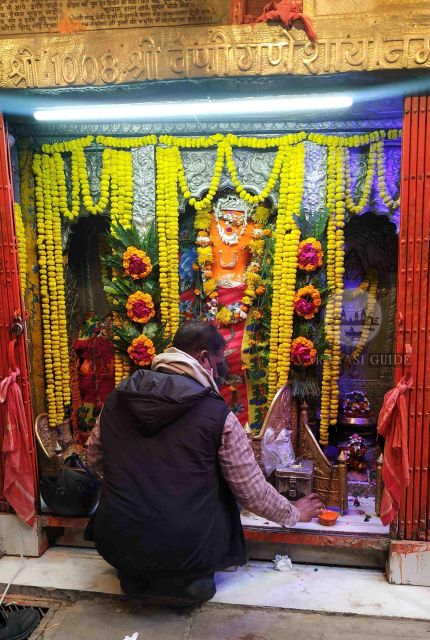
- Shri Vishalakshi Mata Shaktipeeth: a quick start with big spiritual tone
- Dharmeshwar Mahadev Temple in Kashi Khand, why the route order helps
- Kashi Vishwanath Temple Corridor: navigating awe without getting lost
- Manikarnika Kund and tea: the pause that changes how you see the ghats
- Nepali Temple (Kathwala Temple): a different kind of stop in the same sacred zone
- Flower market and tiny painted lanes: where the city’s colors live
- The included temple circuit: what those entry fees buy you
- Pace and guide style: how to get the best version of this tour
- Value check: is $13 fair for a 3-hour heritage walk?
- Who should book this walk, and who should skip it
- Should you book the Varanasi Walking and Heritage Tour?
- FAQ
- How long is the Varanasi Walking and Heritage Tour?
- Where does the tour start?
- What languages are the live tour guides available in?
- What is included in the price?
- What is not included?
- How much does the tour cost?
- Is free cancellation available?
Key highlights you actually feel on the street
- A start point that is easy to locate, the Bank of Baroda ATM, then straight into the old city.
- Temple stops with context, from Shri Vishalakshi Mata Shaktipeeth to Dharmeshwar Mahadev in Kashi Khand.
- Kashi Vishwanath Temple Corridor walking, where architecture and devotion meet in a very real way.
- Manikarnika Kund moments, including photo time plus tea, and a second look later for better understanding.
- Nepali Temple (Kathwala Temple), adding variety to the religious mix you see in Varanasi’s lanes.
- Flower market and tiny temple-colored streets, great for photos and for seeing how daily life and worship overlap.
More time on the Varanasi ghats
From Bank of Baroda ATM to the old lanes of Kashi
The tour is built for people who do not have all day. You meet at the Bank of Baroda ATM, then the walking starts immediately, dropping you into the tight urban maze of Varanasi where temples, ghats, and alley life share the same space. At about 3 hours, it is a solid way to get your bearings without burning the whole day.
I also appreciate how this feels like an organized street-level experience rather than a checklist. The included tea/coffee and bottled water mean you can keep going through the afternoon without constantly searching for a café. It is also a good fit if you want to see several major religious sites but still keep your energy for later in the day.
Shri Vishalakshi Mata Shaktipeeth: a quick start with big spiritual tone
Your first guided stop is Shri Vishalakshi Mata Shaktipeeth Temple (listed at about a 5-minute visit). That short intro matters because it frames the kind of devotion you are going to encounter again and again throughout the walk.
Even if you do not know the stories yet, you can still pick up the mood: this is not sightseeing from behind glass. It is worship in motion, and that sets the expectation for how you should behave around shrines and devotees.
Dharmeshwar Mahadev Temple in Kashi Khand, why the route order helps

Next comes Dharmeshwar Mahadev Temple (Kashi Khand) for a guided visit of about 10 minutes. I like this stop because it teaches you how Varanasi works as a network, not as one single monument. You begin to see the pattern of how different temples anchor different corners of the city.
Practical tip: use this part to ask your guide one simple question in your preferred language, English, Spanish, or Hindi. When you get the basic orientation, the later stops start to click faster, especially around the ghats and the denser temple areas.
- The Ultimate 1 Day in Varanasi – How to Spend 13 Hours – Private Guided Tour★ 5.0 · 295 reviews
- A Journey of A lifetime★ 5.0 · 272 reviews
- Varanasi: Hidden Secrets of Vibrant Tradition (Guided Tour)★ 4.9 · 176 reviews
- Private Heritage and Spiritual Walk Tour – Varanasi Kashi★ 5.0 · 172 reviews
- 3 Hour Walking Tour of Buddhism in Sarnath★ 5.0 · 160 reviews
Kashi Vishwanath Temple Corridor: navigating awe without getting lost
You then walk toward Shri Kashi Vishwanath Temple for about 10 minutes, including time for the corridor experience. This is one of those places where architecture, crowd flow, and spiritual purpose all overlap, so the corridor is not just a hallway, it is part of how the place functions.
What you should do with this stop is simple: pay attention to the route and the rhythm. When the guide explains what you are looking at, you can turn what would feel like chaos into a readable flow. And if you are sensitive to crowds, this corridor is still doable because you are going in with a plan, not guessing on your own.
Manikarnika Kund and tea: the pause that changes how you see the ghats
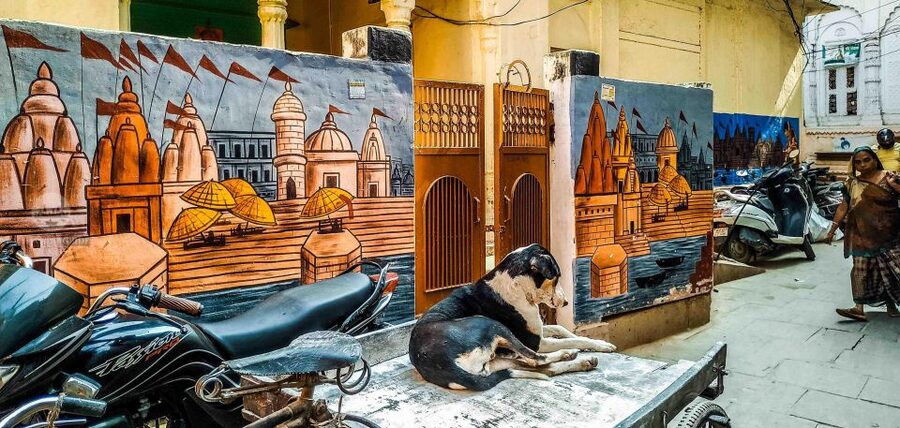
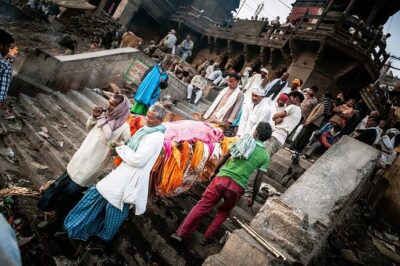
One of the most important parts of the walk is Manikarnika Kund, where the tour includes a photo stop plus tea, a guided visit, and walking time (listed around 10 minutes). Then, later, you come back for another guided visit (another 10 minutes). That two-part structure is smart. It gives you time to absorb what you just saw and then refine your understanding once you have the basics in your head.
The tour also frames Manikarnika Ghat with the idea of learning the truth of life. You do not need to force deep emotions, but you should bring respect and patience. This is one of those settings where people are not performing for visitors, and your job is to observe carefully and behave gently.
Also, the included tea/coffee is not just a break. It is a reality check. You get a short moment to cool off, hydrate, and reset your attention before continuing into smaller lanes and other temple points.
Nepali Temple (Kathwala Temple): a different kind of stop in the same sacred zone
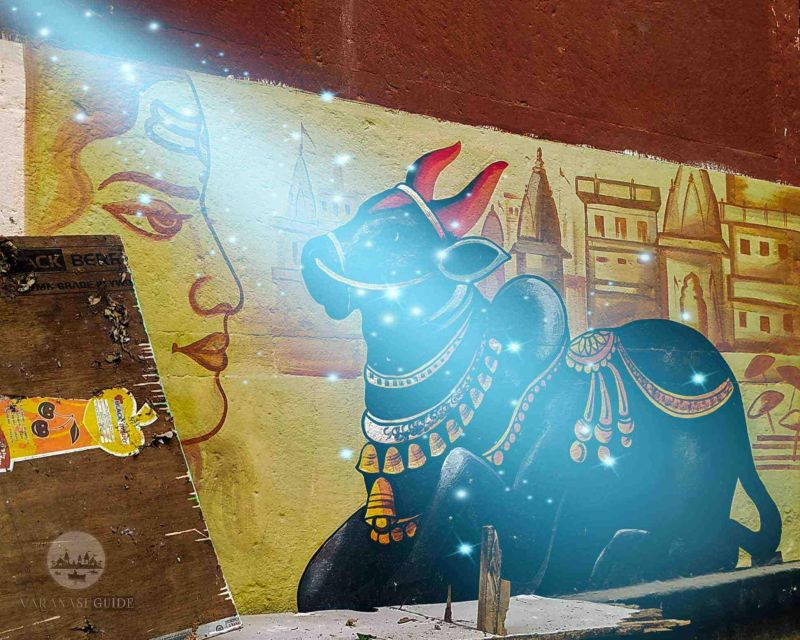
After Manikarnika Kund, the route includes the Nepali Temple, identified as Kathwala Temple, for about 15 minutes with a guided visit. I like this stop because it adds variety. In a city where you might expect similar-looking shrines back to back, this gives you a different feel and a chance to compare styles of devotion.
In practical terms, this is also a breather. If you have been moving quickly through crowded temple areas, a longer guided pause helps you regroup. You start noticing how different places within Varanasi create different experiences, even when everything feels sacred.
Flower market and tiny painted lanes: where the city’s colors live
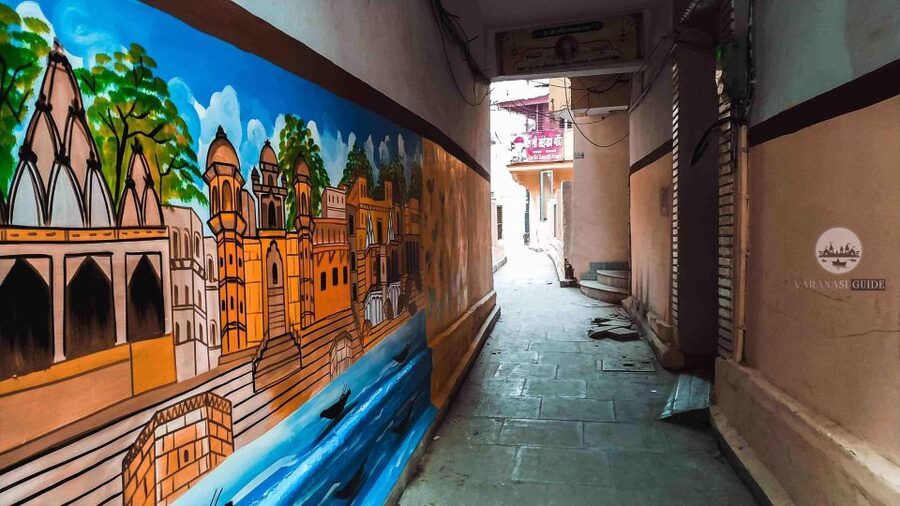
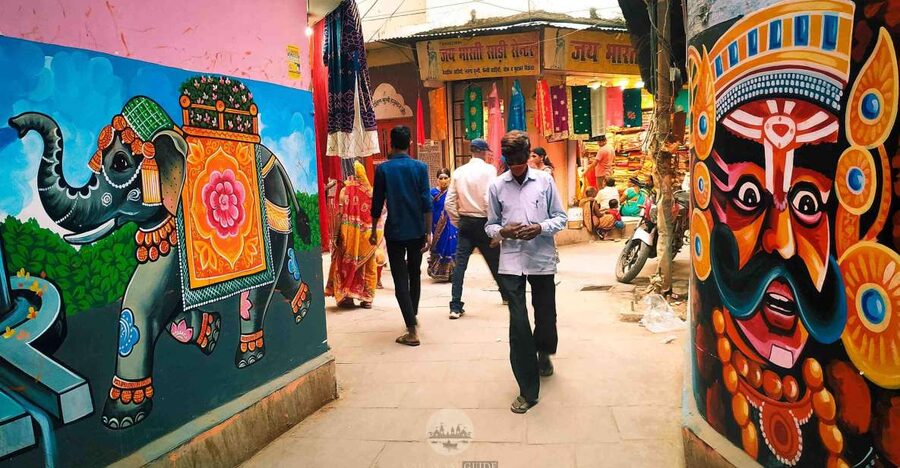
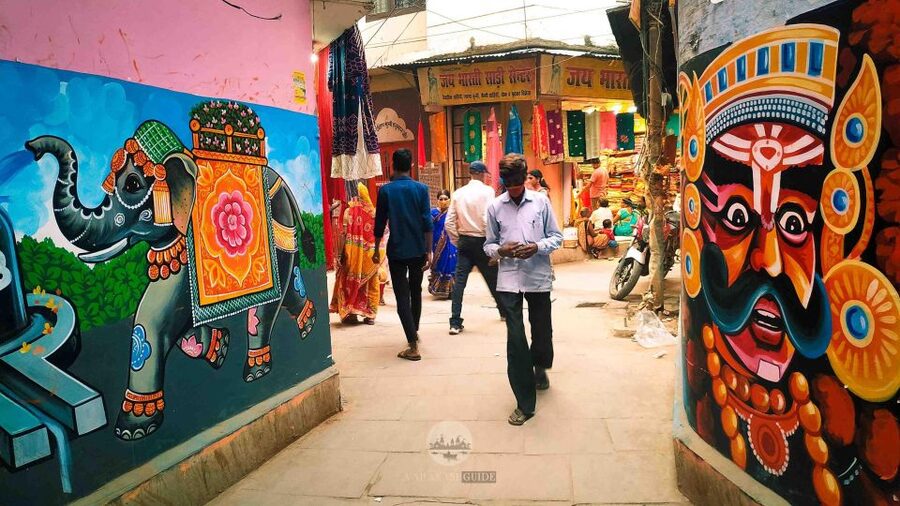
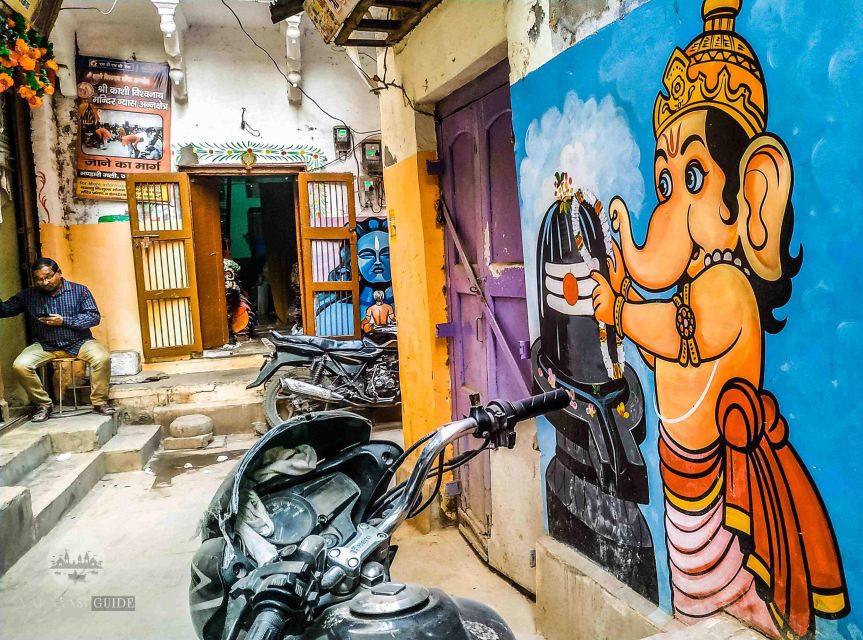
The highlights point to a flower market and tiny streets filled with temple color painting arts. This is where the tour becomes less about one monument and more about Varanasi as a lived city. Flower markets mean texture and smell, even if you are just walking past. The small lanes with color painting let you see how people decorate worship spaces and turn everyday streets into a visual language.
If you care about photos, treat this part like your best chance to slow down. Keep your camera ready, but do not block foot traffic. Also, if you want to buy anything from the market areas, keep cash handy and assume prices and bargaining norms will vary by stall.
The included temple circuit: what those entry fees buy you
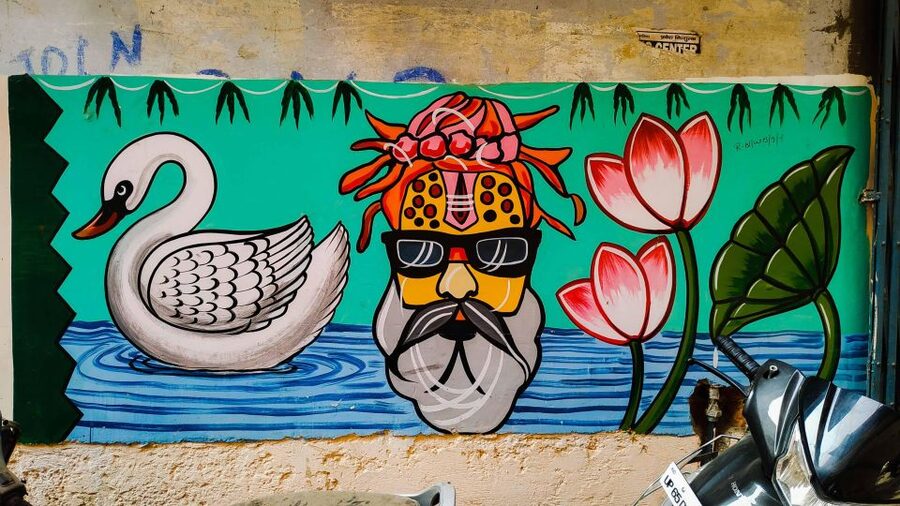
The tour price includes admissions for a set of key points, not just one or two headline sights. You get entry/Admission for Vishalakshi Temple, Nepali Temple (Kathwala Temple), Manikarnika Ghat, Manikarnikeshwar Temple, Ratneshwar Temple, and Chakrapushkarni Kund. That matters because in Varanasi, doing these sites one by one on your own can turn into a paperwork and ticket hunt, especially when you are trying to stay respectful and organized.
Think of it like paying for permission to move through multiple sacred areas in a short window. You are not just paying for someone to walk beside you. You are also paying for the friction reduction that comes with knowing where to go and what to expect.
Pace and guide style: how to get the best version of this tour
The main downside that shows up in feedback is pace and how the guide manages group movement. In at least one experience, the guide reportedly walked ahead and stopped at each point to deliver information without staying alongside the group as you walked. If you like conversation while walking, that style can feel wearing after a while.
Here is the fix, and it is simple: tell your guide your preference at the start. Ask them to slow down and to keep pace with you. If you want fewer facts and more walking-time conversation, say so. A good guide, like Praveen Pathak, can adjust, and multiple people have praised his ability to make the walk feel more human, not just informational.
You can also use the language option strategically. If you choose English, Spanish, or Hindi based on comfort, you will catch the explanations more easily, and you will enjoy the architecture and cultural context much more.
Value check: is $13 fair for a 3-hour heritage walk?
At $13 per person, this tour is priced in a way that usually works best for people who want guided access without going full private-guide mode. The practical value is that you get tea/coffee, bottled water, and admissions for several temple and kund stops. In other words, your money is not only paying for narration, it is paying for included entry into multiple locations.
The tour does not include drinks or lunch, so plan for that gap. You might want to eat after the walk or bring your own snack if you are the type who gets hungry fast. But for a half-morning or early afternoon plan, the included tea/coffee can help you bridge the time until your next meal.
Who should book this walk, and who should skip it
This is a great fit if you want a fast, guided way to understand Varanasi beyond the biggest postcard image. If you are a first-timer, the sequence of temple stops and ghats helps you build a mental map quickly. If you like street-level travel, the tiny lanes, temple-colored artwork, and flower market moments add texture that a car tour will never give you.
You might skip it if you dislike walking in dense areas or if you need long, quiet time at each stop. The tour is short by design, so you will not get hours of slow sitting and reading. It is a sampler, and the guide structure is part of that.
Should you book the Varanasi Walking and Heritage Tour?
Yes, if you want a 3-hour heritage walk that strings together major names like Kashi Vishwanath, Manikarnika Ghat area stops, and additional temples such as Nepali (Kathwala) and the various kund sites. It is also a good bet if you value included tea/coffee and bottled water, because that keeps the experience practical, not just cultural.
Book it with one expectation firmly in place: Varanasi is a sensory city. You will get the best experience when you pace yourself, dress comfortably for walking, and communicate your preferred pace to the guide. If you do that, this tour is a strong way to turn a short visit into a clearer, more meaningful one.
FAQ
How long is the Varanasi Walking and Heritage Tour?
The tour duration is 3 hours.
Where does the tour start?
The tour starts at the Bank of Baroda ATM.
What languages are the live tour guides available in?
The live tour guide offers English, Spanish, and Hindi.
What is included in the price?
Included are tea/coffee, bottled water, and entry/admission to several sites including Vishalakshi Temple, Nepali Temple (Kathwala Temple), Manikarnika Ghat, Manikarnikeshwar Temple, Ratneshwar Temple, and Chakrapushkarni Kund.
What is not included?
Drinks and lunch are not included.
How much does the tour cost?
The price is $13 per person.
Is free cancellation available?
Yes. You can cancel up to 24 hours in advance for a full refund.
The Ghats at Varanasi, More Reviews




Recently reviewed across Varanasi
- Varanasi: Sunrise Boat Tour and Heritage Walk with transfers
★ 5.0 · 10 reviews - Varanasi Mysteries Walk: A Journey through Life and Death
★ 5.0 · 10 reviews - Omvity’s Full-Day Varanasi Tour: Sunrise Boat to Sunset Aarti
★ 5.0 · 10 reviews - Cycle of Life, Death & Rebirth (2 Hours Guided Walking Tour)
★ 4.5 · 10 reviews - Varanasi: Private Heritage Walking Tour & Sunrise Boat Ride
★ 4.9 · 11 reviews - Varanasi: Ganga Arti Evening Light Ceremony on the Main Ghat
★ 4.1 · 11 reviews
Varanasi Ghats and Ganga Aarti, compared.
 ★ 4.8Full Day City Highlights Day Tour & Ganges CruiseFrom $61520 reviews
 ★ 5.0Hidden Secrets of Varanasi: Vibrant Tradition (Guided Tour)From $24429 reviews
 ★ 5.0Sunrise Boat Tour with Arti CeremonyFrom $31375 reviews
 ★ 5.0Banaras Wala ToursFrom $13329 reviews
 ★ 5.0The Ultimate 1 Day in Varanasi – How to Spend 13 Hours – Private Guided TourFrom $65295 reviews
 ★ 4.9Hidden Secrets of Vibrant Tradition (Guided Tour)From $16176 reviews
 ★ 5.0Private Heritage and Spiritual Walk Tour – Varanasi KashiFrom $24172 reviews
 ★ 4.5Varanasi Landmark Evening City Tour – Aarti, Boating & Witnessing the GODFrom $31149 reviews
Browse the lists this tour appears in