
REVIEW · VARANASI GHATS AND GANGA AARTI
Walking tours – for an authentic Varanasi experience
River rituals meet everyday lanes. This private Varanasi walk links sacred ghats, temples, and local life into one doable half-day plan, with a guide who points out what most first timers miss. It is themed, so you are not just checking boxes, you are learning how the city works.
I like two things most: the local guide explanations and the secret parts of Varanasi that usually stay off the standard photo route. The route is built to give you big landmarks plus quieter glimpses of daily routines in the old city.
One practical drawback: you will cover a lot of ground, including crowded crossings and tight lanes. If you dislike slow walking, crowds, or uneven steps, plan accordingly and wear shoes you trust.
In This Review
- Key highlights you will feel on this walk
- A half-day walk through Varanasi’s main ghats and the lanes between them
- Entering Varanasi at Godowlia Crossing, where the city moves first
- Dashashwamedh Ghat to Prayaga Ghat, one river, two sacred references
- Man Mandir Observatory and Man Singh’s carved windows by the river
- Meer Ghat and the Vishalakshi area, history tied to names and access
- Kathwala Nepali Temple and the staircase view of Ganga devotion
- Manikarnika Ghat for cremation rituals, with a strict photography rule
- Alamgir Mosque and Maa Sankata Devi, religions and daily life in the same lanes
- A practical lassi break, then the big Shiva stop at Kashi Vishwanath Temple
- Ending back near Godowlia, markets that feel lived-in
- Price and value: why $13 is a bargain if you want a guide
- What to expect on the ground: pace, crowds, and respectful rules
- Who this tour is best for, and who should think twice
- The guides: what matters most when you hire a private walk
- Should you book this Varanasi walking tour with Kashi Journeys?
- FAQ
- How long is the walking tour in Varanasi?
- How much does the tour cost?
- Is this tour private or shared?
- Does the tour include pickup?
- Is a monument entrance ticket included?
- What is included in the price besides the guide?
- Do I need a paper ticket?
- Can I buy food or drinks during the walk?
- Is photography allowed at Manikarnika Ghat?
- What happens if the weather is bad?
Key highlights you will feel on this walk
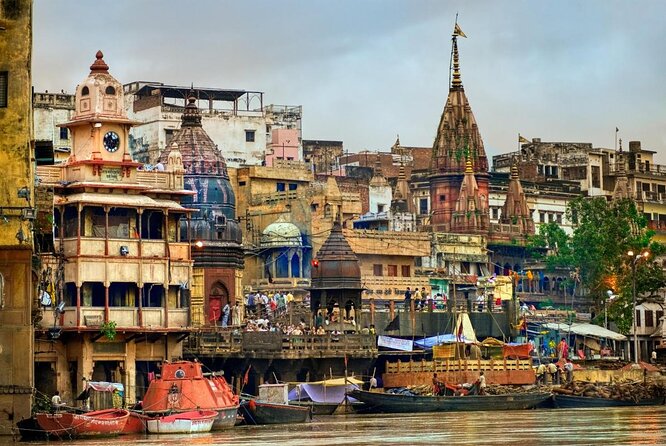
- Godowlia Crossing to start, so you feel the real pulse of the city early
- Dashashwamedh Ghat with Prayaga Ghat in between, a ritual layout with a built-in story
- Man Mandir and carved windows, plus the Man Singh observatory area by the river
- Manikarnika Ghat for cremation rituals, with the important rule that photography is prohibited there
- Kathwala Nepali Temple, a picturesque replica linked to Pashupati Nath
- Lassi and Kashi Vishwanath Temple stops, a practical mix of food break and major Shiva pilgrimage
More time on the Varanasi ghats
A half-day walk through Varanasi’s main ghats and the lanes between them
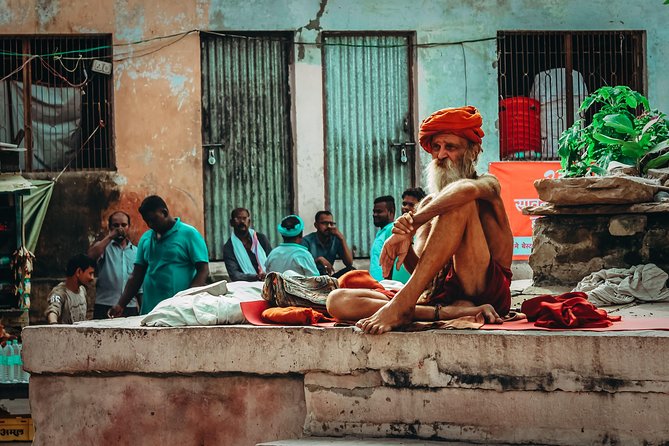
This is the kind of Varanasi experience that makes the city feel less like a map and more like a living place. You spend your time moving along the river and through old town lanes, so you see how devotion, commerce, and community overlap.
Because it is private, your pace is more flexible than on group tours. If you want more time watching rites at the ghats, or you want to pause longer near temples, your guide can adjust within the overall 4 to 5 hour window.
The price is also unusually low for what you get. At $13, the value is mostly in the guide time, bottled water, and the small included refreshment (coffee and/or tea), plus a route that strings together major sites and lesser-known streets.
Entering Varanasi at Godowlia Crossing, where the city moves first
You begin at Godowlia Crossing, and that choice is smart. It is the busy, crowded crossing on the way toward the main ghat area, which means you start in the thick of everyday movement rather than at a quiet viewpoint.
Even if you are not into watching crowds, this start helps you get oriented fast. You get a feel for how people navigate the city, how traffic and foot paths flow, and how your guide reads the street so you do not end up constantly asking, where do we go next?
This is also a good reminder that Varanasi is not a one-at-a-time museum town. You are walking in a place where people work, pray, and shop, all at once.
Dashashwamedh Ghat to Prayaga Ghat, one river, two sacred references
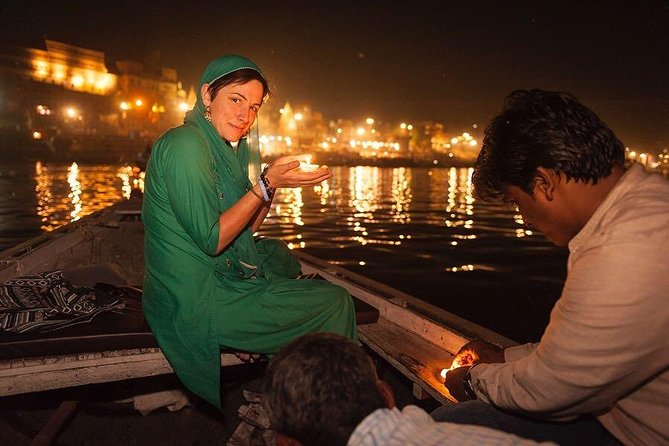
Your next major stop is Dashashwamedh Ghat, and it is described as being divided into two parts. The space between them is Prayaga Ghat, presented as a replica of the holy city of Prayagraj (Allahabad).
That detail matters. It means you are not only seeing a wide riverfront, you are seeing how sacred geography is staged right here in Varanasi. Your guide can connect that to why certain rituals and gatherings are located where they are.
You also have a decent chunk of time at this point, about 30 minutes. That is enough to watch what is happening, take in the river views, and get the guide’s context before you head deeper into the temple and ghat network.
- The Ultimate 1 Day in Varanasi – How to Spend 13 Hours – Private Guided Tour★ 5.0 · 295 reviews
- A Journey of A lifetime★ 5.0 · 272 reviews
- Varanasi: Hidden Secrets of Vibrant Tradition (Guided Tour)★ 4.9 · 176 reviews
- Private Heritage and Spiritual Walk Tour – Varanasi Kashi★ 5.0 · 172 reviews
- 3 Hour Walking Tour of Buddhism in Sarnath★ 5.0 · 160 reviews
Man Mandir Observatory and Man Singh’s carved windows by the river
At Man Mandir Ghat, there is a palace complex built by Savai Man Singh (dating to the 1585 to 1605 period). The standout feature is the ornately carved windows and the observatory-like structure on the roof.
This stop is short, but it works because it changes the feel of the walk. After river rituals and crowded edges, you get a moment of architecture and design, the kind that shows how rulers and thinkers historically treated knowledge as something you could build into public stone.
If you are the type who likes details, bring that attention here. The time is limited (around 15 minutes), so you will want to listen for what your guide points out, especially on how the building relates to its observatory purpose.
Meer Ghat and the Vishalakshi area, history tied to names and access
Next comes Meer Ghat, which has a name history linked to Mir Rustam Ali in 1735. This ghat is described as providing access to Vishalakshi temple and Dharma Kupa.
From the top of the ghat, you also reach New Vishwanath temple, built in 1956 by Swami Karapatri-ji. That combination of older references plus more recent construction is exactly why a guided walk helps. The riverfront is layered, and names carry meaning when someone explains what they connect to.
This stop is about 10 minutes. Use it to absorb the overview and catch the cues to what is worth visiting longer if you come back on your own.
Kathwala Nepali Temple and the staircase view of Ganga devotion
Then you move to the Nepali Temple, also called Kathwala Temple. It is described as a pretty shrine of the goddess connected to the Ganga, with a staircase that leads to the Nepali temple structure.
The tour calls out that this temple is a replica of Pashupati Nath Temple. It is also described as a picturesque building made of wood and brick, which gives it a different look from many of the stone-heavy temple scenes around the ghats.
You get about 20 minutes here, enough time to look around and understand the setting without feeling rushed. This stop is also a nice break from the busiest ghats because the focus shifts toward a small, shrine-style view and the stairs that frame the temple approach.
Manikarnika Ghat for cremation rituals, with a strict photography rule
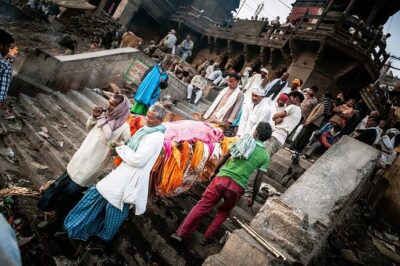
Manikarnika Ghat is famous for cremation rituals, and the tour specifically notes that photography of the cremation area is prohibited. That is not a suggestion, it is a key behavior rule for respecting the space and the people involved.
You will likely see intense emotion and steady ritual practice, and this is one of those moments where a guide changes the experience. When you understand what you are watching, you usually react with more respect and less confusion.
Time here is about 20 minutes. Use the time for quiet observation and let your guide tell you what is going on rather than trying to interpret everything on your own.
If you are sensitive to this kind of scene, consider whether you want a gentle alternative day. But if you do go, treat it as a serious religious space, not a sightseeing photo stop.
Alamgir Mosque and Maa Sankata Devi, religions and daily life in the same lanes
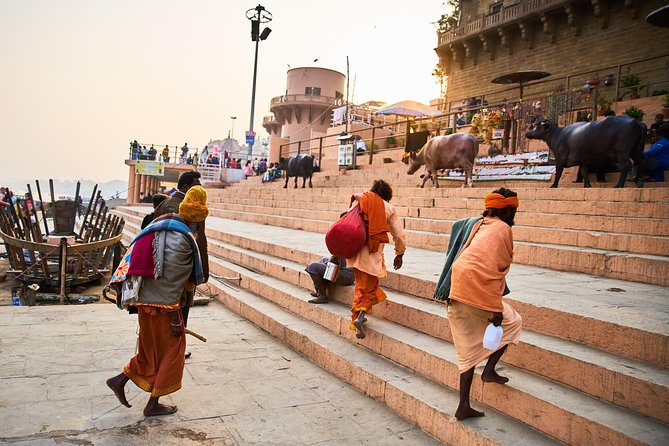
At Alamgir Mosque, you are told it was built on the location of an 11th-century Vishnu temple. The background includes destruction and rebuilding, and then a final transformation into a mosque in 1673, which is where the story turns from one religious identity to another in the same footprint.
You also move toward Maa Sankata Devi Temple in the northern old city lanes. This is where the walk becomes more about people than monuments. The tour description points out that you will get to peep through galiya (alleyways) and see lives of residents who have stayed in the street for years.
This part lasts about an hour, which is longer than most stops. That extra time makes sense because you are not only looking at a temple, you are watching how neighborhood life continues around it.
A practical lassi break, then the big Shiva stop at Kashi Vishwanath Temple
A small food moment shows up as Blue Lassi Shop, where you can try a very famous lassi. The important detail: it is for own expense, while tea or coffee is included earlier in the tour.
This is a smart placement. You are midway through the walk, your feet have opinions, and a quick drink break keeps you going for the final temple area.
Then you reach Kashi Vishwanath Temple, described as one of the most famous temples dedicated to Lord Shiva and also known as the Golden temple. This is a major spiritual destination, so the guide’s context helps you understand what you are seeing beyond the obvious.
Time here is about 10 minutes. That can sound short, but for a high-demand temple area it is realistic. You use it to orient, understand the significance, and move on with the rest of the day in mind.
Ending back near Godowlia, markets that feel lived-in
After Kashi Vishwanath, the walk continues and ends back at Godowlia. You pass local markets, shops, and one more famous temple along the way.
This ending is not just convenient. It lets you see how the pilgrimage route ties back into buying, selling, and everyday movement. In Varanasi, the holy and the practical are never far apart.
You get about 30 minutes for this final stretch, which helps you regroup and decide what you might want to revisit later under your own pace.
Price and value: why $13 is a bargain if you want a guide
At $13 for a 4 to 5 hour private walking tour, the value mostly comes from what you are not paying for separately. You get bottled water, coffee and/or tea, and an eco friendly tour guide.
The route also covers several high-interest sites, from the ghats and temple areas to a mosque and neighborhood temple. Even if some stops have free access, the guide’s time is what stitches the meaning together.
Two value notes to keep in mind:
- Monument entrance fees are not included. Some stops are listed as free in the schedule, but other buildings might still have rules or fees.
- Pickup and drop via a vehicle is not included. Pickup is mentioned, so you should confirm how transportation is handled for your exact location and whether you need to cover a car or rickshaw cost.
For many first-time visitors, the biggest payoff is practical. You learn where to walk, what to watch respectfully, and what to prioritize when you return on your own.
What to expect on the ground: pace, crowds, and respectful rules
This is a walking tour, so comfort matters. You will hit crowded crossing zones and narrow alleyways, plus steps down and up near ghats.
You also need to be ready for intensity. Manikarnika Ghat involves cremation rituals, and the tour clearly states that photography in that specific area is prohibited. Your guide will likely manage the flow, but you should still keep your behavior calm and respectful.
Weather is another factor. The tour notes that it requires good weather, and if it is canceled due to poor weather you are offered a different date or a full refund.
Who this tour is best for, and who should think twice
I recommend this walking tour if you want an authentic Varanasi experience that mixes ghats, temples, and real neighborhood lanes under one plan. It is also a great pick if you like learning from a local guide who points out the small, easy-to-miss details.
It is less ideal if you have mobility limits or if you get stressed by crowds and narrow walking sections. The schedule includes busy crossings and longer time in alley-heavy parts, like the section that leads into the lanes around Maa Sankata Devi.
The guides: what matters most when you hire a private walk
The standout theme in the provided feedback is guide quality. People highlight guides such as Rajiv (also spelled Rajeev), and Anubis for being tireless, friendly, and strong on explanations.
English clarity also shows up. One account specifically praises very good English, plus the warm, cordial approach of the guide. That combination matters in Varanasi because so much of what you see is layered, and you will get more out of your walk if you can follow the meaning in real time.
So when you book, treat the guide as the star of the show. Even with a set route, the guide is what turns the walk into understanding rather than just movement.
Should you book this Varanasi walking tour with Kashi Journeys?
Book it if you want a focused half-day in Varanasi that covers the big ghats, key temples like Kashi Vishwanath and Manikarnika, plus a real slice of old city alley life. At $13, the included water and tea, plus the private guide time, make it a strong value.
Pass or consider alternatives if you cannot handle intense scenes like cremation rituals, or if heavy foot traffic and crowds will likely ruin your day. If you do go, set your expectations as respectful observation, wear good shoes, and let your guide do the interpreting.
If your ideal trip includes learning quickly and seeing how the sacred and everyday share the same street, this is the kind of walking tour that fits.
FAQ
How long is the walking tour in Varanasi?
The duration is about 4 to 5 hours.
How much does the tour cost?
The price is listed as $13.
Is this tour private or shared?
It is a private tour, so only your group participates.
Does the tour include pickup?
Pickup is offered, but the vehicle for pickup and drop from or to your hotel is not included.
Is a monument entrance ticket included?
No, monument entrance fees are not included. Some stops are listed as free or with admission included, but you should still expect that not all sites are covered.
What is included in the price besides the guide?
Bottled water and coffee and/or tea are included, along with an eco friendly tour guide.
Do I need a paper ticket?
You receive a mobile ticket.
Can I buy food or drinks during the walk?
Coffee and/or tea are included, and there is a lassi shop stop, but lassi is on your own expenses.
Is photography allowed at Manikarnika Ghat?
Photography of the cremation area is prohibited.
What happens if the weather is bad?
The experience requires good weather. If it is canceled due to poor weather, you are offered a different date or a full refund.
The Ghats at Varanasi, More Reviews




Recently reviewed across Varanasi
- Varanasi: Sunrise Boat Tour and Heritage Walk with transfers
★ 5.0 · 10 reviews - Varanasi Mysteries Walk: A Journey through Life and Death
★ 5.0 · 10 reviews - Omvity’s Full-Day Varanasi Tour: Sunrise Boat to Sunset Aarti
★ 5.0 · 10 reviews - Cycle of Life, Death & Rebirth (2 Hours Guided Walking Tour)
★ 4.5 · 10 reviews - Varanasi: Private Heritage Walking Tour & Sunrise Boat Ride
★ 4.9 · 11 reviews - Varanasi: Ganga Arti Evening Light Ceremony on the Main Ghat
★ 4.1 · 11 reviews
Varanasi Ghats and Ganga Aarti, compared.
 ★ 4.8Full Day City Highlights Day Tour & Ganges CruiseFrom $61520 reviews
 ★ 5.0Hidden Secrets of Varanasi: Vibrant Tradition (Guided Tour)From $24429 reviews
 ★ 5.0Sunrise Boat Tour with Arti CeremonyFrom $31375 reviews
 ★ 5.0Banaras Wala ToursFrom $13329 reviews
 ★ 5.0The Ultimate 1 Day in Varanasi – How to Spend 13 Hours – Private Guided TourFrom $65295 reviews
 ★ 4.9Hidden Secrets of Vibrant Tradition (Guided Tour)From $16176 reviews
 ★ 5.0Private Heritage and Spiritual Walk Tour – Varanasi KashiFrom $24172 reviews
 ★ 4.5Varanasi Landmark Evening City Tour – Aarti, Boating & Witnessing the GODFrom $31149 reviews
Browse the lists this tour appears in