
REVIEW · MUMBAI CITY TOURS
Best South Mumbai Heritage Walk
South Mumbai reads like a living postcard. On this South Mumbai Heritage Walk, I love getting up close to landmarks like the Gateway of India and Chhatrapati Shivaji Terminus, and I love how the guide connects buildings to colonial-era influence without turning it into a lecture. The main tradeoff is simple: it is about 3 hours of walking, so you will want comfortable shoes and a realistic pace.
I also like that you can choose a morning or afternoon option, and the mobile ticket keeps everything straightforward. The group is capped at 15, which makes it easier to ask questions at the curb instead of rushing ahead. Names like Aakash, Gautam, Sandesh, and Sanika come up as standout guides known for making the route feel personal, and even for adding side context like photo tips and occasional Bollywood angles while you stroll.
In This Review
- Key things to know before you go
- Why this South Mumbai heritage walk feels worth your time
- Three hours, eight stops, and the pace you should expect
- Gateway of India to Kala Ghoda: iconic views plus artsy street energy
- Town Hall (Asiatic Society Library) and Flora Fountain: the neat geometry of power
- Horniman Circle Garden and the High Court: a pause, then a reality check
- Taj Mahal Palace and Chhatrapati Shivaji Terminus: end with scale and wow-factor
- What you actually learn, without it feeling like a textbook
- Photo tips for a walking heritage route (that does not slow you down)
- Price and value: what $17.89 buys you in real terms
- Who this South Mumbai Heritage Walk suits best
- Should you book this South Mumbai Heritage Walk?
- FAQ
- How long is the Best South Mumbai Heritage Walk?
- How much does the tour cost?
- Are there morning and afternoon tour times?
- What is included in the itinerary?
- Do any of the stops require paid admission?
- Where does the tour start and end?
- What kind of ticket do I get?
- What is the group size limit?
- Is free cancellation available?
Key things to know before you go
- Victorian Gothic Revival details: You do not just see famous facades, you learn what to look for.
- Photo-first walking: The route is built for street-level views where your phone actually captures the architecture.
- Free admission stops: The listed stops are marked free for the tour plan.
- Small group format: With a maximum of 15 people, the walk stays manageable and question-friendly.
- Central end points: You start near CST area landmarks and finish by Colaba’s Regal Cinema area.
Mumbai, a few more routes through it
Why this South Mumbai heritage walk feels worth your time
South Mumbai can look like a blur if you move only by car or ride share. This is different because you slow down on foot and let the streets, building edges, and skyline make sense together. You are basically walking the “why” behind what you see in photos back home.
I also like that the story stays practical. You learn how colonialism shaped the city’s landscape as you move between standout landmarks in the Fort and Colaba areas. Instead of memorizing dates, you notice the shapes of buildings, the planning of public spaces, and the way monuments claim space at street level.
And at $17.89 per person for about 3 hours, it is a solid value if your goal is orientation plus iconic sights. This is not a museum-day ticket. It is a guided route that helps you understand what you are actually looking at while you get great walking views.
Three hours, eight stops, and the pace you should expect
The tour runs roughly 3 hours and is designed around several short stops, not one long one. That means you get a taste of each location, plus time to take photos and regroup, before moving to the next landmark.
This setup is ideal if you want efficiency without feeling like a bus tour. You also get to stretch your legs across different types of places, from monument exteriors to gardens and major civic buildings. Just remember, it is still a walking tour, so plan your day around it.
The small group size matters more than people think. With up to 15 travelers, you can usually hear the guide’s explanations and still get side views when you pause. If you are someone who likes asking questions, that group cap gives you a fighting chance to do it comfortably.
Finally, the mobile ticket is a plus. South Mumbai is busy, and you do not want extra steps on your schedule. Having the ticket on your phone keeps you from scrambling for paper at the start.
Gateway of India to Kala Ghoda: iconic views plus artsy street energy
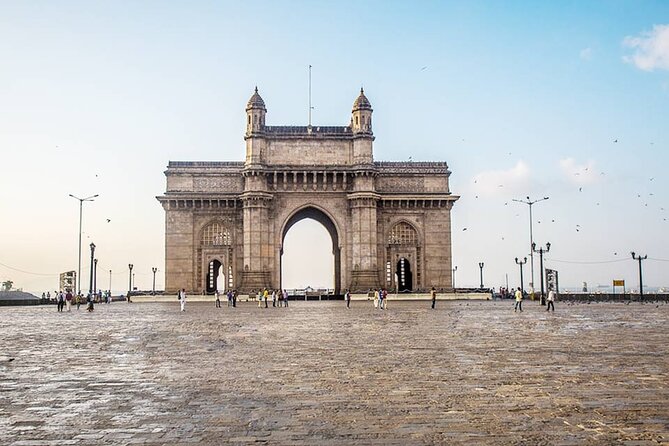
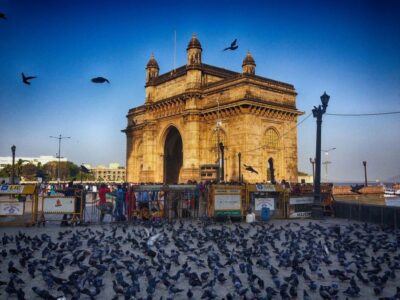
Most heritage walks in Mumbai start with the postcard and then move on. Here, you start with the Gateway of India, which anchors the whole colonial-era seafront feel. You get about 30 minutes here, long enough to frame photos and still catch the guide’s context about what this monument represents.
One of the best parts of starting at the Gateway is that it sets your eye for architecture and public space. You can compare how the monument sits in relation to the surrounding city, not just what it looks like from one angle. Even if you have seen photos online, seeing the scale in person usually changes how you read it.
From there, you head to Kala Ghoda, a neighborhood name that connects to the city’s arts scene. You spend about 30 minutes in this area, and it is an easy shift from grand monument scale to more human street rhythm. In February, the area hosts the Kala Ghoda Arts Festival, which the guide typically uses to explain why this zone has such a strong cultural identity.
If you like your walking tours to include more than architecture, Kala Ghoda is a good breath break. It is also a place where the light and streets can give you better photo chances than some of the larger, more rigid monument backdrops.
- Elephanta Caves & Island Guided Private Tour★ 5.0 · 1,327 reviews
- Private Guided Walking Tour in Fort & Colaba★ 5.0 · 895 reviews
- Mumbai: Street Food and Night Markets Tour★ 4.9 · 719 reviews
- Mumbai: Dharavi Slum, DhobiGhat, and Dabbawallas Tour★ 4.9 · 689 reviews
- Dharavi Slum Tour★ 5.0 · 625 reviews
Town Hall (Asiatic Society Library) and Flora Fountain: the neat geometry of power
Next up is the Town Hall, also known as the Asiatic Society of Mumbai Town Hall, in the Fort locality. You get about 30 minutes, and this is where the walk leans into architectural language. The building is neoclassical, so once your eyes know what to look for, you start spotting how the city borrowed European-style structure and form for major public institutions.
Neoclassical buildings can feel a bit “cold” if you only look at them from a distance. The value of this walk is that the guide helps you see why that formal style mattered in a colonial city: these structures were meant to signal order, authority, and permanence.
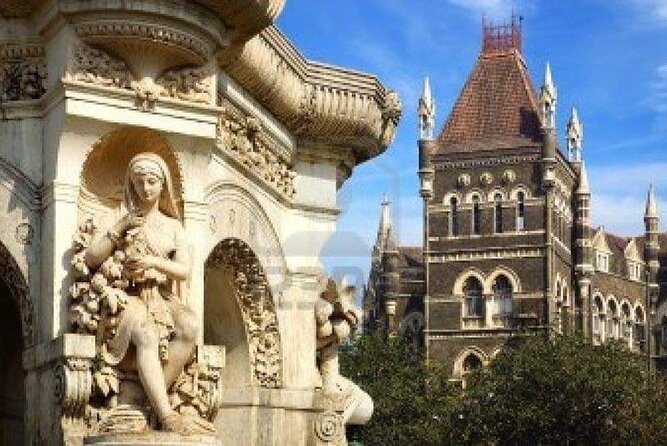
Then you shift to Flora Fountain at Hutatma Chowk, with about 30 minutes allotted. This stop is a reminder that the city’s heritage is not only in grand stations and gates. It is also in commemorative streetscapes and sculpted public features that help define where people gather and move through.
The fountain stop is especially useful for photos, because it gives you a break from the big-silhouette landmarks. You can frame tighter, experiment with angles, and still keep the tour’s story moving forward.
Horniman Circle Garden and the High Court: a pause, then a reality check
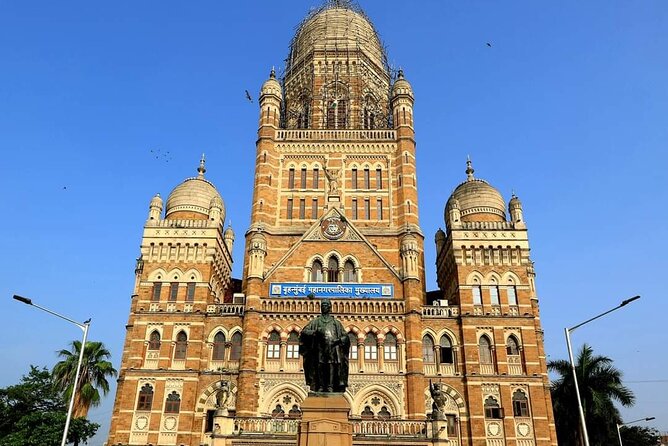
After the civic and monument stops, you get to Horniman Circle Garden. The tour allocates about 10 minutes, and yes, it is short, but it is the kind of short that works on a walking schedule. You also get the garden’s size context, covering about 2.5 acres (10,100 m²), which helps you understand why this pocket of green matters in a dense office and heritage district.
Even in a quick visit, this garden stop gives you something important: a reset for your eyes. It is easier to appreciate the surrounding office blocks and formal buildings when you have a green, open space in your visual memory.
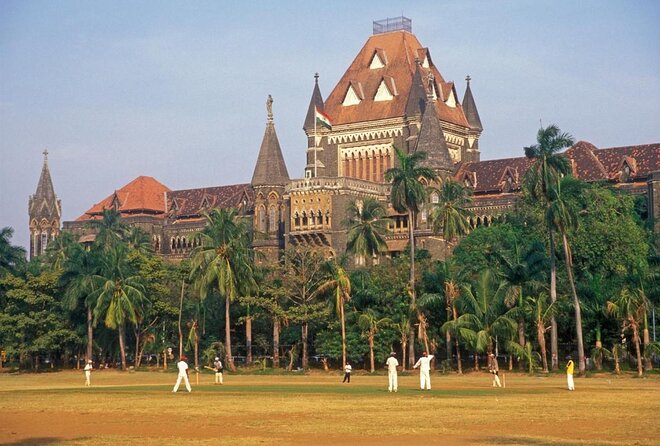
Then you move to the High Court Principal Bench Bombay, another brief stop of about 10 minutes. This is one of those locations where the guide’s commentary can change your whole impression. You start to connect the dots between architecture and function, between what you see outside and the public role these institutions play inside.
This pairing, garden then court, keeps the walk from feeling repetitive. It also gives you a practical lesson in how cities structure daily movement: people need green pauses, but they also need institutions that shape the city’s pace.
Taj Mahal Palace and Chhatrapati Shivaji Terminus: end with scale and wow-factor
A standout part of the route is the stop by The Taj Mahal Palace, Mumbai. The hotel is described as a heritage five-star luxury hotel in Colaba, and you spend about 10 minutes here. Even if you never step inside, this stop matters because it shows how heritage branding and landmark status intertwine in South Mumbai.
The guide helps you read the building as part of the broader streetscape, not as an isolated luxury object. That context makes the Taj area feel less like a closed-off zone and more like a landmark node in the city’s walking logic.
Finally, you reach the big finale: Chhatrapati Shivaji Terminus (CST), a UNESCO World Heritage Site. You get about 30 minutes here, which is a great amount of time for a walking tour finale. The station is not only visually striking. It is a working piece of city infrastructure, and seeing that mix of daily function and heritage significance is what makes it memorable.
If you care about photography, this is usually where your best shots come from. You can play with lines, symmetry, and the building’s overall massing, then capture the station with a sense of scale that you cannot fully get from a single viewpoint.
You end the walk near Regal Cinema, Apollo Bandar, Colaba. That finishing location is convenient if you want to keep wandering around Colaba on your own afterward, or if you are heading to dinner nearby.
What you actually learn, without it feeling like a textbook
The tour is built around the idea that colonialism shaped Mumbai’s built environment. You do not get a generic lecture. You get architecture cues you can carry to your next stop.
When you hear words like Victorian Gothic Revival, it is not just a label. The guide’s job is to show you the features that make that style recognizable. Once you know what to look for, the facades start to make sense even on streets you did not plan to visit.
I also like the guide-to-conversation vibe you can get on this route. Names like Sandesh and Sanika are associated with friendly, personable guiding that keeps explanations flowing naturally. Gautam is also noted for showing photo spots and adding broader India context, which helps if you want a walk that is more human than mechanical.
That matters in a city like Mumbai, where you can feel overwhelmed if you only chase the biggest monuments. A good guide helps you connect the dots between what you see now and what you notice later.
Photo tips for a walking heritage route (that does not slow you down)
If you are bringing a phone camera, this tour gives you several chances to step out of the crowd and frame buildings at street level. The general trick is to slow down at your favorite angles instead of trying to capture everything in one pass.
At the Gateway of India, look for viewpoints that show the monument in relation to nearby movement and open space. At Kala Ghoda, try tighter street frames where signage, street texture, and architecture sit close together. For Town Hall and Flora Fountain, keep your shots steady and give yourself a moment to line up shapes, because neoclassical and sculptural elements reward careful framing.
At Horniman Circle Garden, use the green pause as a contrast. Shooting the surrounding buildings with a garden edge in the frame often makes your photos feel more layered. Then save your wide, dramatic shots for CST, because the station’s scale benefits from a bit more composition time.
Most importantly, pace your photos with the tour’s timing. You will get more keepers if you focus on a few strong angles rather than sprinting between every spot.
Price and value: what $17.89 buys you in real terms
At $17.89 per person for about 3 hours, the value is mostly in the guidance. The tour includes multiple free-entry stops as listed for the route, so you are not stacking ticket costs on top of your sightseeing.
The other value lever is group size. A max of 15 people means you are more likely to get real attention. That matters for architecture walks where your enjoyment depends on what the guide points out.
Also, the tour offers both morning and afternoon options. That flexibility can save you money indirectly, because you can plan around other attractions and not end up with a half-day that costs you a second paid activity just to fill time.
Finally, it is popular, with 10+ bookings in the last month and a high 4.8 rating (122 ratings). High ratings do not guarantee your personal experience, but they do suggest the format works for most people who want a well-paced heritage route.
Who this South Mumbai Heritage Walk suits best
This is a strong fit if you:
- Want first-time orientation in South Mumbai and like getting context along the way
- Enjoy architecture styles, especially when a guide points out features like Victorian Gothic Revival
- Prefer walking and photos over sitting in a vehicle
- Travel solo, as a small group format can feel friendly rather than crowded
If you are someone who hates walking or needs long indoor breaks, you might find the structure demanding. This is not a slow amble through one neighborhood. It is a focused route with several landmarks in one afternoon or morning.
If you are traveling with limited time, this tour can also act like a “scout walk.” You will come away with mental maps for where to return later for a longer look.
Should you book this South Mumbai Heritage Walk?
If your goal is to see the headline monuments and understand the city’s European-influenced architecture cues while you move through real streets, I think you should book it. The combination of small group size, free-entry stops on the route, and photo-friendly pacing makes it a practical way to get your bearings fast.
My one caution is the walking time. With about 3 hours on the schedule, choose this when you can stay comfortable on foot. If your day is already packed, consider the morning or afternoon option that leaves you breathing room afterward.
One more practical note: there has been at least one reported experience of a last-minute cancellation with limited prior notice. It is probably not the norm, but it is smart to keep your booking details handy and check updates close to the start.
FAQ
How long is the Best South Mumbai Heritage Walk?
The tour duration is approximately 3 hours.
How much does the tour cost?
It costs $17.89 per person.
Are there morning and afternoon tour times?
Yes, there are both morning and afternoon options available.
What is included in the itinerary?
The walk includes stops at Gateway of India, Kala Ghoda, Town Hall (Asiatic Society Library), Flora Fountain, Horniman Circle Garden, High Court Principal Bench Bombay, The Taj Mahal Palace, and Chhatrapati Shivaji Terminus.
Do any of the stops require paid admission?
The listed stops are marked as admission ticket free for this tour.
Where does the tour start and end?
It starts at McDonald’s (Empire Building, Dr Dadabhai Naoroji Rd, near CST Station, Azad Maidan, Fort). It ends at Regal Cinema (Apollo Bandar, Colaba).
What kind of ticket do I get?
You receive a mobile ticket.
What is the group size limit?
The tour has a maximum of 15 travelers.
Is free cancellation available?
Yes, you can cancel for a full refund up to 24 hours in advance of the experience’s start time.
Mumbai, Keep Exploring





Recently reviewed across Mumbai
- Mumbai City Sightseeing Guided Tour on a Bicycle
★ 5.0 · 10 reviews - Mumbai Street Food & Beach Tour with 10+ Tastings
★ 5.0 · 10 reviews - Mumbai Market Tour & Maharashtrian Cooking Class with Chef Reshma
★ 4.5 · 10 reviews - Sailing Experience in Mumbai on Mid Size Yacht
★ 5.0 · 10 reviews - 3 Days Complete Mumbai Tour Inclusive of Bollywood Studio Experience
★ 5.0 · 10 reviews - Dharavi Slum Tour
★ 5.0 · 10 reviews
Mumbai City Tours, compared.
 ★ 4.9Full-Day Sightseeing Tour of MumbaiFrom $241,822 reviews
 ★ 5.0Group Guided Walking Tour in Fort and ColabaFrom $161,073 reviews
 ★ 4.8Elephanta Caves Half-Day Guided Tour with ExpertFrom $301,032 reviews
 ★ 5.0Highlights of Mumbai Sightseeing Tour: TRAVELLERS CHOICE AWARDEDFrom $33915 reviews
 ★ 5.0Private Guided Walking Tour in Fort & ColabaFrom $36895 reviews
 ★ 4.9Street Food and Night Markets TourFrom $13719 reviews
 ★ 4.9Dharavi Slum, DhobiGhat, and Dabbawallas TourFrom $14689 reviews
 ★ 5.0Highlights of South Mumbai Guided Private Tour in AC VehicleFrom $74620 reviews
Browse the lists this tour appears in