

REVIEW · MUMBAI CITY TOURS
Mumbai: Full-Day Sightseeing Tour of Mumbai
Mumbai can feel like sensory overload, in the best way. This full-day route mixes iconic landmarks with real daily life, from Chhatrapati Shivaji Terminus to Dhobi Ghat. I like that it’s structured enough to keep you on track, yet flexible enough for a human guide to spot what you care about.
What I love most is the balance of architecture and street-level Mumbai, and how guides like Ganesh, Abdul, and Imran bring the places to life with clear, funny stories. The second big win is the smooth logistics, hotel pickup, air-conditioned car, and drivers who handle the city’s traffic without drama.
One drawback to consider: it’s a long day with short stops, so you won’t get a slow, museum-only pace, and you may feel a bit rushed at places that deserve more time.
In This Review
- Key things I’d watch for on this Mumbai day
- Why this Mumbai sightseeing loop is a smart first day
- Hotel pickup and the real logistics of a long city day
- Gateway to the Taj: starting with the big emotional scene
- Kala Ghoda and the museum district: where art and old buildings share space
- Oval Maidan, Rajabai Clock Tower, and the “paperwork” of power
- Chhatrapati Shivaji Terminus: the UNESCO moment you shouldn’t miss
- Crawford Market and local browsing, with real scents and real crowds
- Marine Drive: the sea promenade break that cools your head
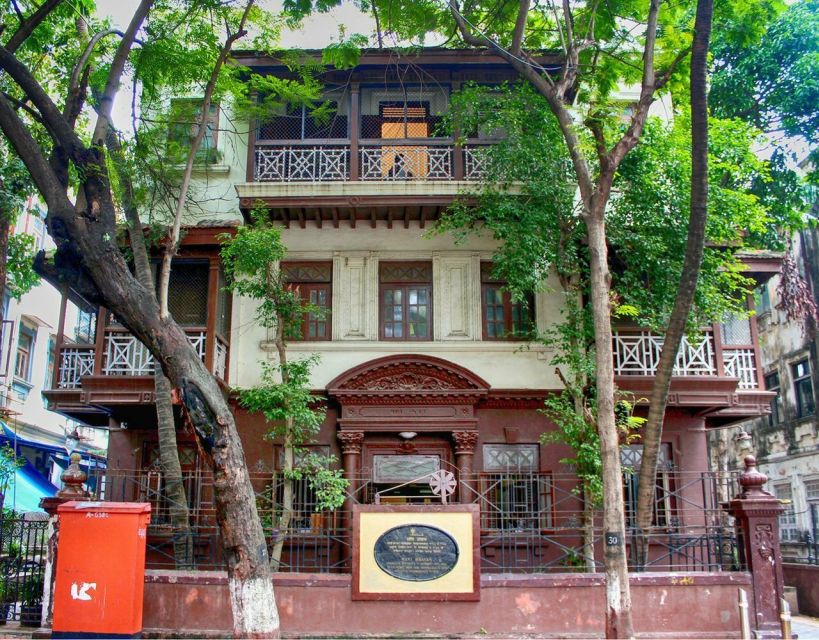
- Mani Bhavan and Gandhi’s story in a smaller, more human setting
- Malabar Hill and the calm side of Mumbai: Banganga Tank and Hanging Gardens
- Dhobi Ghat: watching history and labor at work in open air
- Passing sights that add context, like Antilia and Jain Temple
- The people make it: guides and drivers who keep the day smooth
- What to bring and how to handle the walking, heat, and crowds
- Is this tour worth $24 per person?
- Should you book this Mumbai day tour?
- FAQ
- How long is the Mumbai full-day sightseeing tour?
- Is hotel pickup and drop-off included?
- What’s included in the ticket price?
- Is food included during the tour?
- What if I’m arriving by cruise ship?
- Is the guide available in English, and is it private or small groups?
Key things I’d watch for on this Mumbai day
- Air-conditioned transport + bottled water, so the schedule stays comfortable even when the city heat hits.
- A strong mix of “big sights” and everyday scenes, like Crawford Market and Dhobi Ghat.
- UNESCO-level architecture at Chhatrapati Shivaji Terminus, plus colonial-era neighborhoods nearby.
- Gandhi at Mani Bhavan and calm at Banganga Tank and Hanging Gardens, so the day has emotional range.
- Dhobi Ghat’s open-air laundry operations, a rare look at work that has fed Mumbai for generations.
Mumbai, a few more routes through it

Why this Mumbai sightseeing loop is a smart first day
If you land in Mumbai with only a day (or you only have a few daylight hours), this is the kind of tour that helps you get oriented fast. You start with grand, camera-ready landmarks, then move into neighborhoods where you can feel the city’s daily rhythm.
I also like that it doesn’t treat Mumbai like a list of pretty photos. The day includes places where history, culture, and ordinary life sit next to each other, sometimes only a few minutes apart by road. One moment you’re looking at colonial-era grandeur by the sea, the next you’re watching work at Dhobi Ghat.
The best part is the human factor. In many tours like this, the itinerary is the star. Here, the guide experience really matters. People praise guides such as Ganesh, Abdul, Suresh, Loki, and Imran for doing more than reciting facts. They explain context, answer questions, and keep the mood light, which helps when you’re spending the whole day on the move.
Hotel pickup and the real logistics of a long city day
Mumbai traffic is a character of its own. What makes this tour work is the practical rhythm: hotel pickup and drop-off, an air-conditioned vehicle, and bottled water built into the package.
Duration runs 5 to 10 hours, so timing can vary based on where you’re picked up and how the day flows. That range is important. If you’re visiting for the first time, give yourself breathing room for travel time and for the “wait, I want to ask another question” moments.
The route also has a clear logic. You’re not bouncing randomly across the city. You’re guided through a cluster of sights in South Mumbai first, then you move toward areas like Malabar Hill for calmer scenes, and later you hit Dhobi Ghat for that unforgettable “how does this even work?” feeling.
A couple of practical notes I’d keep in mind:
- Expect some stop times to be short. That’s how the tour fits in so much.
- If you’re jet-lagged, tell your guide early. Many guides, including Abdul and Suresh in past days, are known for accommodating rest breaks and managing longer walks when needed.
Gateway to the Taj: starting with the big emotional scene
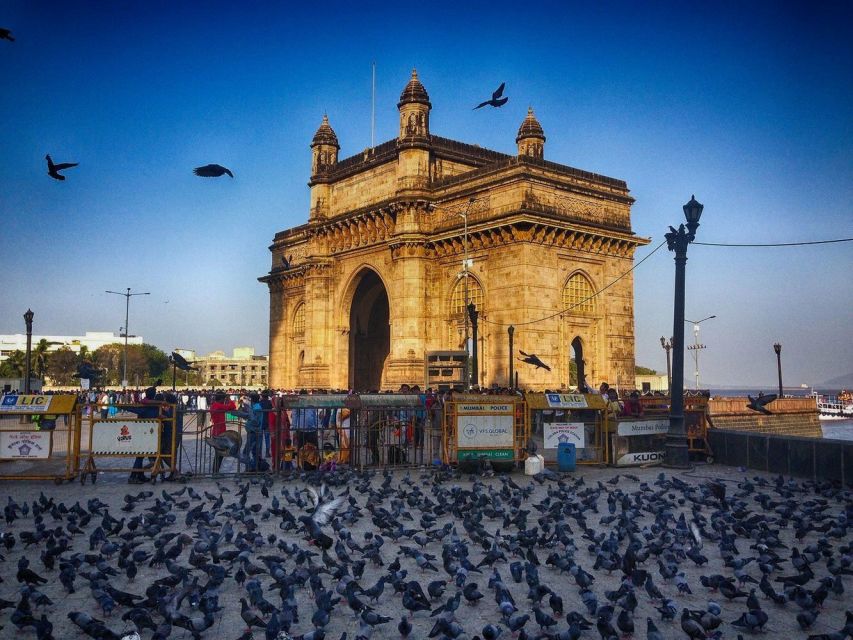
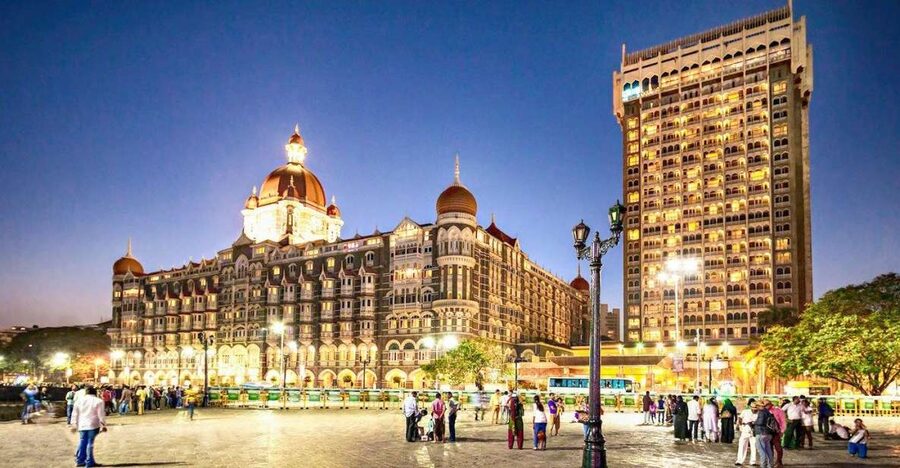
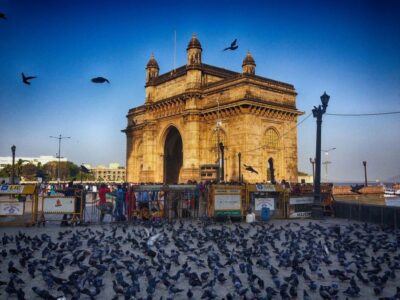
Most first-timers remember the first view. Here, you start at the Gateway of India, with a photo stop and walk time right where colonial Mumbai meets the Arabian Sea.
This isn’t just a postcard. The Taj Mahal Palace Hotel is nearby, and your guide can point out how the shoreline shaped the city’s identity, trade, and power centers. You’ll also see the contrast that makes Mumbai interesting: massive, formal buildings beside crowded streets and water-level activity.
The photo stop at the Taj is quick, but it sets the tone. You’re not spending your whole day in temples or markets only. You’re seeing how Mumbai’s coastline became a stage for everything from empire-era architecture to modern tourism.
- Elephanta Caves & Island Guided Private Tour★ 5.0 · 1,327 reviews
- Private Guided Walking Tour in Fort & Colaba★ 5.0 · 895 reviews
- Mumbai: Street Food and Night Markets Tour★ 4.9 · 719 reviews
- Mumbai: Dharavi Slum, DhobiGhat, and Dabbawallas Tour★ 4.9 · 689 reviews
- Dharavi Slum Tour★ 5.0 · 625 reviews
Kala Ghoda and the museum district: where art and old buildings share space
After the sea, the tour turns inward toward Kala Ghoda, an area known for colonial-era architecture and creative energy. You’ll pass by several recognizable institutions, and you’ll likely get a short walk-and-look moment that helps you read the neighborhood.
From here, the itinerary brings you toward some key cultural stops:
- You’ll pass the Chhatrapati Shivaji Maharaj Vastu Sangrahalaya, which is one of the main museums in this part of the city.
- You’ll also get time around places like Jeghangir Art Gallery and the broader Kala Ghoda streetscape.
- You’ll see buildings that connect Gothic and colonial styles to Mumbai’s identity as a global port city.
I like this part because it’s visually varied without feeling chaotic. In a city with traffic and crowds, the museum-and-gallery zone offers a calmer way to process what you’re seeing. It’s also a good place for your guide to explain why certain neighborhoods look the way they do, and how Mumbai’s growth shaped what got built.
If you care about design, this is your moment. Watch façades. Look at towers and clock faces. These details matter later when you reach the UNESCO station.
Oval Maidan, Rajabai Clock Tower, and the “paperwork” of power
One of Mumbai’s easiest outdoor “wow” moments is the view around Oval Maidan. It’s an open green space framed by monumental buildings, including the Bombay High Court area.
Nearby, you’ll pass the Rajabai Clock Tower, a structure that feels like it belongs in a film set. It’s an architectural marker, a reminder that Mumbai’s colonial administration and elite institutions were housed here.
This stop is short, but it helps you connect dots. You begin to see that Mumbai isn’t just street life and beaches. It’s also a city shaped by courts, universities, and the bureaucracy that keeps port cities organized.
Chhatrapati Shivaji Terminus: the UNESCO moment you shouldn’t miss
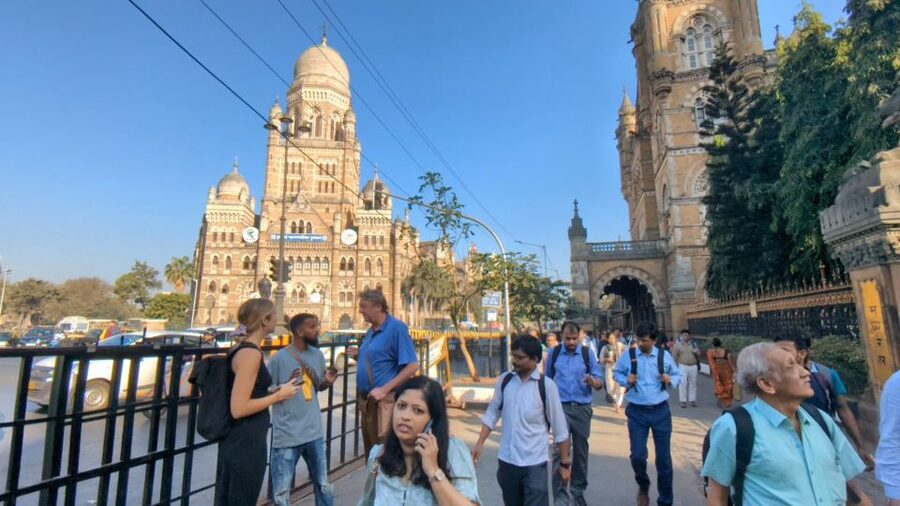
Then you hit one of the true anchors of the day, Chhatrapati Shivaji Maharaj Terminus (CST), a UNESCO-listed Victorian Gothic masterpiece.
Even if you’ve seen pictures, being there hits differently. The station is still functional. It’s alive with commuters, luggage, and fast movement. That means your guide can talk about both architecture and how the rail system became part of daily Mumbai.
You get a photo stop plus walk time. I’d use that time to look upward, then outward at the flow of people. The building is detailed, but the station’s energy is what makes it feel real rather than staged.
If you’re the type who loves transit and how cities move, this is a highlight worth prioritizing. Several guides are praised for making the station’s history make sense in plain language, including by connecting it to Mumbai’s growth as a commercial hub.
Crawford Market and local browsing, with real scents and real crowds
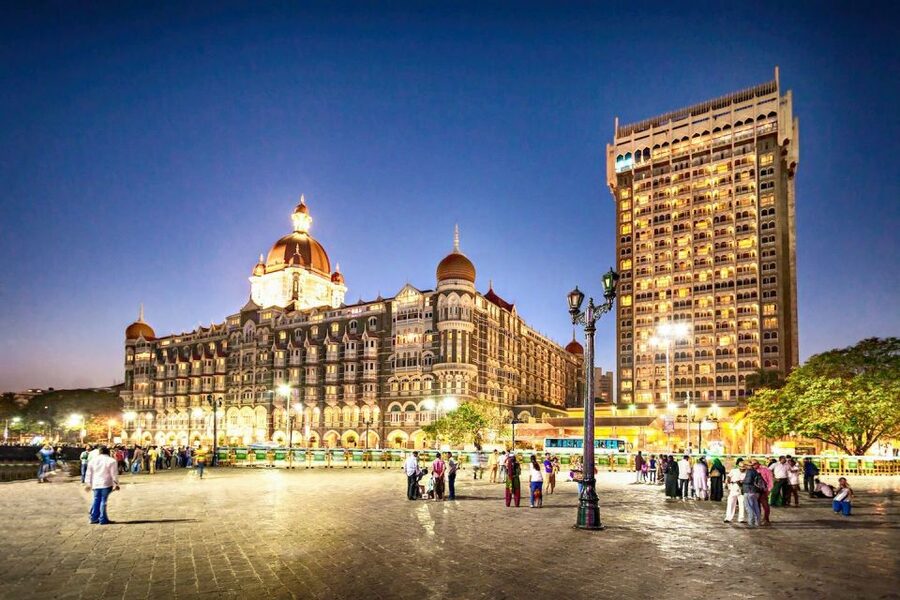
Next comes Crawford Market, one of the best places on this route to feel Mumbai as a working city. The stop is built for visiting and shopping, and you’ll notice the mix of fresh produce, spices, and everyday commerce.
This is one of those stops where your guide can save you from common mistakes. You’ll get guidance on what areas to walk through, what to avoid if you’re not comfortable, and how to navigate crowds without turning the day into a stress test.
If food smells make you hungry, it’s also a good place to decide your snack strategy. The tour does not include food, so you’ll want to plan around when you’ll eat. Many guides help with practical recommendations nearby.
Value-wise, this is smart inclusion. A market stop costs little time but adds huge texture to the day, especially when the rest of the route includes monumental sites that can feel distant from daily life.
Marine Drive: the sea promenade break that cools your head
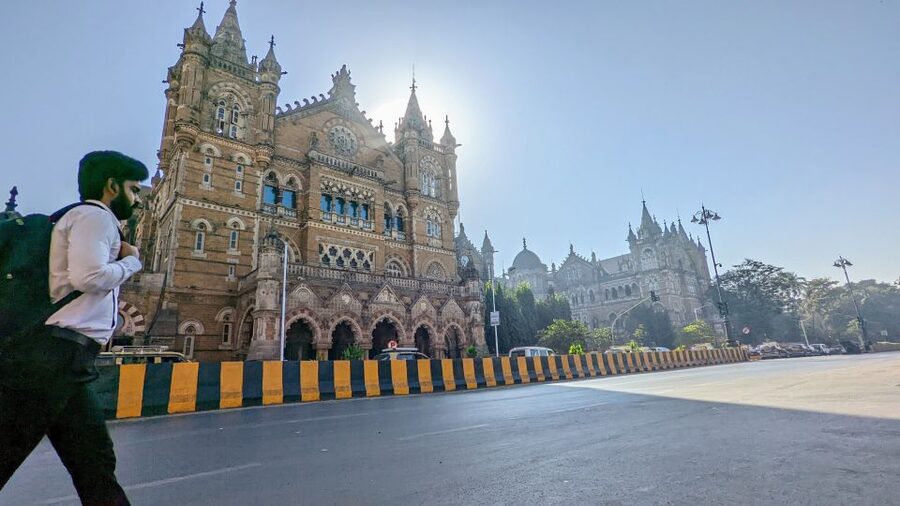
After the market, the tour moves to Marine Drive, Mumbai’s famous coastal promenade. You’ll get photo time plus walk time, with views across the Arabian Sea.
This is not a long beach lounging moment. It’s a viewpoint and a change of pace. That matters. Midday in Mumbai can feel intense, and Marine Drive gives you a visual exhale before the rest of the day turns toward spiritual history and working-city scenes.
You’ll also get perspective here. When you look along the curve of the promenade, you start to understand why Mumbai built so much along the water in the first place.
Mani Bhavan and Gandhi’s story in a smaller, more human setting
Then you reach Mani Bhavan, Gandhi’s former residence now turned into a museum. This is one of the stops that shifts the tone from sightseeing to meaning.
The museum time is short, but it’s enough for you to understand why this place matters. It connects Gandhi’s ideas to Mumbai’s role in the broader national movement. Your guide can add helpful context in a way that doesn’t feel like a lecture, especially when they keep explanations tied to what you’re seeing in the rooms.
If you’ve ever felt history is too big and abstract, this stop usually does a better job of making it personal. It’s quieter than the station, and it slows the day down.
Malabar Hill and the calm side of Mumbai: Banganga Tank and Hanging Gardens
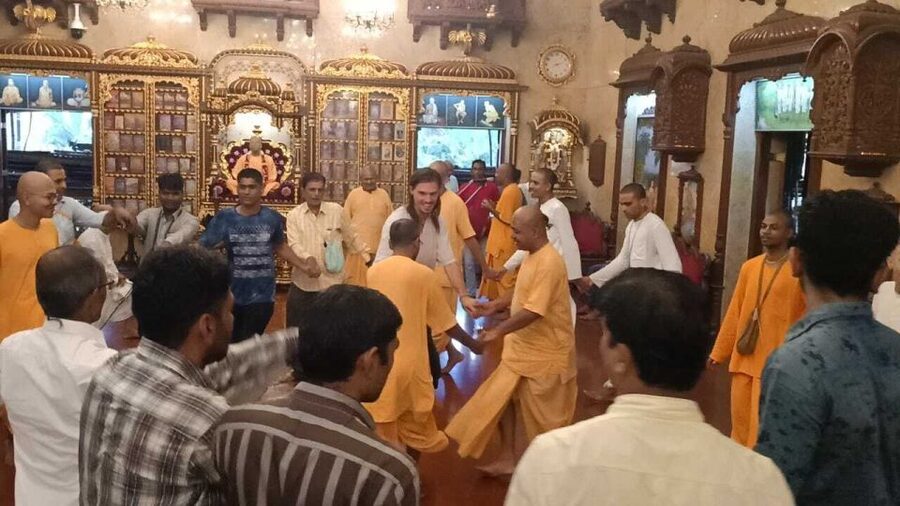
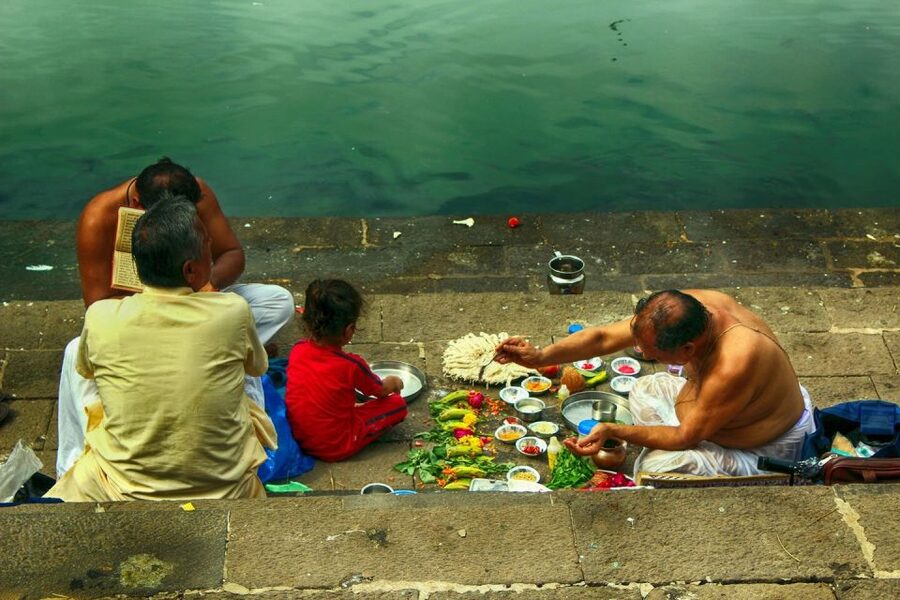
After the intensity of markets and stations, the tour turns toward calmer scenes around Malabar Hill. You’ll see Banganga Tank, a sacred water tank, and Hanging Gardens, which add a peaceful green pause.
This part of the itinerary matters because Mumbai isn’t only loud. You need a break to reset your brain. Even if you only spend short walks here, it changes the feel of the day, and it gives you a contrast that makes everything else land better.
You’ll likely enjoy:
- The tank area for its spiritual calm and sense of place.
- The garden views for open space and a lighter mood.
Also, guides often use this segment to talk about how different Mumbai neighborhoods evolved. That makes the day feel like a story instead of a checklist.
Dhobi Ghat: watching history and labor at work in open air
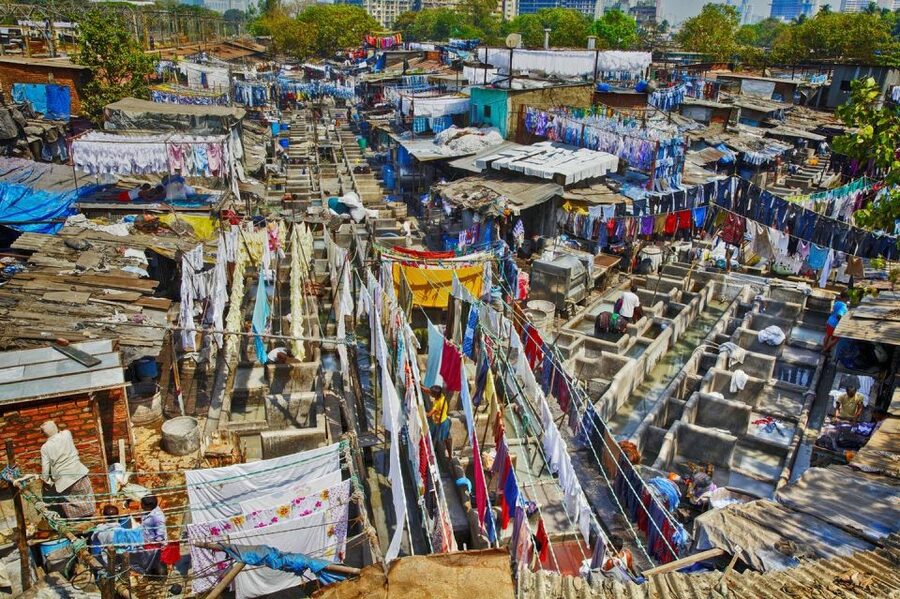
One of the most unforgettable stops is Dhobi Ghat, the world’s largest open-air laundry. You get a photo stop, and you’re there close enough to understand how the work is organized.
This is not a “museum moment.” It’s active. That’s why it’s so powerful. When you see people working with water, stones, and routines that have been part of the city for a long time, Mumbai stops being theoretical.
A couple of practical tips I’d follow here:
- Be respectful with photos. Ask or pause if people look uncomfortable.
- Give yourself a little time at your own pace, even if the schedule is tight. The scene is busy and your brain needs moments to process.
The value of including Dhobi Ghat in a one-day tour is huge. It’s the kind of place that most travelers only see if they go looking for it intentionally. Here, it arrives naturally as part of the city portrait.
Passing sights that add context, like Antilia and Jain Temple
Between the major stops, you may also get quick pass-by glimpses. For example, the tour route can include a glimpse of Antilia as you drive by, and you may pass by places like a Jain Temple.
These pass-by moments aren’t the main event, but they help you read Mumbai’s contradictions. Luxury and crowd density. Big wealth and handmade labor. All of it coexists.
Even if you don’t spend time inside every stop, your guide can connect why these places sit where they do. That’s a big part of why people rate these tours so highly, because they feel guided rather than rushed.
The people make it: guides and drivers who keep the day smooth
This tour tends to get praised for the same reason across many experiences: the combination of a strong guide and an expert driver.
You’ll see names pop up again and again, including Ganesh, Abdul, Suresh, Imran, Loki, and Maz. What they have in common is a mix of storytelling, humor, and good pacing. People also mention guides being flexible, making room for questions, and adjusting for energy levels.
Drivers also matter in Mumbai. Several people mention that the driver handled the chaos and stayed safe, which is no small thing when you’re spending hours in traffic.
If you end up with a driver who’s great at route planning, it can turn a “long day” into a “manageable day.” That’s the difference between feeling overwhelmed and feeling like you conquered the city.
What to bring and how to handle the walking, heat, and crowds
You’re doing a full-day loop, so small choices help a lot.
Bring:
- Sunscreen and a hat for outdoor segments like Marine Drive.
- Comfortable shoes for uneven sidewalks at markets and stations.
- A light layer if you run cold in air conditioning.
- Any personal meds and a small cash reserve, since food is not included.
How to pace yourself:
- If you get tired, say something. Many guides are used to managing rest breaks.
- Prioritize one “deep” stop for your attention, like CST, Mani Bhavan, or Dhobi Ghat. The rest are for context and photos.
Also, keep your expectations realistic. This is a lot of places in one day. That can feel amazing, but it’s not the same as spending a whole afternoon inside one museum.
Is this tour worth $24 per person?
At around $24 per person, this is good value for a day that includes hotel pickup and drop-off, air-conditioned transport, bottled water, parking fees, fuel, taxes, and entrance fees for the included sights.
The cost becomes easier to justify when you look at what you’d otherwise pay piecemeal: entry tickets, local transport, and the time cost of figuring out routes in Mumbai traffic.
The biggest value is not only the landmarks. It’s having a guide to interpret what you’re seeing. When people are happy with this tour, they usually mention the guide’s explanations, the driver’s navigation, and the fact that the day feels organized instead of chaotic.
Food not being included is normal for a city tour like this. It also means you get to choose what fits your taste, budget, and energy level.
Should you book this Mumbai day tour?
Book it if:
- You want a structured way to see major Mumbai highlights without spending hours planning.
- You like a mix of landmark photos and real-life scenes like Crawford Market and Dhobi Ghat.
- You value a guide who can explain context, and who can keep the day moving without making it feel mechanical.
Skip it or consider a shorter option if:
- You hate lots of quick stops and prefer slow, deep time in fewer places.
- You want food included, or you’re planning a very specific lunch experience tied to one restaurant.
- You’re traveling with someone who needs minimal walking. Some stops involve short walks, and the schedule is still a full day.
If you’re doing Mumbai as a first stop in India, this is the kind of day that helps you feel confident. You go from overwhelmed to oriented, and you end with images and stories that make the rest of your trip easier.
FAQ
How long is the Mumbai full-day sightseeing tour?
The duration is listed as 5 to 10 hours. The exact length can vary by starting time and how the route works for your pickup location.
Is hotel pickup and drop-off included?
Yes. Hotel pickup and drop-off are included, and where you meet can vary depending on your booked option.
What’s included in the ticket price?
The package includes hotel pickup and drop-off, an air-conditioned vehicle, bottled water, and all entrance fees for the places mentioned, plus parking, fuel, taxes, and road tolls.
Is food included during the tour?
No. Food and drinks are not included.
What if I’m arriving by cruise ship?
If you select the Cruise passengers option, you’ll need to come to Greengate, about 300 meters from the cruise terminal. A free shuttle is provided by the port.
Is the guide available in English, and is it private or small groups?
The live tour guide is English. Private or small groups are available, and the tour is led by the driver.
Mumbai, Keep Exploring



Recently reviewed across Mumbai
- Mumbai City Sightseeing Guided Tour on a Bicycle
★ 5.0 · 10 reviews - Mumbai Street Food & Beach Tour with 10+ Tastings
★ 5.0 · 10 reviews - Mumbai Market Tour & Maharashtrian Cooking Class with Chef Reshma
★ 4.5 · 10 reviews - Sailing Experience in Mumbai on Mid Size Yacht
★ 5.0 · 10 reviews - 3 Days Complete Mumbai Tour Inclusive of Bollywood Studio Experience
★ 5.0 · 10 reviews - Dharavi Slum Tour
★ 5.0 · 10 reviews
Mumbai City Tours, compared.
 ★ 5.0Group Guided Walking Tour in Fort and ColabaFrom $161,073 reviews
 ★ 4.8Elephanta Caves Half-Day Guided Tour with ExpertFrom $301,032 reviews
 ★ 5.0Highlights of Mumbai Sightseeing Tour: TRAVELLERS CHOICE AWARDEDFrom $33915 reviews
 ★ 5.0Private Guided Walking Tour in Fort & ColabaFrom $36895 reviews
 ★ 4.9Street Food and Night Markets TourFrom $13719 reviews
 ★ 4.9Dharavi Slum, DhobiGhat, and Dabbawallas TourFrom $14689 reviews
 ★ 5.0Highlights of South Mumbai Guided Private Tour in AC VehicleFrom $74620 reviews
 ★ 5.0The Original Mumbai by Dawn – Recommended by Nigella Lawson & Nat Geo Traveller!From $86610 reviews
Browse the lists this tour appears in