
REVIEW · HISTORICAL TOURS
Colonial Heritage Walking Tour in Darjeeling
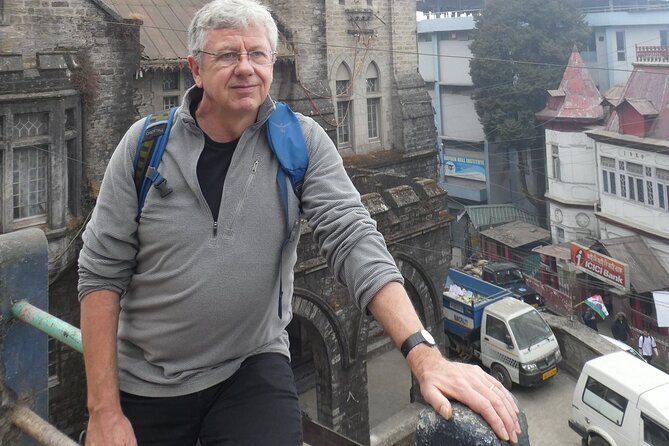
Colonial Darjeeling is right under your feet. This guided walking tour threads British-era landmarks with everyday hill-town life, from the Darjeeling Clock Tower to St. Andrews Church, plus a stop for old photographs that show how the town looked in different eras.
I like the way it mixes colonial buildings with spiritual places, including both temples and churches, so Darjeeling feels complete instead of stuck in one timeline. I also love that many stops are low-cost for you in practice, because a lot of admissions are free and a few key ones are included, so the value is not just the tour name.
One heads-up: the route is packed, and the tour time is about 2 to 3 hours with lots of shorter stops. If you want long hangs in one building, you may feel a bit on the move.
In This Review
- Key things that make this tour worth your time
- What You’re Really Signing Up For: Colonial Darjeeling Meets Local Faith
- Where the Walk Starts in Limbugaon and Ends at St. Andrews
- Clock Tower and Planters Club: The British Shape of Town Life
- Post Office to Keventer’s: A Day Break Built Around Views
- Glenary’s Snacks and the Hill-Town Hangout Mood
- St. Andrews Church and the Gymkhana Club: Colonial Institutions and Faith
- Raj Bhavan on the Mall: Winter Capital Clues in Brick and Planning
- Old Photos at Das Studio: Seeing Darjeeling Through Different Eras
- Shops Between Heritage Stops: Curios and a Hill-Style Bookstop
- Darjeeling Railway Heritage and the Colonial School Trail
- Old Market, Memorial Footsteps, and the Independence Story
- Himalayan Tibet Museum and Hayden Hall: Beyond the Colonial Frame
- Dhirdham Temple Back Near the Station: Mixed Architectural Influences
- Price and Value: Is $27.97 Fair for 2 to 3 Hours?
- The Pace Reality Check: Short Stops, Lots of Stops
- Who Should Book This Colonial Heritage Walk
- Should You Book This Tour?
- FAQ
- How long is the Colonial Heritage Walking Tour in Darjeeling?
- What is the price per person?
- What is included in the tour price?
- Are admissions free at all stops?
- Where do I meet and where does the tour end?
- Do I get a mobile ticket?
- Is free cancellation available?
- What happens if the weather is poor?
- How big is the group?
- Is the tour suitable for most travelers, and are service animals allowed?
Key things that make this tour worth your time
- A professionally guided walk focused on colonial-era Darjeeling landmarks
- Clock Tower, Planters Club, Gymkhana Club, and St. Andrews Church in one connected route
- Temples and churches on the same day, so you see how faith shapes the town
- Included food stops at Keventer’s and Glenary’s, with viewpoint-style breaks
- Das Studio photo history to see the town across multiple periods
- Good value at $27.97, since many admissions are free and some are included
More Darjeeling ridges and rides
What You’re Really Signing Up For: Colonial Darjeeling Meets Local Faith
This is the kind of tour that helps you read the town like a story. You start with big, visible symbols of British planning, like the Clock Tower and club buildings, then you shift into religious architecture and community landmarks. It’s not just “look at old stuff,” it’s about what those places meant to the people living around them.
I also like that the tour explicitly includes spiritual stops, with both temples and churches. That matters in Darjeeling, because the town is not only a colonial snapshot. It’s still a living hill town where worship sites sit alongside hotels, markets, and clubs.
The group runs up to 50 travelers, so it’s big enough to be social, but you still get a guided flow between points. Expect a walking experience with a lot of quick orientation moments, not a slow, detailed art-history class.
Where the Walk Starts in Limbugaon and Ends at St. Andrews
You meet in Limbugaon, Darjeeling, West Bengal 734101. The tour finishes at St. Andrews Church on the Chauk Bazaar side, listed as 27X8+4QG.
Knowing the end point helps. If you want to keep exploring after the tour, you’re already near a well-known landmark, rather than getting dropped somewhere random.
Because the tour is described as near public transportation, you should have an easier time getting to the start and moving on afterward. Still, give yourself a little buffer. Darjeeling streets and hill traffic can make timing feel tighter than you expect.
Clock Tower and Planters Club: The British Shape of Town Life
The first stop is the Darjeeling Clock Tower. It was built in the 1850s and it houses the Darjeeling Town Hall. Even if you don’t go inside, it’s a useful anchor point because it’s the kind of landmark that fixes your sense of direction in a town like this.
Next you visit the Darjeeling Planters Club, started in 1868 for British planters and their families. This is one of those stops where the building is the clue. Clubs like this were about social networks, influence, and the way colonial life organized itself.
Here’s a practical tip: when you’re at places like the Planters Club and later the Gymkhana Club, look for how the layout and setting connect to the surrounding streets and views. Even when you’re not allowed to wander freely, you can still “read” the purpose.
- Tea Pluckers’ Day★ 5.0 · 19 reviews
- 5-Day Private Tour of Gangtok and Darjeeling★ 5.0 · 14 reviews
- The Land Mark Tour (Nautical Day Darjeeling To Mirik crusade)★ 5.0 · 13 reviews
- Trip to Tiger Hill Darjeeling★ 4.5 · 10 reviews
Post Office to Keventer’s: A Day Break Built Around Views
Darjeeling Head Post Office is the next major heritage stop. Built in May 1921, it’s listed as one of the oldest post offices of the region and is also labeled as a UNESCO World Heritage Site. A post office might not sound exciting, but in a hill town it becomes a symbol of communication, trade, and organization. It’s one of those practical colonial-era institutions that helped keep the town connected.
Then the tour turns to a classic hill-town pause: Keventer’s. The included stop is about 30 minutes, and it’s described as a nostalgic reminder tied to Edward Keventer’s dairy farm of Ghoom. You get time here for snacks and the viewpoint feel that Keventer’s is known for.
If you’re sensitive to crowds or noise, you might want to grab your order and find a seat early. Included food stops can get busy, especially on clear days when people want the view.
Glenary’s Snacks and the Hill-Town Hangout Mood
After Keventer’s, you go to Glenary’s, Bakery, Restaurant & Pub. This stop is included for about 15 minutes. It’s known as a former bakery started by an Austrian, and it’s described as a great place for sunsets.
Even if you don’t catch a full sunset during your exact time slot, it’s a worthwhile break because it lets you shift gears. One of the underrated parts of this tour is that it gives you short recovery time. Darjeeling mornings and afternoons can feel cooler and more windy, and you’ll appreciate the chance to sit.
St. Andrews Church and the Gymkhana Club: Colonial Institutions and Faith
St. Andrews Church is built on the Mall Road area and is described as originally built in 1843 as an Anglican Church. It’s also linked to Lt. Gen A Lyod, believed to be the discoverer of Darjeeling.
This stop works best if you take a moment to look beyond the walls. Churches in colonial towns often show how communities built continuity for themselves, while also adapting local settings into familiar forms.
Then you visit the Darjeeling Gymkhana Club, established in 1909. This stop is included for about 15 minutes, and it’s described as having badminton courts, card rooms, and an excellent library.
A useful way to approach this: treat the clubs like social maps. They’re not only sports or reading spaces, they signal who had leisure time, which communities mattered, and how life was organized around indoor spaces when the weather shifted.
Raj Bhavan on the Mall: Winter Capital Clues in Brick and Planning
Your route includes Darjeeling Mall, described as the winter capital during its heydays and tied to Government House, also called Raj Bhavan. The British initially built it in 1840, and later it changed ownership to the Maharaja of Coochbehar in 1877.
This stop is valuable because it connects “colonial presence” to the simple reason power likes comfort. If you’re the type who wonders why certain cities get official buildings, this answers the question in a tangible way. The Mall area helps you picture Darjeeling not just as a tourist hill station, but as a seasonal center of governance.
Old Photos at Das Studio: Seeing Darjeeling Through Different Eras
One of my favorite parts of the tour is the photo stop: Das Studio. It’s described as one of the oldest photography studios in Darjeeling, started in 1927. You spend about 10 minutes here, and the walls are decorated with panoramic photographs of the town from different periods.
This is where Darjeeling turns from “buildings you walk past” into “a place with change.” Old photos let you compare street shapes, hillsides, and the town’s overall feel over time. Even in 10 minutes, it often gives you a mental before-and-after you’ll keep using later while you explore on your own.
Shops Between Heritage Stops: Curios and a Hill-Style Bookstop
The tour includes time for light shopping stops with short durations, which is handy if you want souvenirs without breaking your day.
You’ll pass through Habeeb Mullick & Sons Estd 1890, described as one of the best places to experience handcrafted curios. Then you visit Oxford Book and Stationery Co., known for its hill-style cottage architecture and an enormous collection of souvenirs.
Because these are short stops, go in with a plan. If you’re buying gifts, decide what kind of item you want before you walk in. That way you don’t lose your time comparing 20 things at once.
Darjeeling Railway Heritage and the Colonial School Trail
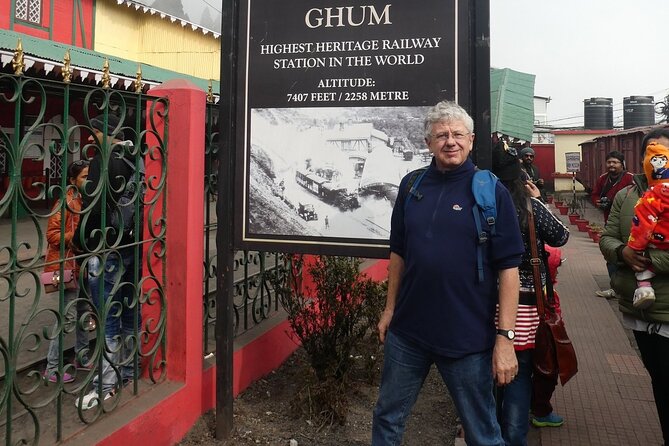
Next is a stop described as Darjeeling, linked to the legendary Darjeeling Himalayan Railway that started its journey back in the 1870s. This portion is included with an admission ticket, and it’s a strong pivot from British social buildings into infrastructure.
Then you visit Turnbull High School for about 20 minutes. It’s described as one of the lesser known colonial schools in Darjeeling, following Nepali High School and Bishop’s House. This helps you see colonial legacy not just in grand buildings, but also in schooling and institutions that shaped daily life.
A practical note: school-related stops can feel “quiet” compared to the clubs and churches. Give it a minute. Let the space register. It often lands better when you slow down mentally, even if you can’t physically slow the tour.
Old Market, Memorial Footsteps, and the Independence Story
Old Market is included for about 15 minutes. It’s described as the heart of the Old British Market, Darjeeling Old Rly Station, and the old British Ropeway, making it a good spot for the town’s everyday bustle.
Then the route includes Chittaranjan Das Memorial, described as a step aside stop and tied to a legendary figure of the Indian Independence Movement. This is about 20 minutes, and it shifts you from colonial administration into the revolutionary side of history that grew within the same region.
If you’re trying to understand Darjeeling’s role beyond tea and tourism, this portion helps. It reminds you that the hill town wasn’t isolated. It connected to wider political movements and identities.
Himalayan Tibet Museum and Hayden Hall: Beyond the Colonial Frame
Himalayan Tibet Museum takes about 30 minutes and is included. It’s described as holding accounts from thousands of years of Tibet’s indigenous history and the centuries-old Tibet-India relationship.
This is a smart contrast stop. After several colonial-themed points, this gives you a bigger Himalaya view. It also matches the wider historical realities of the region, where cultural relationships shape what people carry into their new home.
Then you visit Hayden Hall for about 15 minutes. It’s described as the history of the Hayden Hall Institute and its enterprising women. The language here signals a focus on women’s institutional work, which I appreciate. It prevents the tour from becoming only a “men and buildings” story.
Dhirdham Temple Back Near the Station: Mixed Architectural Influences
The last heritage stop is Dhirdham Temple, near the railway station. It’s described as built in the style of Kathmandu’s Pashupatinath temple, adding varied religious architectural styles to Darjeeling.
This ending works well because it brings you full circle into the railway area. You’ve seen British planning, clubs, and Christian religious space. Now you end with a temple style that points toward trans-Himalayan influence.
It’s also a good final moment to watch how people move through the space. Even when you’re only there for about 10 minutes, you can usually tell the difference between a tourist-facing stop and a place that locals use as part of their regular day.
Price and Value: Is $27.97 Fair for 2 to 3 Hours?
At $27.97 per person for about 2 to 3 hours, you’re paying for three things: a professional guide, the structure that keeps you moving efficiently, and the entrance costs that are handled for you.
In this case, that structure looks like a win. Many stops list admission tickets as free, and several key stops are listed as included, including Keventer’s and Glenary’s, plus admissions at places like the Darjeeling Himalayan Railway stop, Turnbull High School, Old Market, Himalayan Tibet Museum, Hayden Hall, and Dhirdham Temple.
If your main goal is to see a lot of Darjeeling context without researching each place one by one, this feels like a fair deal. If you only want one or two major sights, you might find yourself thinking about whether the guide and multiple quick stops are worth it.
The Pace Reality Check: Short Stops, Lots of Stops
The itinerary spreads time across about 18 listed stops. Most are 10 to 20 minutes, with a few longer ones, like Keventer’s around 30 minutes and Himalayan Tibet Museum around 30 minutes.
That pace is great if you want orientation fast. It’s less great if you want deep reading time at every site. My advice: use your guided moments to decide what deserves your next independent visit.
Also, the experience requires good weather. If the day is foggy or rainy enough to disrupt outdoor movement, you may be offered a different date or a full refund. In a hill town, that weather rule is not a minor footnote.
Who Should Book This Colonial Heritage Walk
This tour is a good fit if you like:
- history that connects buildings to how people lived
- walking routes with short, well-placed breaks
- a mix of colonial-era sites and local faith stops
- photo history and cultural institutions, not just monuments
It’s also a solid choice for first-timers. You’ll leave with a mental map of Darjeeling’s key zones, from the Mall Road area to markets and the railway side.
If you already know Darjeeling well and want lots of time inside museums or behind doors, you may prefer a slower, more specialized plan. But for most people, the compact time is the whole point.
Should You Book This Tour?
I’d book it if you want a guided, high-value snapshot of Darjeeling’s colonial heritage plus cultural context, and you’re fine with shorter stops. The price feels reasonable because many admissions are free or included, and the tour includes real pauses at Keventer’s and Glenary’s.
One more reason to lean yes: the feedback pattern is strong, with a top rating and consistent recommendations. Even the slightly less enthusiastic feedback points to what the tour is good at, history made understandable through comparisons and regional context, including connections people draw between Darjeeling tea development and Simla, plus the wider China and refuge narrative tied to Tibetans.
If you have a morning or early afternoon free, and you’re looking for a guided way to get your bearings fast, this is a practical, worthwhile walk in Darjeeling.
FAQ
How long is the Colonial Heritage Walking Tour in Darjeeling?
The tour lasts about 2 to 3 hours.
What is the price per person?
The price is $27.97 per person.
What is included in the tour price?
All fees and taxes are included. Some stops also specify included admission tickets, such as Keventer’s, Glenary’s, Darjeeling (railway-related stop), Turnbull High School, Old Market, Chittaranjan Das Memorial, Himalayan Tibet Museum, Hayden Hall, and Dhirdham Temple.
Are admissions free at all stops?
Many stops list free admission tickets. Some stops list included admission tickets. The tour price also includes all fees and taxes.
Where do I meet and where does the tour end?
You start at Limbugaon, Darjeeling, West Bengal 734101, India. The tour ends at St. Andrews Church in Chauk Bazaar, Darjeeling, West Bengal 734101, India.
Do I get a mobile ticket?
Yes, the tour offers a mobile ticket.
Is free cancellation available?
Yes, you can cancel for a full refund up to 24 hours in advance of the experience start time.
What happens if the weather is poor?
The experience requires good weather. If it is canceled due to poor weather, you will be offered a different date or a full refund.
How big is the group?
The tour has a maximum of 50 travelers.
Is the tour suitable for most travelers, and are service animals allowed?
Yes, most travelers can participate, and service animals are allowed. The meeting point is also near public transportation.
Darjeeling and the Ridge Beyond

Recently reviewed across Darjeeling
- Trip to Tiger Hill Darjeeling
★ 4.5 · 10 reviews - The Land Mark Tour (Nautical Day Darjeeling To Mirik crusade)
★ 5.0 · 13 reviews - 5-Day Private Tour of Gangtok and Darjeeling
★ 5.0 · 14 reviews - Tea Pluckers’ Day
★ 5.0 · 19 reviews - Private Calcutta Tour With Guide and Authentic Bengali lunch
★ 5.0 · 26 reviews - Day_Trippers (Darjeeling Full Day Tour).
★ 5.0 · 54 reviews
Historical Tours, compared.
 ★ 5.0Old Delhi Food, Heritage&Cultural Walk with Rickshaw ride to Masterji Kee HaveliFrom $52742 reviews
 ★ 5.0Blue City Heritage Private Walking Tour With Pickup and Drop-OffFrom $11441 reviews
 ★ 4.0Kolkata Heritage Tram TourFrom $60395 reviews
 ★ 5.0Private Heritage Walking Tour in Jaisalmer Fort and Old BazaarFrom $10306 reviews
 ★ 4.8Panaji: Heritage Walk through Goa’s Latin QuarterFrom $12291 reviews
 ★ 5.0Old Delhi Heritage Walking TourFrom $13247 reviews
 ★ 5.0Jodhpur Blue City Heritage Walking Guided TourFrom $13240 reviews
 ★ 5.03-hour Old Delhi Heritage Walking tour with Rickshaw RideFrom $7240 reviews
Browse the lists this tour appears in