
REVIEW · MUMBAI CITY TOURS
Discover the Hidden Gems of Bandra on an Engaging Walking Tour
Bandra rewards slow footsteps and good stories. On this 3-hour walk, I like the small-group feel and the way the route connects Bandra West to its Portuguese past, from St. Andrew’s Church to Bandstand and Bandra Fort. One thing to plan for: it is an outdoor route with lots of walking between stops, so wear comfy shoes.
You start at St. Andrew’s Church and end near Taj Lands End at Mount Mary, with a local guide and a tight group cap of 15 people. The 4:00 pm start also helps, since the light along the seafront can be gorgeous for photos and just plain easier on your eyes.
In This Review
- Key highlights worth your time
- Why Bandra West Works Best as a Walking Tour
- Route Map in Your Head: From St. Andrew’s Church to Taj Lands End
- St. Andrew’s Church: Portuguese Jesuits by the Sea
- Ranwar and Chimbai Village: Old Bandra Before the Skyline
- Mount Mary Church: A Roman Catholic Basilica With Living Traditions
- Bandstand Promenade: A Portuguese Watchtower and a View Out Over Mahim Bay
- Bandra Fort, Castella de Aguada: Portuguese Names and Coastal Power
- How Long This Walk Really Takes and What the Pace Feels Like
- Price and Value: $17.90 for a Guided 3-Hour Story
- The Guide Factor: Why Roshita’s Style Makes It Easier
- Practical Tips to Enjoy Bandra Without Rushing
- Who This Tour Fits Best
- Should You Book This Bandra Walking Tour?
- FAQ
- How long is the Bandra walking tour?
- What is the meeting point and start time?
- Where does the tour end?
- How much does the tour cost?
- How large is the group?
- Is a mobile ticket used?
- Are food and drink included?
- Is admission included for the stops?
- Is the tour easy to reach by public transportation, and who can participate?
- Can I cancel for a full refund?
Key highlights worth your time
- Portuguese-era landmarks from the 1500s onward, all walking distance from each other
- Old Bandra villages (Ranwar and Chimbai Village) that explain the neighborhood before the skyline
- Mount Mary Church and its Roman Catholic significance, right in the Bandra heart of things
- Coastal viewpoints from the Bandstand promenade, tied to a 17th-century Portuguese watchtower
- Bandra Fort, Castella de Aguada, where names and history mix in a really human way
Mumbai, a few more routes through it
Why Bandra West Works Best as a Walking Tour
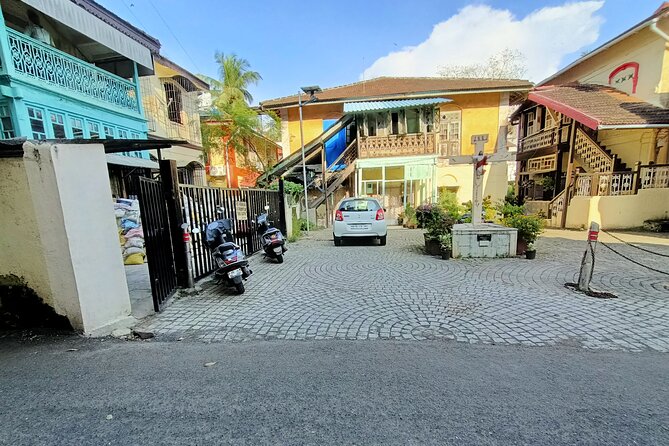
Bandra West can feel like it has layers, like someone built a city, then kept building on top of it. In just a few kilometers you get Portuguese church history, older village footprints, and the seafront that still shapes how the area feels today.
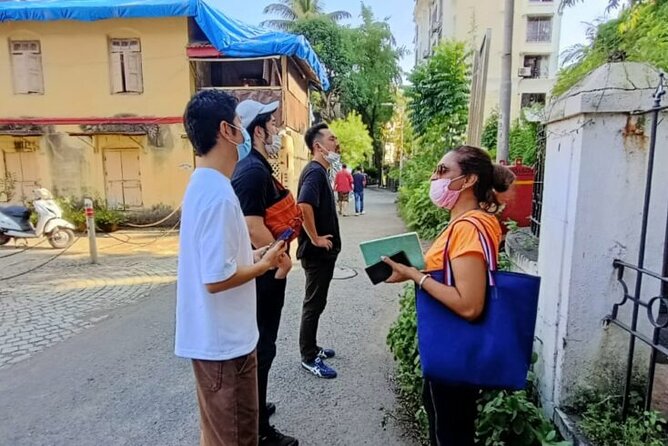
This tour is a good fit because it focuses on meaning, not just stops. You walk past places like St. Andrew’s Church and Mount Mary Church, then move toward the coast where Portuguese forts and watchtowers used geography like a tool. If Mumbai’s scale ever makes you feel a bit lost, I like how this route helps you get your bearings fast.
And the group size matters. With a cap of 15, you can ask questions and actually hear the answers, instead of shouting over a crowd.
Route Map in Your Head: From St. Andrew’s Church to Taj Lands End
The timing is simple. You meet at St. Andrew’s Church on Hill Rd in Bandra West, then you spend about an hour there before heading to the next pieces of Bandra’s story. The rest of the stops are shorter, with roughly 20 to 30 minutes at each key landmark, plus walking time between them.
You finish at Taj Lands End at Mount Mary in Bandra West. That ending point is practical if you want to keep exploring after the tour, especially along the Mount Mary side of the neighborhood.
One small note: each stop is listed as free admission, so your main cost is the tour itself, not entry fees. That makes the price feel more straightforward.
St. Andrew’s Church: Portuguese Jesuits by the Sea
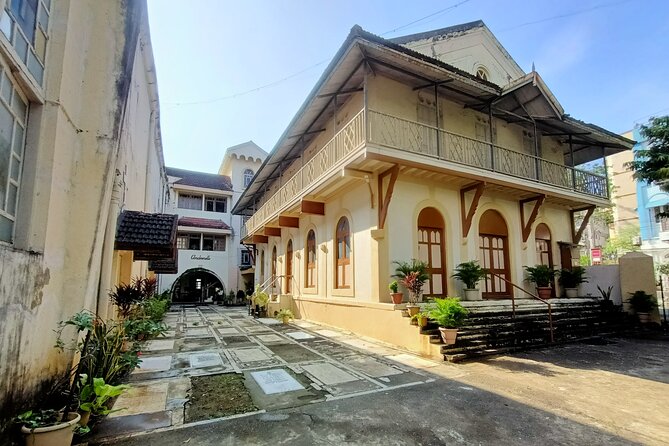
Stop 1 is St. Andrew’s Church, and it gets a full hour. That extra time tells you this is a cornerstone of the area, not a quick photo stop.
The church is among the oldest in Mumbai. It was originally built by Portuguese Jesuits in 1575, and it sits on the seashore in Bandra. I like starting here because it sets the tone. Before you even reach the fort-like coastal spots, you’ve already been pulled into the Portuguese timeline of this part of Mumbai.
What to watch for as you’re there:
- The way the church sits toward the seafront, which makes the Portuguese connection feel physical, not abstract
- The chance to understand how old religious sites anchored early Portuguese influence in Bandra
A possible drawback is that the hour can feel long if you’re used to fast-paced sightseeing. If you enjoy slowing down and listening, you’ll be in your element.
- Elephanta Caves & Island Guided Private Tour★ 5.0 · 1,327 reviews
- Private Guided Walking Tour in Fort & Colaba★ 5.0 · 895 reviews
- Mumbai: Street Food and Night Markets Tour★ 4.9 · 719 reviews
- Mumbai: Dharavi Slum, DhobiGhat, and Dabbawallas Tour★ 4.9 · 689 reviews
- Dharavi Slum Tour★ 5.0 · 625 reviews
Ranwar and Chimbai Village: Old Bandra Before the Skyline
After St. Andrew’s Church, the tour shifts from major landmarks to neighborhood history. Stop 2 is Ranwar.
Ranwar is described as the original of the 24 pakhadis, or villages, that made up Bandra. That detail matters because it reframes Bandra. Instead of thinking of it as only a modern suburb, you get a sense that it was made from smaller village communities first. The Portuguese handed Bombay to the British in 1661, and the British did not immediately take full control, which is one reason these older layers stayed relevant for a long time.
Then you move to Chimbai Village. This one is a contrast stop, and it helps the walking route feel real. Unlike Ranwar, Chimbai Village is portrayed as far from the development and artsy scene that Bandra is known for. It sits near Bandstand, where you also see posh bungalows and high-rise buildings.
That contrast is the payoff. You can stand in the same neighborhood and feel the difference between what people build and what people preserve.
Two tips so this part lands well:
- Slow down at the transitions. The history is in the comparison, not in one single location
- Keep an eye on how the built environment changes as you walk, because that is basically what you’re being taught
Mount Mary Church: A Roman Catholic Basilica With Living Traditions
Stop 4 is Mount Carmel Church, better known as the Basilica of Our Lady of the Mount, or Mount Mary Church. This is a Roman Catholic basilica in Bandra, and the feast of the Blessed Virgin Mary is celebrated here.
Even with limited time, this stop is valuable because it shows how religion and community rhythms shape Bandra. Churches like this aren’t museum objects. They are still part of local life, and that context helps you interpret the Portuguese influence without treating it like a distant chapter in a book.
What I’d focus on:
- The basilica identity, since it signals importance within the Roman Catholic tradition
- The feast connection, which points to recurring community events, not only one-time history
If you are traveling during a major religious period, you might notice more atmosphere around this kind of site. The tour itself stays focused, so you can enjoy it even if you’re not there for a festival moment.
Bandstand Promenade: A Portuguese Watchtower and a View Out Over Mahim Bay
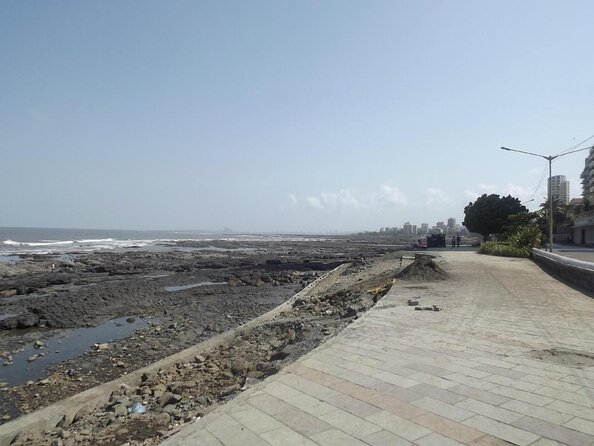
Stop 5 brings you to the Bandstand Promenade at the tip of Bandra West. Here you get remains of a 17th-century fort built by the Portuguese as a watchtower.
The watchtower’s job was strategic. It was placed to look out over Mahim Bay. The tour description also points out that the area now provides excellent views. That is exactly how this stop works best, you stand where someone once scanned the horizon for practical reasons, and you experience the same geography with modern eyes.
In other words, the setting gives the history somewhere to sit. You can connect the Portuguese choice of location to what you’re seeing now.
A practical thought: this part is near the seafront vibe of Bandra. It can be windy depending on the day, so bring something light for your comfort if you tend to get cold easily.
Bandra Fort, Castella de Aguada: Portuguese Names and Coastal Power
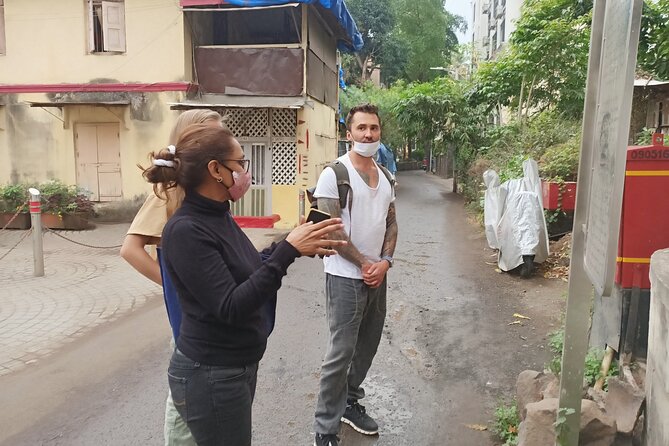
The final major stop is Bandra Fort, also known as Castella de Aguada.
The wording around the name is a neat little detail. Castella de Aguada is described as a misspelling for the Portuguese Castelo, and there is also mention that Portuguese builders likely called it Forte de Band… with the name cut off in the description. Even without chasing every spelling detail, you get the basic idea: Portuguese influence isn’t only in architecture, it’s in the way names evolved over time.
This fort sits in Bandra, and it’s the last step in a walking arc that started with Portuguese Jesuits and moved toward coastal defense. By the time you reach the fort area, it feels less like random sightseeing and more like a story about how power and survival were tied to where you could see the sea.
If you like ruins and viewpoints, you’ll probably enjoy this stop most. If you’re not a fan of forts or you want more church time, you may want to adjust expectations. It is still part of the neighborhood history arc, not separate entertainment.
How Long This Walk Really Takes and What the Pace Feels Like
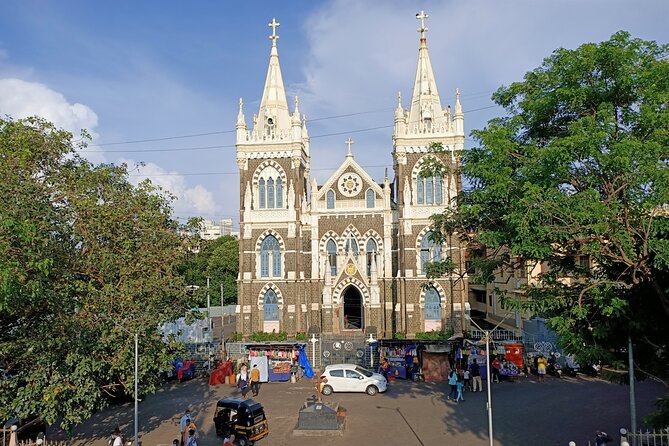
The tour is listed at about 3 hours. The stop timings are roughly:
- St. Andrew’s Church: 1 hour
- Ranwar: 20 minutes
- Chimbai Village: 20 minutes
- Mount Carmel Church (Mount Mary): 20 minutes
- Bandstand Promenade: 30 minutes
- Bandra Fort: 30 minutes
That adds up to about 2 hours 40 minutes of on-the-clock time at the stops, with additional walking between them. So the experience is not a slow amble, but it also is not a sprint. It is a focused neighborhood walk where you get just enough time at each place to absorb the key points.
If you tend to tire quickly, this is still a good format because you can plan the energy with an early anchor stop (the long church stop) and then shorter segments after.
Price and Value: $17.90 for a Guided 3-Hour Story
At $17.90 per person, this tour is priced like a solid entry into local guiding rather than a premium, long-haul excursion. The value comes from a few clear areas:
- You pay for a professional guide included in the price
- The group cap of 15 supports a more personal experience
- The listed stops are free admission, so you are not stacking extra costs on top
For me, the biggest value point is that this is not only “see the sights.” You get informative commentary from a local guide, which is what turns Bandra into a place you can name and remember, not just places you passed.
Also, mobile ticket convenience is a small thing, but it matters on travel days when you do not want extra paperwork. You show the ticket on your phone and get on with your walk.
The Guide Factor: Why Roshita’s Style Makes It Easier
One of the strongest signals from the experience is the guide experience. Roshita is specifically mentioned as a lovely guide who helps you find the best spots and places to be seen.
That kind of guidance is worth real money, especially in neighborhoods where streets, curves, and side lanes can make the route feel confusing on your own. I like tours where the guide doesn’t just lecture. A good guide helps you notice what matters.
Roshita’s impact also shows in how people describe the walk as a way to understand how big Bombay is and how much there is to explore. That is exactly what a neighborhood walking tour should do, shrink the city down into something you can actually navigate and understand.
Practical Tips to Enjoy Bandra Without Rushing
A few simple things will make this tour more comfortable:
- Bring comfortable walking shoes. Bandra is hilly in spots, and you will be on your feet for hours.
- Plan your timing around the 4:00 pm start. Late-day light can help, but it also means you might feel the weather shift as the afternoon turns into evening.
- Skip trying to do everything alone after the tour. The route ends at Taj Lands End at Mount Mary, so use that as your anchor point for the rest of your night plans.
Food and drink are not included. So if you need a meal before you go, eat first. If you like a snack break, bring something small. The tour has no stated pause for food.
Who This Tour Fits Best
This walking tour is built for people who want:
- A guided introduction to Bandra West
- History that connects churches, villages, and coastal forts into one neighborhood story
- A small-group pace that does not feel chaotic
It also notes that most travelers can participate, and it is near public transportation. That combo makes it a realistic option even if you are not traveling with a private car.
If you are short on time in Mumbai but want something more local than the standard big-ticket list, this format is a strong choice.
Should You Book This Bandra Walking Tour?
If you want to understand Bandra West beyond the surface, I’d say yes. The route is short enough to do in one sitting, but it’s detailed enough to feel like you learned something real: Portuguese Jesuit roots at St. Andrew’s Church, older village foundations like Ranwar, the quieter contrast of Chimbai Village, Roman Catholic community significance at Mount Mary, then the coastal story told through Bandstand’s watchtower remnants and Bandra Fort.
Book it if you:
- Prefer a small group
- Like walking routes with strong guidance
- Want free-access stops and a focused 3-hour plan
Pass or adjust if you:
- Hate walking long distances, even at a moderate pace
- Want food included, since nothing is provided
FAQ
How long is the Bandra walking tour?
The tour is about 3 hours.
What is the meeting point and start time?
The tour starts at St. Andrew’s Church, 115, Hill Rd, Old Rajaram Wadi, Bandra West, Mumbai, Maharashtra 400050, India. Start time is 4:00 pm.
Where does the tour end?
The tour ends at Taj Lands End, Mount Mary, Bandra West, Mumbai, Maharashtra 400050, India.
How much does the tour cost?
The price is $17.90 per person.
How large is the group?
The group is capped at a maximum of 15 travelers.
Is a mobile ticket used?
Yes, the tour uses a mobile ticket.
Are food and drink included?
No, food and drink are not included.
Is admission included for the stops?
The itinerary lists admission ticket as free for each stop.
Is the tour easy to reach by public transportation, and who can participate?
The meeting area is near public transportation, and most travelers can participate.
Can I cancel for a full refund?
Yes, you can cancel up to 24 hours in advance of the experience for a full refund.
Mumbai, Keep Exploring



Recently reviewed across Mumbai
- Mumbai City Sightseeing Guided Tour on a Bicycle
★ 5.0 · 10 reviews - Mumbai Street Food & Beach Tour with 10+ Tastings
★ 5.0 · 10 reviews - Mumbai Market Tour & Maharashtrian Cooking Class with Chef Reshma
★ 4.5 · 10 reviews - Sailing Experience in Mumbai on Mid Size Yacht
★ 5.0 · 10 reviews - 3 Days Complete Mumbai Tour Inclusive of Bollywood Studio Experience
★ 5.0 · 10 reviews - Dharavi Slum Tour
★ 5.0 · 10 reviews
Mumbai City Tours, compared.
 ★ 4.9Full-Day Sightseeing Tour of MumbaiFrom $241,822 reviews
 ★ 5.0Group Guided Walking Tour in Fort and ColabaFrom $161,073 reviews
 ★ 4.8Elephanta Caves Half-Day Guided Tour with ExpertFrom $301,032 reviews
 ★ 5.0Highlights of Mumbai Sightseeing Tour: TRAVELLERS CHOICE AWARDEDFrom $33915 reviews
 ★ 5.0Private Guided Walking Tour in Fort & ColabaFrom $36895 reviews
 ★ 4.9Street Food and Night Markets TourFrom $13719 reviews
 ★ 4.9Dharavi Slum, DhobiGhat, and Dabbawallas TourFrom $14689 reviews
 ★ 5.0Highlights of South Mumbai Guided Private Tour in AC VehicleFrom $74620 reviews
Browse the lists this tour appears in