
REVIEW · MUMBAI CITY TOURS
Mumbai Morning Market Tour of Flowers, Fish, and More
Waking up early in Mumbai is the whole point here. In about 3 hours, you’ll walk through the fish and produce markets at Sassoon Dock and Dadar, end at the Flower Market Dadar, and stop at Dhobi Ghat to see thousands of clothes washed daily. I love the sensory contrast, the fish smell turning into flower fragrance, and I love that the guides like Jawwad (Jay), Abhishek (Abhi), and Sharon are praised for clear explanations and looking after you in crowded streets. The only real drawback is you should dress for messy conditions, because the fish market can be wet and smelly.
This is also one of the best ways to see a working side of the city before most of Mumbai catches up. The tour is private for your group, includes a small chai break, and moves by local taxi or train plus walking. If you hate early starts or dislike tight crowds, this may feel like a lot, but if you’re game, it’s practical and memorable.
In This Review
- Key things that make this tour worth it
- Your early start, explained: why morning beats the later crowds
- Sassoon Dock fish market: what you’re really signing up for
- Dhobi Ghat laundry stop: seeing work at scale
- Dadar fruit and vegetable market: the details that matter
- Dadar Flower Market: the scent shift at the finish line
- Getting around: walking, taxi or train, and keeping your day stress-free
- The chai break: small time, big payoff
- Guide quality: why names like Jawwad, Abhishek, and Sharon show up
- Price and value: $20.72 for a concentrated morning education
- Who should book this, and who might skip it
- Should you book it? My call
- FAQ
- How long is the Mumbai Morning Market Tour?
- How much does the tour cost?
- Is pickup offered?
- Is this tour private?
- Where do the stops take place?
- Is there a chai break?
- Are admission tickets required for the stops?
- What is the cancellation window?
Key things that make this tour worth it
- Fish first at Sassoon Dock, when boats and fresh catches set the tone for the day
- Dhobi Ghat’s open-air laundry, where workers handle an astonishing daily volume of clothes
- Two Dadar markets back to back, fruit and vegetables, then flowers
- Chai break included, so you’re not just standing around with your senses running wild
- Good guide energy matters, and names like Jawwad (Jay), Abhishek (Abhi), and Sharon come up often in reviews
- Old-shoe friendly planning, because you’ll likely get a bit of wet market reality
Mumbai, a few more routes through it
Your early start, explained: why morning beats the later crowds

I get why you might hesitate. An early start sounds like a travel cliché until you experience the timing. These markets are active while the rest of the city is still easing into the day, and that means you catch the real rhythm of buying and selling, not the leftovers. As the morning stretches on, many market activities slow down, so being there early is not just about photos, it’s about seeing the work while it’s happening.
You’ll also benefit from fewer traffic headaches compared to later day sightseeing. The tour is designed to hit key stops in a tight 3-hour window, so you spend less time stuck in transit and more time actually watching how the city functions at street level.
Finally, there’s something oddly grounding about doing market travel by routine instead of by monument. You’re not studying a plaque. You’re learning how people source food, manage laundry, and move flowers through daily life.
Sassoon Dock fish market: what you’re really signing up for
Sassoon Dock is the opening act. You’ll see fishermen unload fresh catches and you’ll be right in the thick of the morning fish market world. This is where the tour’s sensory theme becomes real fast.
Here’s what to expect:
- Boats and early unloading activity right away
- Dense crowds and narrow walking spaces
- Strong smells, and surfaces that can feel damp or wet
I want to be straight with you about footwear. One of the most practical tips from reviews is to avoid wearing your best shoes to the fish market. The combo of wet ground and fish odor can cling, and you’ll feel better if your shoes can handle it. Closed-toe shoes you don’t mind getting “market-worn” are the smart move.
If you love taking photos, morning light helps. You’ll likely get better lighting than in harsh midday sun, and you’ll be photographing people doing their jobs rather than waiting for staged moments.
The only “watch your step” drawback is that crowds and slick patches can make moving slowly feel normal. Plan to go with the flow.
Dhobi Ghat laundry stop: seeing work at scale
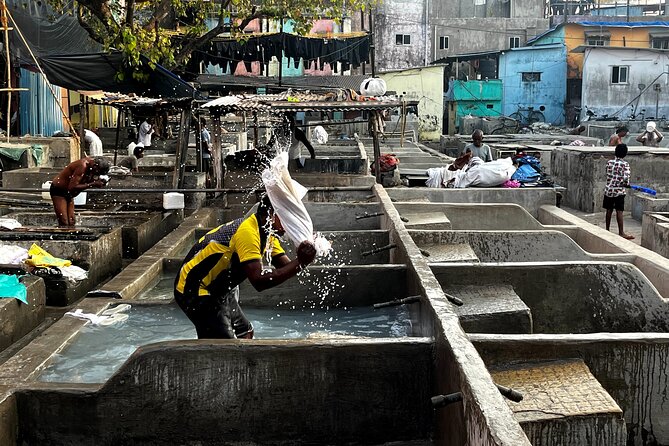
Then you shift from fish to laundry at Dhobi Ghat, famous for being an open-air laundry operation. This stop is where the tour turns from “fun market outing” into “wow, the city runs on labor you never notice.”
The key thing you should know is the scale. Dhobi Ghat is described as washing over 2,000 clothes daily, coming from hotels, hospitals, and private homes. You’ll witness dhobis (laundry workers) doing their skilled routine, with clothes being washed and dried in a way that’s visible in the open.
This is also a strong cultural contrast point. Markets sell what you want to buy. Dhobi Ghat shows how people keep life running behind the scenes. If you pay attention, you’ll notice how the work is organized around daily demand, not around tourist schedules.
In practical terms, this stop is shorter, about 30 minutes, so you’ll want to be ready with simple questions like:
- How does the timing work across different garment types?
- What comes in from hotels versus private homes?
If your guide is good (and reviews point to that), you’ll get clear answers without turning it into a lecture.
- Elephanta Caves & Island Guided Private Tour★ 5.0 · 1,327 reviews
- Private Guided Walking Tour in Fort & Colaba★ 5.0 · 895 reviews
- Mumbai: Street Food and Night Markets Tour★ 4.9 · 719 reviews
- Mumbai: Dharavi Slum, DhobiGhat, and Dabbawallas Tour★ 4.9 · 689 reviews
- Dharavi Slum Tour★ 5.0 · 625 reviews
Dadar fruit and vegetable market: the details that matter
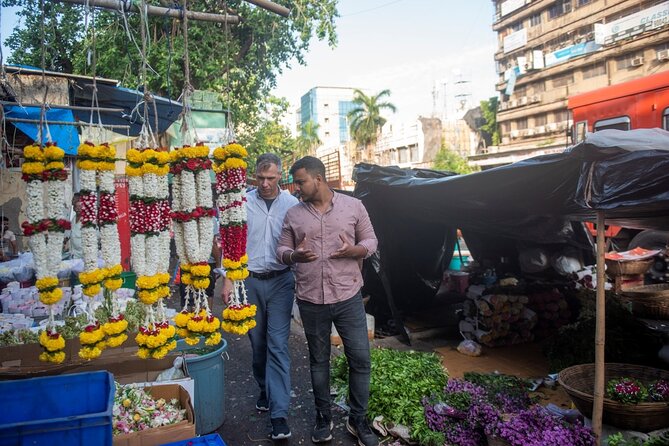
After Dhobi Ghat, you’ll go to Dadar Fruit And Vegetable Market. This is the other “food supply chain” moment of the tour. You’ll see stalls packed with seasonal produce and you’ll get a close look at what locals buy for daily cooking.
What makes this stop valuable is that it’s not generic market browsing. The point is to show you how people shop at street level:
- Color and variety concentrated in a small area
- People moving with purpose, selecting items fast
- Everyday ingredients showing up like clockwork
This stop is about 45 minutes, which is long enough to see patterns, not long enough to get bored. If you’re the kind of traveler who likes to understand what locals eat, this is the part that helps you connect dishes on menus to real ingredients you saw being chosen.
A small consideration: fruit and vegetable areas can be crowded too. If you’re prone to feeling overwhelmed by people, you’ll want to keep a steady walking pace and let the guide handle the crossing points.
Dadar Flower Market: the scent shift at the finish line
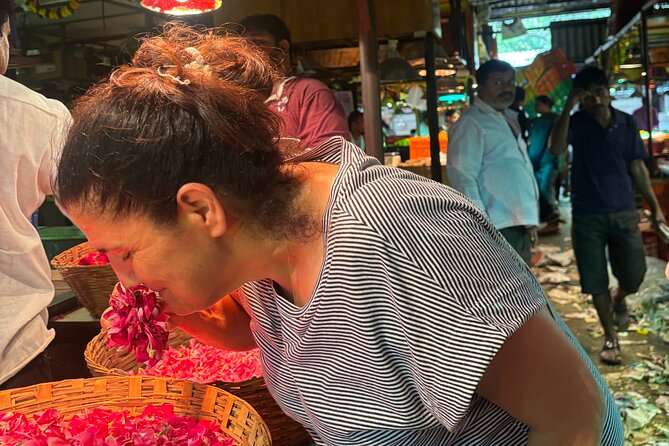
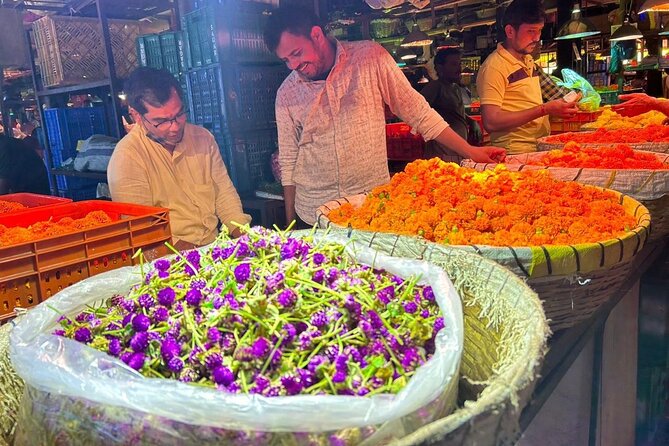
The tour ends at Flower Market Dadar, with another 45-minute stop. This is where you get the strongest sensory contrast on the whole route. One minute you’re near fish and spices, the next you’re in a place built around color and fragrance.
Expect:
- Lots of fresh flower handling right in the open
- Busy vendors moving quickly with careful organization
- Strong smell that can feel intense, in the best way
If you like taking photos, flowers are easier than fish for clean-looking pictures. If you like learning, a flower market also tells you about daily rituals, not just decoration.
One thing to remember: the tour’s structure matters here. Because it ends at the flower market, you’re finishing with something uplifting and visual rather than winding down through another tough-to-walk stop. Then you’re done in a manageable timeframe, about 3 hours total, instead of spending the day getting tired in dense areas.
Getting around: walking, taxi or train, and keeping your day stress-free
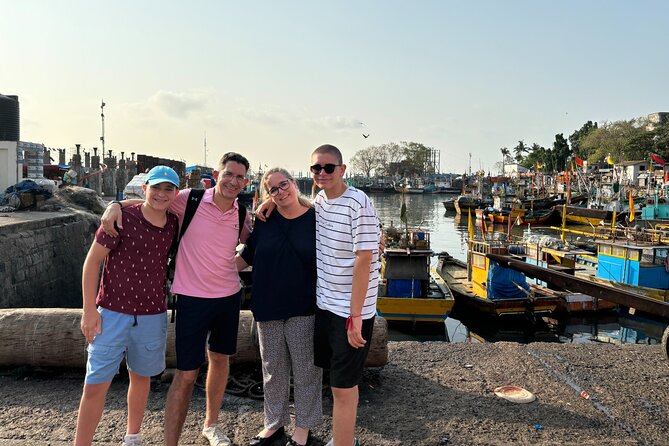
This tour includes local movement by taxi or train, plus walking between stops. The overview also mentions riding the local train as part of the experience, so expect at least one public-transport moment. That’s part of the value. You’re not just viewing markets from the outside, you’re also seeing the city’s everyday transit flow.
Two practical ideas that help:
- Keep your phone and camera handy, but also accept that you’ll be in crowds where you can’t stop constantly
- Bring a small water plan, even if you get chai, because walking plus morning heat can add up by the time you reach Dadar
Also, confirm the exact start meeting point you’ll use. The information you receive may include a start near PizzaExpress Dhanraj Mahal, Chhatrapati Shivaji Maharaj Marg, Apollo Bandar, Colaba, and it also indicates the tour begins at Flower Market Dadar, with your guide helping you book a taxi. The safest approach is to treat your voucher message as the truth for start details and go from there.
The chai break: small time, big payoff

You get a small chai (tea) break during the route. It sounds simple, but it matters because it gives you a moment to reset your senses. After fish market smells and crowded walking, a hot drink and a chance to ask questions makes the cultural context stick.
A chai break also changes the pacing. Instead of moving constantly from one sensory overload point to the next, you get a short pause that helps you absorb what you saw.
If your guide is strong, this is often when you’ll get the most useful explanations, like what different vendors sell and why certain items show up in the morning routine.
Guide quality: why names like Jawwad, Abhishek, and Sharon show up
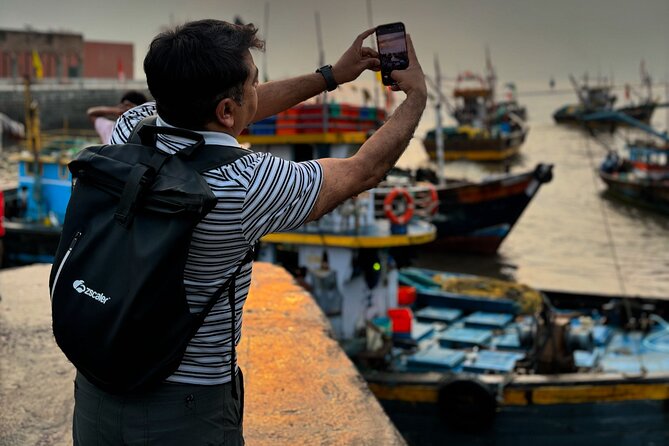
The tour’s success is tied to the guide. In the reviews, guides like Jawwad (Jay), Abhishek (Abhi), and Sharon are repeatedly praised for making sense of crowded places, explaining what you’re seeing, and staying patient with questions.
Here’s what that means for your experience:
- Clear English and explanations help you connect the visuals to real daily life
- Patient guiding matters in tight market lanes
- Helpful crossing and safety tips matter, especially when streets feel busy and people are moving in every direction
One review specifically highlights Sharon helping with walking safely across the streets. That kind of detail is not glamorous, but it’s exactly what reduces stress when you’re navigating real neighborhoods.
If you’re the type who worries about feeling lost in a crowd, this is a major reason to consider booking.
Price and value: $20.72 for a concentrated morning education
At $20.72 per person, this tour is priced like a bargain for what it packs into a short window. You get four distinct stops tied together into a single morning story: fish at Sassoon Dock, laundry at Dhobi Ghat, produce at Dadar Fruit And Vegetable Market, and flowers at Flower Market Dadar.
You also get practical included items:
- Small chai break
- Pickup offered
- Mobile ticket
- Admission ticket free at each stop listed
- Private format for your group, which can make navigating crowds feel calmer
The value comes from timing and structure. Markets change quickly, and the early hours matter. Paying for a guide and route saves you from trying to figure it out alone at the exact moments when the markets are working at full speed.
Group discounts are also mentioned, which can help if you’re not traveling solo.
Who should book this, and who might skip it
This is a great match if you:
- Want to see day-to-day Mumbai, not just landmarks
- Like food markets and cultural routines
- Can handle early hours and crowded streets
- Appreciate sensory travel, including strong smells
It’s a less perfect match if you:
- Get overwhelmed easily by crowds
- Hate messy conditions and odor
- Are only interested in quieter sightseeing
Also, because the tour is “private” for your group, it can suit small friend groups or couples who want the experience without having to sync with a large stranger group.
The tour says most travelers can participate, which is a helpful signal that it’s not designed for only highly specialized travelers. Still, you should assume a decent amount of walking and close-quarters market navigation.
Should you book it? My call
Book it if you want a morning plan that feels like real life in motion. This tour does the hard part for you by bundling fish, laundry, produce, and flowers into one compact route, then adding context through a guide who’s repeatedly described as patient and helpful.
Skip it if you’re not ready for early mornings, strong smells, and crowds in active market areas. If you’re thinking of going, treat it like a working neighborhood experience, not a museum stroll.
If you do book, go prepared: plan on old shoes for Sassoon Dock, expect tight lanes, and keep your curiosity switched on. You’ll finish the morning with a very specific kind of memory, the smell of fish replaced by the scent of flowers, and the surprise of realizing how much daily effort is happening right in front of you.
FAQ
How long is the Mumbai Morning Market Tour?
It runs for about 3 hours.
How much does the tour cost?
The price is $20.72 per person.
Is pickup offered?
Yes, pickup is offered.
Is this tour private?
Yes. It’s listed as private, meaning only your group participates.
Where do the stops take place?
The tour includes Sassoon Dock, Dhobi Ghat, Dadar Fruit And Vegetable Market, and Flower Market Dadar.
Is there a chai break?
Yes, the tour includes a small chai (tea) break.
Are admission tickets required for the stops?
The listed admission at each stop is free.
What is the cancellation window?
You can cancel for a full refund if you cancel at least 24 hours before the experience starts.
Mumbai, Keep Exploring




Recently reviewed across Mumbai
- Mumbai City Sightseeing Guided Tour on a Bicycle
★ 5.0 · 10 reviews - Mumbai Street Food & Beach Tour with 10+ Tastings
★ 5.0 · 10 reviews - Mumbai Market Tour & Maharashtrian Cooking Class with Chef Reshma
★ 4.5 · 10 reviews - Sailing Experience in Mumbai on Mid Size Yacht
★ 5.0 · 10 reviews - 3 Days Complete Mumbai Tour Inclusive of Bollywood Studio Experience
★ 5.0 · 10 reviews - Dharavi Slum Tour
★ 5.0 · 10 reviews
Mumbai City Tours, compared.
 ★ 4.9Full-Day Sightseeing Tour of MumbaiFrom $241,822 reviews
 ★ 5.0Group Guided Walking Tour in Fort and ColabaFrom $161,073 reviews
 ★ 4.8Elephanta Caves Half-Day Guided Tour with ExpertFrom $301,032 reviews
 ★ 5.0Highlights of Mumbai Sightseeing Tour: TRAVELLERS CHOICE AWARDEDFrom $33915 reviews
 ★ 5.0Private Guided Walking Tour in Fort & ColabaFrom $36895 reviews
 ★ 4.9Street Food and Night Markets TourFrom $13719 reviews
 ★ 4.9Dharavi Slum, DhobiGhat, and Dabbawallas TourFrom $14689 reviews
 ★ 5.0Highlights of South Mumbai Guided Private Tour in AC VehicleFrom $74620 reviews
Browse the lists this tour appears in