
REVIEW · MUMBAI CITY TOURS
Mumbai Morning Market Tour of Flowers, Fish, and More
Morning markets in Mumbai hit fast. This is a 3 to 3.5 hour walk through the city’s working side, where you can see the fish auctions, smell the flowers, and watch everyday jobs keep the metropolis running. You start early, before the day fills up, with an English-speaking guide and included transport that keeps you moving without feeling rushed.
I especially like two parts. First, the Sassoon Dock fish market experience, with sellers at work and the steady rhythm of the catch being cleaned and prepared. Second, the local train ride, because the guide shows you how to use the system while you’re still comfortable and the stations are not yet chaotic.
One thing to consider: it is an early morning tour, and the fish market area can get smelly and wet. Wear shoes you can stand in for a while, and don’t plan on pretending you’re wearing your best outfit.
In This Review
- Key moments that make this tour worth your morning
- Why this early-morning route is so satisfying
- Sassoon Dock fish market: the sights you can’t get from a restaurant
- Churchgate to Dhobi Ghat: seeing Mumbai’s daily labor up close
- Dadar fruit and vegetable market: your nose leads before your eyes do
- Flower Market Dadar: the fragrance part is real
- CSMT and Churchgate: iconic Mumbai, timed for your energy
- Local train ride: the most useful part if you want to move like a local
- Price and value: $19 feels fair when you add up the basics
- What to wear and how to prepare for a market-morning reality check
- Who this tour fits best
- Should you book the Mumbai Morning Market Tour of Flowers, Fish, and More?
- FAQ
- How long is the Mumbai Morning Market Tour of Flowers, Fish, and More?
- How much does the tour cost?
- Where is the meeting point?
- Is hotel pickup included?
- What language is the guide?
- What does the tour include for sightseeing and transport?
- Are foods and drinks included?
- Does the tour include CSMT and Churchgate?
- Is there a local train ride?
- Is there free cancellation and a pay-later option?
Key moments that make this tour worth your morning
- Sassoon Dock fish market at sunrise, with auctions and hands-on prep of seafood
- Dhobi Ghat laundry stop, plus time for photos and a guided explanation
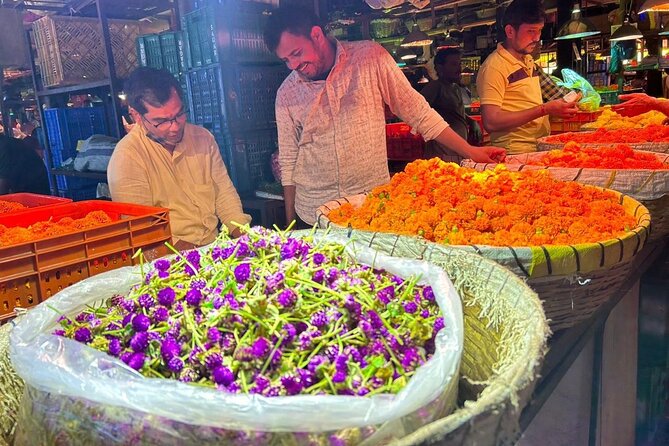
- Dadar fruit and vegetable market, where coriander, chili, and fresh produce hit your senses
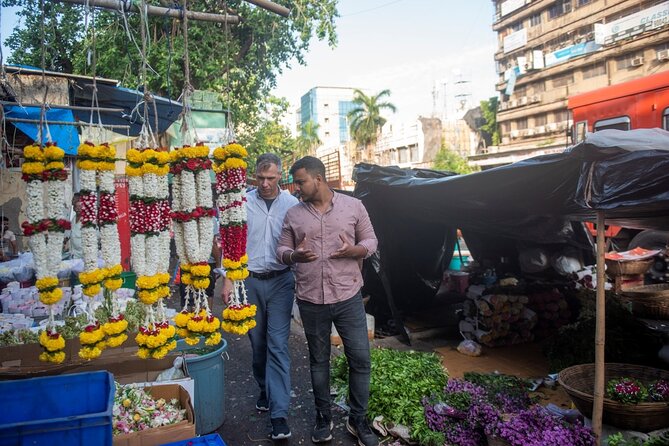
- Dadar flower market, including a photo stop and time to browse closely
- CSMT and Churchgate area views, a major landmark paired with the working markets
- Hotel pickup, drop-off, and a local train ride, so you’re not guessing how to get around
Mumbai, a few more routes through it
Why this early-morning route is so satisfying

Mumbai at 5-ish in the morning has a different tempo. Most neighborhoods are still waking up, but the markets are already doing business, meaning you see how the day starts for the people who supply the rest of the city. That timing matters, because a lot of these stalls and operations slow down or close later.
The tour is built for people who want more than photos of famous buildings. You’re not just looking at Mumbai, you’re watching work: trading, cleaning, sorting, arranging, pricing, and moving goods through dense neighborhoods. It’s also time-efficient. With hotel pickup and a guided path, you can cover multiple market zones in just a few hours without spending your whole day on logistics.
And yes, you still get the big architecture moment. The visit to Chhatrapati Shivaji Maharaj Terminus (CSMT) gives you a “you are in Mumbai” payoff, but it stays connected to the day-to-day theme of the tour.
Sassoon Dock fish market: the sights you can’t get from a restaurant
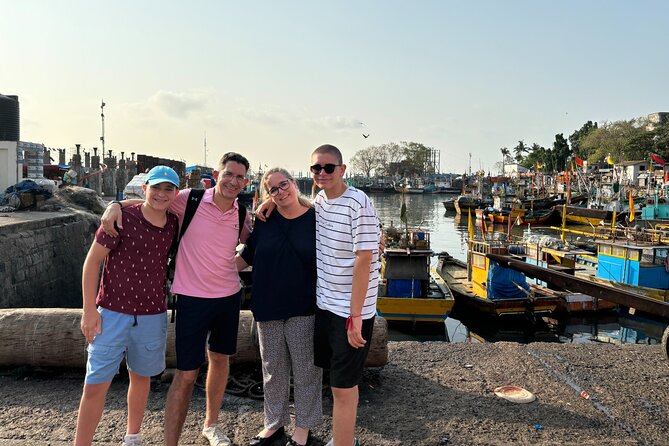
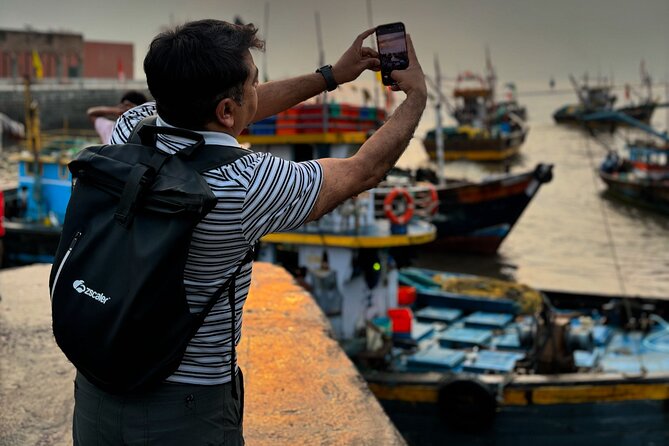
This tour’s starting point is the Sassoon Dock fish market, where you begin your morning with the strongest sensory contrast of the trip. You’ll see women selling fresh fish and men displaying the day’s catch. You may also spot vendors running auctions, which makes the whole operation feel more like a live marketplace than a static stall.
Then comes the practical reality piece. You’ll watch cleaning and preparation of seafood like prawns and shrimp for the day ahead. Even if you’re not a seafood person, this is fascinating because you’re seeing the steps that turn “fresh catch” into something kitchens can actually use.
A couple of details help you enjoy it more:
- Bring your patience for close quarters. This is a working market, not a museum.
- Expect strong smells, especially near prep areas.
- Plan to look with respect. People are working, and you’re there with a camera and questions.
The payoff is huge because you see the supply chain in action. It’s the kind of experience that turns seafood you’ve eaten into a story you can picture.
Churchgate to Dhobi Ghat: seeing Mumbai’s daily labor up close
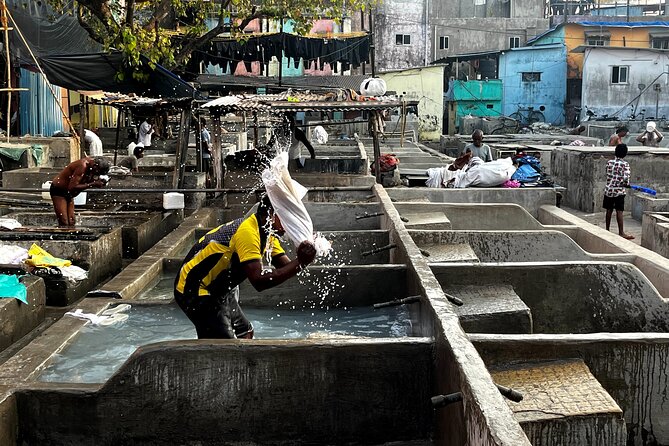
After the fish market, you head toward Dhobi Ghat, using a local taxi or train as part of the route. Dhobi Ghat is famous for a reason: you can see laundry done at a scale that feels almost impossible until you’re standing there.
In the tour, Dhobi Ghat includes a photo stop plus a guided visit. The guide’s job here is especially important. Laundry is one of those places that can look chaotic if you just walk through it, but with explanation you start noticing the workflow: how clothes move through the process, where items come from, and how this service supports hotels, hospitals, and homes.
This is also a mental shift stop. Markets show goods moving through the city. Dhobi Ghat shows services moving through it, and it’s a reminder that “tourist Mumbai” is only half the story. The other half is made by people doing physical work every day, and doing it with speed because demand never stops.
Tip: if you’re sensitive to smells, Dhobi Ghat may still be fine, but the fish market is usually the bigger challenge. Still, keep a bottle of water and a light layer in your bag.
- Elephanta Caves & Island Guided Private Tour★ 5.0 · 1,327 reviews
- Private Guided Walking Tour in Fort & Colaba★ 5.0 · 895 reviews
- Mumbai: Street Food and Night Markets Tour★ 4.9 · 719 reviews
- Mumbai: Dharavi Slum, DhobiGhat, and Dabbawallas Tour★ 4.9 · 689 reviews
- Dharavi Slum Tour★ 5.0 · 625 reviews
Dadar fruit and vegetable market: your nose leads before your eyes do
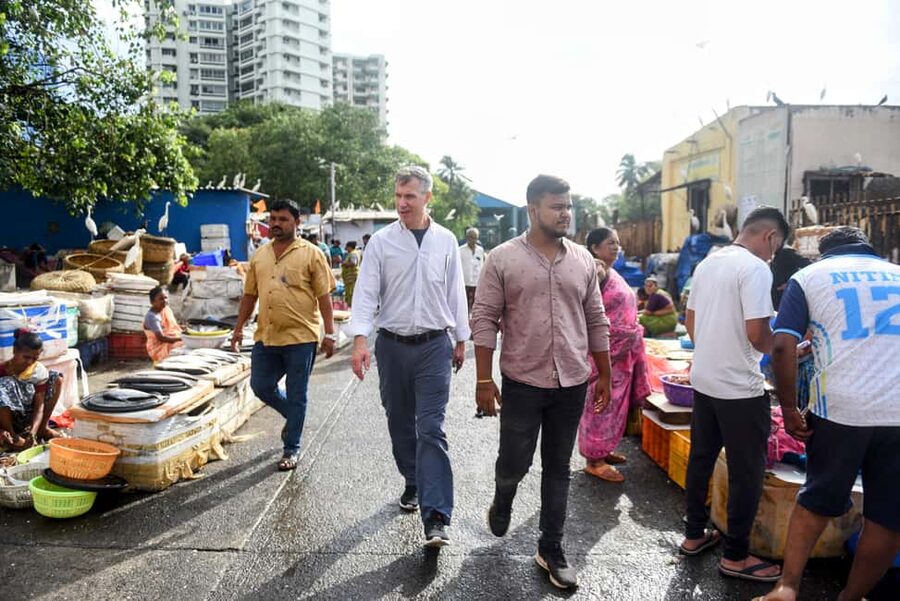
Next you move to Dadar’s fruit and vegetable market, and this is where the tour shifts from seafood to plants, spices, and color. The air is often packed with aromas like coriander and chili, and once you start noticing the mix of fresh produce and chopped spices, the market becomes a living display of Mumbai’s flavor habits.
This stop includes a guided visit, so you’re not just walking between stalls. You get context about how vendors operate and how the market supports daily buying. That makes your photos better too. Instead of shooting random stacks, you start filming the logic of the place.
One more reason this market works well on a short tour: it’s dense and compact. In the same short window you can see a lot of variety without feeling like you’re traveling long distances back and forth.
If you want a souvenir, this is the easiest place to buy something practical, like spices, dried goods, or small food items. Just remember the tour does not include food and drink, so plan for purchases to be extra if you want them.
Flower Market Dadar: the fragrance part is real
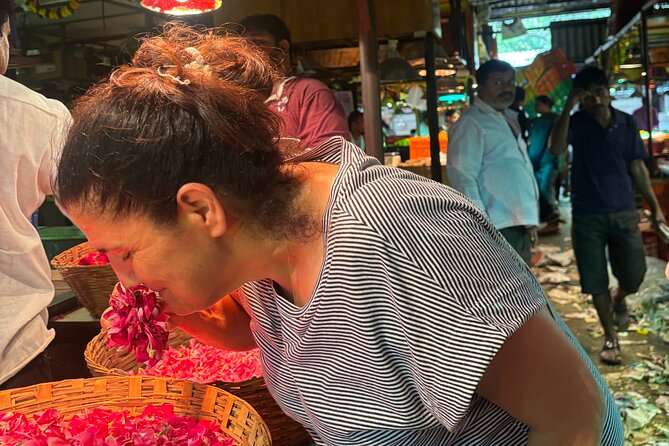
Then comes the Flower Market in Dadar, with time for a photo stop, a guided walk, and a look at how flowers are handled for the day. This is the sensory reward after fish and spices. You’re going from strong marine smells to fragrance that actually changes the air.
What I like about adding flowers after markets is the way it broadens the “working city” theme. Fish and vegetables feed restaurants and homes. Flowers feed worship, celebrations, and everyday cultural rituals. So you’re not just seeing commerce, you’re seeing tradition translated into a supply system.
This stop also makes you slow down. The colors pull you in, and because it’s a market full of movement and selection, you’ll naturally watch people comparing, choosing, and wrapping. If you’re photographing, aim for the moments when vendors group stems or arrange bunches, not only the biggest open displays.
CSMT and Churchgate: iconic Mumbai, timed for your energy
The tour includes a visit to Churchgate Railway Station and also a visit to CSMT, one of India’s best-known historic stations. This portion works because it acts like a pause button between market stops. It also gives you a visual landmark that helps you anchor everything you saw earlier.
CSMT is also an easy way to understand why Mumbai’s markets matter. Railways are what connect supply, labor, and demand across the city. Even if you’re not thinking about it in the moment, standing near a major rail hub after seeing working markets makes everything feel more connected.
Also, the tour includes skip-the-ticket-line, which can help you keep the schedule smooth when you have limited morning hours.
Local train ride: the most useful part if you want to move like a local
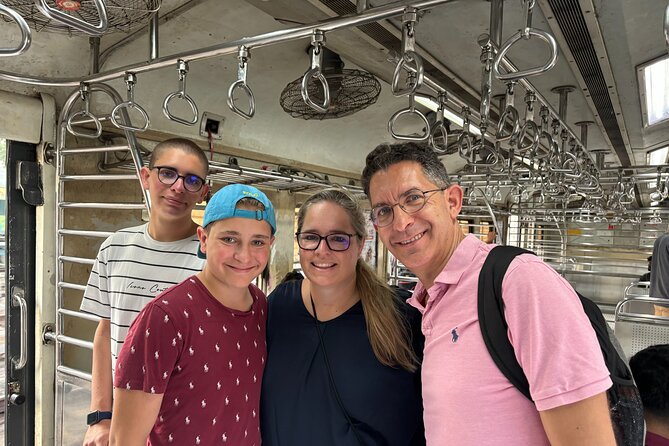
The local train ride is included, and it’s a highlight for many people for a reason. Markets can be overwhelming because of crowds and narrow lanes. A train ride, with the guide helping you navigate the system, gives you confidence instead of stress.
In practice, you’ll do two helpful things:
- You’ll see how the city moves people on a daily schedule.
- You’ll get guidance on using the train system at the right moment, before stations get too crowded.
The guide support here is crucial. In the way this tour is described, the guide doesn’t just point out where to go, they help you handle the route. That means fewer wrong turns and less time standing confused by signage.
This is also one of the best parts of the value. For $19, you’re not paying for a “transport-only” add-on. You’re paying for transport plus market expertise plus time inside multiple neighborhoods.
Price and value: $19 feels fair when you add up the basics

At about $19 per person, this tour is priced low for what it bundles: hotel pickup and drop-off, a live English guide, multiple guided market segments, a Dhobi Ghat visit, and a local train ride. Most tours in big cities try to pack two stops and call it a day. Here you get several distinct areas in just 3 to 3.5 hours.
Where you need to be smart is food and drinks. The tour data says foods and drink are not included. At the same time, you may have a chai tea break or be directed to a street snack stop during the route. Treat that as optional spending, not as a promise that everything you eat is covered.
What I’d budget for:
- Water and basic snacks if you want them
- A small amount for chai or street food, if you stop
- Any purchases you make at the markets, like spices or flowers
Also plan your expectations for comfort. This is a morning walking tour with real market conditions. It’s not designed to be a slow sit-down experience. If you like moving, asking questions, and learning how the city functions on a workday schedule, the pace will feel right.
What to wear and how to prepare for a market-morning reality check
You’re going to be close to active work. That changes what “good touring” looks like.
Here’s what helps most:
- Wear robust shoes with grip. The fish market area can be wet and slippery.
- Bring breathable clothing. You’ll be outdoors and moving in a busy environment.
- Consider a small bag with tissues or wipes. Market surfaces and fish prep areas can be messy.
- Keep your camera ready, but don’t block work. Let people pass first.
Also, don’t underestimate the early start. One reason people rate the experience so highly is that it lets them see Mumbai before traffic and crowds take over. The early timing is part of the deal, not a side effect.
If you’re traveling with jet lag, an early tour can be a win because you’re already awake. If you’re not a morning person, choose the later departure option if it’s available, but the trade-off is that some areas may be more crowded and moving faster.
Who this tour fits best
This tour is ideal if you:
- Want to understand Mumbai beyond the usual sightseeing loop
- Like hands-on observations like auctions, cleaning, and vendor work
- Enjoy public transit experiences, especially with guidance
- Prefer a short, structured morning over a full-day itinerary
It may be less ideal if you:
- Have strong aversions to fish smells
- Need a fully quiet, low-stimulation outing
- Expect food to be included, as drinks and snacks are not listed as included
Should you book the Mumbai Morning Market Tour of Flowers, Fish, and More?
Yes, if you’re looking for a smart value morning that connects multiple parts of Mumbai’s working life into one easy route. The biggest reason to book is the combination: fish market early energy, the human-scale scene of Dhobi Ghat, and the sensory swing to vegetables and flowers. Add in hotel pickup, a live English guide, and a local train ride, and you get a lot of learning for the money.
You might skip it if you’re not comfortable with market conditions, especially near the fish market. If that’s you, consider a different kind of city tour with less time in wet, smelly areas.
If you do book, go in curious. Ask how vendors work. Watch the workflow. And wear shoes you trust. That’s the simple formula that makes this tour feel worth the alarm clock.
FAQ
How long is the Mumbai Morning Market Tour of Flowers, Fish, and More?
The tour lasts about 3 to 3.5 hours.
How much does the tour cost?
It costs $19 per person.
Where is the meeting point?
You meet your guide at Pizza Express Colaba, near the Gateway of India.
Is hotel pickup included?
Hotel pickup and drop-off are included, and pickup is optional. If you choose not to use pickup, you meet at the stated meeting point.
What language is the guide?
The live tour guide speaks English.
What does the tour include for sightseeing and transport?
You get hotel pickup and drop-off, guided market exploration through Dadar Flower Market and vegetable markets, Sassoon Dock fish market and Dhobi Ghat exploration, a visit to CSMT, and a local train ride experience.
Are foods and drinks included?
Foods and drink are not included.
Does the tour include CSMT and Churchgate?
Yes. The tour includes a visit to Churchgate Railway Station and also a visit to Chhatrapati Shivaji Maharaj Terminus (CSMT).
Is there a local train ride?
Yes, a local train ride experience is included.
Is there free cancellation and a pay-later option?
Free cancellation is available up to 24 hours in advance for a full refund. You can also reserve now and pay later.
Mumbai, Keep Exploring




Recently reviewed across Mumbai
- Mumbai City Sightseeing Guided Tour on a Bicycle
★ 5.0 · 10 reviews - Mumbai Street Food & Beach Tour with 10+ Tastings
★ 5.0 · 10 reviews - Mumbai Market Tour & Maharashtrian Cooking Class with Chef Reshma
★ 4.5 · 10 reviews - Sailing Experience in Mumbai on Mid Size Yacht
★ 5.0 · 10 reviews - 3 Days Complete Mumbai Tour Inclusive of Bollywood Studio Experience
★ 5.0 · 10 reviews - Dharavi Slum Tour
★ 5.0 · 10 reviews
Mumbai City Tours, compared.
 ★ 4.9Full-Day Sightseeing Tour of MumbaiFrom $241,822 reviews
 ★ 5.0Group Guided Walking Tour in Fort and ColabaFrom $161,073 reviews
 ★ 4.8Elephanta Caves Half-Day Guided Tour with ExpertFrom $301,032 reviews
 ★ 5.0Highlights of Mumbai Sightseeing Tour: TRAVELLERS CHOICE AWARDEDFrom $33915 reviews
 ★ 5.0Private Guided Walking Tour in Fort & ColabaFrom $36895 reviews
 ★ 4.9Street Food and Night Markets TourFrom $13719 reviews
 ★ 4.9Dharavi Slum, DhobiGhat, and Dabbawallas TourFrom $14689 reviews
 ★ 5.0Highlights of South Mumbai Guided Private Tour in AC VehicleFrom $74620 reviews
Browse the lists this tour appears in