

REVIEW · MUMBAI CITY TOURS
Private Mumbai 25 sights in one tour as recommended by Gigi Hadid
25 stops, one smooth half day in Mumbai.
This private tour is built for fast orientation. You hit a mix of Colonial icons and everyday city scenes, riding in a private vehicle with hotel pickup and drop-off and a pro local guide.
I love the logic of the route. It connects big-ticket landmarks like Gateway of India and Chhatrapati Shivaji Terminus with art blocks such as Kala Ghoda, plus working Mumbai you do not usually get on standard sightseeing tours.
One thing to plan around: the schedule is tight. With so much packed into 3 to 4 hours, the experience can feel fast, and on weekends the Churchgate dabbawala stop may be shut, so you will want to pick your day with that in mind.
In This Review
- Key things to know before you go
- A private, 25-stop sprint through Mumbai you can actually enjoy
- Price and what you really get for $83.25
- Gateway of India and the Shivaji statue, your fast start to Mumbai’s identity
- Colonial Mumbai by car: fountains, yacht club history, and a few celebrity-story photo stops
- Kala Ghoda art precinct: iron buildings, Sassoon stories, and Mark Twain’s Mumbai tie-in
- David Sassoon Library and Reading Room, plus the university arches you will want to linger at
- Rajabai Clock Tower and Bombay High Court: architecture that tells political stories
- Oval Maidan and the cricket practice scene: a “local life” intermission
- Churchgate Railway Station: where the dabbawalas system turns logistics into art
- Chhatrapati Shivaji Terminus: Victoria Terminus at full attention
- Marine Drive and the sea view break you actually remember
- Mani Bhavan Gandhi Museum: the stop with admission included
- Dhobi Ghat: open-air laundry as a live “human washing machine” scene
- The extra short photo stops: Zubeida, a classic cinema, Punjab Grill, and the Independence flag moment
- Comfort, pacing, and how the guide shapes the whole experience
- Practical tips so you get the most from this half-day
- Should you book this Private Mumbai 25-sight tour?
- FAQ
- How long is the tour?
- What time does the tour start in Mumbai?
- Is hotel pickup and drop-off included?
- Is admission included for Mani Bhavan Gandhi Museum?
- Are dabbawalas included every day?
- Can I cancel for a refund?
Key things to know before you go
- 25 sights in a half-day format, designed to help you “get your bearings” fast.
- Private vehicle + hotel pickup, so you spend less time negotiating transport.
- Most stops are free entry, which makes the $83.25 price feel less like a bundle fee and more like paying for time and guidance.
- Dabbawalas and Dhobi Ghat are included, giving you a real peek at how Mumbai runs.
- Mani Bhavan Gandhi Museum has admission included, so you are not hunting tickets mid-tour.
- It runs from 9:30 am, and the start or end time can shift with traffic.
Mumbai, a few more routes through it
A private, 25-stop sprint through Mumbai you can actually enjoy
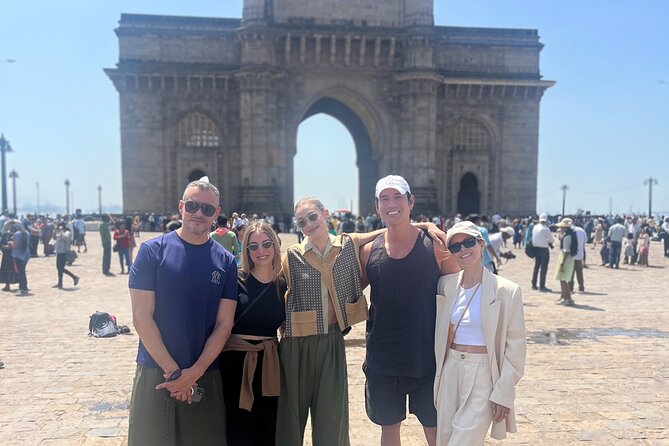
This is the kind of tour that makes sense when Mumbai is your first stop in India, or when you have limited daylight. You cover a lot without feeling like you are trapped in a bus line. Because it is private (your group only) and you ride in your own car, you can ask questions and pause for photos without the chaos of big group herding.
The “hop-on hop-off” idea also helps. Even though you are on a private tour, the stops are short and flexible enough that you can step out for a quick look, then get back in when the city demands patience (hello, traffic). Just know the pacing is built for efficiency, not slow roaming.
At $83.25 per person for a 3 to 4 hour window, the value comes from what you are actually buying: transport, a professional local guide, and a route that strings together the most useful sights for first-time orientation. You are also getting all fees and taxes included in the price, with taxes listed at 5%.
Price and what you really get for $83.25
Let’s break down the money in practical terms.
You pay for:
- Private vehicle transport
- Professional local guide
- Hotel pickup and drop-off
- All fees and taxes
You do not pay for:
- Food and drinks (unless the tour specifies otherwise, and it does not here)
- Any extra cost for a language guide beyond English
- Extra transport cost if your hotel is in suburban Mumbai
- Anything not covered by stop-specific admission (many stops note free admission, and Mani Bhavan is included)
What makes this feel fair is the way the tour is structured. A big chunk of the itinerary is explicitly free entry, which reduces the “you paid, now pay again” feeling. The one clear paid element is Mani Bhavan Gandhi Museum, and that admission is included, so you get at least one cultural site without extra hassle.
If you hate rushing, this might not be the best fit. You will be standing, walking a bit, then getting back into the car again and again. The tour asks for moderate physical fitness, so comfy shoes are not optional.
Gateway of India and the Shivaji statue, your fast start to Mumbai’s identity
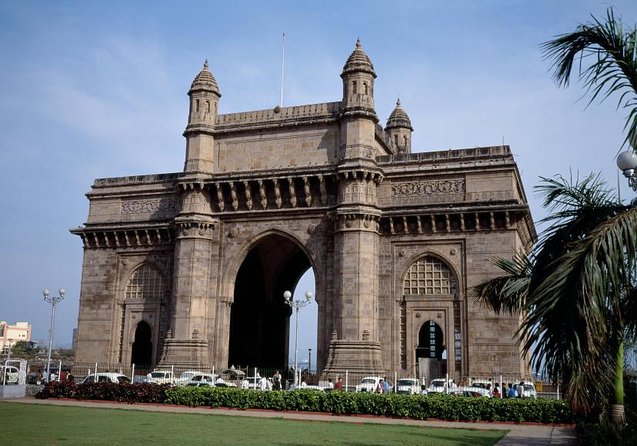
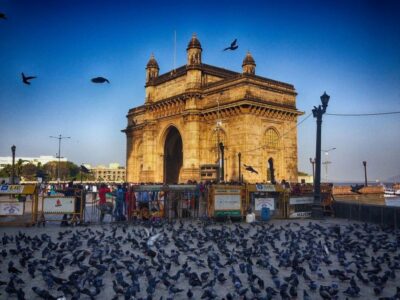
The first stop is Gateway of India, the emblem you will keep seeing referenced everywhere in Mumbai. It is a victory-style arch linked to the British Queen welcome story. Even if you barely know the background, it is a strong visual anchor. You get a clean first photo and a sense of where the action is.
Next comes the Statue of Chhatrapati Shivaji Maharaj. The guide’s framing matters here. Shivaji is presented as a brave Maratha king who fought against the Mughals, and it sets a tone for the whole tour: Mumbai is not just one era, it layers multiple power stories on top of each other.
Both stops are quick and free, so they work well at the beginning when you still have energy. If you want a little extra time for photos, arriving at 9:30 am helps, since the light can be better and the crowds usually feel more manageable earlier.
- Elephanta Caves & Island Guided Private Tour★ 5.0 · 1,327 reviews
- Private Guided Walking Tour in Fort & Colaba★ 5.0 · 895 reviews
- Mumbai: Street Food and Night Markets Tour★ 4.9 · 719 reviews
- Mumbai: Dharavi Slum, DhobiGhat, and Dabbawallas Tour★ 4.9 · 689 reviews
- Dharavi Slum Tour★ 5.0 · 625 reviews
Colonial Mumbai by car: fountains, yacht club history, and a few celebrity-story photo stops
After the opener landmarks, you shift into “drive-by and snap” territory. That is not a bad thing here, because it keeps the pace up while still giving you context.
You will pass a historic hotel that has hosted names like Barack Obama and the Beatles. The point is not celebrity spotting. The point is learning how old Mumbai buildings became modern landmarks, and how the city’s global connections show up in brick and street layout.
You also pass the Royal Mumbai Yacht Club, built by John Adams and Charles Stevens, and located between Charles and Adams Street. That detail is the kind of thing you miss if you are just walking on your own. It turns “a building” into a piece of city planning.
One more standout drive stop is Wellington Fountain, linked to Duke of Wellington, Sir Arthur Wellesley, and the Battle of Waterloo commemoration. Again, this is a quick hit, but the guide can explain why these names and monuments show up in Mumbai’s public space.
Kala Ghoda art precinct: iron buildings, Sassoon stories, and Mark Twain’s Mumbai tie-in
Kala Ghoda is where the tour starts feeling more like a guided walk through ideas, not just photo stops. This is the art precinct, and the guide weaves local stories that connect architecture to communities.
You get time at Kala Ghoda (about 25 minutes) to absorb the vibe. The area is tied to stories of Sassoon and Jewish history. That matters because Kala Ghoda is not only about galleries. It is about how different groups shaped what Mumbai looks like today.
A big reason this stop earns its place is the Watson Hotel reference. The tour notes it as the first iron cast building in the city and mentions Mark Twain as a notable guest during his stay. It is one of those links that makes a random old structure feel surprising.
One practical note: like most central Mumbai areas, it can get busy. Keep your route simple. This stop is a chance to slow down for a bit, so use the time for one solid photo round and then ask your guide what to notice next.
David Sassoon Library and Reading Room, plus the university arches you will want to linger at
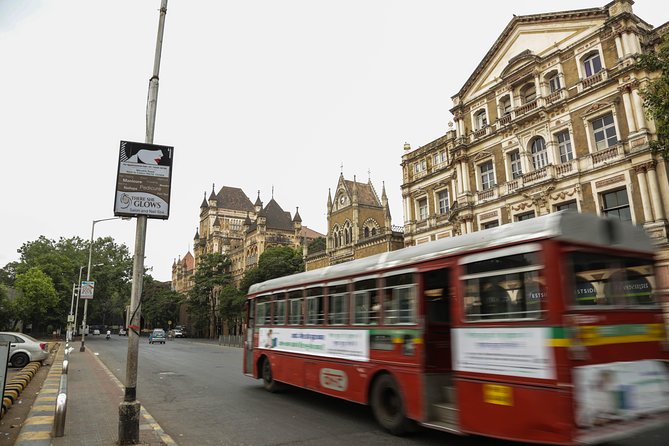
From Kala Ghoda you move to David Sassoon Library and Reading Room, described as an erstwhile mechanical institute that has been converted into a library with views over Kalaghoda. You will usually not think to visit libraries on a quick city tour, but that conversion story is exactly why this tour feels “more than a checklist.”
The stop is short (around 10 minutes), but the setting helps. Libraries give you a different kind of Mumbai. You see the city as readers once did, not just as commuters.
Then you shift to University of Mumbai Library. This is one of the moments you might actually want extra minutes for, because the description emphasizes the architecture and arches. Even if you are not a design nerd, those shapes pull your eyes upward and help you understand the scale of colonial-era planning in Mumbai.
If you have a group mood for it, this is also a good time to take a few minutes to just look up and compare what you see with what your guide has already told you. When everything is moving fast, those “pause and observe” moments make the whole tour feel coherent.
Rajabai Clock Tower and Bombay High Court: architecture that tells political stories
Two stops that you should not just walk past are Rajabai Clock Tower and Bombay High Court principal bench.
Rajabai Clock Tower is presented as the Big Ben of Mumbai, built with a generous donation from Premchand Roychand. The clock chimes every 15 minutes, which means timing can matter. Even if you miss the chime, knowing it is built for regular public rhythm makes it feel more intentional than a simple landmark.
Then comes the Bombay High Court principal bench, built in the form of a German castle. The guide also connects it to a legal history point, saying it was in this court that the jury system was abolished. That is heavy subject matter, but the practical takeaway is this: this court building is not just an old structure. It is a symbol of how justice and power were organized.
These stops are free, so you can focus your attention without worrying about tickets or entry rules. The trade-off is that you might be standing around for a few minutes while the group gathers, so keep your water handy and be ready for brief waiting.
Oval Maidan and the cricket practice scene: a “local life” intermission
Oval Maidan is the kind of stop that feels small on paper, but it is useful. The ground is described as a space where aspiring cricketers practice. That matters because Mumbai is not only colonial buildings and monuments. It is also a city where sports culture lives in public space.
This stop is around 10 minutes. It works as a reset between heavier architecture stops and the railway and waterfront segments ahead.
If you want the most from Oval Maidan, watch how people use the open space. Then connect it back to how Mumbai plans public grounds into the urban flow.
Churchgate Railway Station: where the dabbawalas system turns logistics into art
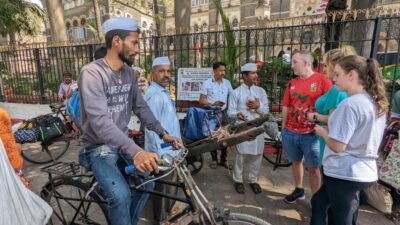
Churchgate Railway Station is where the tour goes from monuments to daily life. It is tied to dabbawalas, described as delivering lunches across Mumbai with extreme precision. The tour references 500,000 lunch boxes daily and even mentions that this system has been studied by consultants and business schools.
One line that sticks here is the idea that the work is so exact it is treated like a model. You start to see why people respect the network. It is not random kindness. It is a system with roles, routes, and timing.
There is also a built-in caveat: dabbawalas are shut on weekends. If you care most about seeing that segment, choose your day accordingly.
This stop is about 15 minutes. You are not there for a documentary shoot. You are there to witness the flow and understand the city’s invisible labor.
Chhatrapati Shivaji Terminus: Victoria Terminus at full attention
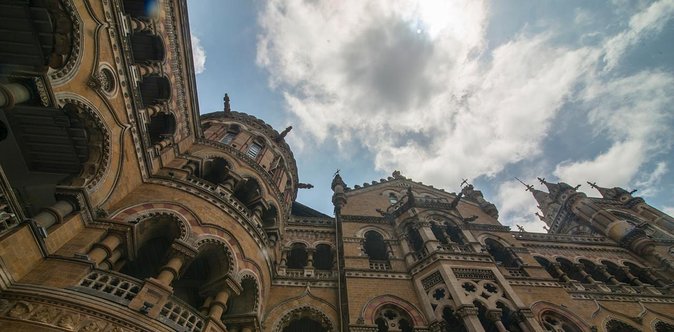
The tour’s railway anchor is Chhatrapati Shivaji Terminus, noted as Victoria Terminus Station (CST). The description calls it possibly the most architecturally stunning building in India and says it sees about 660,000 footfalls daily, making it the busiest station in Mumbai.
This is your chance to appreciate why people insist on calling CST a masterpiece. Even from outside, the building shape is commanding. It feels like it was designed to impress, not just to move trains.
Plan for crowds around a working station. It is not a museum you stroll through for long. Your guide’s role is to help you place what you are seeing in time and function, so you walk away with a mental map rather than just photos.
Marine Drive and the sea view break you actually remember
After the station intensity, you get Marine Drive, with a sea view and a 10-minute photo pause. Marine Drive is one of those Mumbai scenes that changes with light, weather, and time of day.
This stop’s value is simple: you need a visual breath between dense architecture and museum time. If the day is clear, the waterfront view is the part you will remember later, when city scenes blend together.
Mani Bhavan Gandhi Museum: the stop with admission included
Mani Bhavan Gandhi Museum is included with admission, and you get about 20 minutes there. The description focuses on insights into Gandhi’s life, archived in the museum.
In a tour packed with free-entry landmarks, this is a nice change of pace. Museums take longer than you think, even in a short visit, and the guide can help you aim your attention at the most relevant sections.
If you feel museum-tired, ask for one takeaway from the guide before you step inside. That way, you are not wandering and hoping something grabs you.
Dhobi Ghat: open-air laundry as a live “human washing machine” scene
Then you hit Dhobi Ghat, described as an open-air laundry where you can visit the human washing machines of Mumbai. The stop is short, about 5 minutes, but it has punch.
This is one of those places where respect matters. It is people working, not a staged attraction. The best way to enjoy the moment is to look, absorb, and keep your questions thoughtful.
If you are sensitive to sights and smells, go in with awareness. But if you want Mumbai at street level, this is exactly that.
The extra short photo stops: Zubeida, a classic cinema, Punjab Grill, and the Independence flag moment
The tour description includes additional stops that are less spelled out in the itinerary text, but they still point to an interesting mix of themes.
You may make quick stops for:
- An Art Deco structure that was home to Bollywood queen Zubeida
- A cinema described as the most iconic in the city
- The Wayside Inn, which is noted as turned into Punjab Grill
- The place where India’s flag was raised for the first time after Independence, raised by the then Prime Minister
These are the stops that feel like short chapters. They might be brief, but they help you understand how Mumbai shares its story through culture, film, and public symbols, not only monuments.
Comfort, pacing, and how the guide shapes the whole experience
A tour like this lives or dies by the guide. One review highlighted Krupesh for telling stories with energy and for helping make the day feel coherent. The same review also said the car was comfortable and clean, which matters more than people expect. In a city where traffic can steal time, comfort is part of the experience quality.
You should also expect a fairly structured flow. Even though it is “hop-on hop-off,” you will not roam freely for hours. You are moving, learning, and stopping in planned windows.
Weather can be a factor too. The tour notes it requires good weather. If conditions are poor, you should be ready for a different date or a refund offer.
Practical tips so you get the most from this half-day
- Wear shoes you can stand in. You are doing many short stop walks.
- Keep your day flexible. Start time is listed as 9:30 am, but traffic can change start and end timing.
- Bring a light layer. Coastal wind and indoor air can shift comfort quickly.
- Eat before or plan for water. Food and drinks are not included.
- If you want the dabbawalas moment, try to book a weekday since they are shut on weekends.
Should you book this Private Mumbai 25-sight tour?
I think this tour is a great choice if you want maximum orientation in minimal time. It does the smart thing by pairing major landmarks with working-city scenes, and it keeps you moving in a private vehicle with pickup and drop-off.
I would skip it if you hate fast pacing or you want a slow, deep museum day. Also, if dabbawalas are the main reason you booked, pick a weekday so that stop is less likely to disappoint.
If your goal is to see the city’s key landmarks, learn how they connect, and leave with a usable mental map of Mumbai, this one is a strong bet.
FAQ
How long is the tour?
The tour lasts about 3 to 4 hours.
What time does the tour start in Mumbai?
The start time is 9:30 am.
Is hotel pickup and drop-off included?
Yes, hotel pickup and drop-off are included.
Is admission included for Mani Bhavan Gandhi Museum?
Yes, Mani Bhavan Gandhi Museum admission is included.
Are dabbawalas included every day?
The dabbawalas segment is marked as shut on weekends, so it may not run on those days.
Can I cancel for a refund?
Yes, you can cancel for a full refund if you cancel up to 24 hours in advance. If you cancel less than 24 hours before the start time, the amount paid is not refunded.
Mumbai, Keep Exploring




Recently reviewed across Mumbai
- Mumbai City Sightseeing Guided Tour on a Bicycle
★ 5.0 · 10 reviews - Mumbai Street Food & Beach Tour with 10+ Tastings
★ 5.0 · 10 reviews - Mumbai Market Tour & Maharashtrian Cooking Class with Chef Reshma
★ 4.5 · 10 reviews - Sailing Experience in Mumbai on Mid Size Yacht
★ 5.0 · 10 reviews - 3 Days Complete Mumbai Tour Inclusive of Bollywood Studio Experience
★ 5.0 · 10 reviews - Dharavi Slum Tour
★ 5.0 · 10 reviews
Mumbai City Tours, compared.
 ★ 4.9Full-Day Sightseeing Tour of MumbaiFrom $241,822 reviews
 ★ 5.0Group Guided Walking Tour in Fort and ColabaFrom $161,073 reviews
 ★ 4.8Elephanta Caves Half-Day Guided Tour with ExpertFrom $301,032 reviews
 ★ 5.0Highlights of Mumbai Sightseeing Tour: TRAVELLERS CHOICE AWARDEDFrom $33915 reviews
 ★ 5.0Private Guided Walking Tour in Fort & ColabaFrom $36895 reviews
 ★ 4.9Street Food and Night Markets TourFrom $13719 reviews
 ★ 4.9Dharavi Slum, DhobiGhat, and Dabbawallas TourFrom $14689 reviews
 ★ 5.0Highlights of South Mumbai Guided Private Tour in AC VehicleFrom $74620 reviews
Browse the lists this tour appears in