
REVIEW · MUMBAI CITY TOURS
Private Mumbai Sightseeing Tour with Pickup, Car & Guide
Mumbai changes fast, and this tour catches it. This private day is built for first-timers who want both the headline sights and the real-life Mumbai, from Dharavi to the sea views. I love that you get your own AC car with pickup and drop, so the day feels organized instead of chaotic, and I also like that the plan can be shaped to your pace and interests with a guide who can explain what you are actually seeing.
Second, I like the way the route mixes very different places back-to-back, so you get a fuller picture of the city. Dharavi and Dhobi Ghat each teach you something specific about work and daily routines, while landmarks like Chhatrapati Shivaji Maharaj Terminus, Gateway of India, and Marine Drive show Mumbai’s public face. The one drawback to consider is that some stops are short, so if you want deep time in a single place, you may feel slightly rushed at the big sightseeing hits, and Dharavi in particular can be emotionally heavy even when it is educational.
In This Review
- Key things I’d focus on before you go
- Private Mumbai sightseeing: how the day actually feels
- First stop: Dharavi and the value of seeing work up close
- Dhobi Ghat: the world’s largest open-air laundry, at street level
- From CST to BMC and Crawford Market: historic Mumbai in walking portions
- Chhatrapati Shivaji Maharaj Terminus (CST)
- Brihanmumbai Municipal Corporation building
- Crawford Market
- Gateway of India, Marine Drive, and the sea-facing highlights
- Gateway of India
- Marine Drive, the Queen’s Necklace
- The clock tower, High Court, and Oval Maidan: learning to read the architecture
- Rajabai Clock Tower
- Bombay High Court
- Oval Maidan
- Banganga and Hanging Gardens: a calmer turn toward spirituality and views
- Banganga Tank
- Hanging Gardens
- Jain Temple and Mani Bhavan Gandhi Museum: reflection after the skyline
- Jain Temple in Mumbai
- Mani Bhavan Gandhi Museum
- Price and value: what $32.92 buys you in real terms
- Timing, walking, and how to plan your expectations
- Who this private tour suits best
- Should you book it
- FAQ
- How long is the private Mumbai sightseeing tour?
- Can I choose a half-day or full-day option?
- Is this tour private or shared?
- What transportation is included?
- What is included in the price?
- What is not included?
- Which stops are part of the tour?
- Are admission tickets included?
- When do I receive confirmation after booking?
- What is the cancellation policy?
Key things I’d focus on before you go
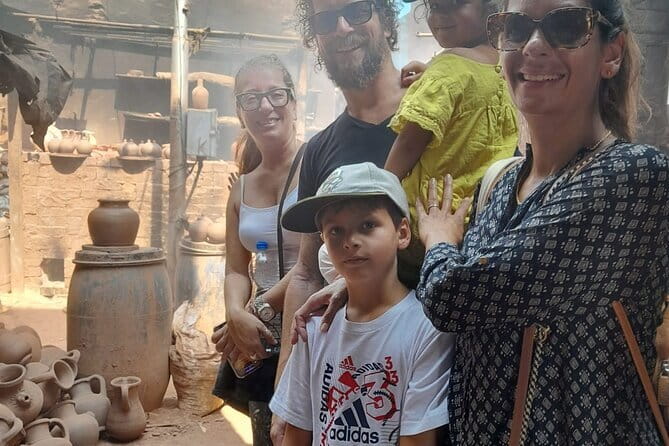
- A private car plus guide means you are not stuck with strangers or fighting for explanations.
- Dharavi with context helps you understand how community and small-scale industries work side by side.
- Dhobi Ghat is quick but memorable, a front-row look at the world’s largest open-air laundry in action.
- Major heritage sites in one arc from CST to the High Court, plus Marine Drive and the Gateway area.
- Quiet spiritual stops like Banganga and the Jain Temple, then a reflective finish at Mani Bhavan Gandhi Museum.
Mumbai, a few more routes through it
Private Mumbai sightseeing: how the day actually feels
This is a private tour, so you ride in your own car with a guide and pickup and drop. That matters in Mumbai. You spend less time figuring out logistics and more time watching what is around you: street life, architecture, and how different neighborhoods function.
You can choose a half-day or full-day format, and the total time runs about 4 to 8 hours. In practice, that means you can pick how much intensity you want. A half-day version can be a fast hit of the key South Mumbai landmarks plus a taste of Dharavi or Dhobi Ghat. A full day lets you slow down at a few places, especially the sites that benefit from walking and listening.
Your guide is the real glue for the experience. The names Sid, Siddesh, Siddhu, Shivam, and Jeezal come up often, and what stands out is patience plus clear explanations. It is not just facts. The guide helps you connect what you see to how people live, work, and move through the city.
First stop: Dharavi and the value of seeing work up close
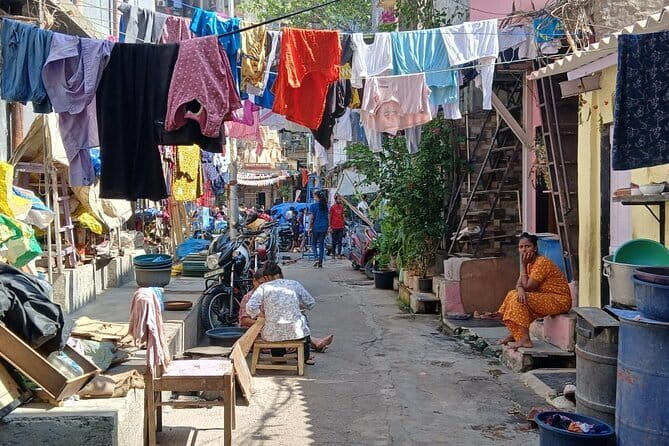
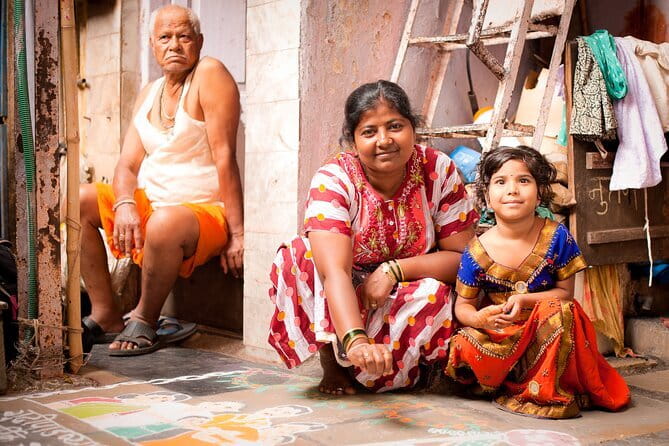
Your day begins at Dharavi, often described as India’s largest slum. What makes this stop more than a quick photo stop is the focus on education: both working areas and residential areas, and the way locals participate in thriving industries like recycling. You are looking for daily reality, not a performance.
Time is set at around 2 hours here, which is exactly what you need to get beyond the first wave of shock or surprise. You walk through small-scale industries, recycling workshops, pottery areas, and residential lanes. Even if you have heard of Dharavi before, seeing the layout and hearing how the community functions is what changes the perspective.
A practical note: this part of the route is intense. It is described as sad but informative in some accounts, and it is easy to feel that mix. I would treat it as a meaningful stop, not a checklist item. Dress comfortably, keep your camera expectations realistic, and be ready to listen more than you talk.
The payoff is huge when the guide leads you step-by-step. A good guide can explain how people create value through recycling and how neighborhoods keep working despite serious constraints. That is the difference between learning about a place and understanding it.
Dhobi Ghat: the world’s largest open-air laundry, at street level
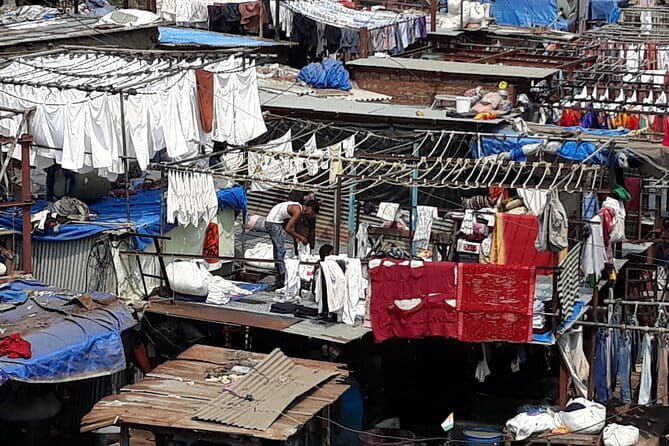
Next you head to Dhobi Ghat, known as the world’s largest open-air laundry. This stop is short, about 10 minutes, but it is visually powerful. You see hundreds of washermen and women working across rows of washing stones, with water and rhythm doing most of the narration.
Because the time here is brief, your best move is to stay present. Watch the routine. Notice how the work is organized. If you have questions, ask quickly, since you will not have hours to wander.
Also, keep in mind that Dhobi Ghat is an active working area. You are there to observe respectfully. Think of it like a live workplace, not an outdoor museum.
If you like experiences that feel hands-on and human, this stop delivers. It is also a good companion to Dharavi because both places teach you the same theme in different settings: how labor shapes daily life.
- Elephanta Caves & Island Guided Private Tour★ 5.0 · 1,327 reviews
- Private Guided Walking Tour in Fort & Colaba★ 5.0 · 895 reviews
- Mumbai: Street Food and Night Markets Tour★ 4.9 · 719 reviews
- Mumbai: Dharavi Slum, DhobiGhat, and Dabbawallas Tour★ 4.9 · 689 reviews
- Dharavi Slum Tour★ 5.0 · 625 reviews
From CST to BMC and Crawford Market: historic Mumbai in walking portions

After the working neighborhoods, the tour shifts toward classic South Mumbai landmarks.
Chhatrapati Shivaji Maharaj Terminus (CST)
At CST, you get about 15 minutes to explore Victoria Terminus, a UNESCO site with a blend of Victorian Gothic and Indian architecture. This is one of those buildings where even a short stop makes sense, because the architecture is built to be noticed from multiple angles.
If you are into trains, architecture, or just big-city energy, CST is a high-return stop. It is also a good place to pause after Dhobi Ghat, since the pace feels different here.
Brihanmumbai Municipal Corporation building
A quick 5-minute stop follows at the BMC building, a Gothic-style structure built in 1893, located opposite CST. This is the kind of stop that can feel like a throwaway unless your guide frames it. Ask for what to look for, like the style and the location relationship to CST, and it stops being just a photo and becomes part of the bigger urban story.
Crawford Market
Then you reach Crawford Market for about 15 minutes. Expect a busy marketplace with stalls selling fresh produce and spices, plus a mix of goods that reflect old Bombay charm. For many visitors, markets are where Mumbai feels most immediate. Even with limited time, you can still pick up the atmosphere and understand why locals return here day after day.
If you want to buy anything, plan to keep it simple since food and drinks are not included on the tour. You can always grab snacks on your own when you see something that fits your taste.
Gateway of India, Marine Drive, and the sea-facing highlights
Now you get to the iconic sights.
Gateway of India
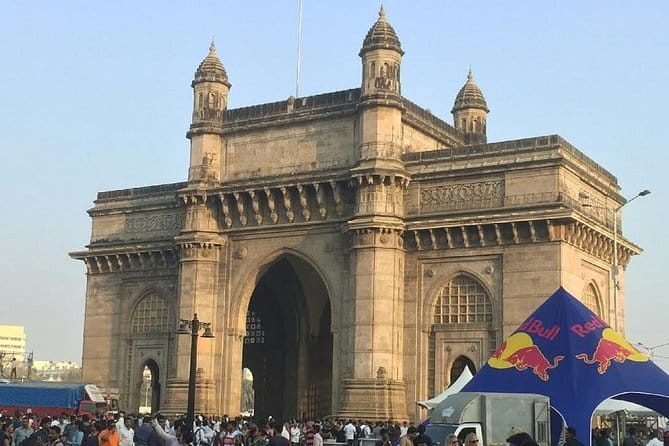
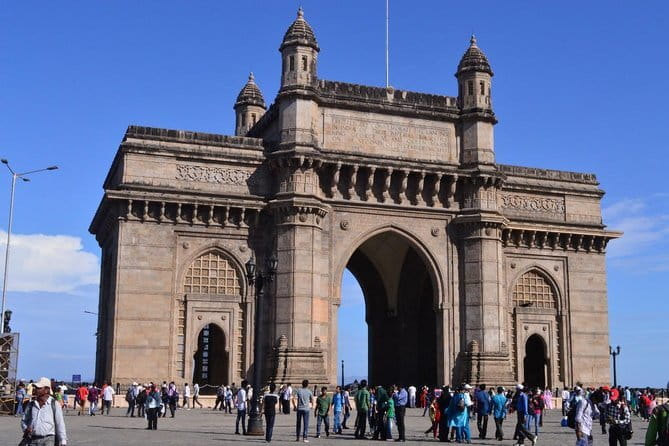
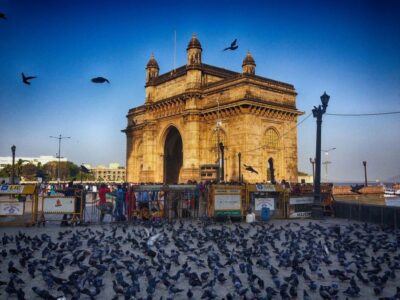
The Gateway of India is about 15 minutes. It is an arch overlooking the Arabian Sea, built in 1924 with an Indo-Saracenic design and colonial history. Even if you have seen pictures before, standing near it gives you the scale and the atmosphere of a major public landmark.
This stop works well after markets and rail stations because it lets you transition from everyday commerce to a grand city symbol. It is a change of mood, and that is useful in a day that already includes something emotionally intense like Dharavi.
Marine Drive, the Queen’s Necklace
You then stroll along Marine Drive, a 3.6 km promenade by the sea, often called the Queen’s Necklace. The time here is not stated precisely as a fixed number of minutes, but it is framed as a scenic stroll, with views, art deco buildings, and sunset vibes as a big draw.
If you can, plan your best attention for Marine Drive. This is where the city looks like what you imagined from postcards, but with real people moving through it. It is also a great place to take a breath before your remaining cultural and spiritual stops.
The clock tower, High Court, and Oval Maidan: learning to read the architecture
Several South Mumbai landmarks sit close together, which is why your guide can cover them efficiently without losing the walking feel.
Rajabai Clock Tower
You visit the Rajabai Clock Tower inside Mumbai University. It is a 19th-century Gothic-style landmark inspired by London’s Big Ben, and it is known for carvings and a chime. The stop time is not given, but it is listed as part of the route, so it is likely brief and focused on key views and details.
Even if you are not an architecture person, this is one of those places where the guide can point out what makes it tick, literally and visually. Hearing the chime is not guaranteed in every moment, but learning that it is built for sound and carving detail makes you look closer.
Bombay High Court
You also see the Bombay High Court, built in 1878 in Gothic Revival style and described as one of India’s oldest and beautiful judicial buildings. This is a short stop, but it is positioned near Oval Maidan, so you can connect the buildings to the open space around them.
Oval Maidan
Finally, Oval Maidan appears as a large green ground surrounded by colonial-era buildings, known for cricket and football matches and offering scenic views of the Raj-era architecture. Even when the tour time here is brief, this open ground gives context. It shows you how public space works alongside monumental buildings in South Mumbai.
This section is valuable because it turns sightseeing into pattern recognition. Once you see these civic and educational buildings together, you start to understand how the city’s colonial-era imprint shaped the urban layout.
Banganga and Hanging Gardens: a calmer turn toward spirituality and views
After the legal and institutional buildings, the route changes tempo again.
Banganga Tank
Banganga is a sacred water reservoir in Walkeshwar, surrounded by ancient temples and busy lanes. The stop is about 15 minutes. You get a mix of spirituality and street life, with religious sites shaping the sound and movement in the area.
If you want a less cinematic stop and more of a sensory one, Banganga is it. The value is in letting your mind settle for a moment. You are no longer only looking at landmarks. You are watching how faith and everyday movement overlap.
Hanging Gardens
Then you go to Hanging Gardens for about 15 minutes. It is described as a lush green oasis perched atop Malabar Hill, with city views and flowerbeds plus a tranquil atmosphere. This is a good reward stop after earlier busier areas, especially if you want a break from walking.
For photos, this is often where you get the best wide angles because Malabar Hill offers perspective over the city. Just remember you still have limited time, so pick one or two view points rather than trying to cover the entire garden.
Jain Temple and Mani Bhavan Gandhi Museum: reflection after the skyline

Two of the last major stops shift the focus from city symbols to personal meaning.
Jain Temple in Mumbai
The Jain Temple stop is about 10 minutes. It is noted for intricate marble carvings and a serene ambiance. If you only do a quick glance, you will miss the point. With this sort of stop, I recommend you spend your attention on one or two key carvings and the space around them, because the calm is part of the experience.
Mani Bhavan Gandhi Museum
Finally, you visit Mani Bhavan Gandhi Museum for about 15 minutes. This museum is the former home of Mahatma Gandhi in Mumbai and showcases his life, works, and teachings, with photos, artifacts, and a library dedicated to his legacy. Admission for this museum is included.
This finish works well because it connects Mumbai to a broader historical thread of ideas and activism. It also gives you a clear ending: you can look back at the whole day and notice how much of Mumbai’s story is about people shaping life under pressure, whether that pressure is economic, social, or political.
Price and value: what $32.92 buys you in real terms
The price is listed at $32.92 per person, with durations running about 4 to 8 hours. On paper, that can look like a budget tour. In practice, the value depends on what you would otherwise spend time and money on.
Here is what you are getting that matters:
- Private AC car with pickup and drop, which removes a lot of transport hassle.
- A guide who can explain what you are seeing at both major landmarks and working neighborhoods.
- Bottled water.
- Museum fee included (specifically noted for Mani Bhavan Gandhi Museum).
Most major stops also list admission as free in the plan you are shown, and Dharavi’s admission is listed as free too. That means you are paying mostly for time with the guide and the private comfort of the car.
What is not included is also important: food and drinks, personal expenses, and tips to the guide and driver. So if you want a full day without thinking, you will likely need to plan your own meal break. That is not a dealbreaker, but it is part of the math.
If you want a day that mixes architecture, sea views, and a working-neighborhood perspective, this pricing can feel fair. If you only want one or two landmarks, you might feel like you are paying for variety you do not care about.
Timing, walking, and how to plan your expectations
This tour spans a lot of geography in a single day. Some stops are timed tightly, like Dhobi Ghat at 10 minutes and Jain Temple at 10 minutes, while Dharavi receives about 2 hours.
That means you should set expectations like this:
- Dharavi is the deep, time-rich part.
- Photo-worthy landmarks tend to be shorter snapshots.
- You get a guide explanation layer on top of the quick visits.
Pack for comfort. Wear shoes you can stand in and walk in. Bring a small light layer, since sea areas and garden tops can feel cooler than you expect.
Also, expect an emotional swing. A day that includes both Dharavi and Gandhi’s museum naturally moves from tough subjects to reflective ones. If that feels tiring, pick the half-day option.
Who this private tour suits best
This tour is a strong fit if:
- You are in Mumbai for a short time and want a mix of iconic sights plus a real look at daily life.
- You appreciate a guide who can explain context, not just point at buildings.
- You want private comfort with pickup and drop, so the day stays smooth.
It may be less ideal if:
- You hate compact stop times and prefer one neighborhood for half a day.
- You want food included and do not want to think about meal timing.
- You are looking for a purely relaxed sightseeing day with no emotional weight.
If you like both history and lived-in reality, this route has a good rhythm.
Should you book it
I would book this if you want a single-day “whole-city” feel, with a private car and guide doing the hard work of connecting the dots. The stand-out strength is how the tour handles Dharavi and other working areas with education and patience from guides such as Sid, Siddesh, Siddhu, Shivam, and Jeezal. It also helps that Mani Bhavan Gandhi Museum ends the day with something reflective and structured.
Skip booking if you only care about a few landmarks and you prefer unhurried time in one place. But if you want your first Mumbai visit to feel like more than a checklist, this is one of the more value-leaning ways to do it.
FAQ
How long is the private Mumbai sightseeing tour?
The tour duration is approximately 4 to 8 hours, depending on the half-day or full-day option you choose.
Can I choose a half-day or full-day option?
Yes, you can choose either a half-day or full-day tour of your convenience.
Is this tour private or shared?
This is a private tour/activity. Only your group will participate.
What transportation is included?
You get a private AC car, plus pickup and drop.
What is included in the price?
Included items are the private AC car, pickup and drop, museum fee, bottled water, and a guide.
What is not included?
Food and drinks, personal expenses, and tips to the guide and driver are not included.
Which stops are part of the tour?
The route includes stops such as Dharavi, Dhobi Ghat, Chhatrapati Shivaji Terminus, the BMC building, Crawford Market, Gateway of India, Rajabai Clock Tower, Bombay High Court, Oval Maidan, Marine Drive, Banganga, Hanging Gardens, the Jain Temple, and Mani Bhavan Gandhi Museum.
Are admission tickets included?
Admission is listed as free for many stops, and the Mani Bhavan Gandhi Museum fee is included.
When do I receive confirmation after booking?
Confirmation is received at the time of booking.
What is the cancellation policy?
Free cancellation is available. You can cancel up to 24 hours in advance of the experience for a full refund, and cancellations within 24 hours are not refunded.
Mumbai, Keep Exploring




Recently reviewed across Mumbai
- Mumbai City Sightseeing Guided Tour on a Bicycle
★ 5.0 · 10 reviews - Mumbai Street Food & Beach Tour with 10+ Tastings
★ 5.0 · 10 reviews - Mumbai Market Tour & Maharashtrian Cooking Class with Chef Reshma
★ 4.5 · 10 reviews - Sailing Experience in Mumbai on Mid Size Yacht
★ 5.0 · 10 reviews - 3 Days Complete Mumbai Tour Inclusive of Bollywood Studio Experience
★ 5.0 · 10 reviews - Dharavi Slum Tour
★ 5.0 · 10 reviews
Mumbai City Tours, compared.
 ★ 4.9Full-Day Sightseeing Tour of MumbaiFrom $241,822 reviews
 ★ 5.0Group Guided Walking Tour in Fort and ColabaFrom $161,073 reviews
 ★ 4.8Elephanta Caves Half-Day Guided Tour with ExpertFrom $301,032 reviews
 ★ 5.0Highlights of Mumbai Sightseeing Tour: TRAVELLERS CHOICE AWARDEDFrom $33915 reviews
 ★ 5.0Private Guided Walking Tour in Fort & ColabaFrom $36895 reviews
 ★ 4.9Street Food and Night Markets TourFrom $13719 reviews
 ★ 4.9Dharavi Slum, DhobiGhat, and Dabbawallas TourFrom $14689 reviews
 ★ 5.0Highlights of South Mumbai Guided Private Tour in AC VehicleFrom $74620 reviews
Browse the lists this tour appears in