
REVIEW · BUDDHIST PILGRIMAGE TOURS
Serene and beautiful Sarnath Private Half Day Tour
Buddha’s footsteps start in quiet Sarnath. This private half-day tour connects the most important Buddhist stops in one smooth route, so you spend less time figuring out logistics and more time reading the place. Expect temple art, archaeological remains, and inscriptions tied to the Buddha’s story.
I love the way the tour pairs temple art with physical evidence of early Buddhism, from mural details to stupa ruins. I also like that it is private transportation with pickup options and admission tickets included at every stop, which keeps the day calm and predictable.
One consideration: it is only about 4 hours, so you will want to keep your questions crisp and your pace steady. Also, lunch and drinks are not included, so plan to eat before or after.
In This Review
- Quick hits
- Why Sarnath Feels Different From Other Varanasi Excursions
- Price and What You Are Really Paying For
- Getting There With Pickup and a Calm Private Plan
- Stop 1: Mool Gandh Kuti Vihara Temple and Its Japanese Murals
- Stop 2: Sarnath Deer Park Archaeology, Stupas, and Monastery Remains
- Stop 3: The Sarnath Museum, Including the National Emblem and a Buddha Image
- Stop 4: The Ashoka Pillar Inscription and the Lion Capital
- The Best Parts, Based on What Makes People Say Yes
- Timing, Pacing, and How to Prepare
- Who This Private Half-Day Tour Is Best For
- Should You Book the Sarnath Private Half-Day Tour?
- FAQ
- How long is the Sarnath private half-day tour?
- What is the price per person?
- What is included in the tour?
- Is lunch included?
- Are admission tickets included for the stops?
- Do I need a physical ticket?
- Can I cancel for free?
- What happens if the weather is bad?
- Is it a private tour?
Quick hits
- Mool Gandh Kuti Vihara Temple: murals painted by a Japanese artist, plus relics housed there
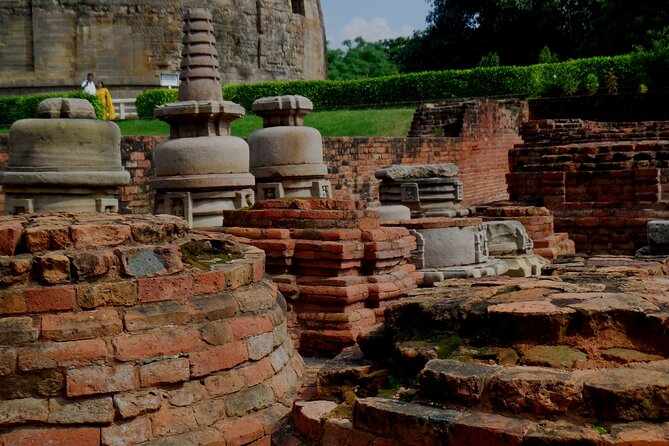
- Sarnath Deer Park: archaeological park with remains of old Buddhist monasteries and many stupas
- Sarnath Museum: key sculptures and the Indian national emblem, plus an important Buddha image
- Ashoka Pillar: Pali language and Brahmi script inscription, with a lion capital design
- Private, ticketed route: pickup and admission fees included, so you are not juggling cash
Other stops on the Buddhist circuit
Why Sarnath Feels Different From Other Varanasi Excursions
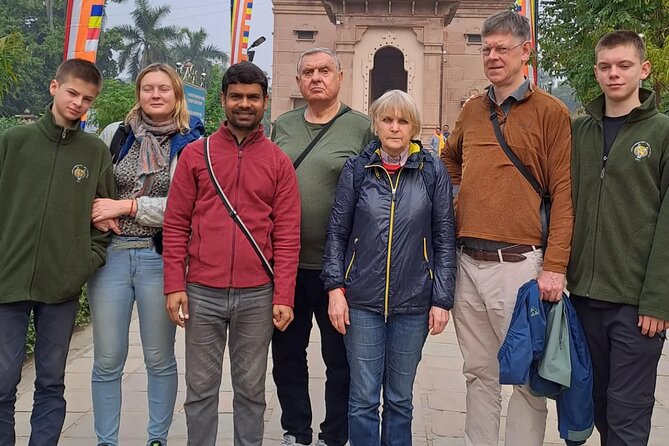
Sarnath is sacred for a reason. It is one of the key places connected with the life of Buddha, and today it is a mix of active Buddhist sites, a museum, and archaeological remains. What I like about a focused route here is that you do not just “see buildings.” You get explanations that connect philosophy, stories, and real artifacts you can actually look at.
This tour is built for people who want meaning without getting lost in a maze of names. In one afternoon, you can move from temple murals to archaeological remains, then to objects in a museum, and end with the Ashoka Pillar inscription that links the place to early historical layers.
And because it is private, the pace is easier. You can ask follow-up questions when you see something that grabs you, instead of waiting for a larger group to catch up.
Price and What You Are Really Paying For
At $60 per person for about 4 hours, the value depends on what you get beyond transportation. Here, you get private transportation, pickup, and admission tickets included for each major stop. You also get all fees and taxes included, which matters in India because small add-ons can quietly grow.
What is not included is lunch and drinks. That is the trade-off. This is a half-day plan meant to keep costs down and time tight, not a full-day food and sightseeing package. If you want a sit-down lunch, you will need to arrange it separately.
Also, the itinerary timing is short enough that advance planning helps. The tour is commonly booked about 55 days ahead on average, so if you are aiming for a specific date, earlier booking is smart.
Getting There With Pickup and a Calm Private Plan
Varanasi can be loud and busy, and that can wear you out fast if you spend too much time “in transition.” This is where the private setup helps: you have private transportation, and pickup is offered.
A private tour is not automatically better, but it is better for Sarnath. The sites are spread out enough that you benefit from direct driving and a clear order of stops. You also avoid the stress of figuring out entry lines and ticket counters on your own while also reading signs.
One more practical point: it is near public transportation, so you are not stuck if you need a backup plan. And you get a mobile ticket, which is convenient if you are traveling light.
- The Ultimate 1 Day in Varanasi – How to Spend 13 Hours – Private Guided Tour★ 5.0 · 295 reviews
- A Journey of A lifetime★ 5.0 · 272 reviews
- Varanasi: Hidden Secrets of Vibrant Tradition (Guided Tour)★ 4.9 · 176 reviews
- Private Heritage and Spiritual Walk Tour – Varanasi Kashi★ 5.0 · 172 reviews
- 3 Hour Walking Tour of Buddhism in Sarnath★ 5.0 · 160 reviews
Stop 1: Mool Gandh Kuti Vihara Temple and Its Japanese Murals
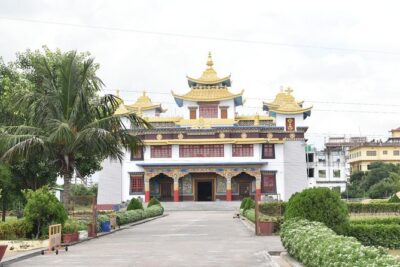
Your first stop is the Sarnath Buddhist Temple Varanasi site, specifically the Mool Gandh Kuti Vihara temple. This matters because Mool Gandh Kuti Vihara is not just another temple stop. It was built by the Mahabodhi Society based in Sri Lanka, which gives the site a modern-organized connection to Buddhist heritage.
Inside, you get a visual highlight: murals painted by a Japanese artist. Murals are one of the best ways to read how Buddhism has been interpreted through art over time. When the guide points out specific scenes and details, these paintings stop being background decoration and start acting like a storybook you can stand in front of.
This temple also houses relics of Buddha, which adds a different kind of weight. Relics are not the same as a museum object. They are part of living religious practice, so your experience feels more direct and less distant.
Admission is included at this stop, and the visit is about an hour. That hour is usually enough to take in the main art and get your bearings.
Potential drawback here: since it is your first stop, it is easy to show up with too many questions at once. If you want the best experience, pick one thing you care about most, for example the murals or the relic context, and ask about that first.
Stop 2: Sarnath Deer Park Archaeology, Stupas, and Monastery Remains
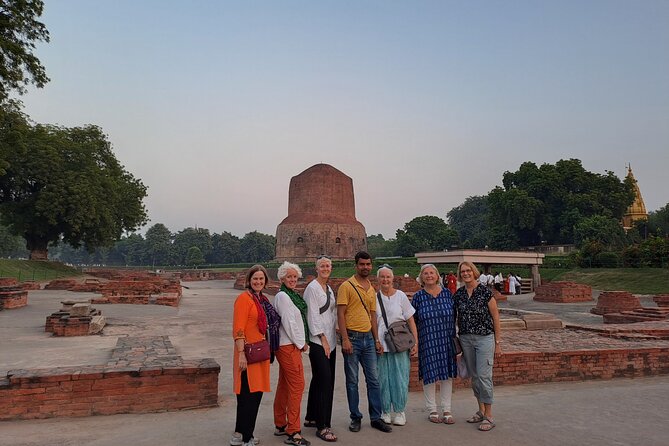
Next comes the Sarnath Deer Park, which is described as an archaeological park. You are looking at remains of old Buddhist monasteries and many stupas. This is a shift in mode from devotional space to historical space.
The deer park is valuable because you can see how Buddhism was physically organized. Stupas are not random structures. They represent devotion and memory, built in a pattern that echoes Buddhist practice across different periods. Monastery remains also help you understand that Buddhism here was not only about worship, it was about community life and learning spaces.
This stop is about an hour and includes admission. In that time, you can do two things well: (1) identify the stupa and monastery remains the guide highlights, and (2) take a slow walk to notice how the archaeological layout feels on the ground.
If you like history but also like calm, this stop can be a sweet spot. You get enough explanation to connect the ruins to purpose, not just dates.
Consideration: archaeological parks require a bit of walking and focused attention. If you are easily distracted, ask the guide to point out the most important structures before you move through the area.
Stop 3: The Sarnath Museum, Including the National Emblem and a Buddha Image
After the outdoor ruins, the museum is a welcome reset. At Sarnath Museum, you see key sculptures, and the tour includes time to take it in properly.
What makes this museum stop especially useful is what is specifically mentioned as being inside:
- the national emblem of India
- one of the most beautiful images of Buddha
- other important sculptures
A museum visit like this is where the day starts to click. Outside, you are looking at temples, stupas, and inscriptions. Inside, the museum gives you a chance to study the forms and symbolism without wind, glare, and crowds.
If you care about how art supports belief, pay attention to the Buddha image and the sculpture details the guide points out. Even without being a formal art expert, you can usually see differences in posture, facial expression, and ornamental style when someone frames what to look for.
The museum stop is about an hour, admission included. That is the right length to understand the main items without turning it into a rushed checklist.
Practical tip: if you are sensitive to crowds indoors, museum hours are a calmer alternative to outdoor sites. Still, keep your pace respectful and avoid blocking viewing areas while you read details.
Stop 4: The Ashoka Pillar Inscription and the Lion Capital
You end at the Ashoka Pillar. This is one of those stops that can feel technical at first glance, then suddenly becomes very human once someone explains what you are looking at.
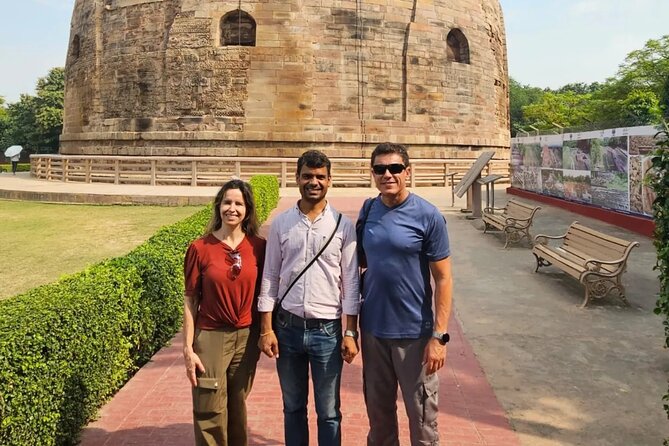
Here is the key detail you should take with you: the pillar contains an inscription in Pali language and Brahmi script. Those two elements are the reason the site matters. Language and script are the bridge between a place and the people who recorded meaning there long ago.
The pillar also had a lion capital with four lions standing back to back, and this design was adopted as the Indian national emblem. That connection is easy to overlook when you are just viewing stone, so I like having a guide put the emblem link into context before you move on.
This stop is about an hour and includes admission. It is also a good place to slow down because inscriptions and capitals are made to be looked at gradually.
Consideration: if you expect the pillar to be like a statue you can photograph and move on from quickly, you might feel it is too “text-heavy.” Lean into it as a storytelling stop. Ask how the inscription relates to Buddhist life at Sarnath, and you will get more out of your time.
The Best Parts, Based on What Makes People Say Yes
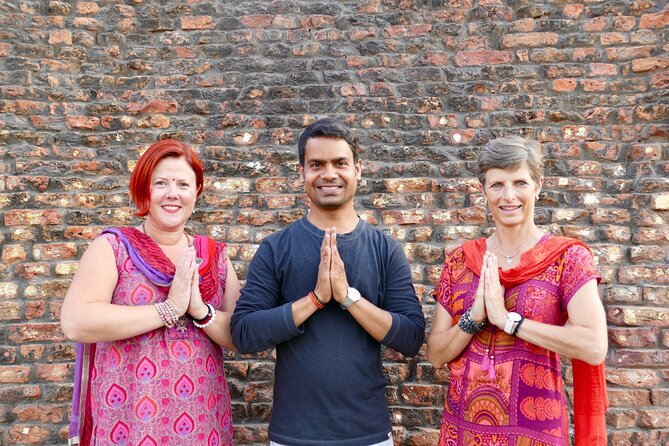
This tour earns its high rating for a couple of clear reasons.
First, the quality of the guidance. One review highlights Mr. Karan Sachan as a professional art restorer and historian, and that combination matters here because this route depends heavily on reading art and objects. When someone understands restoration and the historical context of what you are seeing, the murals, sculptures, and pillar details stop being decorative and start being understandable.
Second, the structure is practical. A private route with admission tickets included at every stop means you are not hunting for what you paid for. That translates into less waiting and more time actually looking.
Finally, the itinerary hits both faith and evidence. You get temple space, outdoor archaeology, museum artifacts, and inscription history. If you care about Buddhism as both belief and culture, this sequence makes that connection easy.
Timing, Pacing, and How to Prepare
This is about 4 hours total. That is enough time to do four meaningful stops, but not enough time to linger for an hour at each detail. To get the most, prepare for “smart scanning,” not marathon studying.
Here is how I would set yourself up:
- Wear comfortable shoes because you will be walking between sites and across archaeological ground.
- Bring a small water bottle, since lunch and drinks are not included.
- Decide your priority for the day. For example, if inscriptions are your thing, focus your questions at the Ashoka Pillar stop. If art is your thing, aim your questions at the temple murals and museum sculptures.
Also, the experience requires good weather. That is important around Varanasi because rain can change how comfortable outdoor stops feel. If weather is poor, you should expect a date change or a refund offer.
Who This Private Half-Day Tour Is Best For
This is a smart match if you want a focused introduction to Sarnath without turning it into a full-day commitment. It works well for:
- couples and small groups who want a private pace
- people who like Buddhism-related art and artifacts
- anyone who prefers clear structure over figuring out each stop independently
It is also a good choice if you want a “first time” Sarnath experience. The tour hits the core sites you would likely want anyway, and it does so in an order that makes the story easier to follow.
If you are looking for something extremely slow and philosophical with long breaks, the 4-hour format might feel tight. But if you want the essentials done well, this route delivers.
Should You Book the Sarnath Private Half-Day Tour?
If you like the idea of seeing Sarnath through a mix of temple art, archaeological remains, museum artifacts, and the Ashoka Pillar inscription, then yes, book it. The value is strongest when you want private transportation and you do not want to manage tickets and entry friction on your own.
I would especially consider it if you care about Buddhist art details. The presence of an art-restoration and historical perspective, associated with Karan Sachan, is a real advantage for this particular itinerary.
Skip or rethink it only if you want a longer day with lunch included, or if you are not comfortable with outdoor walking in an archaeological park setting.
FAQ
How long is the Sarnath private half-day tour?
The tour duration is about 4 hours.
What is the price per person?
The price is $60.00 per person.
What is included in the tour?
It includes private transportation, all fees and taxes, admission tickets for each stop, and pickup is offered.
Is lunch included?
No. Lunch and drinks are not included.
Are admission tickets included for the stops?
Yes. Admission tickets are included for the temple, deer park archaeological area, museum, and Ashoka Pillar.
Do I need a physical ticket?
No. A mobile ticket is included.
Can I cancel for free?
Yes. You can cancel up to 24 hours in advance for a full refund.
What happens if the weather is bad?
The experience requires good weather. If it is canceled due to poor weather, you will be offered a different date or a full refund.
Is it a private tour?
Yes. This is a private tour/activity, only your group will participate.
The Buddhist Circuit Continues

Recently reviewed across Varanasi
- Varanasi: Sunrise Boat Tour and Heritage Walk with transfers
★ 5.0 · 10 reviews - Varanasi Mysteries Walk: A Journey through Life and Death
★ 5.0 · 10 reviews - Omvity’s Full-Day Varanasi Tour: Sunrise Boat to Sunset Aarti
★ 5.0 · 10 reviews - Cycle of Life, Death & Rebirth (2 Hours Guided Walking Tour)
★ 4.5 · 10 reviews - Varanasi: Private Heritage Walking Tour & Sunrise Boat Ride
★ 4.9 · 11 reviews - Varanasi: Ganga Arti Evening Light Ceremony on the Main Ghat
★ 4.1 · 11 reviews
Buddhist Pilgrimage Tours, compared.
 ★ 5.03 Hour Walking Tour of Buddhism in SarnathFrom $33160 reviews
 ★ 4.9Full-day private Varanasi tour with AC car, boat & SarnathFrom $61103 reviews
 ★ 4.7Varanasi & Sarnath: Full-Day Tour with Ganges Boat RideFrom $5587 reviews
 ★ 4.8Buddhist Kanheri Caves with Golden Pagoda TempleFrom $2847 reviews
 ★ 5.0Mumbai Kanheri Caves & Golden Pagoda – A Buddhist SettlementFrom $2328 reviews
 ★ 5.010 Hours Morning Ganges Tour including Sarnath and Ganga ArtiFrom $6426 reviews
 ★ 5.0Private Kanheri- Buddhist Cave TourFrom $8524 reviews
 ★ 4.5Bodhgaya Day Tour (Hotel Pickup)From $3223 reviews
Browse the lists this tour appears in