
REVIEW · MORNING
The Colourful Early Morning Tour
Waking up early in Mumbai pays off fast, and this tour is built for that. You’ll move through working neighborhoods before the heat and crowds take over, while learning how spirituality and everyday life fit together. I especially like that it mixes big sights with markets and docks, so you get the city’s rhythm, not just photo stops.
Two things I really like: you get to see flower life up close at Dadar West, then you’ll actually offer flowers at temples like many locals do. I also like the practical pacing, short visits at each stop, so your 3 hours stay focused. You’ll also have round-trip hotel transfers plus bottled water, which matters when you start at 5:30 am.
The main drawback to consider is the early start. If you’re not a morning person, 5:30 am can feel like a hardship, and the tour doesn’t include breakfast or food unless something is specifically added for your group.
In This Review
- Key moments worth getting up for
- Why 5:30 am makes Mumbai feel like a different city
- Your route from flower markets to Marine Drive in 3 hours
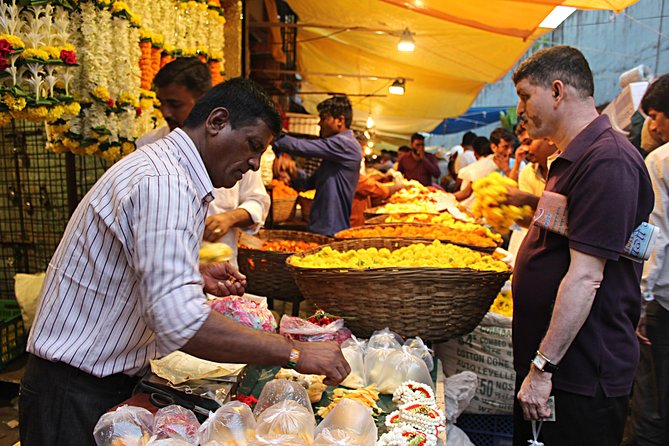
- Dadar West flower market: garlands, color, and the work behind it
- Girgaon ISKCON Temple: what an offering teaches you
- CSMT at dawn: rail life and heavy-footstep architecture
- Sassoon Dock and the Koli fisherfolk: fish grading and real routine
- Marine Drive early: calm sea views before the city fills in
- What the $35 price buys you, and what you still need to cover
- How to dress and behave around temples and market crowds
- Who this tour suits best, and who should think twice
- Should you book this Colourful Early Morning Tour?
- FAQ
- What time does the tour start?
- How long is the Colourful Early Morning Tour?
- Is hotel pickup and drop-off included?
- What’s included in the tour price?
- Is food included?
- Which places do you visit on the tour?
- Are admission tickets required?
- Is this a private tour?
- What is the cancellation window?
Key moments worth getting up for
- Dadar West flower market: marigolds and red roses, plus the smell of fresh garlands being made
- ISKCON Temple in Girgaon: a clear look at spirituality and temple routines
- CSMT (Chhatrapati Shivaji Maharaj Terminus): architecture and the nonstop flow of rail life
- Sassoon Dock: Koli fisherfolk and the daily arrival and grading of huge amounts of fish
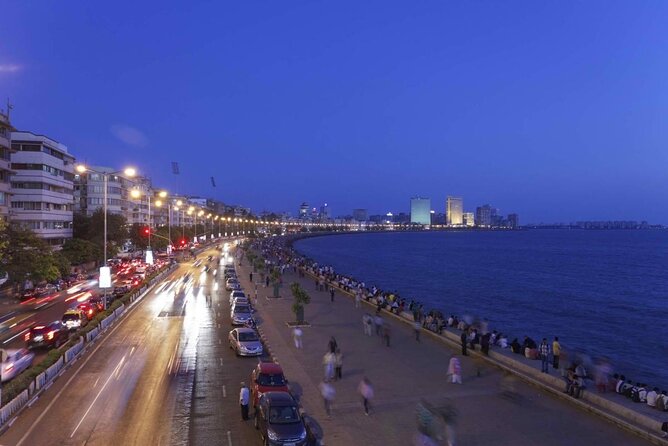
- Marine Drive at dawn: a quick hit of calm before the city wakes up
Shortlisting? Every Mumbai trip below went through the same review.


Why 5:30 am makes Mumbai feel like a different city
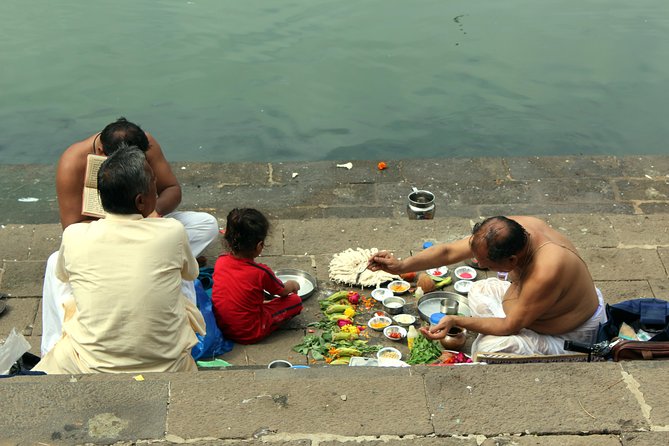
Mumbai can feel intense by mid-morning, mostly because the streets fill in and the temperature climbs. Starting at 5:30 am changes the whole vibe. Roads are calmer, light is softer for photos, and you’re watching daily routines at the moment they actually happen.
This tour is also designed around a simple idea: local life makes more sense when you see it before it gets busy. That’s why you’ll visit places that aren’t really about tourism, like flower wholesale areas and working docks. You’re not just passing through. You’re seeing why the city runs on an early schedule.
Your route from flower markets to Marine Drive in 3 hours
The plan is compact and efficient, roughly 3 hours total. It’s “private for your group,” which usually means less waiting and more focus on your pace. It’s also built for first-time visitors who want context fast, with an English-speaking guide, bottled water, and pickup offered.
Here’s how the route works in real terms. You’ll begin at a flower market, then shift from trade to worship at ISKCON. After that you’ll swap into architecture and transport at CSMT, then head to the docks for sea life and fishing logistics. The tour ends with a short look along Marine Drive, so you finish with something scenic and peaceful.
Dadar West flower market: garlands, color, and the work behind it
Your first stop is Dadar West, where the flower market runs on early demand. This is where you’ll see the color and fragrance that make Mumbai recognizable in the first place, especially the garland culture. The market is known for saffron-colored marigold garlands and red roses, and the sheer amount of fresh flower heads is the shock factor here.
You’ll get about 20 minutes on the ground. That’s enough time to walk the lanes, watch how flowers are arranged, and understand the difference between “pretty flowers” and “flowers that have a job.” Garlands are not decoration. They are part of the ritual cycle.
Practical note: markets can be crowded even at dawn, so wear comfortable shoes with grip. If you’re sensitive to strong smells, this is the part to mentally prepare for, because flowers are not subtle.
- Elephanta Caves & Island Guided Private Tour★ 5.0 · 1,327 reviews
- Private Guided Walking Tour in Fort & Colaba★ 5.0 · 895 reviews
- Mumbai: Street Food and Night Markets Tour★ 4.9 · 719 reviews
- Mumbai: Dharavi Slum, DhobiGhat, and Dabbawallas Tour★ 4.9 · 689 reviews
- Dharavi Slum Tour★ 5.0 · 625 reviews
Girgaon ISKCON Temple: what an offering teaches you
After the market, the tour turns toward spirituality at the ISKCON Temple in Girgaon (Hare Rama Hare Krishna). You’ll have about 30 minutes here. This is not a long lecture. It’s more like guided orientation, helping you connect what you saw in the flower market to what happens at temples.
A major highlight is that you’ll offer flowers at the temples like the locals do. That small action changes how you understand the visit. Instead of treating religion as a sight, you see the role of materials, gestures, and timing.
If you’re unsure how to behave, your guide should help with the basics, like where to stand and how to handle your offering respectfully. The temple is also a great place to ask questions, because worship routines are visible, not hidden behind explanations.
CSMT at dawn: rail life and heavy-footstep architecture
Next up is Chhatrapati Shivaji Maharaj Terminus, usually called CSMT. The tour frames it as possibly the most architecturally striking railway building in India, and it also gives you the real-world scale of a place that never stops. CSMT sees enormous daily foot traffic, around 660,000 daily footfalls.
You’ll have about 20 minutes here, which sounds short, but it works because the goal is to give you orientation. You’ll notice the building as a statement, then you’ll feel how it functions as transport infrastructure. This is one of the best “history you can walk into” stops, because people are still using it every minute.
What can be tricky: railway stations are active even at dawn. Plan for some noise, some movement, and brief delays if crowds thicken in certain areas. That’s also why an early start matters, because you get more breathing room to look up and take in the details.
Sassoon Dock and the Koli fisherfolk: fish grading and real routine
Sassoon Dock is where the tour becomes very “Mumbai” in the rawest sense. You’ll learn about the Koli fisherfolk, described as the original inhabitants of Mumbai, and you’ll see the daily flow of catch to market.
You’ll spend about 30 minutes here, and the tour highlights a specific morning operation: you can witness the arrival and grading of around 60 tonnes of fish every day. That number is big enough that you feel how industrial the daily routine is, even though it’s still tied to local community life.
This is the part where you’ll probably remember the textures and smells most. Fish markets are intense. The good news is your guide should help you understand what you’re looking at so it doesn’t feel like random chaos. Also, since the tour includes bottled water and keeps the stops short, you’re less likely to overstay in the busiest areas.
If you’re photographing, keep a respectful distance from workers. Motion is constant, and safety comes first.
Marine Drive early: calm sea views before the city fills in
The last stop is Marine Drive, with only about 10 minutes set aside. That brevity is smart. Marine Drive is best for a quick reset after the markets and docks, because you can enjoy the calm without trying to “power through” a long sightseeing block.
At dawn, Marine Drive can feel almost like a breathing space. You’ll catch early colors in the sky and see the waterfront without the heavy daytime crowd. It’s a simple way to finish with scenery after hands-on, practical stops.
What the $35 price buys you, and what you still need to cover
At $35 per person, this tour is priced like a solid value for a city-day at the start of the morning. The big reason it feels fair is what’s included:
- Pickup and round-trip hotel transfers
- Private transportation
- Bottled water
- An English-speaking guide
- Mobile ticket use
You also get free admission at the listed stops (each stop is marked as admission ticket free). That helps keep your budget predictable.
What’s not included is food and drinks unless your experience specifies otherwise. So if you want breakfast, you’ll need to plan it around the tour timing. Many people grab something after, once they’re back and warm. If you know you’ll get hungry, consider bringing a small snack if that’s allowed by your guide and your comfort level, but don’t expect a meal to be part of the base price.
In short, you’re paying for early access, local guidance, transportation, and the practical comfort items that make the start time livable.
How to dress and behave around temples and market crowds
This tour asks you to be mobile. “Comfortable clothing” is the official advice, but what that means in practice is: wear layers. Early mornings can feel cool, then you’ll warm up once you start moving.
A few habits to keep you smooth at every stop:
- Wear closed-toe shoes with good grip.
- Bring sunscreen or a light hat if you run hot, because even early sun adds up.
- Keep your phone accessible, but don’t block walkways in tight market lanes.
- At temples, follow your guide’s direction for where to stand and how to offer flowers.
Most importantly, treat this as a working morning, not a “see and leave” tourist loop. Your best photos and best understanding usually come when you slow down for a moment, watch how locals do things, then ask your guide what it means.
Who this tour suits best, and who should think twice
This tour fits best if you want an early, practical introduction to Mumbai. It’s ideal for:
- First-time visitors who want more context than a standard sightseeing route
- People who like markets, daily routines, and “how the city works”
- Anyone who enjoys temple visits but prefers to understand the role of everyday materials, like flowers
It may not be ideal if:
- You hate mornings and won’t be functional at 5:30 am
- You want a relaxed, sit-down pace with lots of free time
- You’re expecting food included as part of the experience
Because it’s a private tour for your group, it also tends to work well for friends and families who want less friction and more attention from the guide.
Should you book this Colourful Early Morning Tour?
I’d book it if your goal is to understand Mumbai from the inside edge. The mix of flower market to temple offering to dock life is the kind of route that sticks, because it connects different parts of the city through one shared theme: daily ritual and daily work happen at the same hour.
The biggest reason to hesitate is the early wake-up. If you can handle that, the tour’s structure makes sense. It’s short, focused, and includes the essentials you don’t want to manage at dawn, like transfers, water, and an English guide.
If you’re ready for a morning that feels like a local schedule, this one is a strong pick.
FAQ
What time does the tour start?
The start time is 5:30 am.
How long is the Colourful Early Morning Tour?
The duration is about 3 hours.
Is hotel pickup and drop-off included?
Yes. Round-trip hotel transfers are provided, and pickup is offered.
What’s included in the tour price?
Included items are bottled water, private transportation, and an English-speaking guide.
Is food included?
Food and drinks are not included, unless specified for your experience.
Which places do you visit on the tour?
You’ll visit Dadar West flower market, Girgaon ISKCON Temple (Hare Rama Hare Krishna Temple), Chhatrapati Shivaji Maharaj Terminus (CSMT), Sassoon Dock, and Marine Drive.
Are admission tickets required?
The listed stops are marked as admission ticket free.
Is this a private tour?
Yes. It’s described as private, with only your group participating.
What is the cancellation window?
You can cancel for a full refund if you cancel up to 24 hours in advance of the experience start time.
Recently reviewed across Mumbai
- Mumbai City Sightseeing Guided Tour on a Bicycle
★ 5.0 · 10 reviews - Mumbai Street Food & Beach Tour with 10+ Tastings
★ 5.0 · 10 reviews - Mumbai Market Tour & Maharashtrian Cooking Class with Chef Reshma
★ 4.5 · 10 reviews - Sailing Experience in Mumbai on Mid Size Yacht
★ 5.0 · 10 reviews - 3 Days Complete Mumbai Tour Inclusive of Bollywood Studio Experience
★ 5.0 · 10 reviews - Dharavi Slum Tour
★ 5.0 · 10 reviews
Morning, compared.
 ★ 4.9Taj Mahal and Agra Fort Private Sunrise TourFrom $592,270 reviews
 ★ 5.0Sunrise Taj Mahal, Agra Fort & Baby Taj Tour from Delhi by CarFrom $622,243 reviews
 ★ 4.9Taj Mahal Sunrise, Baby Taj & Agra Fort Day TourFrom $102,020 reviews
 ★ 5.0Private Sunrise Taj Mahal Trip from Delhi all InclusiveFrom $801,537 reviews
 ★ 5.03-Hour Morning Bike Tour of JaipurFrom $321,253 reviews
 ★ 5.0Private Taj Mahal Sunrise, Baby Taj & Fort TourFrom $10743 reviews
 ★ 5.0Sunrise Boat Tour with Arti CeremonyFrom $31375 reviews
 ★ 4.5Private Taj Mahal at Sunrise and Agra Day Tour from DelhiFrom $92373 reviews