
REVIEW · PUSHKAR AND AJMER TOURS
Full Day Spiritual Tour of Ajmer & Pushkar-The Pushkar Route
A single day, two sacred cities. This Ajmer to Pushkar spiritual tour is designed for folks who want the big heritage hits without wrestling schedules, and I especially like the way it strings together quiet temple moments with the energy of Pushkar’s ghats. The other thing I like is the structure: you get set admission coverage for most stops, plus a built-in lunch break, so you can keep your focus on the sights.
One consideration is the day is packed. With many stops timed at about 30 to 45 minutes each, you will enjoy seeing a lot, but you also need to accept a more “hit the highlights” pace than a slow, linger-all-afternoon plan. Also, the tour requires good weather, so plan for a backup date if conditions are rough.
In This Review
- Key highlights you will actually feel
- Ajmer and Pushkar in 6 hours: why this route works
- Stop by stop in Ajmer: Soni Ji, Ajmer Sharif, Akbari Museum, Ana Sagar Lake
- Soni Ji ki Nasiya, Soni ji ki Haveli, and Soni Temple
- Dargah Khwaja Kanoon Sahib at Ajmer Sharif
- Akbar’s Palace and Museum (Ajmer Museum)
- Ana Sagar Lake for a calmer reset
- The one-hour lunch break, and how to use it well
- Pushkar temple sequence: Gurudwara, Varaha, Rangji, Atmateshwar cave, Brahma Temple
- Gurudwara Sahib
- Varaha Temple
- Old Rangji Temple near Varaha Ghat
- Ati Prachin Shri Atamteshwar Mahadev Mandir (the underground cave)
- Brahma Temple, the one-temple-only idea
- Pushkar Lake and evening arti: how the day lands
- What the guide quality changes, and why the private format matters
- Timing, comfort, and practical tips for a packed spiritual day
- Is this $50 price fair for what you get?
- Should you book this Ajmer and Pushkar spiritual route?
- FAQ
- How long is the Ajmer and Pushkar full day spiritual tour?
- What time does the tour start?
- Is pickup offered on this tour?
- Is this a private tour?
- Are tickets included for the stops?
- Is lunch part of the schedule?
- What is the cancellation policy if the weather is poor?
Key highlights you will actually feel
- Private tour with pickup: only your group participates, and you start with convenient logistics instead of hunting down sites
- Ajmer Sharif Dargah + Jain heritage: Soni Ji ki Nasiya and the tomb of Khwaja Moinuddin Chishti bring two different faith traditions into one route
- Akbar’s Palace and Museum time: history, artifacts, and mini paintings are part of the Ajmer rhythm
- Pushkar lake grand finale: you end by watching evening arti at Pushkar Lake, not just checking a box and leaving
- Pushkar temples you cannot skip: Varaha, Atmateshwar cave temple, and the Brahma Temple give you a very specific spiritual “greatest hits” loop
Pushkar and Ajmer, more options
Ajmer and Pushkar in 6 hours: why this route works
Ajmer and Pushkar sit close, but they feel worlds apart once you are on the ground. Ajmer tends to be more about layered religious heritage, courtyards, and big named shrines. Pushkar, especially around the lake, feels more like slow ritual and walking, with temples stacked along the ghats.
This tour gives you a simple flow. In the first stretch, you focus on Ajmer’s most famous sites, then you get a one-hour lunch break, then you shift to Pushkar for the key temples and end with the evening arti at the lake. The total duration is about 6 hours, starting at 10:00 am.
For your time, this is a smart way to choose. You are not paying to “see a map.” You are paying to hit the places that make both cities worth visiting in their own right, with a guide who helps connect the dots between faiths, architecture, and the meaning behind what you are looking at.
The value angle is practical: the tour includes admission tickets for many stops (and Pushkar Lake entry is listed as free). So you are less likely to get surprised by fees in the middle of a packed day, and you can keep your energy for the sights.
Stop by stop in Ajmer: Soni Ji, Ajmer Sharif, Akbari Museum, Ana Sagar Lake
Ajmer is where the route gets its “spiritual contrast” feature. You go from Jain temple heritage to Sufi devotion, then into Mughal-era history, then out to a calm lake break.
Soni Ji ki Nasiya, Soni ji ki Haveli, and Soni Temple
Your day starts with Soni Ji ki Nasiya. This is a Jain temple area built in the 19th century, worshipped in connection with Lord Rishabhdev, the first of the Tirthankaras. The tour description also notes gold was used in the temple, which helps explain why this stop feels like more than just another temple courtyard.
This is also a good opener because it sets expectations. Jain sacred art and worship have a different texture than Islamic and Hindu sites, even if the architecture is what first grabs your eye. You spend about 45 minutes here, including admission.
- Walking Sightseeing Tour – The Shine Pushkar★ 5.0 · 64 reviews
- Evening Walking tour with Fire Ceremony – The Pushkar Route★ 5.0 · 35 reviews
- From Jaipur : Private Ajmer Pushkar Tour by Cab★ 4.5 · 29 reviews
- Dhiraj’s painting classes and art workshop★ 5.0 · 24 reviews
- Full Day Spiritual Tour of Ajmer & Pushkar-The Pushkar Route★ 5.0 · 12 reviews
Dargah Khwaja Kanoon Sahib at Ajmer Sharif
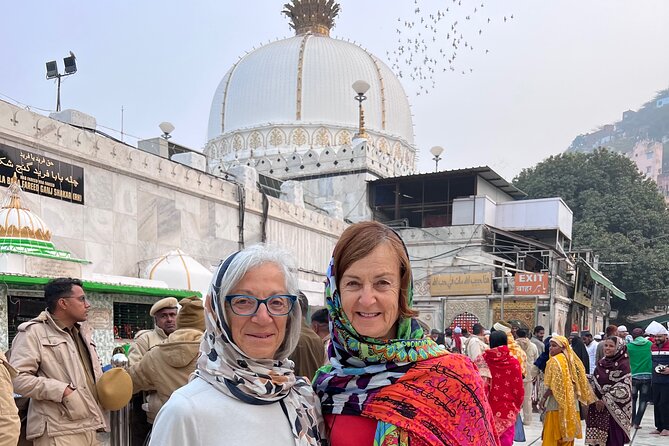
Next you head to Dargah Sharif, the tomb of the Sufi saint Khwaja Moinuddin Chishti, who came to Ajmer from Persia in the late 11th century. The route calls this a mosque with a sacred importance for Muslims, and Ajmer Sharif is one of those places where the atmosphere does a lot of the teaching.
This stop is also listed for 45 minutes with admission included. Even if you only know the basics about Sufism, watching how devotion works in the space helps you understand why this place matters for centuries.
Akbar’s Palace and Museum (Ajmer Museum)
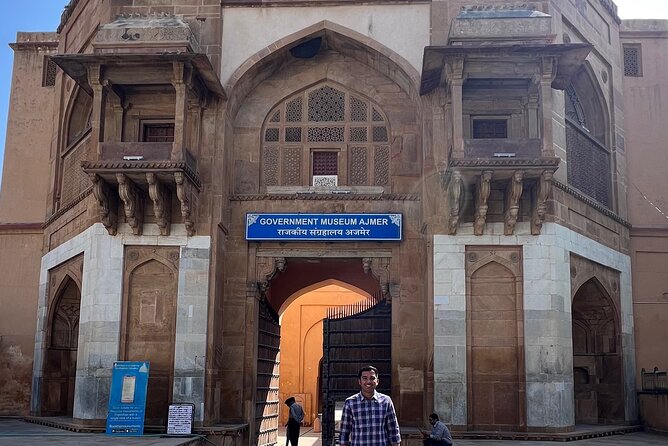
Then the tour pivots into museum mode with Akbar’s Palace & Museum. The site is in the premises of the ancient 16th-century Akbari Fort, and it is described as a government museum with historical artifacts, exhibits, sculptures, and miniature paintings.
This is a great moment in the day because it slows things down. Temples can be intense for the senses. A museum gives you time to read, look closely, and connect the visuals you just saw to larger historical themes.
You get about 45 minutes here, and admission is included.
Ana Sagar Lake for a calmer reset
Finally in Ajmer, you get Ana Sagar Lake. The tour notes it was built by King Arnoraja (also referenced as Anaji Chauhan), and it also mentions Mughal Emperor Jahangir constructing Daulat Bagh garden beside the lake. The point here is not trivia. It is a breather.
A lake stop works on this itinerary because you are about to move into Pushkar’s lake and ghats, where walking and lingering are part of the experience. Spending about 30 minutes at Ana Sagar Lake helps you land in “calmer rhythm” instead of rushing from shrine to shrine without a pause.
The one-hour lunch break, and how to use it well
After the Ajmer portion, you get one hour for lunch. The description frames this as a built-in reset before you head to Pushkar.
Use this hour strategically:
- If you can, eat something simple and filling. You will still be walking and moving after lunch.
- If your guide offers suggestions, take them. A good lunch stop can reduce the chaos of finding a place at exactly the wrong time.
The best part of a break on a spiritual tour is not the food alone. It is the chance to clear your head. You have gone through Jain, Sufi, and museum history in the morning. Lunch gives you a mental switch so Pushkar feels different, not like “more of the same.”
Pushkar temple sequence: Gurudwara, Varaha, Rangji, Atmateshwar cave, Brahma Temple
Once you shift into Pushkar, the tour stays focused on religious landmarks that are both famous and distinct. Expect a steady pace: each stop is about 30 minutes, with admission listed as included for the temple sites.
Gurudwara Sahib
You start Pushkar with Gurudwara Sahib and get knowledge about the Sikh religion and community. The tour description also says two of the ten famous Sikh teachers have been here, which is the sort of detail that makes a place click once you know it has deep roots for the community.
This stop is about 30 minutes, and admission is included. It also helps your route “expand” beyond just Hindu and Islamic heritage. You are seeing Pushkar as a shared spiritual crossroads.
Varaha Temple
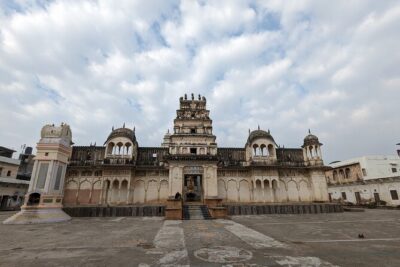
Next is Varaha Temple, dedicated to Lord Vishnu. The route says it is one of the ancient Pushkar temples and that it is considered one of the eight Swayambhu Kshetra of Vishnu. It also states the temple was built in the 12th century by King Anaji Chouha.
Varaha Temple is a good middle stop because it connects old architecture to ongoing worship. You spend about 30 minutes here, and admission is included.
Old Rangji Temple near Varaha Ghat
Then you visit Old Rangji Temple, near Varaha Ghat. The description says it is about 200 years old, dedicated to Lord Vishnu, and recognized as one of Pushkar’s most ancient and famous religious temples.
This stop matters because it gives you a temple location in the real geography of Pushkar. You are not only visiting buildings. You are understanding how temples and ghats sit together and support daily life and ritual.
Ati Prachin Shri Atamteshwar Mahadev Mandir (the underground cave)
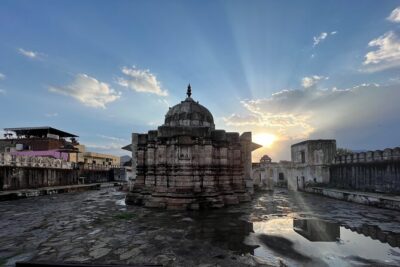
Now you reach Atmateshwar Mahadev Mandir, dedicated to Lord Shiva. The tour description emphasizes it as an underground cave temple built in the 12th century with intricate Hemadpanti architectural carvings.
This stop is the most “wow” for architecture lovers, but it can also be a little more demanding for some visitors simply because underground cave spaces can feel tighter. Plan to move carefully and stay patient. You get about 30 minutes and admission included.
Brahma Temple, the one-temple-only idea
The route ends its Pushkar temple run with the Brahma Temple. The description calls it the only temple in the world dedicated to Lord Brahma. It also notes the structure dates to the 14th century, partly renovated later, and that it uses black and white marble stones.
This is a high-impact stop because it gives you a very specific spiritual identity. When a place is the only one of its kind, you feel it. You have about 30 minutes here, with admission included.
Pushkar Lake and evening arti: how the day lands
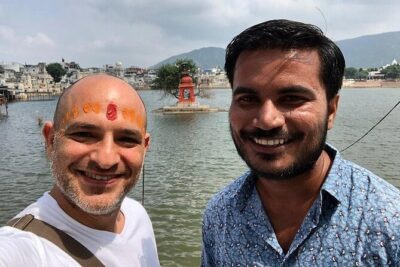
After the temples, you shift into the lake centerpiece: Pushkar Lake. The description says it is surrounded by 52 ghats, each with cultural and religious importance for bath, ceremonies, and meditation.
Admission for Pushkar Lake is listed as free, and the time allocation is about 45 minutes. That is enough time to get your bearings along the ghats and absorb the scale of the place without feeling totally rushed.
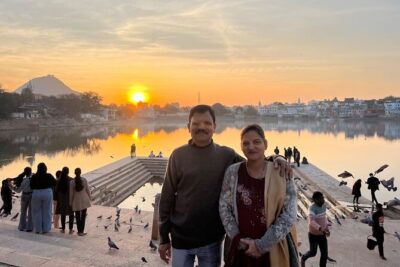
Then the route finishes with watching evening arti at Pushkar Lake. This is the part of the day that turns sightseeing into something more ceremonial. The arti is not just a performance you watch from a distance. It is a shared moment in a location people treat as a spiritual center.
If you want the most from the finale:
- Arrive mentally ready to slow down. The day has been fast.
- Focus on the lake space and the movement around it, not just any single action at the fire.
- Use the earlier stops to recognize temple forms and symbols when you see them again near the lake.
What the guide quality changes, and why the private format matters
The biggest praise for this kind of itinerary is rarely the sites. It is the translation. When you are going from Jain heritage to Sufi devotion to Vishnu and Shiva worship, you need help connecting what you see to what it means.
In this tour, the guide is the workhorse. You get information that is conversational and tied to religion and culture. The best guidance on a day like this does two things:
- It gives you enough context to read the details you would otherwise miss.
- It adjusts based on your interests, so you do not get stuck in one long lecture.
The private format helps. It means you do not have to share attention with strangers or fight over the pace. If you want questions answered, you can ask. If you want more time to look, you can ask for a bit of flexibility. This is the kind of setup that makes a spiritual route feel personal instead of mechanical.
Also, the tour is built around a mobile ticket and pickup offered. Those small logistics matter on busy days because they protect your attention. You spend less time managing the day and more time understanding what you came for.
Timing, comfort, and practical tips for a packed spiritual day
The itinerary runs for about 6 hours, starting at 10:00 am, and includes multiple sites with 30 to 45 minute time windows. That means comfort and readiness are not optional.
Here is how to set yourself up:
- Wear comfortable shoes. You will be walking around ghats and moving between temple areas.
- Dress respectfully. You will be in religious spaces, so go for modest, comfortable clothing.
- Bring water. Even if you get lunch, you may need hydration between stops.
- Keep an eye on weather. The tour explicitly requires good weather, and the plan may change if conditions are poor.
Because the day is structured, you should not expect long, slow wandering. You are going to see 11 major points, then finish at the lake. That pace is great for first-timers who want a complete overview of both cities in one day.
Is this $50 price fair for what you get?
At $50 per person, this tour hits a useful value sweet spot, especially for a first trip. Here is the math that matters most:
- Duration is about 6 hours, so you are buying a full day window of guided sightseeing rather than a short stop.
- It is a private tour, meaning your group only, with pickup offered.
- Admission is included for many stops, while Pushkar Lake entry is free. That reduces surprise costs mid-route.
- You end with the evening arti, which is a major part of why Pushkar feels special after the temples.
The main cost risk is also the main tradeoff: because time per site is limited, you are paying for breadth, not depth. If you want to spend two hours in one temple or museum room, this itinerary will feel too fast. If you want the highlights and a clear understanding of what you are seeing, it is a solid deal.
Should you book this Ajmer and Pushkar spiritual route?
Book it if:
- You want a single-day Ajmer plus Pushkar plan that actually covers the core landmarks
- You like a guide who connects religion and culture in plain language
- You prefer a set pace with a smooth flow, including a lunch break and a meaningful ending at Pushkar Lake
Skip it (or choose a slower plan) if:
- You hate tight schedules and want lots of extra time at fewer places
- You are traveling during a period where weather could be unstable, since the tour requires good conditions
If your goal is to see why Ajmer and Pushkar feel different but belong together, this route is built for you. It is not just a checklist. It is a guided story, told through temples, shrines, and the lake’s evening ritual.
FAQ
How long is the Ajmer and Pushkar full day spiritual tour?
The tour lasts about 6 hours (approx.).
What time does the tour start?
The start time is 10:00 am.
Is pickup offered on this tour?
Yes, pickup is offered.
Is this a private tour?
Yes. It is a private tour/activity, and only your group will participate.
Are tickets included for the stops?
Admission tickets are included for most stops in the itinerary, and Pushkar Lake entry is listed as free.
Is lunch part of the schedule?
The itinerary includes 1 hour of time for lunch between the Ajmer stops and the Pushkar stops.
What is the cancellation policy if the weather is poor?
You can cancel up to 24 hours in advance for a full refund. The experience requires good weather, and if it is canceled due to poor weather, you will be offered a different date or a full refund.
Pushkar and Ajmer, More Routes




Recently reviewed across Pushkar
- Full Day Spiritual Tour of Ajmer & Pushkar-The Pushkar Route
★ 5.0 · 12 reviews - Fullday pushkar tour from jaipur with guid+camel/jeep safari
★ 4.4 · 12 reviews - Dhiraj’s painting classes and art workshop
★ 5.0 · 24 reviews - From Jaipur : Private Ajmer Pushkar Tour by Cab
★ 4.5 · 29 reviews - Evening Walking tour with Fire Ceremony – The Pushkar Route
★ 5.0 · 35 reviews - Walking Sightseeing Tour – The Shine Pushkar
★ 5.0 · 64 reviews
Pushkar and Ajmer Tours, compared.
 ★ 5.0Spiritual City Walking Tour-THE Pushkar RouteFrom $6907 reviews
 ★ 5.0Afternoon Walk Tour with Sunset & Fire Ritual -The Pushkar RouteFrom $7119 reviews
 ★ 4.9Evening Walking Tour with Fire Rituals-The Pushkar RouteFrom $6108 reviews
 ★ 5.0Spiritual Walking tour with Puja Ceremony -The Pushkar RouteFrom $6101 reviews
 ★ 5.0Walking Sightseeing Tour – The Shine PushkarFrom $564 reviews
 ★ 4.5Pushkar Day Trip from Jaipur – Private Car, Safari, Guide & LunchFrom $5845 reviews
 ★ 5.0Evening Walking tour with Fire Ceremony – The Pushkar RouteFrom $835 reviews
 ★ 4.5Private Ajmer Pushkar Tour by CabFrom $1229 reviews
Browse the lists this tour appears in