
REVIEW · DHARAVI AND MUMBAI SLUM TOURS
Private Dharavi Slum and Sightseeing Tour
Dharavi teaches Mumbai fast. This private day tour connects Dharavi homes and small businesses with major landmarks like Chhatrapati Shivaji Terminus and Marine Drive, all in one route. What makes it feel different is the way it mixes everyday life with history and city sights, so you do not just look at Mumbai, you get its rhythm.
I really like two things about the setup: hotel pickup and drop-off, which saves time in traffic, and the English-speaking guide and driver who keep the whole day moving. You also get water or a cold drink, and many of the stops are free entry, which makes the day feel good value for the number of places covered.
One thing to consider: it is a long day (about 9 hours) with multiple stops and a lot to absorb. If you get easily overwhelmed by crowds and street noise, you may want to plan for a calmer pace where you can, especially near the markets and busy religious sites.
In This Review
- Key things I’d bet you’ll remember
- A smart 9-hour route through Mumbai, not just the postcard hits
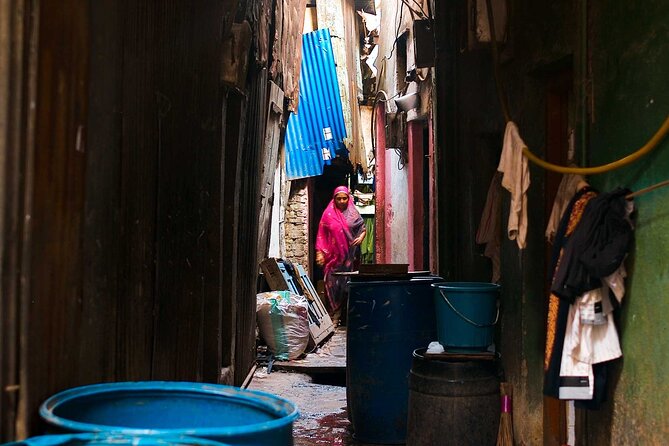
- Dharavi first: homes, businesses, and the industries behind everyday life
- Dhobi Ghat, then quiet stops with big meaning
- Dhobi Ghat: the outdoor laundry you can almost smell
- Jain Temple: art and non-violence as a core idea
- Kamala Nehru Park: a green pause with a serious view
- Banganga: a 12th-century tank with healing rumors
- Banganga to Haji Ali: when Mumbai’s religious sites sit in open air
- Haji Ali Mosque: a long causeway into the sea
- Markets and rail power: Crawford Market and CST
- Crawford Market: trade that runs on electricity
- Chhatrapati Shivaji Terminus: UNESCO station energy
- Gateway of India to Chor Bazaar: monuments, then mischief
- Gateway of India: 1911 to the end of empire
- Chor Bazaar: the “thieves market” with real shopping energy
- Marine Drive and Sassoon Dock: sea views to end the day right
- Marine Drive: the Queen’s Necklace stroll
- Sassoon Dock: fishermen bringing in the catch
- Price and value: what $87.23 buys you here
- Who should book this private Dharavi and Mumbai highlights day
- Should you book it
- FAQ
- How long is the Dharavi and Mumbai sightseeing tour?
- Is hotel pickup and drop-off included?
- Is this a private tour?
- What is included in the price?
- Is food included?
- What stops are on the itinerary?
- Can I cancel for a full refund?
Key things I’d bet you’ll remember
- Dharavi with real context: homes and businesses, plus the industries that operate there, explained step-by-step
- Dhobi Ghat in quick, practical fashion: see the world’s largest outdoor laundry without wasting time
- Big-name Mumbai sights, tightly scheduled: CST, Gateway of India, Marine Drive, and more, in one day
- Free-entry stops most of the way: many landmarks on the route do not require paid admission
- Guides who make it flow: Sabina and Chetan are specifically praised for energy and history facts
- A day that rewards stamina: expect walking, motion, and quick transitions between areas
Other Dharavi walks, guides named
A smart 9-hour route through Mumbai, not just the postcard hits
This is the kind of Mumbai tour that helps you get oriented fast. Instead of doing only the usual monument parade, your day starts in Dharavi, then swings through laundries, temples, markets, and classic waterfront views. The pacing is built around short blocks at each place, so you are constantly learning, then immediately connecting it to what Mumbai looks like on the street.
It also works well for first-timers. You get a guided route to places that can feel hard to string together on your own, especially when you are trying to cover a lot of geography in one day. And because it is private, it feels less like you are following a crowd and more like you have a plan your guide can adjust to your pace.
There is a practical side here too. You get a local English speaking guide and a driver for the full tour, plus return hotel transfers. That means fewer headaches about navigation and timing, and more energy left for the sights that need your attention.
Dharavi first: homes, businesses, and the industries behind everyday life
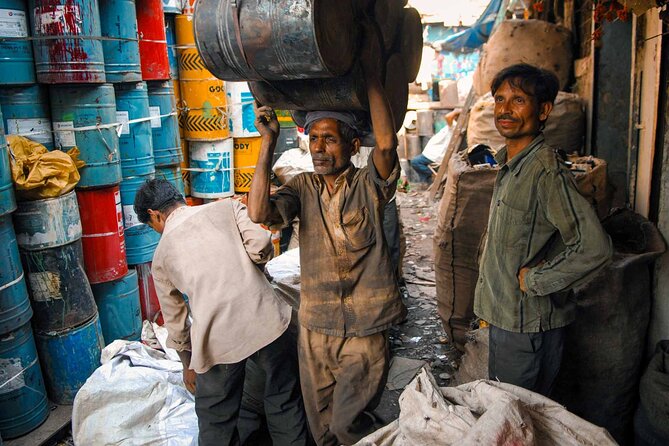
The day opens with a 2-hour visit to Dharavi, and that choice sets the tone. This is not presented as a shock stop. It is educational, with a focus on how many industries operate inside the settlement and how people live their day-to-day lives. You visit homes and businesses, so you are seeing how work and community overlap in real space.
Why this order matters: by the time you reach the famous landmarks later, you have already learned one big truth about Mumbai. The city is not only monuments and museums. It is industry, people, and systems that run whether tourists are there or not.
Also, the route is designed so you do not have to figure out how to reach Dharavi independently. That alone can be a big value for first-time visitors, because Dharavi is far from the typical tourist track.
Practical consideration: this is a sensitive area. You will want to stay alert, follow your guide’s lead, and keep your curiosity respectful. Since the tour includes walking and close viewing, comfortable clothing helps too, but your main job is attitude: listen first, ask second, and keep your camera use controlled.
Dhobi Ghat, then quiet stops with big meaning
After Dharavi, the schedule shifts into shorter, sharper stops that still say a lot about Mumbai’s daily life.
- Elephanta Caves & Island Guided Private Tour★ 5.0 · 1,327 reviews
- Private Guided Walking Tour in Fort & Colaba★ 5.0 · 895 reviews
- Mumbai: Street Food and Night Markets Tour★ 4.9 · 719 reviews
- Mumbai: Dharavi Slum, DhobiGhat, and Dabbawallas Tour★ 4.9 · 689 reviews
- Dharavi Slum Tour★ 5.0 · 625 reviews
Dhobi Ghat: the outdoor laundry you can almost smell
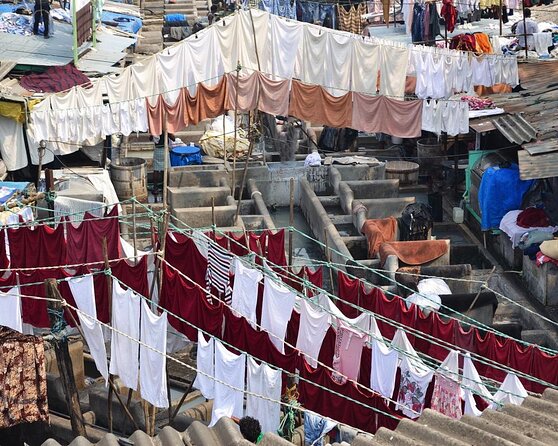
Next is Dhobi Ghat, often called the world’s largest outdoor laundry. The stop is only about 10 minutes, but the point is clear: you see the dhobiwallahs, or washermen, scrubbing sheets linked to Mumbai’s hospitals and hotels. It is a rare chance to watch a working system in public, not a staged performance.
Because the time is short, you will get the best results by focusing on what you are actually seeing, not trying to capture everything. If you want photos, pick a couple of angles and then spend the rest watching hands and routines.
Jain Temple: art and non-violence as a core idea
From there, you head to the Jain Temple in Mumbai for about 20 minutes. The big takeaway is the temple’s detailed decoration and the religion’s emphasis on peacefulness and non-violence. Even if you are not a religious traveler, you can appreciate how the architecture is meant to reflect values.
A short stop like this also helps you regroup mentally. After the intensity of Dharavi and the laundry scene, the temple gives you a calmer space to reset your attention.
Kamala Nehru Park: a green pause with a serious view
Then comes Kamala Nehru Park at about 20 minutes. The setting is on top of Malabar Hill, and the reward is the view over Marine Drive and the Arabian Sea. This stop is one of the more “breathing room” parts of the day, because you get a quieter pocket plus a skyline moment.
If you like photos, this is one of your best chances for a clean view that makes the rest of the route make sense. You will later walk along Marine Drive, so seeing it from above first helps.
Banganga: a 12th-century tank with healing rumors
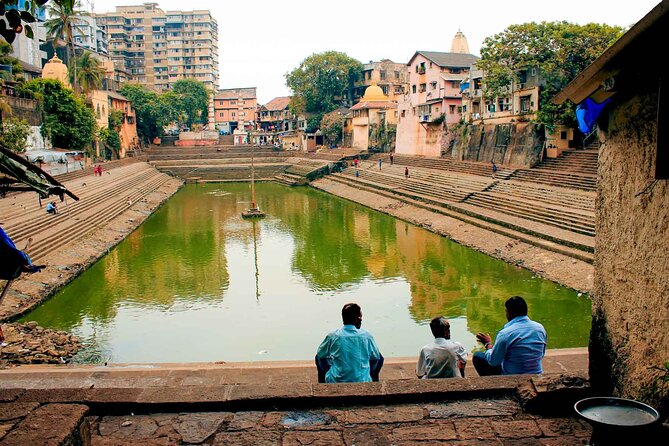
Next is Banganga, a famous 12th-century tank surrounded by Hindu temples. You have about 20 minutes here. The key detail is the belief that the water has special healing powers, with a rumor that the spring connects to the holy Ganges river.
Even if you treat that story as legend, the site still matters because it shows how sacred water shapes city life. You are not just looking at a tank. You are watching people relate to a place through belief.
Banganga to Haji Ali: when Mumbai’s religious sites sit in open air
Haji Ali Mosque: a long causeway into the sea
You will then spend about 30 minutes at Haji Ali Mosque, which sits at the end of a causeway into the sea. The stop centers on the tomb of Saint Haji Ali, a wealthy Muslim who renounced worldly life and went to Mecca.
The experience here is partly about architecture and partly about setting. Being surrounded by water changes how the space feels, and your guide’s narration can help you notice details you might otherwise miss, like why the location matters.
If weather is intense, this can be the kind of stop where you want to stay focused and not linger too long in uncomfortable conditions. Since the tour is time-managed, you will not get stuck here forever, but it is exposed.
Markets and rail power: Crawford Market and CST
Crawford Market: trade that runs on electricity
About 30 minutes goes to Crawford Market, described as one of Mumbai’s largest wholesale markets for fruit, vegetables, and meat. A standout fact is that it is the first building in India to get electricity.
That is a surprisingly modern detail to learn inside an old-style market. It is the kind of fact that sticks because it connects daily commerce to the bigger story of how cities change.
Practical note: markets can be sensory. If you are prone to getting overwhelmed, focus on one lane at a time and let your guide steer you through.
Chhatrapati Shivaji Terminus: UNESCO station energy
Then you hit Chhatrapati Shivaji Terminus (CST) for about 20 minutes. It is Mumbai’s only UNESCO World Heritage Site, and you see it during rush hour. The tour also nods to its appearance in pop culture, but what matters most is the working vibe of the station.
This is one of those stops where the narration helps you read the place. Without context, CST can look like any busy station. With a guide, you start noticing why it is considered so important.
Tip: if you hate crowds, treat this stop as a quick observation moment. Stand where your guide directs you, look, then move on. The value is seeing it as part of the city’s daily motion.
Gateway of India to Chor Bazaar: monuments, then mischief
Gateway of India: 1911 to the end of empire
At about 20 minutes, you visit Gateway of India, built in 1911. Your guide explains that in 1948 British troops marched under the Gateway of India to mark the end of the British Raj.
This is a classic landmark, but what makes it work on this tour is the contrast. You go from Dharavi and working laundries to a monument tied to empire and power. It gives you a broader lens on the city’s history.
If you want iconic photos, this is also a good moment to grab them, then keep moving. It can get busy.
Chor Bazaar: the “thieves market” with real shopping energy
Next is Chor Bazaar for about 45 minutes. It is a big flea market where you can find almost anything. The route even suggests you might try local sweets and buy home-made pickles and chutneys.
This is one of the longer shopping blocks of the day, and it gives you room to browse without feeling rushed. Just go in with realistic expectations. Markets like this are loud, busy, and full of choice, so decide on a goal before you start wandering, whether that is snacks, small gifts, or just people-watching.
Marine Drive and Sassoon Dock: sea views to end the day right
Marine Drive: the Queen’s Necklace stroll
You finish with Marine Drive at about 25 minutes. It is known as the Queen’s Necklace, and it is easy to see why. Even for short walking stretches, the curve of the road and the sight of the Arabian Sea make the city feel cinematic.
If you saw Marine Drive from Kamala Nehru Park earlier, this is where you connect the dots. You recognize angles, scale, and sight lines.
Sassoon Dock: fishermen bringing in the catch
The last stop is Sassoon Dock for about 30 minutes. You watch fishermen bring in their catch in a working port setting.
This ending matters because it brings you back to the theme of the day: Mumbai is not only history. It is jobs, water, and daily work. Ending at a port gives the day a grounded feel, especially after markets and monuments.
Price and value: what $87.23 buys you here
At $87.23 per person for about 9 hours, the value comes from the structure. You are getting:
- hotel/residence pickup and drop-off
- an English-speaking guide and driver for the full day
- water or a cold drink
- a packed route that includes Dharavi plus major sights
You are also spending your time efficiently. Many stops are listed as free admission, which helps keep the total cost from climbing with each location. Food is not included, so you may want to plan for a meal on your own during the day if you get hungry.
The private format is also a major factor. Instead of squeezing into a shared group schedule, you get a route built around your group’s pace. The day still moves fast, but it feels more controlled.
If your priority is maximum variety in one day, and you want local guidance rather than DIY hopping, this price range can make sense.
Who should book this private Dharavi and Mumbai highlights day
This tour fits you best if you want:
- a first-timer introduction that goes beyond monuments
- a guided look at Dharavi that includes homes and businesses
- a one-day mix of religion, markets, transport hubs, and sea views
- a day with support, pickup, and an English guide
It is not ideal if you prefer slow travel with lots of free time. This route is structured. It expects you to move, look, listen, and keep your stamina up.
The names Sabina and Chetan show up in standout feedback for a reason. The praise is about organization, energy, and history facts, which is exactly what you want on a route this packed.
Should you book it
Yes, if you want one guided day that connects Mumbai’s real-world life with its best-known landmarks, and you like the idea of a structured route with pickup and drop-off. The biggest reason to book is simple: it saves you time and stress while still letting you see a lot of the city’s different sides.
Hold off if you feel sensitive about long days, crowds, or switching contexts quickly. This itinerary moves from working and sacred spaces to busy markets. You can still enjoy it, but you should go in ready to focus and take breaks when you can.
FAQ
How long is the Dharavi and Mumbai sightseeing tour?
The tour runs for about 9 hours.
Is hotel pickup and drop-off included?
Yes. Hotel or residence car pickup and drop-off are included.
Is this a private tour?
Yes. It is listed as a private tour/activity, so only your group participates.
What is included in the price?
Included are a local English speaking guide and driver for the entire tour, hotel/residence pickup and drop-off, and water or a cold drink.
Is food included?
No. Food is not included.
What stops are on the itinerary?
The route includes Dharavi, Dhobi Ghat, Jain Temple in Mumbai, Kamala Nehru Park, Banganga, Haji Ali Mosque, Crawford Market, Chhatrapati Shivaji Terminus, Gateway of India, Chor Bazaar, Marine Drive, and Sassoon Dock.
Can I cancel for a full refund?
Yes, you can cancel up to 24 hours in advance for a full refund. If you cancel less than 24 hours before the start time, the amount paid is not refunded.
More Dharavi Walks with Local Guides





Recently reviewed across Mumbai
- Mumbai City Sightseeing Guided Tour on a Bicycle
★ 5.0 · 10 reviews - Mumbai Street Food & Beach Tour with 10+ Tastings
★ 5.0 · 10 reviews - Mumbai Market Tour & Maharashtrian Cooking Class with Chef Reshma
★ 4.5 · 10 reviews - Sailing Experience in Mumbai on Mid Size Yacht
★ 5.0 · 10 reviews - 3 Days Complete Mumbai Tour Inclusive of Bollywood Studio Experience
★ 5.0 · 10 reviews - Dharavi Slum Tour
★ 5.0 · 10 reviews
Dharavi and Mumbai Slum Tours, compared.
 ★ 4.9Dharavi Slum, DhobiGhat, and Dabbawallas TourFrom $14689 reviews
 ★ 5.0Dharavi Slum TourFrom $20625 reviews
 ★ 5.0Dharavi Slum tour in Mumbai by local residentFrom $4572 reviews
 ★ 4.9Dharavi Slum Slumdog Millionaire Tour with a LocalFrom $10529 reviews
 ★ 5.0Mumbai Slum Tour – Visit Dharavi Slum with Local GuideFrom $5509 reviews
 ★ 5.0Sanjay Colony Slum TourFrom $21498 reviews
 ★ 5.0Dhobi Ghat Laundry and Dharavi Slum Tour with LocalFrom $4469 reviews
 ★ 5.0New Delhi Slum Walking TourFrom $28360 reviews
Browse the lists this tour appears in