
REVIEW · MUMBAI CITY TOURS
Mumbai: Dhobi Ghat Laundry and Dharavi Slum Tour with Local
A place like Dharavi changes your brain. This tour pairs Dharavi life with Dhobi Ghat’s laundry work so you see how money, labor, and community actually move through Mumbai. You’ll walk residential lanes and working areas, watch industries like plastic recycling and textiles, and learn why the area is far more complex than movie shorthand.
Two things I really like: first, the tour is led by locals, people like Bharti, Abi, Ansh, and Alkama who grew up there, so your questions get real answers without the tourist script. Second, Dhobi Ghat is not a museum stop, it’s an open-air laundry system in action. One consideration: this is an intense, real-world visit, so you should come with respect, patience, and comfortable shoes for walking in crowded, everyday spaces.
In This Review
- Key highlights
- Dharavi and Dhobi Ghat in One Smart 3-Hour Mix
- Your Local Guide Is the Whole Point (Bharti, Abi, Ansh, and More)
- Entering Dharavi: What You’ll See Beyond the Headlines
- Following the Work: Recycling, Textiles, and Leather
- The Slumdog Millionaire Film Spot, and the Reality Check That Comes With It
- The Dharavi-to-Dhobi Ghat Train Transfer: A Mumbai Experience in Motion
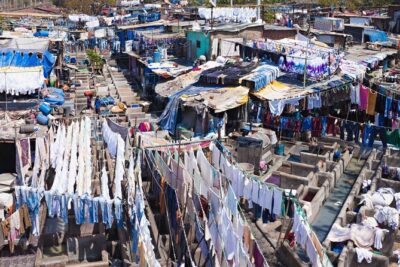
- Dhobi Ghat Open-Air Laundry: Seeing a System, Not a Photo Spot
- Price: Why This Feels Like a Bargain for the Time You Get
- Who This Tour Suits Best, and Who Should Rethink It
- What to Pack and How to Prepare So You Enjoy It
- Should You Book This Dhobi Ghat and Dharavi Tour?
Key highlights
- Local guides who grew up in Dharavi share everyday life, business, and community rules with a calm, respectful tone
- Dhobi Ghat’s open-air laundry shows how washing and drying works at real scale
- Work zones you can actually see including plastic recycling plus garment, textile, and leather industries
- A reality check on Slumdog Millionaire with a film-related spot inside Dharavi
- A local train ride that makes the journey feel like Mumbai, not a staged transport script
Mumbai, a few more routes through it
Dharavi and Dhobi Ghat in One Smart 3-Hour Mix
Mumbai has a talent for turning “sightseeing” into a lesson. This tour does that by combining two places that are linked by work, not by postcards. In Dharavi, you focus on how people live and earn. At Dhobi Ghat, you see one of Mumbai’s most iconic labor systems in the open air.
The timing is also practical. At about 3 hours, it fits easily when you have a full itinerary. You are not stuck for half a day, but you still get enough time to understand what the guide is pointing at, and why Dharavi is often misunderstood.
One more thing I appreciate: the tour’s goal is to dispel stereotypes. Not by lecturing, but by showing how residents balance privacy, family life, and production work every day. That shift matters, because if you come expecting chaos, you will miss the order.
Your Local Guide Is the Whole Point (Bharti, Abi, Ansh, and More)
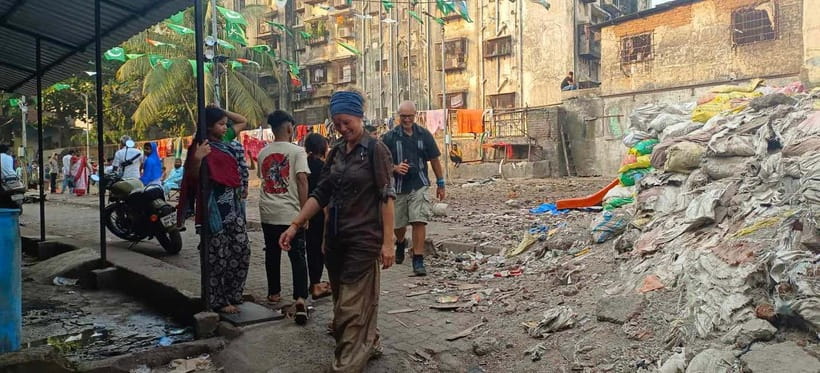
This is one of those tours where the guide makes or breaks the experience. The biggest strength here is that you are typically walking with someone from Dharavi who can explain the area from the inside. Guides named in the information and feedback include Bharti, Abi, Ansh, Alkama, and Faizan.
You can feel the difference fast. Your guide knows which areas are active, how to move respectfully through neighborhoods, and how to answer questions about work without turning people into a spectacle. English is also a stated feature, and many guides are described as fluent, which helps a lot when you want clear explanations, not hand-waving.
Practical tip: come with a few questions, but keep them human. Ask how people earn, how recycling works, how businesses connect, and what daily life looks like. You’ll get better answers that way, and the conversation stays respectful.
Entering Dharavi: What You’ll See Beyond the Headlines
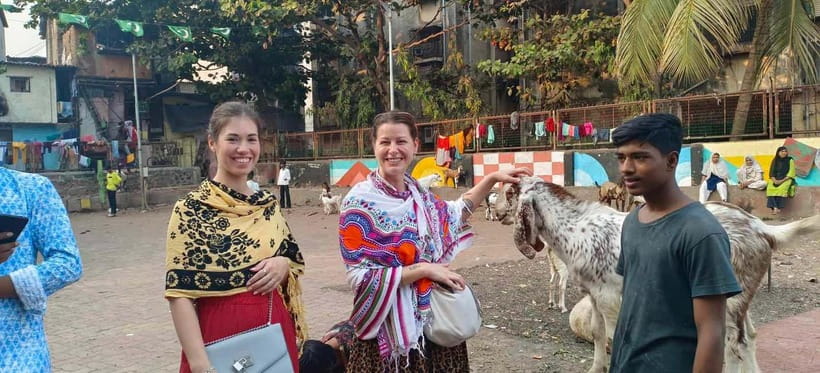
Dharavi is not one thing. It’s housing, workshops, small trade, and community spaces all layered together. On this tour, you move through different zones so you get a more accurate picture of the place.
Expect to see:
- how families set up daily life, where children play and people relax
- where work happens alongside living space
- local businesses tied to production and recycling
- a sense of neighborhood rhythm that does not match the sensational stories
A key promise of this tour is that you will go beyond the film stereotype. There’s an explicit focus on showing that Dharavi is an ecosystem, including the commercial side of life. The tour information even points to the area’s large economic output, stating yearly income is around 1 billion US dollars. Even if you don’t care about the exact number, it’s a useful frame: this place is economically active.
The tour also emphasizes safety. It’s described as completely safe to visit when you go with the local guide who knows residents and the right routes. That matters because safety in areas like this is not just about police, it’s about context, pacing, and who you’re walking with.
Other Dharavi walks, guides named
- Mumbai: Dharavi Slum, DhobiGhat, and Dabbawallas Tour★ 4.9 · 689 reviews
- Dharavi Slum Tour★ 5.0 · 625 reviews
- Dharavi Slum tour in Mumbai by local resident★ 5.0 · 572 reviews
- Mumbai: Dharavi Slum Slumdog Millionaire Tour with a Local★ 4.9 · 529 reviews
- Mumbai Slum Tour – Visit Dharavi Slum with Local Guide★ 5.0 · 509 reviews
Following the Work: Recycling, Textiles, and Leather
Here’s the part that surprises many first-time visitors. Dharavi is often reduced to “slums” in casual conversation, but your walk is built around industry. You’re guided through the plastic recycling world and you’ll also see activity tied to garments, textiles, leather, and other connected trades.
What makes this valuable is the cause-and-effect story your guide can explain. Recycling is not just a pile of waste. It becomes raw material, then labor, then products. That chain creates jobs. It also creates relationships between workshops and trades, which is why Dharavi functions like a network.
Also, this is not presented as a horror show. The better approach is to treat it like an industrial neighborhood. You’ll be watching people at work, and your guide will help you understand what’s being made and why it matters.
Practical tip: bring a mindset of curiosity, not judgment. If you treat it like an everyday workplace, you’ll learn far more than if you start from “poverty tourism.”
The Slumdog Millionaire Film Spot, and the Reality Check That Comes With It
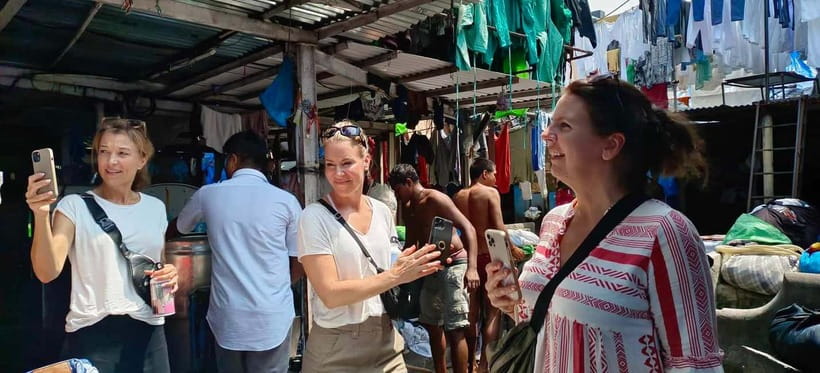
The tour includes a place where Slumdog Millionaire was filmed inside Dharavi. That’s a fun hook, especially if you know the movie. But the real value is what comes after the reference.
You see how film framing can oversimplify. Your guide’s job is to connect what you saw on screen to what people actually do, how communities function, and why the area is more nuanced than a single cinematic moment. In other words, the movie connection is the entrance, not the destination.
If you’re a film fan, you’ll enjoy the recognition. If you’re not, you’ll still appreciate the “reality check” approach. It helps you stop relying on what you think you already know.
The Dharavi-to-Dhobi Ghat Train Transfer: A Mumbai Experience in Motion
One of the smartest parts of this tour is the transition. You don’t just jump by taxi and call it culture. You typically take a local train ride to reach Dhobi Ghat, which turns the transfer into part of the experience.
Why this matters: train travel in Mumbai is how you read the city’s real tempo. It’s also a reminder that you’re moving through everyday Mumbai, not a curated corridor. Your guide helps you stay oriented, which is a relief if you don’t know the rail system.
What to do: hold onto your water (you get water included) and plan for crowds and heat. The tour lasts about three hours total, so you’re moving with purpose, not lingering for long breaks.
Dhobi Ghat Open-Air Laundry: Seeing a System, Not a Photo Spot
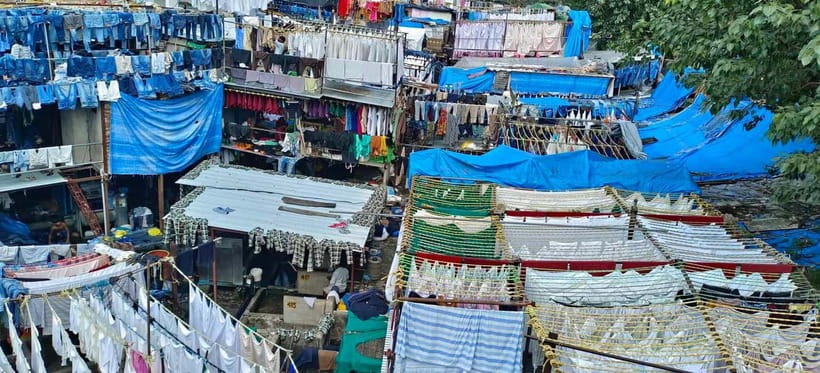
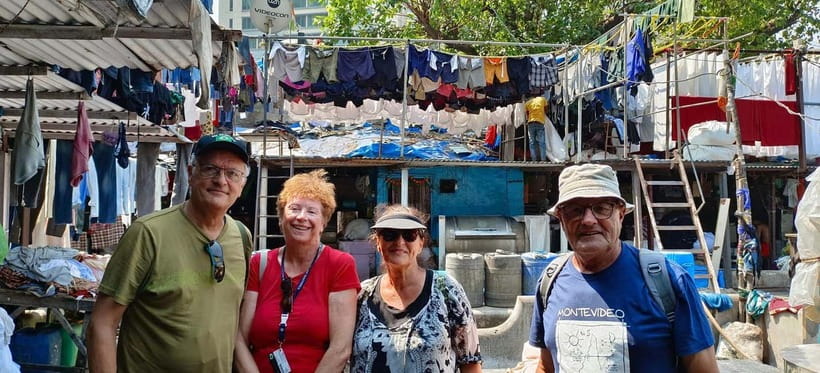
Then you reach Dhobi Ghat, the open-air laundry area. This is where many people feel the strongest “wow” moment, because you can see the whole process rather than imagining it.
Dhobi Ghat is described as an open laundry system, and your guide explains how it works and why it operates at that scale. You’ll be able to observe the workflow as it happens, and your guide will connect it back to Mumbai’s industrial rhythm.
What I like about this stop is that it’s hands-on in your senses. You’re not just learning from words. You’re watching people at work and seeing how the job fits into daily output.
A tip for first-timers: don’t rush photos. If you stand back and watch for a minute, your understanding improves. Then take the shots you actually want, not the ones you grabbed too fast.
Price: Why This Feels Like a Bargain for the Time You Get
The stated price is $4.45 per person for a 3-hour experience. That number is so low it almost sounds unbelievable, but the practical reason it can work is simple: it’s a short, focused tour with a local guide, and the core “value” is the access and explanation, not a long chain of high-cost attractions.
Here’s what you get for the money, based on what’s included:
- local English-speaking tour guide
- private or shared format depending on your choice
- entry tickets
- traveling fees
- water
And the parts you do not get are food and drinks, so plan for that on your own.
Balanced take: cheap is good, but don’t let the price erase your responsibility to behave respectfully. This is not a “check the box” stop. If you come in with patience, you’ll get much more than a quick look.
Who This Tour Suits Best, and Who Should Rethink It
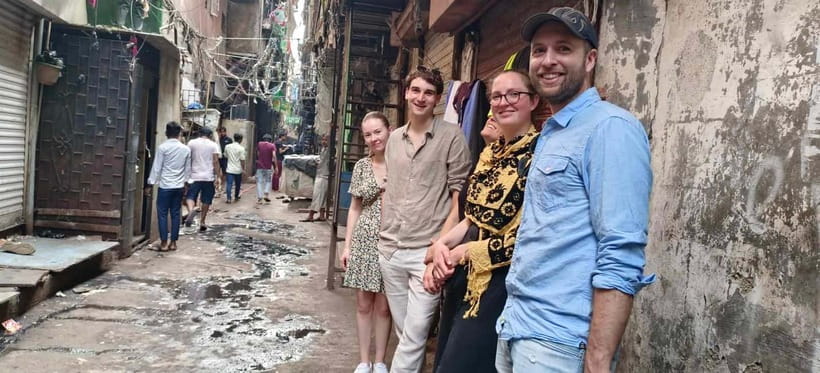
This experience is a great fit if you:
- want a more real Mumbai than standard sightseeing
- like learning from local experts with direct connections to the neighborhood
- are curious about how recycling and small industry actually work
- enjoy a short tour that still includes multiple neighborhoods and a train ride
It may not be ideal if you:
- hate walking in crowded areas
- are easily overwhelmed by close-up views of poverty and labor
- want a purely scenic, “relax and take photos” outing
The tour’s emphasis on respectful viewing helps, but Dharavi is still real life. Come prepared for that, and you’ll likely find it rewarding.
What to Pack and How to Prepare So You Enjoy It

Because this is walking plus industry viewing, you’ll enjoy it more if you show up ready. I’d plan around:
- comfortable shoes (you’ll cover ground on foot)
- light layers for humidity
- a water-aware mindset (water is provided, but you’ll still want to pace yourself)
- respectful photo behavior (ask your guide what’s appropriate in specific areas)
Also, if you’re the type who needs “perfect weather for perfect photos,” you might stress. Instead, focus on listening to your guide. That’s where the best moments happen.
Should You Book This Dhobi Ghat and Dharavi Tour?
Yes, I think you should book it if you want depth in a short window. The strongest reasons are the same ones that keep showing up in how people describe the experience: local guides with inside context, a tour structure that focuses on real work and community life, and the combination of Dharavi plus Dhobi Ghat for a fuller picture of Mumbai labor.
My advice for a smart decision: book it when you have enough mental space for a reality-based visit. If you do, you’ll leave with a more accurate view of Mumbai’s economy and daily life, not just a sequence of sights.
More Dharavi Walks with Local Guides





Mumbai, Keep Exploring





Recently reviewed across Mumbai
- Mumbai City Sightseeing Guided Tour on a Bicycle
★ 5.0 · 10 reviews - Mumbai Street Food & Beach Tour with 10+ Tastings
★ 5.0 · 10 reviews - Mumbai Market Tour & Maharashtrian Cooking Class with Chef Reshma
★ 4.5 · 10 reviews - Sailing Experience in Mumbai on Mid Size Yacht
★ 5.0 · 10 reviews - 3 Days Complete Mumbai Tour Inclusive of Bollywood Studio Experience
★ 5.0 · 10 reviews - Dharavi Slum Tour
★ 5.0 · 10 reviews
Mumbai City Tours, compared.
 ★ 4.9Full-Day Sightseeing Tour of MumbaiFrom $241,822 reviews
 ★ 5.0Group Guided Walking Tour in Fort and ColabaFrom $161,073 reviews
 ★ 4.8Elephanta Caves Half-Day Guided Tour with ExpertFrom $301,032 reviews
 ★ 5.0Highlights of Mumbai Sightseeing Tour: TRAVELLERS CHOICE AWARDEDFrom $33915 reviews
 ★ 5.0Private Guided Walking Tour in Fort & ColabaFrom $36895 reviews
 ★ 4.9Street Food and Night Markets TourFrom $13719 reviews
 ★ 4.9Dharavi Slum, DhobiGhat, and Dabbawallas TourFrom $14689 reviews
 ★ 5.0Highlights of South Mumbai Guided Private Tour in AC VehicleFrom $74620 reviews
Browse the lists this tour appears in