
REVIEW · MUMBAI CITY TOURS
Dharavi Slum tour in Mumbai by local resident
Dharavi feels real fast. This 2 to 3 hour walk with a local resident shows the working side of Mumbai’s biggest slum, including factory-style production and daily life you cannot get from the roadside.
What I like most is that the route is built around how people actually earn money. You’ll move through commercial areas tied to recycling and crafts, then continue into the neighborhood side, so you get more than a quick peek.
The main consideration is tone. This is a working residential area, so expect close-quarters sights and a more serious feel than a standard sightseeing walk. If you want a purely comfortable, photo-only stroll, you might need to adjust your expectations.
In This Review
- Key things that make this Dharavi tour worth your time
- Why a Dharavi walk like this is so much more than sightseeing
- Meeting up at Third Wave Coffee near Mahim
- The core experience: walking the work areas of Dharavi
- What you learn when you see recycling and small manufacturing close up
- A note on pace and route reality
- Seeing the residential side without turning it into a show
- What the guide adds: friendly explanations and a practical flow
- Group size, language, and how that affects your comfort
- Duration and what you can fit around it
- Price, value, and why $4.46 can still make sense
- How to get the most from this visit (without getting in the way)
- Should you book this Dharavi slum tour in Mumbai?
- FAQ
- How long is the Dharavi slum tour?
- Where do I meet, and does pickup work?
- What will we see during the tour in Dharavi?
- Is admission included?
- How large is the group?
- What is the cancellation policy?
Key things that make this Dharavi tour worth your time
- Local resident guidance that helps you understand what you’re seeing while you’re walking
- A production-focused route (recycling, small-scale making, and related workshop areas)
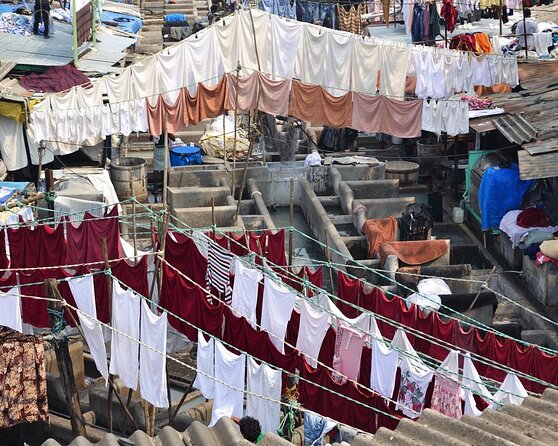
- Commercial and residential areas in one outing, so it is not just business, not just homes
- A clear, walking tour flow that keeps you moving and oriented
- No-pressure shopping at the end, even though there is a shop with local products
Mumbai, a few more routes through it
Why a Dharavi walk like this is so much more than sightseeing
Dharavi is often talked about like a single headline. A good tour helps you see it as a patchwork of routines, work, and skills, spread across tight streets and small workshops.
This experience is interesting because it is structured around that reality. You’re not just looking at buildings, you’re walking through areas tied to how goods are sorted, processed, and made. The result is a clearer picture of how so many different tasks fit together in a place that still functions day to day.
You’ll also notice something else that’s valuable: the information is delivered by someone from the area. When a guide understands the rhythms of the neighborhood, they can explain what certain spaces are for and why people do what they do, without turning it into a spectacle.
Meeting up at Third Wave Coffee near Mahim
Your tour starts at Third Wave Coffee on Tip Road, Unit no. 58, Ground, Ram Mahal, Senapati Bapat Marg, Marinagar Colony, Station, Mahim, Mumbai, Maharashtra 400016. The activity ends back at the meeting point, so you are not stuck planning a finish on your own.
Pickup is offered, which matters in a city where travel time can swing wildly. If you can use pickup, it often makes the whole outing feel easier, especially if you’re combining this with other plans.
Because it is near public transportation, you also have a Plan B if you do not want pickup. The best approach is to confirm your exact pickup or check the easiest transit route for that day, then give yourself a little buffer.
The core experience: walking the work areas of Dharavi
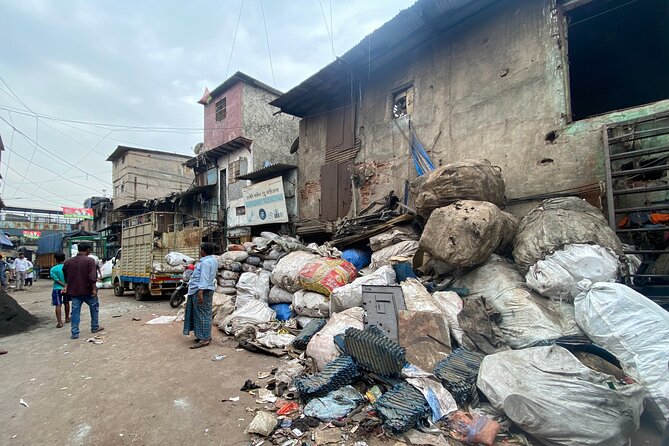
This tour is centered on the parts of Dharavi where making and recycling happen. You visit factory-style spaces and see both the commercial and residential sides, with the guide keeping the focus on what these places do.
One review specifically described a route that includes:
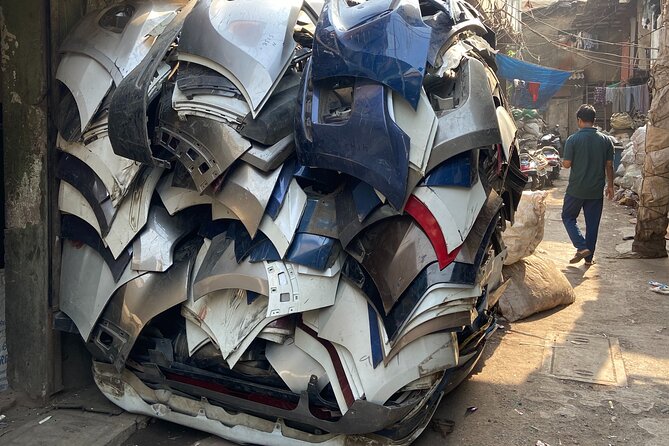
- a zone for plastic recycling
- a walk through narrow lanes
- soap production and plastic bag production
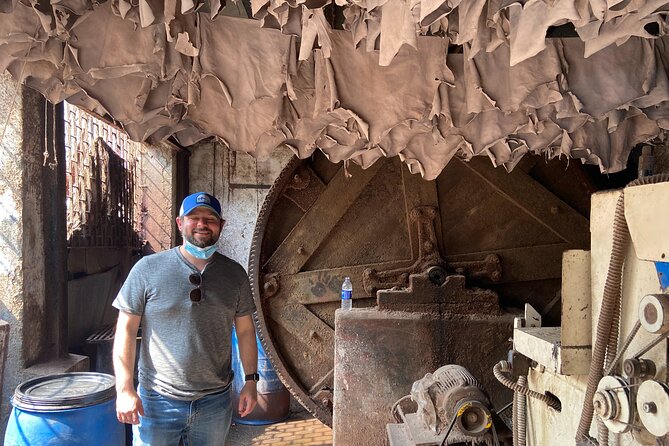
- a section where leather is dried
- a shop area where products are sold
Even if your exact stop order varies a bit, this is the kind of range you should expect from a production-focused walk. That matters because Dharavi’s “story” is tied to work, not just architecture. When you see processes side-by-side, you start to understand how materials move, how products get made, and how small workshops fit into the larger system.
Other Dharavi walks, guides named
- Mumbai: Dharavi Slum, DhobiGhat, and Dabbawallas Tour★ 4.9 · 689 reviews
- Dharavi Slum Tour★ 5.0 · 625 reviews
- Dharavi Slum tour in Mumbai by local resident★ 5.0 · 572 reviews
- Mumbai: Dharavi Slum Slumdog Millionaire Tour with a Local★ 4.9 · 529 reviews
- Mumbai Slum Tour – Visit Dharavi Slum with Local Guide★ 5.0 · 509 reviews
What you learn when you see recycling and small manufacturing close up
Seeing these processes up close changes how you think about the place. Instead of imagining Dharavi as only one thing, you start noticing how different skills show up in different rooms, corners, and workflow stages.
You’ll probably find yourself asking practical questions while you walk, like what gets processed where, who is doing which steps, and how finished items make their way out. A local guide helps you connect those dots in real time, which is the main value of doing this with someone who knows the area.
A note on pace and route reality
This is a walking tour, and it is designed to move you through multiple types of spaces in a short window. Wear comfortable shoes and keep water in mind if you’re doing it on a warmer day. Tight lanes also mean you may need to go slow, pause for explanations, and share space with people who live and work there.
Seeing the residential side without turning it into a show
The tour does not stop at workshops. You also spend time in the neighborhood side, which is crucial for understanding Dharavi as a living community, not just a market.
Because the guide includes both residential and commercial areas, the outing feels more balanced. You’re better able to understand how work and home overlap, and why the neighborhood’s layout matters to daily life.
This is where your mindset matters. Try to treat the area like you’re visiting someone’s workplace and neighborhood at the same time. That usually means staying respectful, listening carefully, and not rushing for photos if people are busy.
If you’re sensitive to the realities of living conditions, this part may hit harder than the workshop sections. Still, it is also the part that makes the tour feel honest, because it reflects the everyday side of Dharavi, not just the production side.
What the guide adds: friendly explanations and a practical flow
One of the standout things from the experience is the guide. The descriptions highlight a guide who is friendly, kind, and clearly able to explain what you’re seeing.
That kind of guide makes a difference in two ways:
- You get context for what looks like clutter at first glance, because someone can explain what each area is used for.
- You avoid turning the visit into a guided version of staring, because the guide nudges you toward understanding.
A big plus is that the outing includes learning moments while still keeping the walk moving. You are not stuck in one place for long, and you are not shuffled through too fast. For many people, that pace is exactly why this tour feels worthwhile.
Group size, language, and how that affects your comfort
The group size has a maximum of 99 travelers. That number is big on paper, but the tour is built to work as a group walk rather than a private experience.
What you can expect is a shared path where the guide keeps orientation for the group. If you like lots of personal attention, you may want to arrive with patience. If you’re fine with a lively group setting and just want solid context, this format usually works well.
The guide is local and English-speaking, which is a real comfort factor. It means you won’t be left guessing about what each room or process is, and you can ask questions as you go if your guide invites them.
Service animals are allowed, and the tour is described as suitable for most travelers. Still, since this is a neighborhood walk, you should use common sense about comfort and mobility.
Duration and what you can fit around it
The experience runs about 2 to 3 hours. That’s a sweet spot for a tour in Mumbai because it gives you enough time to cover multiple parts of Dharavi without swallowing your entire day.
Because you return to the start point, it’s also easier to plan your next activity. You can head to another neighborhood or meal plan without needing a late-stage logistics scramble.
If your schedule is tight, aim to keep a little breathing room before and after. Even with a smooth running tour, neighborhood walks take real time, and you’ll likely spend moments paused for explanations.
Price, value, and why $4.46 can still make sense
At $4.46 per person, this is an unusually low-cost option for a guided tour that covers both work areas and residential areas. The value comes from what you get for the price: local guidance, a structured walking route, and an admission ticket included.
You should also think about what the price does to the experience. With a low ticket price, the operator is likely relying on a group format and a clear, efficient route to keep costs down. That can be a good thing if you like a focused itinerary and a practical pace, but it also means you should be flexible about crowd flow.
In other words, don’t expect a luxury, slow, private walk. Do expect a guide-led view of Dharavi that you cannot replicate as easily on your own. The included admission and the production-focused route help justify the cost, even if you’re comparing to pricier, single-attraction tours.
How to get the most from this visit (without getting in the way)
This is the kind of tour where your behavior directly shapes the experience for everyone around you. Here are a few things that help you get more out of it:
- Keep your camera use respectful. If people are working, treat that as a cue to pause and ask your guide what’s appropriate.
- Listen for the workflow explanations. The tour is strongest when you connect processes to purpose, not when you just look at spaces.
- Stay mentally open. The neighborhood side can feel intense, but that is part of why the tour has meaning.
- Move with the group. Tight lanes work best when you don’t stretch ahead or stop suddenly.
- Plan for walking. Comfortable shoes matter more than you think, especially if the route includes narrow lanes and workshop entrances.
If you go in expecting a documentary-style lesson with a local guide, you’ll likely feel satisfied. If you go in expecting a theme-park tour, you might feel disappointed.
Should you book this Dharavi slum tour in Mumbai?
Book it if you want a guided, production-focused look at Dharavi that goes beyond a quick exterior view. The biggest reason to choose it is the blend of workshop areas and the residential side, guided by someone local who can explain what you’re seeing as you walk.
Skip it or at least reconsider if you need a very light, comfortable experience. This is a working neighborhood, and the tour reflects that. Also consider your comfort with close-quarters conditions and a more serious tone than typical sightseeing.
If you’re the kind of traveler who likes learning through real places, and you’re ready to be respectful while you walk, this is the kind of outing that can change how you see Mumbai.
FAQ
How long is the Dharavi slum tour?
The tour lasts about 2 to 3 hours (approx.).
Where do I meet, and does pickup work?
You meet at Third Wave Coffee, Tip Road, Unit no. 58, Ground, Ram Mahal, Senapati Bapat Marg, Marinagar Colony, Station, Mahim, Mumbai. Pickup is offered, and the tour ends back at the meeting point.
What will we see during the tour in Dharavi?
You will explore Dharavi with a local English-speaking guide, including both commercial and residential areas. The tour also includes visits to factories within Dharavi.
Is admission included?
Yes. Admission ticket is included.
How large is the group?
The tour has a maximum of 99 travelers.
What is the cancellation policy?
You can cancel for a full refund if you cancel up to 24 hours in advance. If you cancel less than 24 hours before the start time, the amount paid is not refunded.
More Dharavi Walks with Local Guides





Mumbai, Keep Exploring





Recently reviewed across Mumbai
- Mumbai City Sightseeing Guided Tour on a Bicycle
★ 5.0 · 10 reviews - Mumbai Street Food & Beach Tour with 10+ Tastings
★ 5.0 · 10 reviews - Mumbai Market Tour & Maharashtrian Cooking Class with Chef Reshma
★ 4.5 · 10 reviews - Sailing Experience in Mumbai on Mid Size Yacht
★ 5.0 · 10 reviews - 3 Days Complete Mumbai Tour Inclusive of Bollywood Studio Experience
★ 5.0 · 10 reviews - Dharavi Slum Tour
★ 5.0 · 10 reviews
Mumbai City Tours, compared.
 ★ 4.9Full-Day Sightseeing Tour of MumbaiFrom $241,822 reviews
 ★ 5.0Group Guided Walking Tour in Fort and ColabaFrom $161,073 reviews
 ★ 4.8Elephanta Caves Half-Day Guided Tour with ExpertFrom $301,032 reviews
 ★ 5.0Highlights of Mumbai Sightseeing Tour: TRAVELLERS CHOICE AWARDEDFrom $33915 reviews
 ★ 5.0Private Guided Walking Tour in Fort & ColabaFrom $36895 reviews
 ★ 4.9Street Food and Night Markets TourFrom $13719 reviews
 ★ 4.9Dharavi Slum, DhobiGhat, and Dabbawallas TourFrom $14689 reviews
 ★ 5.0Highlights of South Mumbai Guided Private Tour in AC VehicleFrom $74620 reviews
Browse the lists this tour appears in