
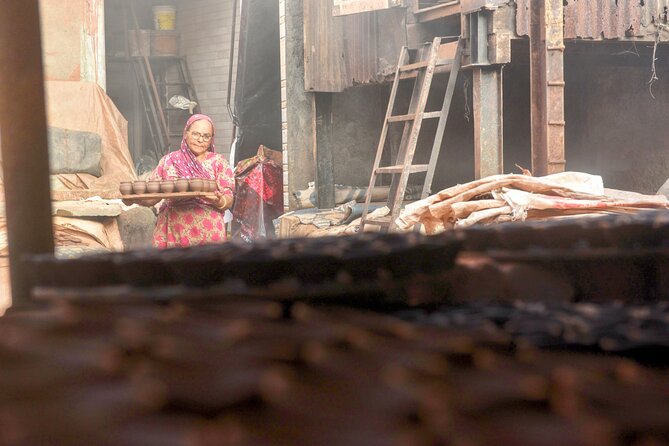
REVIEW · MUMBAI CITY TOURS
Mumbai: Dharavi Slum & Dhobi Ghat Laundry Tour
Laundry smell, then real city life.
This 3-hour walk pairs Dharavi with Dhobi Ghat, the world’s largest open-air laundry, and adds a short Mumbai local train ride. You’re not just looking at places, you’re learning how people make a living day after day, from small industries to traditional laundry work. It’s also guided by locals with English, so the streets make more sense as you move.
I love how the tour balances two very different worlds in one outing: Dharavi’s day-to-day industries and Dhobi Ghat’s huge, hand-powered laundry system. I also like the scale and practicality of the plan, it includes an actual local train segment plus an included Dhobi Ghat admission, and the whole thing runs on a tight, manageable 3-hour schedule.
One possible drawback: the start point is a specific cafe address, so if you arrive late or tired, you might lose time figuring it out. And while the tour is described as English-led, one past experience flagged that guide English quality can vary.
In This Review
- Key things to know before you go
- How This Dharavi to Dhobi Ghat Tour Actually Folds Into 3 Hours
- Dharavi, where small industries drive daily life
- Dhobi Ghat: the world’s biggest outdoor laundry, explained by people who see it daily
- The 15-minute Mumbai local train ride that gives the city its tempo
- Your guide can make or break the story
- Price, group size, and what you should plan for
- Who this tour suits best, and who might want a different plan
- Should you book the Dharavi Slum & Dhobi Ghat Laundry Tour?
- FAQ
- How long is the Dharavi Slum & Dhobi Ghat Laundry Tour?
- What does the tour cost?
- Is the Dhobi Ghat ticket included?
- Do you ride the local train on this tour?
- What is included in the price?
- How many people are in the group?
- Where do I meet for the tour?
- Is private transportation included?
- Is there free cancellation?
Key things to know before you go
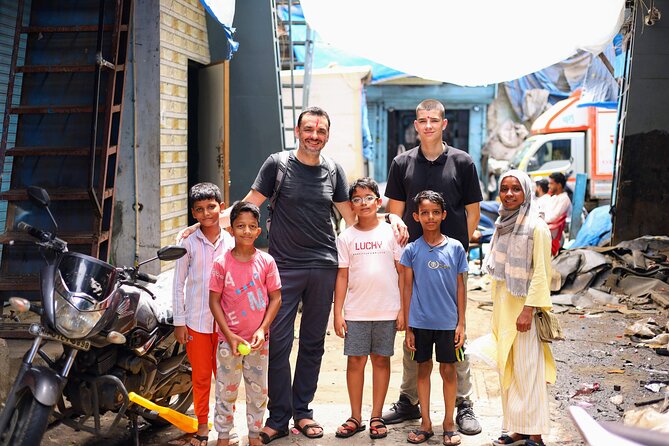
- Small group max 15: You get time to ask questions without feeling swallowed by a crowd.
- Two big stops in 3 hours: Dharavi first, then Dhobi Ghat, with the train ride included to connect it all.
- Dhobi Ghat by hand, outdoors: You’ll see thousands of garments washed daily using methods passed down through generations.
- Local guides and practical explanations: Guides like Priti, Ruba, Subhan, and Ruqaiyya are mentioned as strong at communication and pacing.
- Safety and respectful conduct: Several experiences highlight that the tour aims to keep things respectful and well-managed.
- Value is the point: At about $9.29 for the full experience, the included train ride and Dhobi Ghat admission make it feel like a bargain.
Mumbai, a few more routes through it
How This Dharavi to Dhobi Ghat Tour Actually Folds Into 3 Hours

The rhythm is simple. You meet near Third Wave Coffee on Senapati Bapat Marg, then you head into Dharavi for around two hours, followed by Dhobi Ghat for about one hour, with a 15-minute ride on the Mumbai local train built into the mix. The tour ends back at the meeting point, so you are not scrambling to get home afterward.
Because it’s only about 3 hours, you should think of it as a city snapshot, not a full Dharavi masterclass. Still, that short window can feel heavy in a good way, because you’re watching work happen and hearing how people organize daily life under real constraints.
A nice detail for your comfort: bottled water is included. And with a maximum of 15 travelers, the guide can keep an eye on the group and move at a pace that works.
Dharavi, where small industries drive daily life
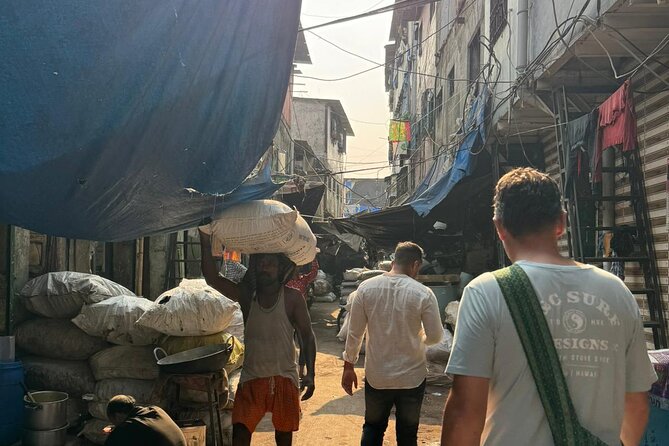
Dharavi is presented here as an active neighborhood, not just a label. The tour focuses on how residents run small-scale businesses and keep the community going, and it calls out industries you can expect to hear about on the walk, like leather work, plastic recycling, and pottery from the Kumbhar Wada area.
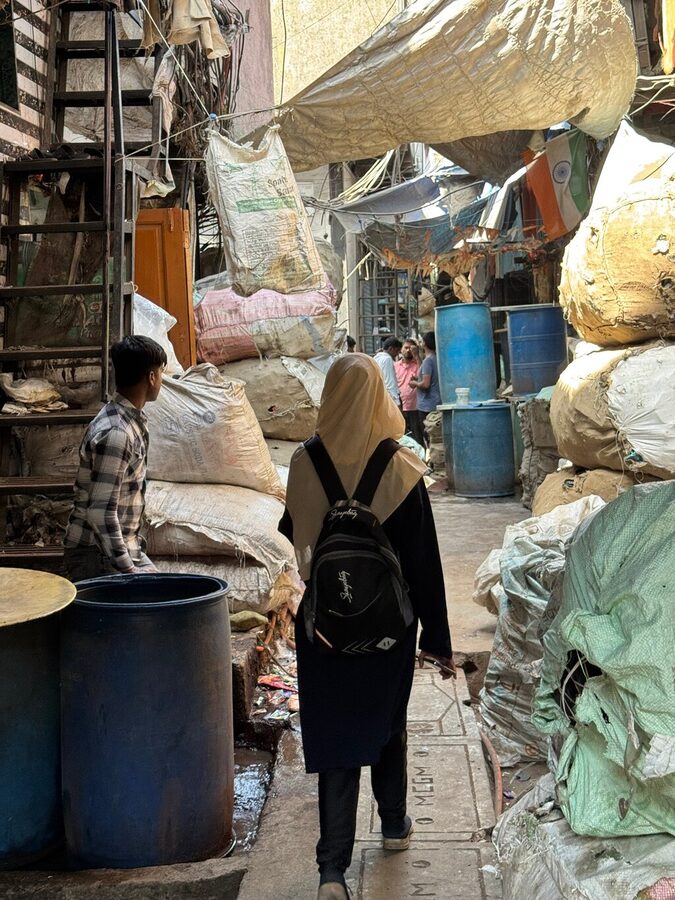
In practice, what makes this stop work is the mix of residential and working spaces. Some guided routes go deeper into neighborhood lanes and then into the business side, so you see how people live next to the work that pays bills. That contrast is one of the biggest reasons this tour gets 5-star feedback.
I’d also pay attention to the way the tour frames your role as a visitor. One thoughtful comment shared a moment of self-awareness about taking photos in a community of residents, and that’s a good mindset to bring. Keep your camera down until your guide gestures it’s okay, and follow their lead on what feels respectful.
What you might love most at Dharavi is the focus on entrepreneurship and resilience, not pity. The guide is there to explain how the area keeps functioning and why the local economy looks the way it does. If you’re the type who likes learning the why behind a place, this part tends to land well.
A practical note: Dharavi stop admission is listed as free for the tour. That matters because the tour is priced so low while still packing in a paid-feeling experience at the next stop.
Dhobi Ghat: the world’s biggest outdoor laundry, explained by people who see it daily
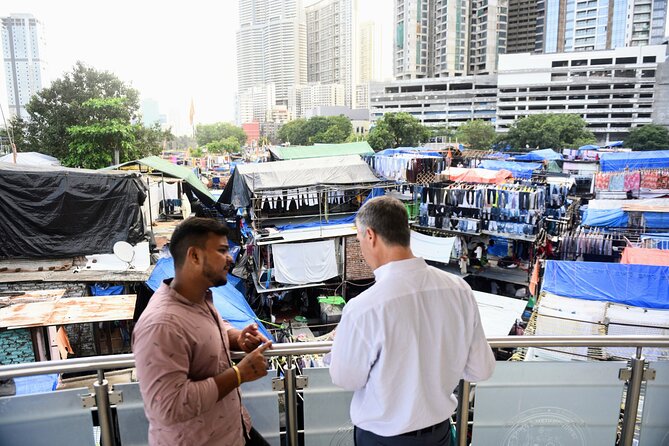
Dhobi Ghat is the showpiece of the itinerary. This tour positions it as the world’s largest outdoor laundry, where over 100,000 clothes are washed daily using traditional methods. The guide doesn’t just point, they explain techniques passed down for generations, which is what turns a landmark sight into a real learning experience.
You spend about one hour here, and that time is usually enough to understand the system at a human scale. You’re watching hand-washing work at scale, and it helps to remember this is not a museum setup. It’s an active working area, which is why the explanations are so important.
Dhobi Ghat admission is included, so you’re not digging through tickets mid-experience. The tour also keeps you moving, you don’t just stand and stare. Instead, you get the context behind how the work happens, and why this place matters in Mumbai’s daily functioning.
One thing to keep in mind: because this is a working laundry, it can be intense just from the sensory side and the constant activity. If you get overwhelmed easily in busy environments, go in with a calm mindset and let the guide handle your pacing.
Other Dharavi walks, guides named
- Mumbai: Dharavi Slum, DhobiGhat, and Dabbawallas Tour★ 4.9 · 689 reviews
- Dharavi Slum Tour★ 5.0 · 625 reviews
- Dharavi Slum tour in Mumbai by local resident★ 5.0 · 572 reviews
- Mumbai: Dharavi Slum Slumdog Millionaire Tour with a Local★ 4.9 · 529 reviews
- Mumbai Slum Tour – Visit Dharavi Slum with Local Guide★ 5.0 · 509 reviews
The 15-minute Mumbai local train ride that gives the city its tempo
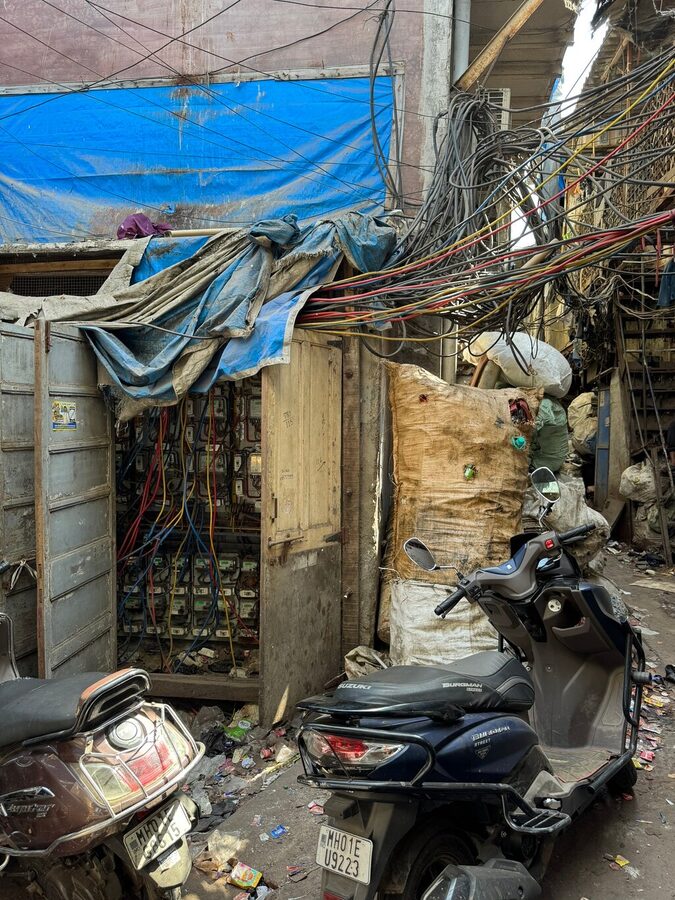
Between the neighborhood walking and the laundry spectacle, you’ll take a short local train ride of about 15 minutes. The tour describes it as a glimpse of Mumbai’s fast-paced city life, and that’s exactly what this segment is for.
This is valuable because it breaks up the day and shifts your perspective. On foot, you notice individual streets and small businesses. On the train, you notice movement, the rhythm of transit, and how connected the city feels even when you’re surrounded by dense activity.
Also, this is one of those included parts that makes the tour feel like more than a basic walking checklist. People in the past mentioned their guides even gave helpful train and platform details, which is a big quality-of-life boost in a city where stations can feel confusing.
Your guide can make or break the story
The tour is led by a local English-speaking guide, and the names that come up repeatedly show why. Priti is praised for strong English and for explaining life and businesses across Dharavi. Ruba is highlighted for confidence on route, and for guiding through both residential zones and working areas in a way that felt contextual and respectful.
Subhan and Ruqaiyya also receive strong mentions, including good pacing and answers to questions. One experience notes a guide helped with practical train advice that even extended beyond the tour, which tells you the guide’s value is not just scripted facts.
That said, there is also at least one caution from prior experiences: one guide was described as speaking little English, leading to lots of informal translation gaps and less polished explanations. Another comment felt that some information sounded like it came from generic sources rather than local storytelling.
So, how should you prepare? Ask questions early. If something is unclear, speak up quickly. And if you care most about accurate, personal context, consider choosing a day when you can arrive calm and ready to engage, since the tour’s quality often depends on the guide’s ability to connect with the group.
Price, group size, and what you should plan for
Let’s talk value first. At about $9.29 per person, this tour is priced like a budget outing, but it includes multiple components: the Dharavi walking portion, Dhobi Ghat admission, and a 15-minute local train ride, plus bottled water. It’s hard to find this kind of mix of street-level access and transit included at this price point.
Group size also supports value. With a maximum of 15 travelers, you’re less likely to feel rushed or lost in the shuffle. Smaller groups tend to mean quicker answers and smoother movement at both stops.
Logistics are also pretty manageable. The meeting point is clearly defined at Third Wave Coffee in Mahim, and the activity ends back at the meeting point. The tour is near public transportation, so you’re not locked into a private car plan.
Two practical tips that will save you stress:
- Arrive a few minutes early. The start is a specific cafe address, and one past experience mentioned difficulty finding it right after landing.
- Come with comfortable walking shoes. The tour is a walking experience through neighborhoods and a busy working area, even though the exact ground conditions aren’t spelled out.
If you’re traveling with limited time in Mumbai, this is one of the better ways to use a half-day slot. It’s short enough to fit into a schedule, but structured enough to feel complete.
Who this tour suits best, and who might want a different plan
This is best for you if you want grounded, real-world Mumbai. If you like learning how everyday work runs, not just taking photos of famous sights, you’ll likely appreciate the focus on industries and daily routines.
It also suits curious travelers who enjoy local guidance. The tour is designed around interpretation by a local English-speaking guide, and the strongest feedback focuses on guides who explain clearly, answer questions, and keep a respectful tone.
It might be less ideal if you need a very polished, lecture-style experience. If you prefer highly structured storytelling every minute, you should be aware that guide English quality can vary. And if you dislike active working environments, Dhobi Ghat might feel like sensory overload rather than a calm attraction.
Finally, if you’re a first-time visitor and want one quick way to understand how different Mumbai neighborhoods function, this pairing is a smart choice. Dharavi shows the work side of the city. Dhobi Ghat shows a massive, traditional labor system. The train ride connects both to the wider city rhythm.
Should you book the Dharavi Slum & Dhobi Ghat Laundry Tour?
I’d recommend booking this tour if you want maximum city insight for minimal time and money. The included Dhobi Ghat admission, plus the short local train ride, is a strong value mix, and the repeated praise for guides like Priti, Ruba, Subhan, and Ruqaiyya suggests you can get clear, respectful storytelling.
You should consider thinking twice if you’re very sensitive to language variation or you only enjoy places that feel quiet and tourist-friendly. This experience is about working communities, with real people doing real jobs. If that’s your thing, you’ll probably leave with a different mental map of Mumbai than you started with.
If you book, do one simple thing: arrive on time and come ready to ask questions. That’s how you make a low-cost tour feel personal and meaningful.
FAQ
How long is the Dharavi Slum & Dhobi Ghat Laundry Tour?
It lasts about 3 hours.
What does the tour cost?
The price is listed as $9.29 per person.
Is the Dhobi Ghat ticket included?
Yes, Dhobi Ghat admission is included, and the Dharavi stop is listed as free for admission.
Do you ride the local train on this tour?
Yes. The tour includes a 15-minute ride on Mumbai’s local train.
What is included in the price?
Bottled water is included.
How many people are in the group?
The tour has a maximum of 15 travelers.
Where do I meet for the tour?
The meeting point is Third Wave Coffee, Tip Road, Unit no.58, Ground, Ram Mahal, Senapati Bapat Marg, Marinagar Colony, Station, Mahim, Mumbai, Maharashtra 400016, India.
Is private transportation included?
No, private transportation is not included.
Is there free cancellation?
Yes. You can cancel up to 24 hours in advance for a full refund.
More Dharavi Walks with Local Guides





Mumbai, Keep Exploring





Recently reviewed across Mumbai
- Mumbai City Sightseeing Guided Tour on a Bicycle
★ 5.0 · 10 reviews - Mumbai Street Food & Beach Tour with 10+ Tastings
★ 5.0 · 10 reviews - Mumbai Market Tour & Maharashtrian Cooking Class with Chef Reshma
★ 4.5 · 10 reviews - Sailing Experience in Mumbai on Mid Size Yacht
★ 5.0 · 10 reviews - 3 Days Complete Mumbai Tour Inclusive of Bollywood Studio Experience
★ 5.0 · 10 reviews - Dharavi Slum Tour
★ 5.0 · 10 reviews
Mumbai City Tours, compared.
 ★ 4.9Full-Day Sightseeing Tour of MumbaiFrom $241,822 reviews
 ★ 5.0Group Guided Walking Tour in Fort and ColabaFrom $161,073 reviews
 ★ 4.8Elephanta Caves Half-Day Guided Tour with ExpertFrom $301,032 reviews
 ★ 5.0Highlights of Mumbai Sightseeing Tour: TRAVELLERS CHOICE AWARDEDFrom $33915 reviews
 ★ 5.0Private Guided Walking Tour in Fort & ColabaFrom $36895 reviews
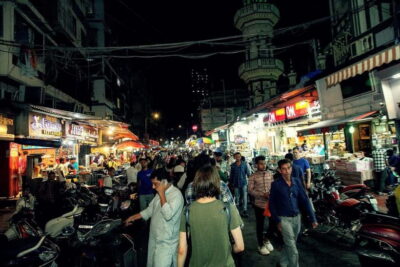 ★ 4.9Street Food and Night Markets TourFrom $13719 reviews
 ★ 4.9Dharavi Slum, DhobiGhat, and Dabbawallas TourFrom $14689 reviews
 ★ 5.0Highlights of South Mumbai Guided Private Tour in AC VehicleFrom $74620 reviews
Browse the lists this tour appears in