
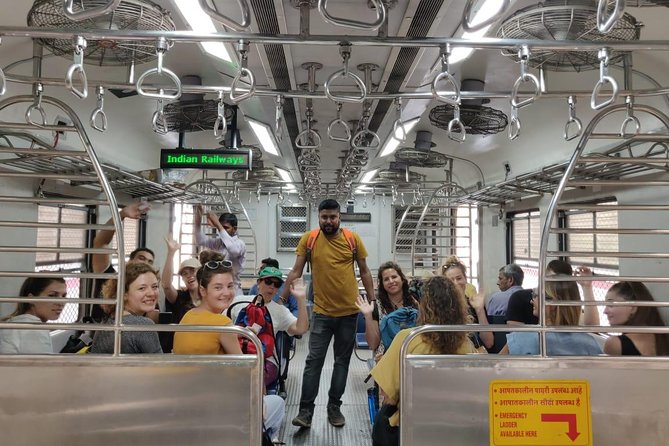
REVIEW · MUMBAI CITY TOURS
Walking Tour of Dharavi Slum in Mumbai
Dharavi looks like a rumor until you walk it. This small-group tour is designed to show the area as a working neighborhood, not a stereotype, with a local guide who shares context and day-to-day realities. You will also get a rare feel for how community life and small industries run side by side.
What I like most is the focus on local perspective and practical, on-the-ground details. You are not just hearing about Dharavi, you are seeing things in action, including recycling, embroidery, soap-making, pottery-making, and the big one, leather work in tight spaces. Another plus is the way the route highlights the mix of faiths, with temples, mosques, and churches close together, and the sense of community your guide points out as you walk.
One drawback to consider: photography is restricted at certain locations, and the tour includes working areas where you must follow your guide’s lead. If you hate rules, or you want lots of pictures, this may feel limiting.
In This Review
- Key things you should know before booking
- Walking Dharavi for real, not as a TV picture
- Price and value: what $12 buys you in Mumbai
- Where you start near Mahim Station, and where you finish in Dharavi
- Stop 1: Dharavi walking tour, the neighborhood lesson on foot
- Stop 2: Leather work, why it is the dominant industry
- Stop 3: Pottery-making and selling in Dharavi
- The industries you might notice beyond leather and pottery
- Faith, community, and what your guide points out as you walk
- Photography rules and how to stay respectful in working spaces
- Getting value from the guide, especially if you want context
- Logistics that matter: group size, timing, and walking comfort
- Who should book this Dharavi walking tour?
- Should you book it with Amaze Mumbai Tour?
- FAQ
- Where do I meet the guide, and where does the tour end?
- How long is the Walking Tour of Dharavi?
- What will I see on the tour besides walking around Dharavi?
- Is food or drinks included?
- Can I take photos during the tour?
- Is this tour suitable for children?
Key things you should know before booking
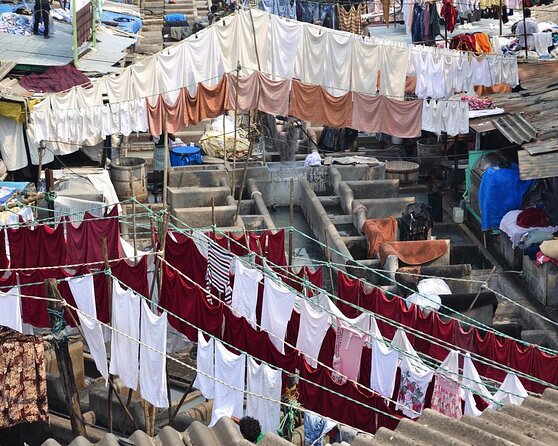
- Local-led small group: Max 15 people, with a guide who lives and works with the neighborhood context.
- You’ll see small-scale industry up close: Leather, pottery, recycling, soap-making, and more happen in confined spaces.
- Walking time is short, focus is high: Plan on about 1 hour 30 minutes to 2 hours for the main experience.
- Dress and behavior matter: Dress appropriately, avoid very short clothes, and respect privacy rules.
- Expect a working neighborhood feel: It is not a museum stop, so your route is shaped by how production and community life function.
- Good value for the time: At $12 per person, you are paying for a guide and access to viewpoint details you would never find alone.
Mumbai, a few more routes through it
Walking Dharavi for real, not as a TV picture
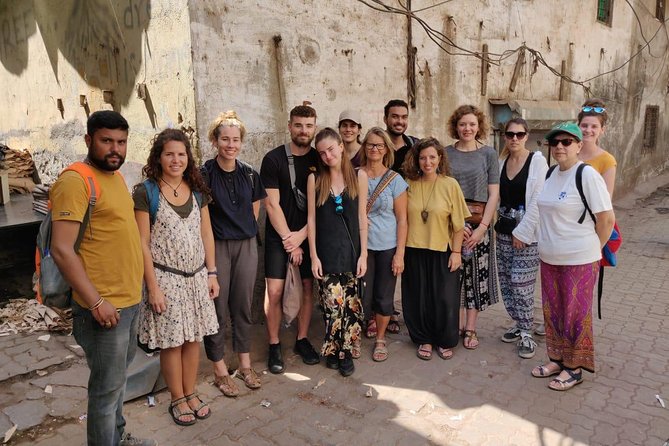
Dharavi has a reputation from headlines, movies, and photos that rarely show the full story. This tour keeps it grounded by focusing on what people do all day, how products get made, and how residents build community in a crowded, resourceful place.
The emotional goal is simple: challenge the negative stereotypes that come with the word “slum.” Your guide will steer your attention toward the real engines of Dharavi: small-scale industries, local skills, and the social bonds that keep daily life moving. I like tours that do this without being preachy, and the best moments here come when your guide connects what you see to what it means for the people living and working there.
You also get something practical out of this. Walking means you can read the neighborhood at human speed: you see the mix of houses and workshops, the closeness of spaces, and how different religious landmarks sit near each other. That mix is part of the point, and your guide calls it out as you go.
Price and value: what $12 buys you in Mumbai
At $12 per person, this feels like one of the more affordable ways to experience Dharavi with a guide. You are not paying for a fancy bus or a long excursion. You are paying for a local guide and a route designed to show specific kinds of industry and everyday community life.
Duration matters for value, too. This is about 1 hour 30 minutes to 2 hours, so it works well if you want an important Mumbai moment without taking over your entire day. And the group size is capped at 15, which helps you ask questions and actually hear the guide while still staying in a manageable walking group.
If you are comparing value, remember what is included: a local guide. Food and drinks are not included, so plan to handle that yourself. Also, there is no hotel pickup or drop-off, so you will need to get to the start point near Mahim Station West.
Where you start near Mahim Station, and where you finish in Dharavi
The tour begins in the morning near Mahim Station (West), outside a Cafe Coffee Day restaurant. Your start location is clearly defined, which helps you avoid the common chaos of finding a meeting point in Mumbai.
The tour ends on foot, opposite Sai Multispeciality Hospital & Research Centre at the end point near Dharavi’s 90 Feet Road area. The exact end note matters because it affects what you do next. If you plan a later appointment or connection, treat the end location as your real destination, not the start area.
Also, the tour uses a mobile ticket, so keep it handy on your phone. Confirmation is typically received at booking time, unless you book close to departure.
Other Dharavi walks, guides named
- Mumbai: Dharavi Slum, DhobiGhat, and Dabbawallas Tour★ 4.9 · 689 reviews
- Dharavi Slum Tour★ 5.0 · 625 reviews
- Dharavi Slum tour in Mumbai by local resident★ 5.0 · 572 reviews
- Mumbai: Dharavi Slum Slumdog Millionaire Tour with a Local★ 4.9 · 529 reviews
- Mumbai Slum Tour – Visit Dharavi Slum with Local Guide★ 5.0 · 509 reviews
Stop 1: Dharavi walking tour, the neighborhood lesson on foot
The main experience is the walking segment in Dharavi, around 1 hour 30 minutes. This is where the tour earns its reputation for reframing Dharavi through lived context rather than fear or pity.
Here is what to expect during the walk:
- Your guide gives context and explains life in India through what you see around you.
- You will notice small industry operating in very confined spaces, using innovative techniques to turn materials into finished products.
- You will see a diversity of communities, including temples, mosques, and churches side by side.
- You will pick up on the sense of community that makes Dharavi function day after day.
The walk is not just sightseeing. It is guided interpretation, which is why the local guide is the central value. Many guides mentioned in feedback, such as Mr. Ganesh and Mr. Alam, are praised for English skills and for creating a calm, safe feeling. The best part is that they do not reduce the neighborhood to a single topic. You will likely get a mix of history context and practical observations tied to what is happening now.
A small but important consideration: the pace is manageable, but it is still walking in a working neighborhood. The tour asks for moderate physical fitness, so if you tire easily, bring your best walking shoes and plan to take breaks if your guide allows it.
Stop 2: Leather work, why it is the dominant industry
Leather shows up early because it is described as the dominant industry in Dharavi. This stop is shorter, about 10 minutes, but it has weight.
Why it matters is the kind of production you see. Leather tanning and related work are labor-intensive and happen in close quarters. Even in a brief stop, you get an idea of how skilled work can thrive in limited space and how products move from raw inputs to something sellable.
This is also a moment where your guide’s tone matters. Feedback highlights that guides make people feel safe and comfortable while still respecting privacy and community needs. If you are sensitive to how production sites can look or smell, keep expectations realistic. This is not a curated storefront, it is a working industrial area.
Stop 3: Pottery-making and selling in Dharavi
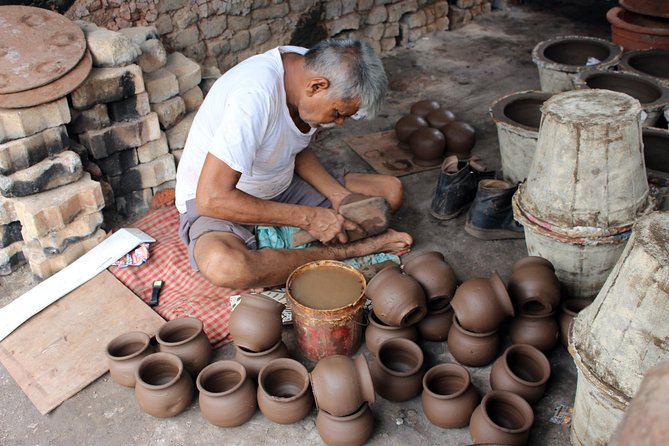
Another short stop, around 10 minutes, focuses on pottery-making. Pottery is significant in Dharavi, and this is where you can see craft work that links daily life to local industry.
Pottery here is not just an art display. It is part of the small business flow, where making and selling connect directly. Seeing it in person helps you understand what “small-scale” really means. It is not a simplified version of industry. It is full production, just compact and local.
If you are the type of traveler who likes practical craft and manufacturing, this stop tends to land well. It pairs nicely with what you may have seen in other workshops, like recycling or soap-making, because it shows how materials and skills become products through repeated, local know-how.
The industries you might notice beyond leather and pottery
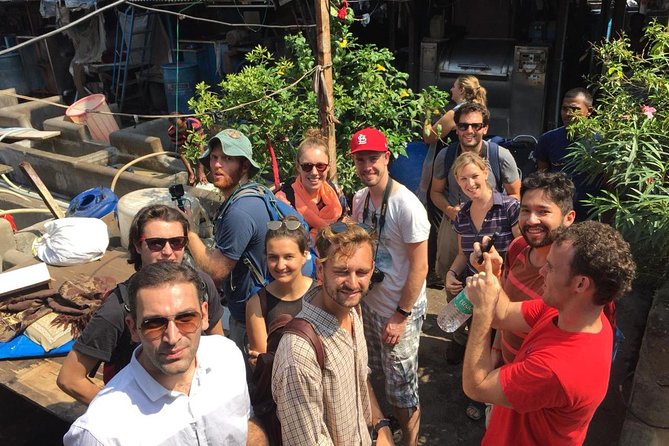
Even though the route has clear stop points, the walking segment is described as a broad look at multiple mini-industries. That can include:
- Recycling (including plastic recycling)
- Embroidery
- Soap-making
- Pottery-making
- Leather tanning
In feedback, people especially appreciated seeing the plastic recycling process and the ceramics area, which aligns with pottery and workshop craft. So if you came for the “how it works” side of Dharavi, you are likely to get it.
One extra detail from feedback that you should file away: some guides may invite you into additional workshop moments beyond the headline stops, such as garment-making. That is not something you should count on, but it explains why the experience can feel more personal than you expect from a short tour.
Faith, community, and what your guide points out as you walk
A big part of the experience is the neighborhood social fabric. Dharavi is described as home to people from across India, so you will see diversity in daily life, not just demographics on paper.
Your guide draws attention to how temples, mosques, and churches exist side by side. That helps you understand Dharavi not as a single identity, but as a place where people keep practicing their faith and building routines together.
This is also where “community spirit” shows up. You are walking through an active neighborhood where neighbors support each other and where local social rules matter. One practical takeaway: you will get more out of the tour if you ask respectful questions and follow your guide’s cues quickly, especially around privacy and photography.
Photography rules and how to stay respectful in working spaces
One firm rule is that photography is not allowed on this tour at certain locations. This is not a minor detail. Your guide may ask you to stop for privacy reasons, and it can happen right at a key moment.
So what should you do?
- Assume you will be told when to put your phone away.
- Avoid trying to sneak photos over someone’s shoulder.
- Treat the rule as part of community respect, not as an obstacle.
In feedback, guides are specifically praised for caring about privacy and for asking people not to take pictures. That aligns with why this tour can offer access in the first place. If you want the experience to feel human, not extractive, your behavior matters.
Dress code is also straightforward: dress appropriately and avoid very short clothes. It is a small rule, but it helps you blend in and show respect for the setting.
Getting value from the guide, especially if you want context
This tour is built around the guide, and different guides have different communication strengths. Feedback points out that some guides, including Dawood, are praised for clarity and for putting people at ease. Others, like Mr. Ganesh and Mr. Alam, are praised for English skills, safety awareness, and making the neighborhood feel approachable.
What you can do to maximize the value:
- Ask one or two questions early, when you still have attention.
- Listen for explanations about how industries function in confined spaces.
- Pay attention when your guide talks about community and stereotypes, not just production details.
Because the tour is short, you do not want to waste time with things you can do alone. This is a guided walk where the real product is interpretation.
Logistics that matter: group size, timing, and walking comfort
The tour caps at 15 travelers. That matters in Dharavi because narrow spaces and working areas can get crowded fast. A smaller group also makes it easier for the guide to manage flow and safety.
Duration is about 1 hour 30 minutes to 2 hours, and the tour runs in the morning. Booking is typically done around 33 days in advance on average, which suggests popularity. If you have tight dates, book early to get a better chance at the time you want.
Shoes are a real decision. This is a walking tour, and you are moving through real neighborhoods and workshops. Bring comfortable footwear and wear clothing you feel good walking in, while still following the dress guidance.
And bring a simple plan for food. Food and drinks are not included, so eat beforehand or plan to refuel after.
Who should book this Dharavi walking tour?
This is a great fit if you:
- Want a short, guided, local-led experience in Mumbai
- Care about how communities live and work, not just landmarks
- Enjoy small industries and craft, especially leather and pottery
- Like tours where guides explain the why behind what you see
You might reconsider if you:
- Are uncomfortable with strict privacy and no-photo-at-certain-locations moments
- Need a highly controlled, museum-style experience
- Prefer long stops and deep museum-level exhibits, since this is mostly walking with brief industry moments
This tour is also framed in a way that avoids pure poverty tourism. You are looking at skills, production, and community life, which many people find more respectful and more interesting than the usual disaster-film version of Dharavi.
Should you book it with Amaze Mumbai Tour?
If you want to see Dharavi as a functioning neighborhood with real work and real community, I think this is a strong book. The value is high for the price, the group is small, and the guide is the main attraction. The route is short enough to fit into a day in Mumbai, but structured enough that you are not just wandering.
My practical advice: go in with the mindset of a respectful observer. Follow the photography rules, wear appropriate clothing, and ask questions. If you do that, you will likely come away with a very different picture of Dharavi than the one you started with.
FAQ
Where do I meet the guide, and where does the tour end?
You meet your guide in the morning near Mahim Station (West), outside Cafe Coffee Day. The tour ends opposite Sai Multispeciality Hospital and Research Centre in Dharavi.
How long is the Walking Tour of Dharavi?
It runs about 1 hour 30 minutes to 2 hours.
What will I see on the tour besides walking around Dharavi?
You will get a guided look at life in Dharavi and see small-scale industry at work, including leather work and pottery-making as specific stops, with other industry areas also part of the walking experience.
Is food or drinks included?
No. Food and drinks are not included, so you will need to plan your own refreshments.
Can I take photos during the tour?
Photography is not allowed on the tour at certain locations. You should expect your guide to enforce privacy rules.
Is this tour suitable for children?
The minimum age is 5 years, and children must be accompanied by an adult.
More Dharavi Walks with Local Guides




Mumbai, Keep Exploring



Recently reviewed across Mumbai
- Mumbai City Sightseeing Guided Tour on a Bicycle
★ 5.0 · 10 reviews - Mumbai Street Food & Beach Tour with 10+ Tastings
★ 5.0 · 10 reviews - Mumbai Market Tour & Maharashtrian Cooking Class with Chef Reshma
★ 4.5 · 10 reviews - Sailing Experience in Mumbai on Mid Size Yacht
★ 5.0 · 10 reviews - 3 Days Complete Mumbai Tour Inclusive of Bollywood Studio Experience
★ 5.0 · 10 reviews - Dharavi Slum Tour
★ 5.0 · 10 reviews
Mumbai City Tours, compared.
 ★ 4.9Full-Day Sightseeing Tour of MumbaiFrom $241,822 reviews
 ★ 5.0Group Guided Walking Tour in Fort and ColabaFrom $161,073 reviews
 ★ 4.8Elephanta Caves Half-Day Guided Tour with ExpertFrom $301,032 reviews
 ★ 5.0Highlights of Mumbai Sightseeing Tour: TRAVELLERS CHOICE AWARDEDFrom $33915 reviews
 ★ 5.0Private Guided Walking Tour in Fort & ColabaFrom $36895 reviews
 ★ 4.9Street Food and Night Markets TourFrom $13719 reviews
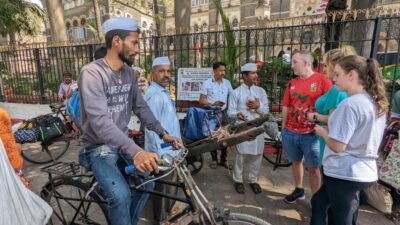 ★ 4.9Dharavi Slum, DhobiGhat, and Dabbawallas TourFrom $14689 reviews
 ★ 5.0Highlights of South Mumbai Guided Private Tour in AC VehicleFrom $74620 reviews
Browse the lists this tour appears in