
REVIEW · HISTORICAL TOURS
Victorian Gothic Heritage Quarter and Art Deco Walking Tour
Old buildings, new stories in Mumbai.
This guided walk links Victorian Gothic and Art Deco design to the city you actually see today, from grand civic buildings to the sea-view finish near Churchgate. It is short, structured, and easy to fold into a first day, even if your only plan is getting your bearings fast.
What I like most is the way the tour connects architecture to everyday purpose, like why the GPO and High Court look the way they do. I also like the human side, since guides such as Abhi and Ravi are praised for clear English and for answering questions without making you feel rushed. One thing to consider: as with any guide-led walk, the quality can depend heavily on who you get, and not every guide hits the same depth or delivery.
In This Review
- Key Highlights If You Want Gothic and Art Deco Without the Fuss
- Starting at Regal Cinema: The Route That Gets You Oriented Fast
- Mumbai GPO: Indo-Saracenic Grandeur in the Mail and Communication Story
- Town Hall and Asiatic Society Library: Neoclassical Calm for Book Lovers
- Horniman Circle Garden: A Break Between Buildings That Still Feels Historical
- St. Thomas Cathedral and the Bombay High Court: When Power Was Built in Stone
- Rajabai Clock Tower: Gothic Revival on the University Edge
- Oval Maidan: Victorian Gothic Meets Art Deco and the Sunday Cricket Moment
- Kala Ghoda to the Sea: Art District Energy, the Gateway, and a Palace Finish
- Price and Value: Why $18.88 Can Work If You Plan Your Day
- Who This Walking Tour Fits Best (And Who Might Want Something Else)
- Should You Book This Victorian Gothic and Art Deco Walk?
- FAQ
- How long is the Victorian Gothic Heritage Quarter and Art Deco Walking Tour?
- Where does the tour start and end?
- What is included in the price?
- Are admission tickets required for the stops?
- How many people are in the group?
- What is the cancellation policy?
Key Highlights If You Want Gothic and Art Deco Without the Fuss
- A tight 2-hour route across major landmarks, with a small group size capped at 15
- Free admission stops at every scheduled location, so you do not waste time buying or queuing tickets
- Local guide storytelling that turns buildings into context, with praised English and Q-and-A time
- A real mix of styles: Indo-Saracenic, Gothic Revival, neoclassical, and Art Deco details you can spot on foot
- A social-feeling city break at Oval Maidan, where Sunday cricket energy can show up in season
- A satisfying finish near Churchgate, useful if you are planning onward travel the same day
Shortlisting? Every Mumbai trip below went through the same review.


Starting at Regal Cinema: The Route That Gets You Oriented Fast

This is a classic “walk the spine of South Mumbai” idea, built for people who want structure without a long day. You meet at Regal Cinema in Colaba, a practical starting point that is easy to reach by public transport, and you finish near Churchgate Station.
Because the tour is about two hours (with some departures running a little longer if the guide adds extra stops), you can treat it like a guided primer. I like that it is not trying to cover everything. Instead, it focuses on a readable set of landmarks so you can start spotting design influences on your own afterward.
Also, the small group size matters. With a maximum of 15 people, you are more likely to hear details clearly and get your questions answered, especially when your guide is actively talking and prompting.
Mumbai GPO: Indo-Saracenic Grandeur in the Mail and Communication Story
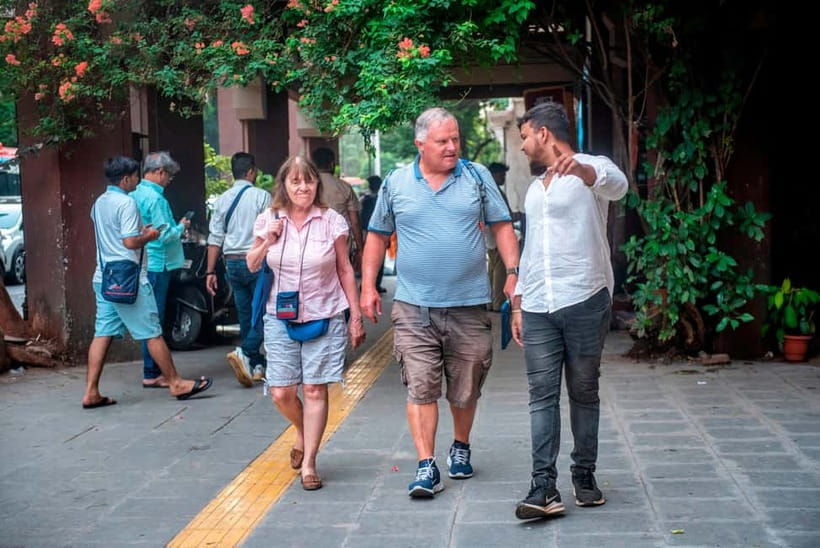
You kick things off at the General Post Office Mumbai, a landmark built in 1913. Even if you do not care about mail history, the building is worth your attention because it was designed as a statement, using Indo-Saracenic style with big civic presence.
A good guide will point out how this kind of architecture worked like branding. In a colonial-era city, major public services were not just functional. They were meant to project authority, order, and permanence, and the GPO is built for that impression.
Practical angle for you: since the stop time is short (around 15 minutes) and admission is free, go in ready to look up. The details matter more than staying still in one spot. This is one of those places where moving your gaze around the facade is half the fun.
Town Hall and Asiatic Society Library: Neoclassical Calm for Book Lovers
Next comes Town Hall, paired with the Asiatic Society Library, founded in 1804. The vibe here is a sharp contrast to the bigger civic monuments because neoclassical architecture tends to feel more formal and measured than Gothic or Indo-Saracenic.
This stop is valuable if you like the quieter side of Mumbai history, not just stone-and-banners. A library like this is essentially a time capsule, and your guide should connect that to why elite education and collecting knowledge mattered in the city’s early institutions.
You are not expected to spend a long time here. The stop is short, and admission is free, so use those minutes to get oriented with what is inside the story. If you enjoy museums, manuscripts, and rare collections, this is the part of the walk that will feel most specific and rewarding.
- Elephanta Caves & Island Guided Private Tour★ 5.0 · 1,327 reviews
- Private Guided Walking Tour in Fort & Colaba★ 5.0 · 895 reviews
- Mumbai: Street Food and Night Markets Tour★ 4.9 · 719 reviews
- Mumbai: Dharavi Slum, DhobiGhat, and Dabbawallas Tour★ 4.9 · 689 reviews
- Dharavi Slum Tour★ 5.0 · 625 reviews
Horniman Circle Garden: A Break Between Buildings That Still Feels Historical
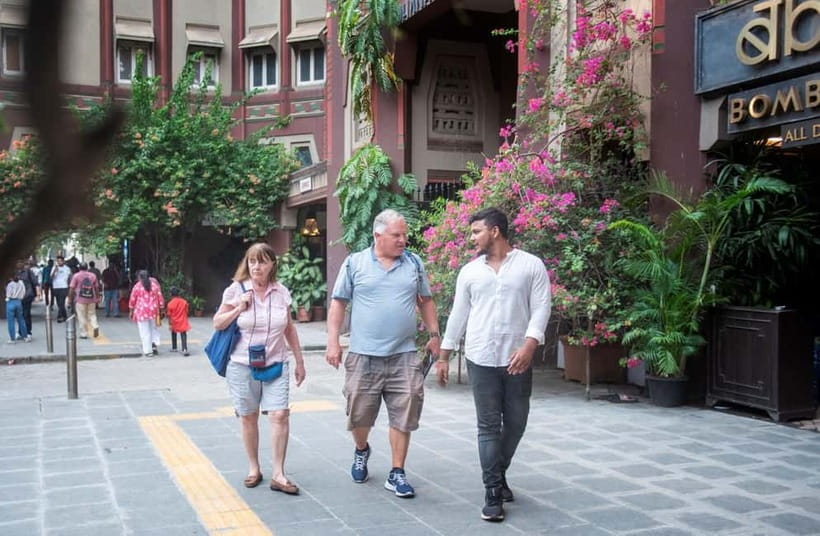
Then you step into Horniman Circle Garden, originally built in 1860. I love this kind of stop because it gives your feet a reset while keeping you in the same architectural conversation. The garden sits amid grand colonial buildings, so you can see how open space was planned into the urban fabric.
It is also the best place on the walk to slow down and notice “in-between” design. On foot, the city can blur together, but here you get a clear sense of how streets, facades, and open areas were composed as one system.
If you are photographing, this is also where you can find calmer framing. You can catch the surrounding buildings with less clutter than some other streets on the route.
St. Thomas Cathedral and the Bombay High Court: When Power Was Built in Stone

After the garden, the tour shifts into places tied to faith and law.
First is St. Thomas Cathedral Mumbai, described as the city’s oldest Anglican church, consecrated in 1718. Even if your church-visit style is quick, it’s hard to miss the historical weight. Your guide can help you understand why this church mattered as a religious anchor for early colonial Mumbai.
Then you reach Bombay High Court, an iconic Gothic Revival building inaugurated in 1879. This is where the Gothic style often feels like more than decoration. The structure communicates seriousness and permanence, and the details signal that the law here was designed to be seen.
For your timing: this stretch moves steadily, with short stops. You will get enough time to look, but not so much that you feel stuck. If you like architecture, make a habit of comparing them in your head. One building is about belief and community. The other is about legal authority.
Rajabai Clock Tower: Gothic Revival on the University Edge
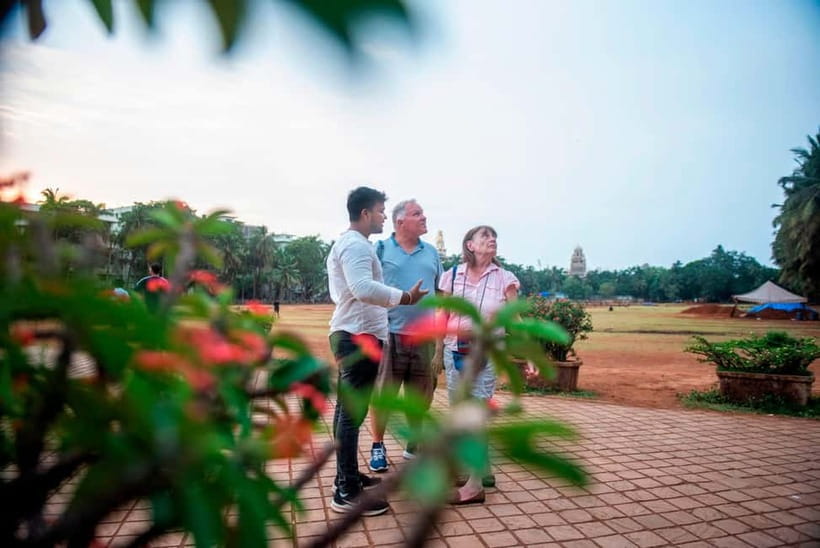
The walk continues to Rajabai Clock Tower, completed in 1878. Located at the University of Mumbai, it was designed by Sir George Gilbert Scott and supported by Premchand Roych, so it ties together British architectural influence with local patronage.
This stop is a crowd-pleaser for a reason. A clock tower is instantly legible, even if you do not know the history. And Gothic Revival structures tend to feature strong vertical lines, so your photos usually look good even when you are standing on a busy sidewalk.
For you, the practical win is simple: this is a landmark you can use later. After the tour, if you are trying to navigate Mumbai’s South Mumbai grid, you will remember this tower as a reference point.
Oval Maidan: Victorian Gothic Meets Art Deco and the Sunday Cricket Moment
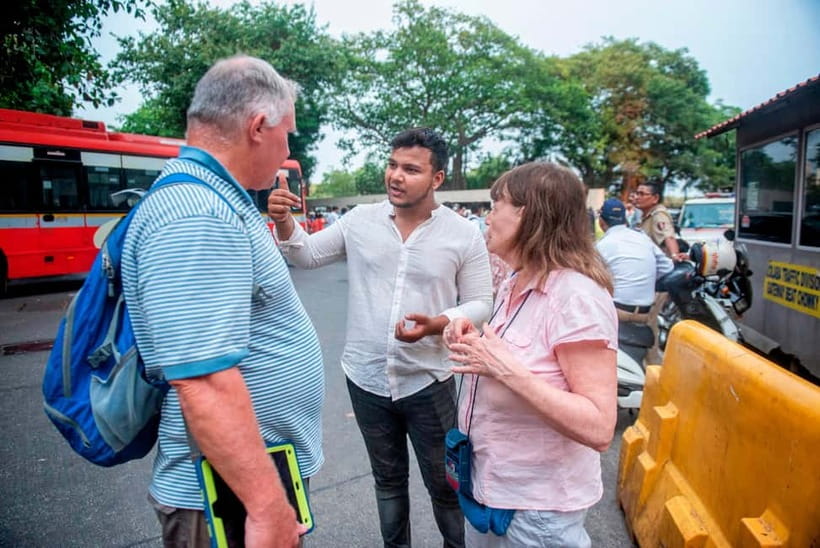
Next is Oval Maidan, a major recreational ground established in the 19th century. What makes it interesting on this particular walk is the way it sits alongside architecture that mixes Victorian Gothic and Art Deco influences.
One review detail that really helps you picture it: on Sundays, people often gather for cricket in the park. So if your schedule includes a Sunday, do not be surprised if the atmosphere turns casual and energetic. It is a reminder that these colonial-era civic spaces never just became relics. They stayed in daily life.
You get about 10 minutes here, admission-free. Use that time to take in both the open area and the building edges around it. This is one of the best spots to understand how style and street life blend together.
Kala Ghoda to the Sea: Art District Energy, the Gateway, and a Palace Finish

Then you move into Kala Ghoda, known for galleries, museums, and street art. On this walk, it functions like a transition from institutional buildings to cultural and commercial streets.
You may also hear smaller street stories along the way, including quirky local lore and the character of older shopping corners. This is the kind of added color that makes a walking tour feel less like a checklist.
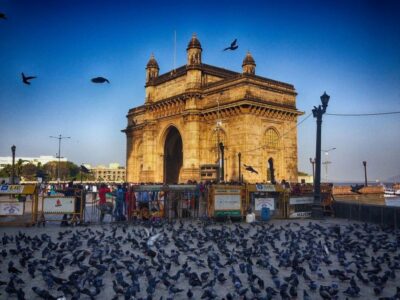
Finally, you reach the Gateway of India, built in 1924 to commemorate the visit of King George V and Queen Mary. It is a famous arch, yes, but the value here is being able to frame it in the wider architectural story you just walked through, rather than seeing it as a standalone photo stop.
The last major stop is The Taj Mahal Palace, Mumbai, built in 1903 and looking out toward the Arabian Sea. Even if you do not go inside, the building gives you a sense of how Mumbai’s elite hospitality and coastal prominence shaped the city’s image.
Ending near Churchgate Station is helpful if you want to keep going. You are not forced into a long return trip just to get back to transit.
Price and Value: Why $18.88 Can Work If You Plan Your Day
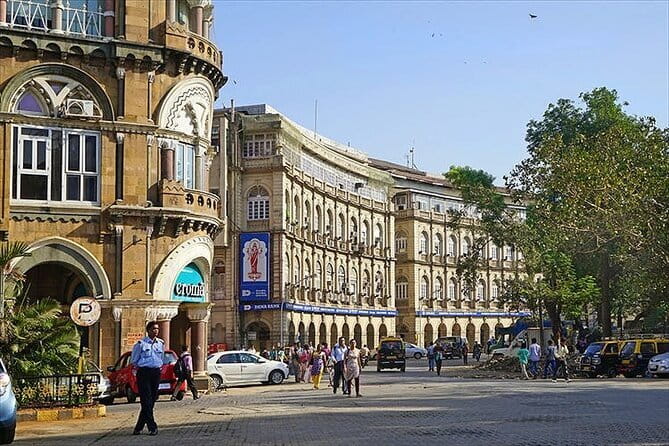
The price is $18.88 per person, and the tour is typically booked about 13 days in advance. For a 2-hour guided walk with bottled water included, it is aimed at budget-friendly first-timers, especially those who do not want to juggle multiple paid tickets.
The biggest value lever for you is that the scheduled stops list free admission. That means you are paying primarily for guidance, timing, and interpretation. If you enjoy learning how buildings were meant to function in their era, you will likely feel that value quickly.
The small group limit of 15 travelers also supports better quality. When a guide can manage a smaller crowd, explanations tend to land better, and the pacing stays controllable.
Still, I will be honest about the one risk you should plan for. If you get a guide who does not click with your interests, you might feel like you paid for a “see it, move on” format instead of a story-driven experience. My suggestion is to go in with a few questions ready. Ask about what to look for on facades, why certain styles were used, or how these institutions shaped the city.
Who This Walking Tour Fits Best (And Who Might Want Something Else)
This tour suits you best if you:
- want a fast introduction to South Mumbai’s colonial-era architecture
- prefer walking to big vehicle tours, with short stops and frequent resets
- like city context, not just photos, especially around civic buildings, churches, and university landmarks
- want a straightforward plan without needing to buy entry tickets
If you are a hardcore architecture nerd who expects long inside access, you might find the time at each stop too short. This walk is built for the exterior and the stories behind them, not for hours of deep museum study.
It also helps if you can handle a day of walking in heat. The route is compact, but it is still an outdoor experience. You’ll appreciate the included bottled water, and you may want to bring your own sunscreen hat if you tend to run hot.
Should You Book This Victorian Gothic and Art Deco Walk?
Yes, I think you should book it if you want a high-effort, low-time introduction to Mumbai’s design heritage. For the money, you are getting a guided thread connecting Indo-Saracenic, neoclassical, Gothic Revival, and Art Deco-adjacent details, plus a sensible start at Regal Cinema and an end near Churchgate Station.
Skip it only if you already have a plan to hire a private architectural guide, or if your biggest goal is quiet time inside museums and buildings. Otherwise, this is a smart way to get your bearings fast, learn what to look for, and leave with a mental map you can use all week.
FAQ
How long is the Victorian Gothic Heritage Quarter and Art Deco Walking Tour?
It runs for about 2 hours.
Where does the tour start and end?
You start at Regal Cinema, Apollo Bandar, Colaba, Mumbai and end near Churchgate Station on Maharshi Karve Rd.
What is included in the price?
The tour includes bottled water.
Are admission tickets required for the stops?
All the listed stops have free admission tickets, so you are not paying entry fees for these specific locations.
How many people are in the group?
The tour has a maximum of 15 travelers.
What is the cancellation policy?
You can cancel for a full refund up to 24 hours in advance. If you cancel less than 24 hours before the start time, the amount paid is not refunded.
Recently reviewed across Mumbai
- Mumbai City Sightseeing Guided Tour on a Bicycle
★ 5.0 · 10 reviews - Mumbai Street Food & Beach Tour with 10+ Tastings
★ 5.0 · 10 reviews - Mumbai Market Tour & Maharashtrian Cooking Class with Chef Reshma
★ 4.5 · 10 reviews - Sailing Experience in Mumbai on Mid Size Yacht
★ 5.0 · 10 reviews - 3 Days Complete Mumbai Tour Inclusive of Bollywood Studio Experience
★ 5.0 · 10 reviews - Dharavi Slum Tour
★ 5.0 · 10 reviews
Historical Tours, compared.
 ★ 5.0Old Delhi Food, Heritage&Cultural Walk with Rickshaw ride to Masterji Kee HaveliFrom $52742 reviews
 ★ 5.0Blue City Heritage Private Walking Tour With Pickup and Drop-OffFrom $11441 reviews
 ★ 4.0Kolkata Heritage Tram TourFrom $60395 reviews
 ★ 5.0Private Heritage Walking Tour in Jaisalmer Fort and Old BazaarFrom $10306 reviews
 ★ 4.8Panaji: Heritage Walk through Goa’s Latin QuarterFrom $12291 reviews
 ★ 5.0Old Delhi Heritage Walking TourFrom $13247 reviews
 ★ 5.0Jodhpur Blue City Heritage Walking Guided TourFrom $13240 reviews
 ★ 5.03-hour Old Delhi Heritage Walking tour with Rickshaw RideFrom $7240 reviews
Browse the lists this tour appears in